About Amid Amidi

test

Coraline Production Artists Panel

Coraline Panel

Did you miss the Coraline production artists panel at Gallery Nucleus last week? Sean Szeles recorded the discussion and has posted it onto YouTube. The artists on the panel were Shannon Tindle, Shane Prigmore, Dan Krall, Chris Appelhans, Jon Klassen and Andy Schuler. All of Chris Appelhans’ and half of Jon Klassen’s presentation weren’t recorded due to the camera battery dying. Nevertheless this is a rare opportunity to hear from the talents who helped design this extraordinary film, especially seeing as how the film’s accompanying ‘art of’ book is a farce that excludes the work of these artists. I’ll be writing more about Coraline soon. Until then, I’ve created a playlist so you can watch the entire panel with just one click below:

Sita Sings the Blues in the NY Times

Men Working

Nina Paley’s animated feature Sita Sings the Blues is the subject of a write-up in this Sunday’s NY Times. It’s a delight to see such a deserving piece of indie animation receive copious amounts of attention from the mainstream media. Of particular interest are the latest developments in how Nina is tackling the film’s music copyright issues and finding a way to make her film available for public consumption:

Because of an exception in the copyright act, public television stations can broadcast music without having to clear individual licenses, and “Sita” will be shown on the New York PBS station WNET on March 7, after which it will be available on the station’s Web site. “My thing,” Ms. Paley said in November, sounding glum, “is that I just want people to see it.”

Recently, though, the licensing fee was negotiated down to approximately $50,000, and “Sita” is close to being sprung from what Ms. Paley calls “copyright jail.” Still, she hopes to release it in a manner as alternative as her film. Using the free software movement – dedicated to spreading information without copyright restrictions – as her model, she has decided to offer “Sita” at no charge online and let the public become her distributor.

Sita Sings the Blues was my 2008 pick of the year for best animated feature, and we also presented the first eleven minutes of the film a few weeks ago on Cartoon Brew TV. Watch it below:

No Girls Allowed?

Men Working

Danny Hayes, a guy who worked on Coraline, complains in Bitch magazine that the Coraline production was too much of a boys-only club. Says Danny:

Make no mistake — Coraline (the just-released stop-motion feature made by Laika Productions right here in Bitch’s hometown of Portland, OR) may be a girl’s story, but the animation industry is still very much a boys’ club. Stick around for the credits after the film and you’ll see that the screenwriter, director, editors, most of the animators, and the “Based on the Novel by” guy are all dudes. This tidbit may come as a surprise, but it shouldn’t. Men were at the helm of almost every major animated feature in recent and not-so-recent history, including those movies that have been embraced specifically by female audiences.

But what does keeping female voices out of the upper echelons of the movie machine do to the industry as a whole?

In my (admittedly limited) experience, it creates a stressful, and at times hostile, work environment. From Henry Selick (the movie’s sometimes maniacal leader) on down, there was definitely a machismo feeling on the set. Competition among co-workers and an assembly-line type of atmosphere was imposed on employees, most of whom were there because of their obsession with the art form but let down by the studio’s poor treatment of its workers.

Danny has a valid point that animation production in general is too male-dominated, but I’d argue that the situation has been changing very rapidly during the past decade. Though the mainstream industry’s creative figureheads remain almost entirely male, the independent animation industry has become much more diverse, with many of the coolest commercials, music videos and independent films being made by women like Gaelle Denis, Suzie Templeton and Laurie Thinot. Two recent indie animation features were also directed by women–Tatia Rosenthal’s $9.99 and Nina Paley’s Sita Sings the Blues–and women are principals of some of the coolest studios around like Shy the Sun, Panda Panther and Tiny Inventions. In other words, the animation world is currently experiencing an unprecedented diversification of its gender make-up, and as a result, the art form is becoming much richer and more interesting to watch.

Paint by Norman Gollin

Paint is a trippy live-action short from 1968 directed by West Coast advertising art director Norman Gollin. Why post it here on Cartoon Brew? Not only because it has the mesmerizing voice of Paul Frees, but because it was produced at the Haboush Company, which was the commercial production studio of animation legend Victor Haboush. I’ve known Vic for quite a few years and I’m always amazed by how many cool projects and people he’s been involved with throughout his career, from studying with Lorser Feitelson at Art Center, apprenticing under Tom Oreb for much of the 1950s on Disney films like Toot Whistle Plunk and Boom and Sleeping Beauty, art directing Gay Purr-ee, starting a commercial studio with the inimitable John Dunn, and later directing hundreds of live-action commercials and producing experimental animated shorts at his own company. Oh yeah, he also worked on The Iron Giant. Somehow it’s not surprising that he’d be involved with a film as wild as this.

The painter in Paint is Charlie White III, a veteran airbrush artist who is one of four people featured in the new book Overspray: Riding High with the Kings of California Airbrush Art. White notes that Gollin shot the entire film without any re-takes. No paint-overs or practice; it was all painterly improv.

(Warning: This film might be considered NSFW, though most people would consider it art.)

World Wildlife Fund PSA by Stephen Watkins

Stephen Watkins, repped by Melbourne’s XYZ Studios, created “Tick,” a stylish PSA for the World Wildlife Fund. The piece, set to Fleet Foxes’ “White Winter Hymnal” (which has its own animated music video too), makes effective use of digital animation and CGI to create a hand-crafted feel. The agency behind the piece, Leo Burnett Sydney, gave the following brief to the filmmaker:

Sometimes it’s hard to get people to support a cause because they think, ‘I’m just one person, what can I do?’ We wanted to show individuals how their support can have a direct and positive effect on Australia’s natural environment. So we took the universal symbol for pledged support, the ticked box, and we animated it. Then that ticked box joined forces with hundreds of other animated ticks and they built habitats around some of Australia’s precious native animals so they can survive.

(Thanks, Tony Sykes)

David O’Reilly Wins Top Prize the Berlinale

Please Say Something

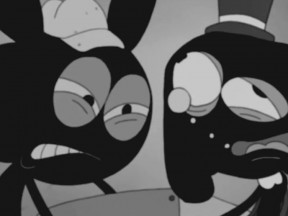
Congrats to David O’Reilly who just won the Short Film Golden Bear at the 59th Berlin International Film Festival for his animated film Please Say Something. It’s a thrill to see animation take the top prize at one of the world’s most prestigious film festivals where distinctions aren’t drawn between live-action and animation and both mediums have to compete in the same category. (Don Hertzfeldt accomplished the same feat at Sundance in 2007.) O’Reilly’s ten-minute computer-animated short, a self-described Internet turbodrama that examines the “troubled relationship between a Cat and Mouse set in the distant Future,” uses a unique narrative structure comprising 23 episodes of exactly 25 seconds each. Below you can watch the first five of twenty-three episodes in the series. (On a sidenote, last December I also chose Please Say Something as my pick for the year’s best online animation.)

The State of DreamWorks Animation

Jeffrey KatzenbergThe NY Times published a lengthy piece last week about how DreamWorks Animation is performing financially. None too shabby is the Times’ verdict. “This company is a flower that is just beginning to blossom,” Katzenberg tells the paper. The studio’s features are obviously popular–their last four have outgrossed Pixar’s efforts–and they’re aggressively expanding with two TV series on Nick, theme parks in Dubai and Singapore, and the Shrek Broadway musical (which has flopped, according to the article). My opinion of the company’s output hasn’t changed, but their success can’t be denied. Katzenberg has clearly found a way to generate short-term profits by tapping into the audience’s desire for celebrities, crude humor, and pop culture-fueled entertainment. At what cost though? In my opinion, Katzenberg has sacrificed long-term cultural relevance (and profits) by ignoring the need for honest storytelling, meaningful artistry, and offering a unique point of view in his films.

(Thanks, Celia Bullwinkel, for the link)

No Original Ideas Required: Welcome to Advertising

Even though Motionographer posted this advertisement for the Bonnaroo Music & Arts Festival, I felt it was important to post it again on Cartoon Brew. Not because it’s visually impressive (it is), but because of the technique it “borrowed” for its production.

The creators of the spot–director Elliot Jokelson and NY-based studio Ghost Robot–credit recent Pratt grad Javan Ivey for coming up with the Stratastencil technique upon which they’ve based their entire piece. When Javan posted his short “My Paper Mind” on his website last year, he also posted technical notes on how he achieved the look. (We mentioned Ivey’s work in last month’s piece about 3D papercraft animation.)

The ethical question here is, If an artist comes up with an original technique and style and a studio decides to use it shortly after the artist puts his work online, should the original artist be offered a job, financial compensation, or creative credit on the project?

Let me make one thing clear: techniques can’t be hidden away; they need to be pushed around, explored, discovered. Computer animation would not exist today if not for the early SIGGRAPH conferences where artists and technicians openly shared their discoveries. There’s a big difference here though in that Ghost Robot and Ivey were not working collaboratively and contributing to each other’s artistic development. Ghost Robot took another artist’s fleshed-out technique and got hired by a client to replicate that look. Examine Ivey’s original piece and the Bonnaroo spot and you’ll see that they not only borrowed the technique, they brazenly took actual animation ideas from Ivey’s piece. In my opinion, if you’re a studio that’s taking money on the basis of another individual’s brand-new technique, it’s shamelessly low not to make an effort to have the originator direct the piece.

In the comments of the Motionographer post, Ivey notes that he was emailed by the director but he didn’t respond to their initial inquiry. Ghost Robot’s single email to Javan does not, in my mind, constitute a sincere effort to communicate with him, and since the director was emailing him, it was clear that they weren’t looking to have Ivey direct. They’d already sold the job based on Ivey’s technique and, more than likely, they wanted to make their own jobs easier by having the originator show them the way.

In my opinion, this is what it boils down to: how creatively bankrupt does a commercial studio have to be to troll the Internet looking for the ideas of college students to rip off? Is there nobody at Ghost Robot who possesses an ounce of creativity so that they don’t have to pitch the ideas of college students to clients? Sadly this situation is considered business as usual in the icky world of advertising where studios regularly repurpose ideas, technique and styles. And just as I feel it’s important to point out the creative people in this business, I also feel it’s important to point out the Jokelsons and Ghost Robots who coast off the creativity of others.

At the end of the day, Javan lost money and work because of this, but he’s gained credibility within the animation community by having the validity of his animation technique proven by an uncreative commercial studio supported by deep-pocketed clients. It should be pointed out that despite being taken advantage of, Ivey has been a class-act about the situation and tells Motionographer:

“This is precisely what I mean every time I say ‘I’d like to see someone try.’ Because I do, I love to see what someone else does with it. They’ve taken the idea and applied manpower and a budget to it, and I’m absolutely floored. It looks great. I mean, I’m kinda bummed I wasn’t invited to the party, but I really enjoy seeing what they’ve done.”

“Welcome to the Third World” by Webster Colcord

If Fritz the Cat had been done as an artsy independent animated film, it might look something like “Welcome to the Third World,” an offbeat video directed by Webster Colcord for The Dandy Warhols. It was produced through the now-defunct Orphanage. Artists who worked on the piece inlcude Jan Van Buyten and Eric Kilkenny, as well as a crew of students from DeAnza College and Ex’pression College of Digital Art.

(Thanks, Karl Cohen)

How Pixar Hires

Randy Nelson, head of the in-house Pixar University, gives a 10-minute talk that offers insight into character traits the studio looks for when it hires employees. One of the primary factors is to hire people who are interested rather than interesting. Also, collaboration does not simply mean cooperation, but it means amplification–people who bring separate depth to the problem and bring breadth that gives them interest in the entire solution.


(via Kottke)

Coraline Opens Today

Coraline

The first animated feature out of Laika, Henry Selick’s Coraline, opens in theaters today. Jerry loved the film, I haven’t seen it yet. The overwhelming critical consensus on Rotten Tomatoes is that it’s a solid film with a nearly 90% positive review rate. Personally, I can’t wait to see it. It’s so rare for any animation studio to start out of the gate with a film that looks and feels this different from everything else out there. Selick and company have created a gutsy film that appears to take risks and doesn’t repeat the tired formulas and conventions that make most animated features such a chore to watch. For that alone, the film deserves the support of the animation community, and you can be sure that I’m going to be planting my butt into a theater seat this weekend.

There are plenty of interviews with director Henry Selick appearing online. One of the smartest series of questions, especially as it relates to the techniques used in the film, can be found in this chat with the A.V. Club. Selick has this to say about the continuing relevance of stop-motion in a CG-dominated world:

“You know, I love stop-motion. I’ve done almost all the styles of animation: I was a 2D animator. I’ve done cutout animation. I did a CG short a few years ago, “Moongirl,” for young kids. Stop-motion is what I keep coming back to, because it has a primal nature. It can never be perfect. There’s always something like–[Points to the Coraline puppet on the table.] Coraline’s sweater, you can notice here that it’s sort of boiling. And that’s because people are touching it and moving it for every frame. There’s an undeniable reality that I don’t think any of the other mediums give you. You know these things are real even if you don’t know exactly how they move, how big they are. It’s something I got when I was 4 or 5, and I saw my first Ray Harryhausen film. I saw some monsters he created. So why still follow that in this day and age? Well, it has certainly been the age of CG, and the hits keep coming. You know, Jeffrey Katzenberg’s company [DreamWorks], they seem to have a formula. Pixar as well. And they make very, very well-made films with maybe the best story department in the world. But I do think there’s a part of everyone that likes to see handmade stuff. That’s what we offer. It’s never going to be the dominant filmmaking style. It’s always going to be the cousin off to the side. You know, the more eccentric relative of yours that some of the kids like.”

Another fun interview peppered with insider details about the production is this one which appeared on Ain’t It Cool News a few days ago. There’s also a profile of Selick in the LA Times in which he points out Laika’s questionable plans to build a new studio campus from the ground up. Those plans have temporarily been put on hold, and that’s fine with Selick, who’d like to see the company spend its money elsewhere:

“I’m in favor of no campus — let’s use our resources to put the movies on the screen. You build a campus after you’ve had five hit movies. And without a doubt, ‘Coraline’ will have an impact on the number of films put into production. If we do a little business, it will be a good first film — because then it will have proven its worth.”

As Selick alludes to in that last sentence, expectations are modest for the film’s opening weekend with forecasts in the $9-12 million range. One of the reasons that could prevent Coraline from becoming a smash hit is also the reason that it’s such a promising film: the fact that the original vision hasn’t been watered down so that it attempts to appeal to each and every member of the audience. Any animated film that takes chances also carries with it the risk of failure, especially with a general public that still assumes every animated feature is designed for four-year-olds. Films like Coraline will eventually broaden the audience’s palette for different approaches to animated storytelling, but they don’t guarantee instant piles of money like your average Kung Fu Panda does. Coraline‘s creator Neil Gaiman had the best retort about whether Coraline is appropriate for every child in America; in an interview with Canada’s National Post he said:

“Someone asked me last week if Coraline would be an appropriate film for their six-year-old son. I don’t know. That’s like asking me if their six-year-old would like mushroom soup. I don’t know the kid and so I have no idea what is appropriate for him.”

This article from The Oregonian offers the most detailed look at the business side of Laika and what Coraline means to the fledgling studio’s prospects. Nike co-founder Phil Knight, who started Laika, is upbeat and tells the paper, “Even if nobody goes to see it, we’re going to make another couple of movies at least.” But the reality is that no follow-up film is currently in production at the studio and, according to the article, their next feature might not premiere until 2014. To be fair, this lag is not uncommon in a start-up studio; there was a three-year lag between Pixar’s first feature, Toy Story, and their follow-up A Bug’s Life. According to the article, the film’s $60-70 million production cost went over-budget by more than 12 percent and the film was completed a year late. “We really got surprised a little bit on the production, on how complicated that was,” says Knight. “We were going along fat, dumb and happy.”

Fans of stop-motion (and intelligent animated filmmaking in general) have a lot to look forward to in 2009 with another major stop-mo film scheduled for November–Wes Anderson’s The Fantastic Mr. Fox–and hopefully the wider releases of two indie films, Tatia Rosenthal’s $9.99 and Adam Elliot’s Mary and Max.

The Orphanage Shuts Down

The Orphanage

Yesterday, Stu Maschwitz, the co-founder of San Francisco-based visual fx house The Orphanage, announced on his blog that they’re “suspending operations indefinitely.” The studio, founded in 1999 by Maschwitz, Jonathan Rothbart and Scott Stewart, employed 160 people at its peak and contributed vfx work recently to Iron Man and The Spirit. If the hundred-plus comments on Maschwitz’s blog are any indication, the studio set high standards for the work it produced and was well-loved by its former employees. Its TV commercial unit is also shutting down, however, the LA-based Orphanage Animation Studio, headed by Genndy Tartakovsky (Samurai Jack, Dexter’s Lab) will continue to remain in operation. More details come from this Variety article:

OAS [Orphanage Animation Studio] and the Jim Henson Co. continue to work on “The Power of the Dark Crystal,” OAS’ first announced feature. Maschwitz told Daily Variety on Thursday that while the Orphanage Inc. had had an ownership stake in OAS, “The management of the Orphanage no longer has any ownership in Orphanage Animation Studios.” Maschwitz said that the company’s owners were unsure whether they would sell or liquidate, but “whatever we do, that money is going first to creditors,” including employees who have not yet been paid in full.

(Thanks, Karl Cohen)