
About Amid Amidi

test

Animation Legend Ken Mundie Pitches “The Match” on Kickstarter

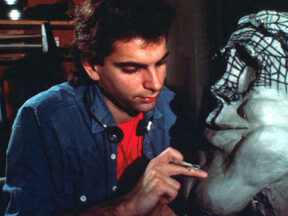
Director and animator Ken Mundie, who is in his late-’80s, is probably the oldest animator to date who has used Kickstarter to fund an animated short. The project he’s pitching is something he’s been working on for years called The Match. Here’s a short test from the project for which he’s aiming to raise $10,000.

Mundie has had a fascinating career in Hollywood, walking the mainstream-indie tightrope for much of it. He is perhaps best known for directing the 1969 Fat Albert pilot, which has absolutely nothing to do with the Filmation crud that followed and ranks as one of the greatest TV specials in animation history.

One of his indie shorts, The Door (1967), was released by Warner Bros. in 1967:

He did lots of film and TV series titles like The Wild Wild West:

While working on lesser projects in Hollywood, he always did personal projects on the side, like this adapation of Homer’s The Odyssey which he was never able to get off the ground:

It’s exciting to see him with the desire to finish an animated film at such an advanced age. According to the campaign page, his son is assisting him, and they’re aiming to complete by September 2014. Unfortunately, the project is poorly set up and is basically a “what not to do” for crowdfunding. Every newbie Kickstarter mistake has been made, though it’s not too late to fix many of these issues, such as:

  • It’s set up by someone who isn’t Ken Mundie and who hasn’t made his relationship to Mundie clear.

  • There have been no updates in the first week.

  • There’s no video of Ken Mundie explaining his project (seeing a ‘grand old man’ of the art form personally explain his project could make a crucial difference to many potential backers.)

  • The descriptions of what the money will accomplish are vague. (They say the money will complete the ‘first act,’ but is that a stand-alone short and of what length?)

Even with these reservations, I felt the project was worthy of being highlighted because Mundie’s animation tests look phenomenal and the man is one of the unheralded renegades of the American animation industry.

Artist Kevin McShane Draws Himself in A Hundred Different Animation Styles

Cartoonist Kevin McShane has spent the last two years drawing himself in the styles of different animators and animated films. He’s collected one hundred of these stylistic deviations on CartoonKevin.com. One might criticize McShane’s decision to emphasize only the most superficial stylistic traits of a character design as a representation of that style, but it still manages to be a worthwhile exercise that makes the viewer aware of both the similarities and differences in character design styles across the spectrum of animation history.

(Thanks, Justin Hilden)

Why Jeffrey Katzenberg is Considered Among the Most Powerful People in American Politics

The new print issue of Mother Jones (May/June 2013) has a fascinating piece about DreamWorks Animation CEO Jeffrey Katzenberg and his central role during the 2012 U. S. Presidential elections. The article will be an eye-opening read for anyone who considers the animation business to be detached from American politics. It makes clear that Katzenberg’s involvement in Obama’s Presidency has opened doors for him at the highest levels of both U. S. and Chinese government, and given him the ability to more quickly expand into the Chinese film market, whose box office returns are expected to overtake the American film market within the next decade.

The six-page Mother Jones piece by Andy Kroll isn’t online so here are some of my takeaways from the piece:


  • Katzenberg, who is worth an estimated $800 million, donated $3.15 million to Democratic super-PACs during the 2012 election cycle. (He potentially donated more to other groups which aren’t required by law to disclose donor lists.)

  • He helped raise nearly $30 million from other Hollywood figures, including a $1 million donation from Steven Spielberg. According to actor Will Smith, “Jeffrey has no problem asking you for, like, way too much money.”

  • Katzenberg is considered unique among President Barack Obama fundraisers for his tenacity and personal involvement. One person in the article said, “He’s like soy sauce in Chinese food: He’s everywhere,” and another commented, “No one in the United States did what Katzenberg did. He is in a class of one.”

  • Katzenberg and his political advisor Andy Spahn visited the White House an average of once a month during Obama’s first term as U. S. President.

  • Obama takes Katzenberg’s phone calls personally.

  • The son of a Wall Street stockbroker, Katzenberg has been involved in politics since childhood. In his teens and early-twenties, Katzenberg worked as an aide to NY mayor John Lindsay, and helped during Lindsay’s 1972 run for President.

  • Katzenberg’s wife, Marilyn, first saw Senator Obama in 2006 on Oprah and encouraged her husband to meet him. Obama reminded Katzenberg of John Lindsay. Katzenberg said in a TV interview that Lindsay was “very much about hope and about engagement and change. All the things we hear today were things he represented in 1965.”

  • Obama has said of the Katzenbergs: “Jeffrey and Marilyn Katzenberg have been tireless and stalwart and have never wavered through good times and bad since my first presidential race, back when a lot of people still couldn’t pronounce my name. I will always be grateful to them.”

  • It’s not clear what Katzenberg’s endgame is from supporting the President, but most presume that easier access to the Chinese film market is a big part of his motivation.

  • When China’s top leader ‪Xi Jinping‬ visited the U. S. in 2011, Katzenberg sat next to him at a State Department luncheon. Later that week in California, Katzenberg announced a $350 million deal to open Oriental DreamWorks, with Jinping’s personal approval.

  • Vice-President Joe Biden asked Jeffrey Katzenberg and Disney CEO Bob Iger what they thought was a fair solution to the profit-sharing disputes between the Chinese government and U. S. film studios. Biden was able to craft a new agreement that gave 25% of the profits to film studios, and also allowed more American 3-D and IMAX movies to be released in China.

  • Katzenberg’s advisor Andy Spahn denies that Katzenberg had discussions with anybody in the Obama administration about his Oriental DreamWorks venture or that he played a role in the deal that Biden made with the Chinese government about film profit-sharing.

  • DreamWorks is among several studios that are under federal investigation for possibly violating US anti-bribery laws in China.

  • Katzenberg is involved in politics beyond Obama. He is set to cohost a fundraiser soon for the 2014 Senate bid of Newark mayor Cory Booker. He also helped raise $150,000 for the Los Angeles mayoral bid of former DreamWorks employee Wendy Greuel.

David OReilly Talks About His Glitchy “Adventure Time” Episode

Rhizome.org published a great interview with David OReilly about his recent Adventure Time episode “A Glitch is a Glitch” and the challenges of making convincing styistic glitch:

“In general, doing stylistic glitch is easy compared to doing good character animation. Mixing the two gets very tricky though. One of the hardest things was corrupting the scene near the end of the entire broadcast so that the earlier clip is superimposed over Finn & Jake to give them an idea (i.e., using glitch as a kind of thought bubble). It was easy to storyboard that idea, but making it work properly took a lot of grind…It was all generated from ‘real’ glitches—but since everything is run through compositing software and sort of controlled you could also say it was all fake. The glitches needed to begin locally—inside objects—then spread out until they became part of the scene itself. The local stuff was done by generating a ton of sprites that had random pixels move outwardly to create the colorful flourishes we associate with video compression. These had a decent amount of control—a blob of glitchy stuff could move around a scene, for example. Once the scenes were fully animated and rendered the global full-frame glitches were done. There was some jpeg corruption added on top of the battle scene at the end.”

“Mulan” Director Tony Bancroft Will Teach You How to Direct Animation

Animation veteran Tony Bancroft (co-director of Mulan) has an interesting sound book in the works. It’s called Directing for Animation: Everything You Didn’t Learn in Art School.

The 246-page book will explore the directing process from start to finish, mixing personal stories and experiences with insights from top mainstream directors including Dean DeBlois, Pete Docter, Eric Goldberg, Tim Miller, John Musker, Jennifer Yuh Nelson, Nick Park and Chris Wedge. The book, which will be published in June by Focal Press, will retail for $34.95, though it’s currently available as a pre-order on Amazon for $22.32.

Annecy Announces 23 Animated Features for 2013 Festival

Annecy, the longest-running and largest animation fesival, has announced the feature film selections for their upcoming festival in June. Nine films were chosen to compete for the Cristal award for feature film, which will be decided by a jury consisting of producer Didier Brunner (Les Armateurs), Cartoon Network exec Brian Miller and director Robert Morgan (The Cat with Hands, The Man in the Lower-Left Hand Corner of the Photograph). An additional fourteen features will screen out of competition.

Marcel Jean, the festival’s artistic director, said of this year’s feature selections:

“Many films have been created in a totally independent way, using traditional means, which illustrates the change in production habits that is opening the way for smaller companies and happening at the same moment as the production of digital 3D features is becoming more accessible. Japanese production has also particularly stood out through the number and quality of science fiction, horror or genre films.”

Feature Films—In Competition

  • Arjun, The Warrior Prince
    Directed by Arnab Chaudhuri (India)

  • Berserk Golden Age Arc II: The Battle for Doldrey
    Directed by Toshiyuki Kubooka (Japan)

  • Jasmine
    Directed by Alain Ughetto (France)

  • Khumba
    Directed by Anthony Silverston (South Africa)

  • Legends of Oz: Dorothy’s Return
    Directed by Daniel St. Pierre and Will Finn (U.S.)

  • My Mommy is in America and She Met Buffalo Bill
    Directed by Marc Boréal and Thibaut Chatel (France)

  • O Apóstolo
    Directed by Fernando Cortizo (Spain)

  • Pinocchio
    Directed by Enzo D’Alo (Italy, Luxembourg, France, Belgium)

  • Rio 2096: A Story of Love and Fury
    Directed by Luiz Bolognesi (Brazil)

Feature Films—Out of Competition

  • After School Midnighters
    Directed by Hitoshi Takekiyo (Japan)

  • Aya de Yopougon
    Directed by Marguerite Abouet and Clément Oubrerie (France)

  • Blood-C: The Last Dark
    Directed by Naoyoshi Shiotani (Japan)

  • Buratino’s Return
    Directed by Ekaterina Mikhailova (Russia)

  • Consuming Spirits
    Directed by Christopher Sullivan (U.S.)

  • El Santos vs la Tetona Mendoza
    Directed by Alejandro Lozano (Mexico)

  • Gusuko-Budori no Denki
    Directed by Gisaburo Sugii (Japan)

  • It’s Such a Beautiful Day
    Directed by Don Hertzfeldt (U.S.)

  • One Piece Film Z
    Directed by Tatsuya Nagamine (Japan)

  • Persistence of Vision
    Directed by Kevin Schreck (U.S.)

  • Sakasama no Patema
    Directed by Yasuhiro Yoshiura (Japan)

  • The Legend of Sarila
    Directed by Nancy Savard (Canada)

  • The Snow Queen
    Directed by Maxim Sveshnikov and Vladlen Barbe (Russia)

  • Tito on Ice
    Directed by Max Andersson and Helena Ahonen (Sweden)

Animation Editor Jay Lawton, RIP

We received an email this afternoon from a friend of photographer and film editor Jay Lawton, who passed away on Tuesday, April 23, after a battle with cancer. He was 51. Lawton’s family provided the following obituary:

As an assistant editor he worked at several Los Angeles animation studios, including DreamWorks Animation, Warner Bros. and Walt Disney Television Animation. Projects included Recess, Lady and the Tramp II: Scamp’s Adventure, The Jungle Book 2, Clifford’s Really Big Movie, Loonatics Unleashed, Johnny Test, and The Replacements.

For over a decade Lawton ran his own fine art studio, JayPG Photography, and his recently completed “Project 50,” a set of fifty portraits of gay men over the age of fifty (a demographic Lawton felt was unjustly marginalized within an already marginalized minority), is scheduled to be exhibited at this summer’s LA PRIDE / Christopher Street West Festival. Lawton’s photo archives documenting over two decades of Gay and Lesbian history in Los Angeles have been acquired by the ONE National Gay & Lesbian Archives housed at USC. Lawton is survived by his partner, Peter Ayala, and a sister, Janet Brunty, of Waycross, Georgia. Donations in his name may be made to the ONE Archives, www.onearchives.org.

Photo credit: JayPG Photography

“I Am Art” by David Stodolny

DreamWorks animator by day, independent filmmaker by night—David Stodolny keeps busy for sure. His pop culture parodies of The Hulk and The Hunger Games have earned him a growing online following. In his latest short, I Am Art, he stretches his range to satirize a more refined target: the fine art world.

The accompanying making-of video explains his thought process and visual approach to the film:

Joe Pitt Shares the Artwork That Inspires Him

Industry artist Joe Pitt has started a new Tumblr called Straights Against Curves to share “a collection of animation related art, primarily character development, thoughts, and anecdotes that greatly inspire me in hopes to inspire others as well.”

Pitt is the lead character designer on the upcoming Disney series Wander Over Yonder and formerly a director on Gravity Falls. (He’s also a recent Cartoon Brew Artist of the Day pick.)

There’s only a handful of posts so far, but already some valuable insights, such as this observation about how Disney feature characters were developed in the late-1930s/early-1940s compared with today:

The great thing about the old Character Model Department at Disney is that with Joe Grant running it, the concentration was less on solving a final model, but approaching design from a place of story…It was in the model department under Joe’s supervision that they would work with story to help develop the character’s personalities. You don’t see this process much any more. Finding the characters’ traits and personalities are now mostly solved in the story room. This is not a bad thing, it’s just a lot more departmentalized now. I would love to see this structure brought back though, blurring the lines between design and story. It would breed a more collaborative atmosphere I feel.

The Rise and Fall of 38 Studios

The NY Times offers an infuriating and detailed article about the recklessly stupid Rhode Island politicians who gave $75 million to baseball player Curt Schilling so he could launch a video game company. Predictably, Schilling’s company, 38 Studios, not only failed to deliver the online role playing game it set out to make, it accrued $150 million in debt in just two years before the company collapsed last spring and left the state’s finances in ruin. With so much discussion about government subsidies and incentives for VFX and film production, there’s a valuable cautionary tale in here somewhere:

And yet, you don’t have to dig very hard into the record to find that there were plenty of serious-minded advisers who tried to warn state officials away from 38 Studios. Among them, apparently, was the corporation’s own financial portfolio manager, Sean Esten.

According to the state’s pending lawsuit, Mr. Esten was alarmed that 38 Studios’ worst-case projection for its business seemed to rely on releasing a successful game every two years — a track record that most gaming companies can only dream of.

“I don’t think I can support a $75 million guarantee to any single company in this industry due to the wide volatility in commercial success of game releases,” Mr. Esten told his bosses in an e-mail. “Perhaps we should develop a toolbox of incentives (including loan guarantees) to attract companies into a cluster and not rely on a single company to build the cluster around.” According to the state’s complaint, Mr. Esten’s bosses decided to bury his analysis.

Another skeptic was Gina Raimondo, a Democrat who was running for state treasurer at the time and now holds the office. Ms. Raimondo spent the previous decade working in venture capital, and after reading about the proposed investment in July 2010, sent an unsolicited and eerily prescient e-mail to Keith Stokes, who was then the corporation’s executive director and the deal’s main architect.

“In general, I would proceed very carefully on this,” Ms. Raimondo wrote. The company “is in the Boston area where there are 200 venture capital firms, and it is in a very hot area of gaming so if it were in fact a compelling investment I would have to think it would be well funded already by venture capitalists; the fact that many have looked at it and passed is a red flag.”

Frenzer Foreman Animation Forum #1: Liz Artinian


Cartoon Brew’s new podcast Frenzer Foreman Animation Forum debuts today with guest Liz Artinian.

Liz is the owner of the Brooklyn-based art gallery Bunnycutlet as well as the organizer of Too Art for TV, the annual art show devoted to showcasing the personal art of East Coast animation artists.

She’s also done plenty of work in animation, serving as the color supervisor on The Venture Brothers and the first few seasons of the Teenage Mutant Ninja Turtles revival, as well as painting backgrounds on Metalocalypse, to name just a few series. See her work at LizArtinian.com.

Executive Pay at DreamWorks Animation Was Up in 2012

Whew, for a second there, we were worried that DreamWorks Animation was struggling, but if their executive pay is any indication, they’re doing just fine. The Hollywood Reporter reports that executive pay at DreamWorks rose significantly in 2012.

Jeffrey Katzenberg’s compensation rose 31% from $4 million to $5.24 million. Katzenberg, who has typically taken a $1 annual salary and has waived option awards in the past, still earns a pittance compared to other major media honchos, like Viacom’s Philippe Dauman who took home $33.45 million last year and Disney’s Bob Iger whose pay package totalled $37.1 million.

The same Reporter article also offered numbers on other DreamWorks execs:

As for other executives at the company, COO Ann Daly’s compensation increased from $3 million to $4.6 million and CMO Anne Globe’s compensation was upped from about $2.3 million to $2.8 million. Losing out was Lewis Coleman, president and CFO, whose compensation package decreased from $3.7 million to under $3.2 million.

“Kairos” is the Most Exciting Hand-Drawn Animation You’ll See Today

What’s that? You say that no one is making exciting 2D animation anymore? You say that you’d like to see some drawn animation that’s so fun and entertaining it’ll bring tears to your eyes? Well, we have just the thing for you. Kairos is a one-of-a-kind action-packed trailer for a new French comic book that looks pretty amazing in its own right.

The promo was produced by Studio La Cachette, a young Paris-based outfit founded by four Gobelins graduates: Nuno Alves Rodgrigues, Oussama Bouacheria, Julien Chheng, and Ulysse Malassagne.

CREDITS
Réalisation & Production: Studio La Cachette

Idée Originale & Direction Artistique: Ulysse Malassagne

Storyboard: Oussama Bouacheria

Dévelopement Visuel: Nuno Alves Rodrigues, Alice Dieudonné, Julien Chheng, Ulysse Malassagne, Rémi Salmon

Animation: Nuno Alves Rodrigues, Oussama Bouacheria, Alice Bissonnet, Julien Chheng, Hanne Galvez, Rachid Guendouze, Sandrine Han Jin Kuang, Ulysse Malassagne, Stéphanie Mercier, Bung Nguyen, Stéphanie Pavoine, Julien Perron

Décors: Alice Dieudonné, Ulysse Malassagne

Compositing: Ulysse Malassagne

Design Sonore et Mixage: Florian Calmer

Musique: X-Ray Dog

DreamWorks Animation’s Chinese Arm Announces Live-Action Movie Franchise

DreamWorks Animation is moving into live-action. At a Beijing news conference last week, Jeffrey Katzenberg announced a co-production agreement between Oriental DreamWorks and the Chinese state-owned China Film Group Corp. The deal will result in a movie franchise based on the bestselling Chinese book series Tibet Code.

Katzenberg said that the film will become “China’s Indiana Jones,” while China Film Group chairman Han Sanping proclaimed that the film’s “characters represent traditional Chinese culture and Chinese morality.”

The Wall Street Journal offers the most in-depth piece I’ve read about the new Tibet Code deal. In the same article, they report that Oriental DreamWorks is working on its first production, Kung Fu Panda 3.