brewmasters
JERRY BECK
bio & contact
view posts by jerry
AMID AMIDI
bio & contact
view posts by amid
VIEW POSTS BY
“amid”
by amid
October 13, 2009 5:29 am


Guilherme Marcondes

If I were in LA next Monday, I’d go to see this multimedia music/animation performance by The Decemberists at UCLA’s Royce Hall. With seemingly every other band using animation for their videos nowadays, the format is in need of some fresh takes like this:

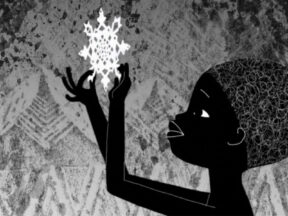
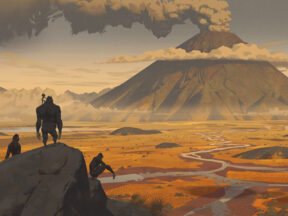
On October 19, The Decemberists will unveil Here Come The Waves: The Hazards of Love Visualized, a special project that takes their ambitious and acclaimed song cycle to new heights for its final American performance at UCLA’s Royce Hall in Los Angeles. This unique live experience will feature The Decemberists in collaboration with four filmmakers—Guilherme Marcondes, Julia Pott, Peter Sluszka and Santa Maria—each of whom have created animation to accompany a section of the music. Flux commissioned the films and worked with Hornet Inc. who produced them. This is a one time only - not to be missed - live experience. The film will later be released on iTunes.

Tickets are available through Ticketmaster. This is the trailer for Here Come The Waves: The Hazards of Love Visualized.

by amid
October 13, 2009 4:57 am


This morning, an example of animation from South Africa. Animator Mike Scott created this video for the band Goldfish. Software and tools used were Photoshop CS4, Anime Studio Pro 6, Final Cut Express 4 HD, Macbook, Macbook Pro, Wacom Intuos 3 and Wacom Cintiq 12 WX .

by amid
October 13, 2009 3:42 am


Breathdeath

There’s a lot of good stuff happening at the Ottawa International Animation Festival this week. Eric Goldberg, Henry Selick, David Silverman and Ronnie del Carmen will be speaking up there, Don Hertzfeldt, Suzan Pitt and Jim Blashfield are having retrospectives, and there’s the to-be-expected impeccable selection of shorts as well as features like Mary and Max , $9.99 and My Dog Tulip. Inbetween this animation frenzy, I hope you’ll take the time to check out the retrospective of filmmaker Stan VanDerBeek. His films screen Friday, October 16, and Saturday, October 17, at the Arts Court Theatre, both nights at 7pm.

It’s a disservice to label VanDerBeek (1927-1984) merely a filmmaker because he was so much more than that. He was a multimedia artist years before the term even existed. He was constantly getting his hands dirty with new technologies and trying to figure out artistic and educational applications for them. This included creating huge murals via fax machine, projecting film onto steam, and designing interactive multi-screen TV shows. No surprise that VanDerBeek was also a computer animation pioneer who starting experimenting with CGI in 1965.

His short films—often surreal, often funny, and always a visual free-for-all—combine animation, collage, cut-out, photography and video, with manic cutting that looks more contemporary than ever. Terry Gilliam has said in interviews that it was VanDerBeek’s cut-out films, and specifically Breathdeath (which will be shown in Ottawa), that inspired his animation style for Monty Python. I’ve personally been influenced by VanDerBeek’s work since I first saw it last year, and I recommend you check him out in Ottawa later this week. The screening will include examples of his analog and CG films, as well as rare film clips of VanDerBeek at work and at play.

See Saw Seams

by amid
October 12, 2009 2:53 am


Peter de Seve

This Thursday, October 15, Galerie Arludik (12-14 rue Saint-Louis en l’Île, 75004 Paris) presents a one-man show of the work of illustrator and character designer Peter de Sève. The opening, from 6:30 to 9:30pm, will feature published and upublished pieces by de Sève, some of which will be available for sale. A preview of the show’s artwork can be found at Peter’s blog here, here, and here.

The event also marks the official launch of Peter’s monograph—A Sketchy Past: The Art of Peter de Sève—for which I wrote the introduction. I haven’t seen the finished product yet, but Peter tells me that it looks gorgeous, and I bet that he’s right.

by amid
October 11, 2009 1:01 pm


KaBoing TV

Joe Murray is in the planning stages of a new site called KaBoing TV, which he envisions as “an all cartoon, all animation channel, not only with my content, but bringing in other content providers as well.” Murray, who has a long history in TV animation with series like Rocko’s Modern Life and Camp Lazlo, wrote on his blog about his desire to “make a home for animation that is cool, creator driven, and fair business wise to the people who make the entertainment, as well as being responsible in the advertising we choose to run.”

To date, most of the major online cartoon channels and animation video sharing sites have been started by corporations looking for ways to exploit creators. There hasn’t been any attempt on the part of sites like Aniboom or Channel Frederator to find sustainable and fair models that encourage online animation production. Murray’s track record as an artist responsible for successful shows on both Nick and CN gives him a unique edge as an entrant into the field of online animation distribution. It’ll be interesting to watch what he does.

(Charles Brubaker via Cartoon Brew’s Facebook page)

by amid
October 9, 2009 2:09 am


William Golden

Recently I revisited The Visual Craft of William Golden, a book published in the early-Sixties about the legendary CBS creative director. There is an essay in the book by CBS exec John Cowden that sheds light on Golden’s artistic integrity, and helps to explain why the advertising work created under his guidance remains to this day the strongest body of advertising ever created for a TV network.

Golden’s world revolved around graphic design, illustration and advertising, but I find his experiences to be relevant to creative people working in any commercial field, and especially animation. For example, Cowden recounted how Golden was offered a promotion from creative director to an upper management position. Golden flatly turned down the offer, Cowden wrote:

Many years ago, when he was offered the title of Vice President in charge of Advertising and Sales Promotion, he said no thanks. His reasons were significant—and characteristic. He said the stripes would be bars…that they would force him to become a “company man”…to take the so-called “broad view” at the expense of principle.

Bill preferred to keep his independence and to preserve his inalienable right to shout—when the occasion demanded—that the emperor wasn’t wearing any clothes. In any case, he said he didn’t want to go to meetings, or be snowed under by administrative duties. I mention this because it reveals how Bill was willing to sacrifice anything—including his own advancement—if he felt it stood in the way of better design and advertising.

The story, incidentally, has an ironic but delightful ending. In scorning the conventional status symbols, Bill won far more. By turning down a vice presidency, he eventually gained a respect and status that outranked any vice president in the company.

Contrast Golden’s unwavering integrity to all of the animation artists in recent years who have moved into high-profile executive and management positions. In every case—with the notable exception of John Lasseter—these artists have unwittingly weakened their creative influence and become part of the problem by entrenching themselves within broken production systems.

Golden, who refused to become a part of upper management, also had his own ways of dealing with clueless business people. Again, from Cowden’s essay:

This integrity and pride in craft were also apparent in his willingness to lay his job on the line if anyone tried to invade his special area of responsibility. I remember a layout for a rate card he once submitted to his superior—the President of the Division. It came back by messenger with a note saying “I don’t like it very much. Let’s discuss.” Bill’s answer was simply to scotchtape a drawing pencil to the corner of a large layout pad and send it back with this message scribbled across the top sheet: “Let’s not. Why don’t you make a better one.” There was no reply. The rate card was produced as originally designed.

Here’s another example of how he dealt with the endless stream of unqualified individuals who tried to encroach on his domain:

Bill flatly refused to submit art for approval to anyone. On another occasion, he commissioned the artist Rene Bouché to do a drawing of a certain television star for a newspaper ad. When the star saw the sketch in the paper he exploded. He demanded that only authorized photographs be used in all future ads. I was one of many who urged Bill not to make an issue of the matter but to go along with the request. Instead, Bill immediately commissioned Bouché to do another drawing of the same performer and again refused to show it to the star. Eventually the new sketch appeared in another ad and became the famous trademark—on the air and off—of America’s all-time favorite comedian: Jack Benny.

Bill Golden demanded the best, and didn’t accept excuses from artists:

Nothing upset [Golden] more than someone who alibied his samples on the ground that his particular client would not let him do good work. Bill maintained—and proved it at CBS—that there are no good or bad clients, there are only good or bad advertising men.

Unlike so many blockheads in positions of power within the contemporary animation industry, Golden could identify skill and talent with his trained eye. This is evidenced by the group of people who worked for him, which is a who’s who of mid-century illustration and design giants: David Stone Martin, Feliks Topolski, Leo Lionni, Joe Kaufman, George Lois, Ludwig Bemelmans, Ben Shahn, Miguel Covarrubias, and Jan Balet, to name but a few. Cowden’s memories of Golden are a reminder that great commercial work, whether it’s a piece of print design or an animated film, doesn’t happen by accident. It happens because of this:

[Golden] accepted the fact that part of the responsibility of being an advertising man and a designer was to have the courage of one’s convictions…a bulldog tenacity…a willingness to do daily battle for the things one believed in…and the recognition that constant vigilance is the price of freedom.

by amid
October 8, 2009 10:52 pm


Don’t miss Anthony F. Schepperd’s video for Ape School’s “Wail to God.” The immediacy and intensity of his drawn animation is a real pleasure to watch. His stretchy character transformations and surrealist touches like the NSFW tit-trees give off a vibe of somebody who’s having fun with the possibilities of animation.

by amid
October 8, 2009 2:07 pm


A graduation film by Sjors Vervoort of The Netherlands, with sound design by Steven Aerts. While I would have liked to see the interplay between the cardboard creatures and their real-world surroundings pushed even further, there’s some imaginative ideas throughout the piece.