We’ve Got the Winners of Cartoon Brew’s Oscar Survey

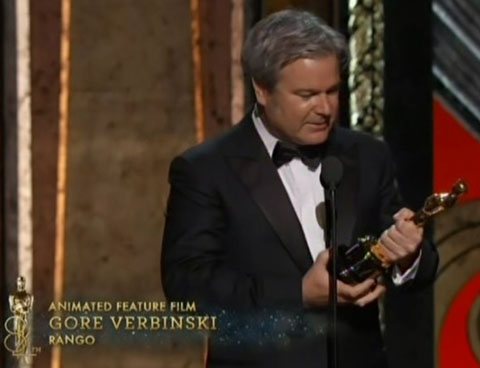
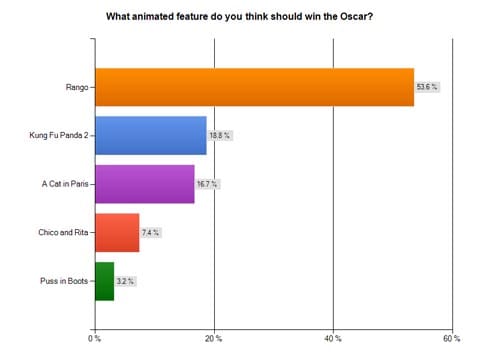
The results are in from Cartoon Brew’s Oscar survey and the winners are Pixar’s La Luna in the Animated Short Category and ILM’s Rango for Animated Feature. The full results are below:

Short Oscar Survey

Feature Oscar Survey

As an unfortunate sidenote, we had to end the survey a few days earlier than we’d anticipated because someone attempted to hack the survey over the weekend. Despite the system’s restrictions for allowing one vote per IP, a user with the IP 75.128.42.114 who lives in a residential neighborhood of Glendale, circumvented these safeguards. This person voted a total of 224 times, 221 of those votes for Kung Fu Panda 2. In a show of generosity, the other three votes were awarded to Puss in Boots. We eliminated all of those results and ended up with 618 legitimate ballots.

Cartoon Brew’s 2012 Oscar Survey


With no clear frontrunners in either the Best Animated Feature or Short categories, it’s time to call upon the wisdom of the animation masses. Tell us what films you think SHOULD win the animation Oscars this year. We’ll keep the survey open for a week until everyone has had a chance to make their voice heard.

GO TO THE SURVEY PAGE >>>
Continue reading

The Oscars: Animated Short Nominees

The nominees for BEST ANIMATED SHORT, announced today by The Academy of Motion Picture Arts and Scienes, are:

A Morning Stroll
A Morning Stroll by Grant Orchard (Studio AKA)
Read Cartoon Brew’s post about A Morning Stroll and our coverage of Grant Orchard throughout the years.


Dimanche / Sunday by Patrick Doyon (NFB)


La Luna by Enrico Casarosa (Pixar)
Read Cartoon Brew’s coverage of La Luna.


The Fantastic Flying Books of Mr. Morris Lessmore by William Joyce and Brandon Oldenburg (Moonbot Studios)
Read Cartoon Brew’s post about The Fantastic Flying Books of Mr. Morris Lessmore.


Wild Life by Amanda Forbis & Wendy Tilby (NFB)
Read Cartoon Brew’s post about Wild Life.

Congratulations to all the nominees. The Academy Awards will be presented on Sunday February 26th at the Kodak Theatre in Hollywood.

The Oscars: Animated Feature Nominees


The Oscar nominations were announced this morning.

Nominated for BEST ANIMATED FEATURE were:

A CAT IN PARIS – Jean-Loup Felicioli, Alain Gagnol
CHICO AND RITA – Tono Errando, Javier Mariscal.
KUNG FU PANDA 2 – Jennifer Yuh Nelson
PUSS IN BOOTS – Chris Miller
RANGO – Gore Verbinski

THE SCORE: It’s “2″ for Dreamworks and “0″ for Disney/Pixar. “2″ for International independent films, and “1″ for a live-action director making his animated feature debut (and that director isn’t Spielberg). And a big “zero” for Mo-Cap.

It’s not a complete loss for TINTIN – the film was nominated for Best Music (Original Score). And RIO got a nod for Best Original Song. A complete list of nominees in all categories is posted here. The Academy Awards will be presented on Sunday February 26th at the Kodak Theatre in Hollywood.

Why Cartoon Brew Opposes PIPA and SOPA

You may have noticed that a lot of websites have gone “dark” today, most notably Wikipedia and Tumblr. There’s grave concern throughout the online community as a result of two bills currently in the US Congress: Protect IP Act (PIPA) and Stop Online Piracy Act (SOPA). This animated video explains why the bills would almost certainly kill off sites like Cartoon Brew:

Our ISP sent us a note this morning explaining how it would affect both him and us:

As an ISP I will become responsible for all of your content. Currently I am not. Due to the massive logs requirements and policing I would either need to increase my fees or discontinue service if the law is passed. If you are interested about its impact on hosting please take a moment and read this at SaveHosting.org.

Keep the Internet alive. Send a message to your Congressperson today by visiting AmericanCensorship.org.

Your Brewmasters,
Jerry Beck and Amid Amidi

WEB PREMIERE: “Wild Life” by Amanda Forbis & Wendy Tilby

One of the true highlights of the festival circuit this past year was Wild Life by Amanda Forbis and Wendy Tilby, who were nominated for an Academy Award in 1999 for their short When the Day Breaks. We are pleased to present–courtesy of our sponsor The National Film Board of Canada–the exclusive on-line debut of this Annie-nominated short.

Told in a robust, rustic style that captures the spirit of the new frontier, Wild Life won the 2011 Canadian Film Institute (CFI) Award for Best Canadian Animation at the recent Ottawa International Animation Festival. Set in 1909, the film is from the POV of a dapper young man sent from England to Alberta to attempt ranching. It soon becomes clear that nothing in his refined upbringing prepared him for the harsh conditions of the New World. Wild Life is also part of the new NFB dvd compilation Animation Express 2.

Credits after the jump.
Continue reading

WEB PREMIERE: “Sunday” by Patrick Doyon

We are pleased to present–courtesy of our sponsor The National Film Board of Canada–the exclusive on-line debut of Patrick Doyon‘s Annie-nominated film, Sunday. It’s clever, quirky and stylishly hand drawn, with a limited color palette that defines its nostalgic point of view. Sunday captures a child’s imagination as only a keenly observant cartoonist can. Sunday is also part of the new NFB dvd compilation Animation Express 2.

Credits after the jump.
Continue reading

My Friend, Ronald Searle by Matt Jones

Ronald Searle

In memory of Ronald Searle’s passing, we present this tribute by Matt Jones. Besides working as a story artist at Pixar, Matt is the curator of the Ronald Searle Tribute blog, a fantastic repository of Searle’s artwork and a required first-stop for anyone interested in his work. In the piece, Matt speaks about the friendship he formed with Ronald Searle in the final years of his life.

My Friend, Ronald Searle
by Matt Jones

Disney’s Nine Old Men, Ken Anderson, Chuck Jones, Tex Avery, Bob Clampett, Joe Grant, Art Babbitt . . . all the American icons of animation had already left us. I moved to the United States too late to meet any of them, but at Pixar I work with many people who had the privilege of knowing and learning from these legendary artists, and I listen to their tales with glee. When I lived in Europe, however, there was still one legendary artist left who had outlived them all, one who had influenced them all, and one who I was fortunate to meet and get to know–the incomparable Ronald Searle.

I first became aware of Searle’s work trawling the second hand bookshops on London’s Charing Cross Road. His work struck me as the forebearer of a British cartooning tradition dominated by Ralph Steadman and Gerald Scarfe at the time. I had discovered them in art school and came to realize that Searle was the original master of the scratchy, spattered ink line, influencing all who followed. I was dissatisfied with the materials that were available online about Searle, and sought to establish a resource of choice scans from my growing collection of his books. I undertook the blog merely as a fan. Little did I know that I would later come to know the artist and even have him contribute material to the site.
Continue reading

Ronald Searle (1920-2011)

Ronald Searle and Walt
Ronald Searle with Walt Disney. Click for bigger version

World-renowned cartoonist and illustrator Ronald Searle passed away peacefully in his sleep on Friday, December 30th, 2011. He was 91. Here is the BBC News obit.

In addition to his print work, Searle worked on numerous animation projects throughout his career including Energetically Yours and Dick Deadeye, and has indirectly been responsible for the look of countless other works of animation, most notably Disney’s 101 Dalmatians.

Here’s a Channel 4 interview with Searle on the occasion of his 90th birthday in 2010:

Below is the 1957 industrial film Energetically Yours that Ronald Searle designed. There are lots of behind-the-scenes photos and artwork related to the film on the Ronald Searle Tribute blog:

This is an animation test of his St. Trinian’s characters animated by Uli Meyer:

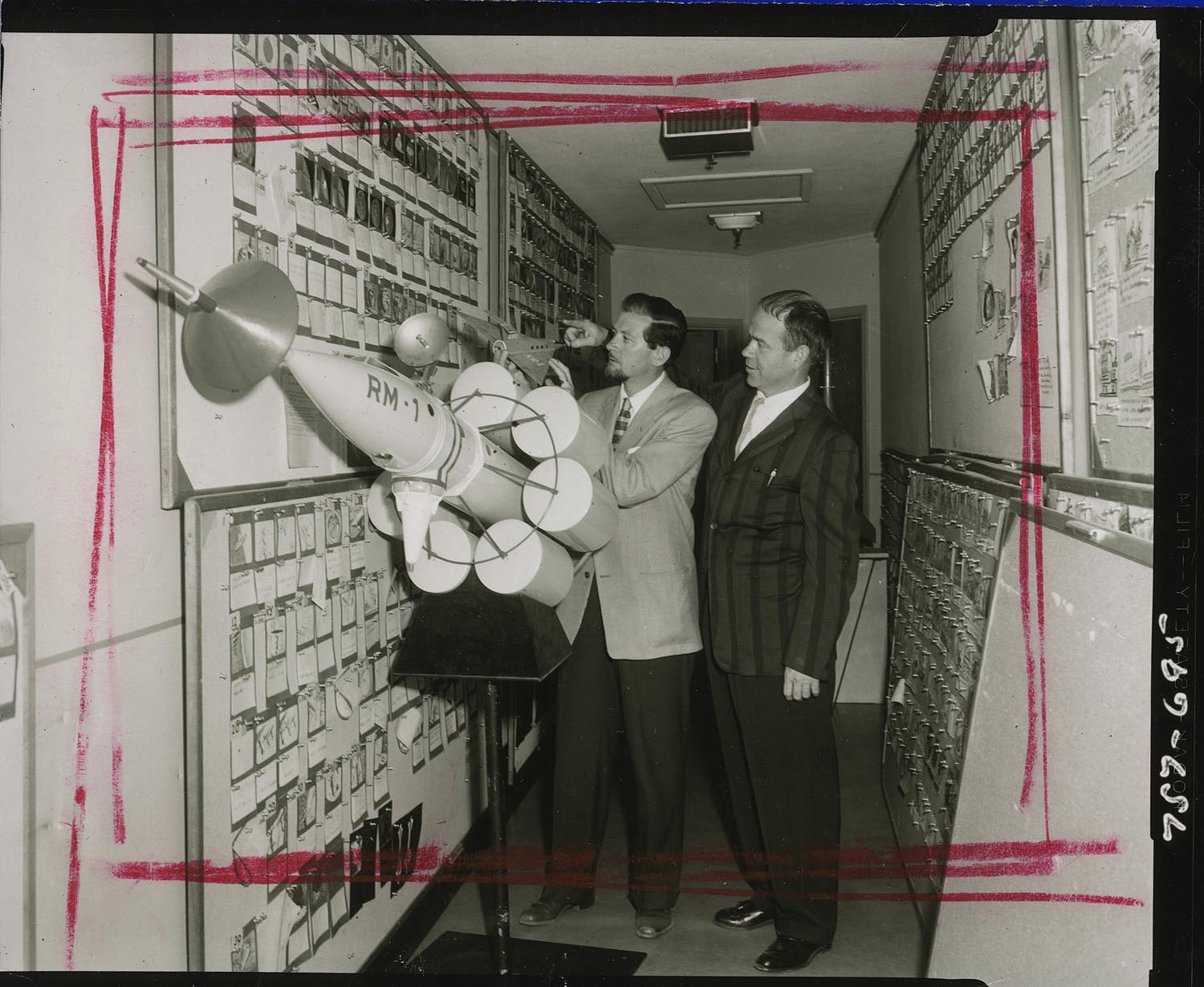
A photo of Ronald Searle visiting with Disney director and animator Ward Kimball in 1957. Click on the image for a larger version:

Ronald Searle and Ward Kimball


Note: Gallery Nucleus will present a Ronald Searle Exhibition January 7th through 29th, 2012. The opening reception is this Saturday at 7 pm — 10 pm.

Searle, an influential figure in the cartooning world since the beginning of the post-war era, his drawings identifiable by their scratchy textures, controlled gestural line quality, and often exaggerated human forms. This exhibit features a collection of Searle’s published and preliminary works including caricatures, illustrated typography, completed cartoons, and signed lithographs.

For more information on this Los Angeles area event, click here.

PREVIEW: 2012 Animated Features

Let’s ring in the new year with a look ahead at the animated features of 2012. The animated feature glass was half-full last year. Whereas in 2010, five of the top ten highest-grossing features in the US were animated, last year only one animated film ranked in the US top 10–Cars 2. Around the world, however, animation fared better in 2011, earning 3 of the top 10 spots at the global box office (and if you count The Smurfs, four of the top ten).

Our 2011 list focuses primarily on films set for release in the United States, but we’ve also rounded it out with a few foreign films. Of course, we’ll be covering dozens of other foreign and indie feature productions throughout the year, but even with the films below, 2012 is already looking like a decent year. If you know of other must-see animated films this year, please let us know in the comments.

LIST OF 2012 FEATURES BY SCHEDULED RELEASE DATE

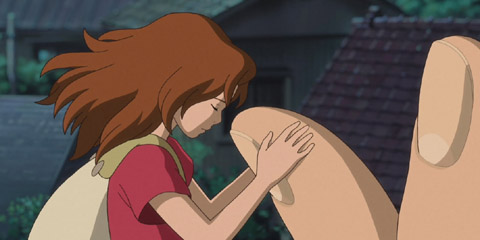
The Secret World of Arriety
The Clock family are four-inch-tall people who live anonymously in another family’s residence, borrowing simple items to make their home. Life changes for the Clocks when their daughter, Arrietty, is discovered.

Release Date: 2/17
Director: Hiromasa Yonebayashi
Production Company: Studio Ghibli
Distributor: Walt Disney
Technique: hand-drawn
Voice Cast: Bridgit Mendler, Amy Poehler and Will Arnett
Film Website

Plenty more films after the jump
Continue reading

Every Tintin Adaptation–And How Spielberg Stacks Up

Tintin

Steven Spielberg’s new Adventures of Tintin is the most technically ambitious film version of Tintin to date, but it is hardly the first time Hergé’s boy reporter has been brought to life. To help place Spielberg’s efforts into context, we turned to someone far more qualified than us, French writer and artist David Calvo. In this exclusive piece for Cartoon Brew, he takes a look at the highs and lows of prior Tintin screen adaptations and helps us understand where Spielberg’s performance capture film fits into the picture. When he’s not being a Tintinologist, Calvo is a creative consultant and writer at Ankama, where he has played a key role in developing the popular MMORPG Wakfu. He has also written numerous novels, comic books and short stories, and draws the on-line comic Song of Beulah.

The History of Tintin Adaptations: From Misonne to Spielberg
by David Calvo

It’s been a long time coming. We can read everywhere how Steven Spielberg and Hergé missed their rendez-vous, at the dawn of the 1980s, a few weeks before the Belgian comic master passed away. We’re now resigned to the American side having the upper hand. Today, we can feel Spielberg and Peter Jackson oozing in every frame of the new Tintin, childhood memories and artist’s pride perspiring behind the dual banter of the Thomson and Thomson. The star filmmaking duo have managed to bring this hot, harshly defended property to a new media. Without delving into the technical aspects of this production, adapting Hergé’s master comic book is already a daunting task. It has been done before–sometimes for the best, mostly, for the worst.


“The Crab with the Golden Claws”

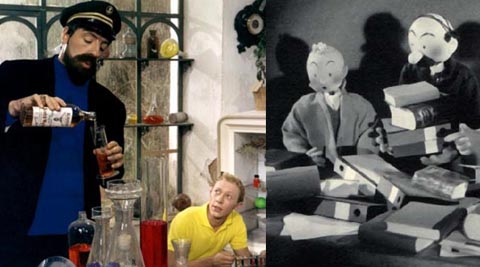
The crowning jewel of all Tintin adaptations is the “The Crab with the Golden Claws” handkerchief puppet extravaganza by Hergé’s friend Claude Misonne and her husband João B. Michiels. Splendid and boring, so abstracted, this stop motion tour de force managed to be a scrupulous, if non-inventive, duplication of the comic, filled with wonderful voice performances, horrendous stock shots, and plagued by severe budget problems. The movie was shown only once in theaters, in December, 1947, in front of two thousand kids. The film was seized next morning by the justice, because the adaptation fees wee never paid. The movie has now achieved cult status as the first Belgian animated feature, a visionary precursor in stop motion history.


“Tintin et le Mystère de la Toison d’or”

Often cited as the worst thing you can do to Hergé, the two live-action movies of the Sixties, “Tintin et le Mystère de la Toison d’or” (“Tintin and the Golden Fleece”, Jean-Jacques Vierne, 1961) et “Tintin et les Oranges bleues” (“Tintin and the Blue Oranges”, Philippe Condroyer, 1964), deserve to have their reputations rehabilitated today. If “la Toison d’Or” fares better than the “Oranges Bleues,” it’s because of the exoticism, the touristic adventures, and the multiple references to the Tintin canon. Despite their cruel lack of any cinematic values and terrible scripts (both are original stories by André Barret), these playful, lush productions were able to pull the major feat of having perfect main characters: a Tintin superbly played twice by Jean Pierre Talbot, and two Haddock incarnations, Georges Wilson and Jean Bouise–both major French actors bringing uncanny depth to this difficult character.


Belvision’s Tintin series

The Sixties were the apotheosis of the Franco-Belgian comic-book school, and Belgian studios Belvision, founded by Le journal de Tintin editor Raymond Leblanc, had a winning streak of flair. First they adapted Tintin as a cartoon TV show. Produced by Ray Goossens, the seven serials were aired between 1959 and 1964 as five-minute shorts, for a total of 50 episodes (only “The Calculus Affair” was bundled as a feature film). Despite having brought the best animators in Europe to Brussels, the old-fashioned animation and funny characterization perks struggled to overcome the horrid scripts and schematic action. To fit the format, the albums were condensed and chopped, often badly, but the overall thrust of non-stop action and cliffhangers, typical of any serialized mystery, worked perfectly on TV. Curiously, Belvision also produced a stunning fifteen-minute industrial film, “Tintin et la SGM” (1970), to promote a Belgian mining company. (Watch a clip from the industrial film.)


The animated feature “Tintin and the Temple of the Sun”

Next, Belvision seized the big screen with two animated features, which are still a Christmas fixture in France. “Le Temple du Soleil” (“Tintin and the Temple of the Sun,” 1969) was a deeply faithful adaptation of the source material (with thoughtful alteration by comic book artist and journal de Tintin editor Greg). A more technically challenging endeavor, enhanced by a splendid soundtrack featuring a song written by Jacques Brel, the musical alter ego of Hergé. Even if the movie only focused on the second part of the two-album story arc (which will be “adapted” next by Peter Jackson), it retains a large part of the adventurous setting and rhythm. The next feature, “Tintin et le lac aux requins” (Tintin and the Lake of Sharks, 1972) is a funny, original Tintin story pitched by Greg, featured an awesome visit to Syldavia and touching characters, though lacking animation brio and depth.


Opening titles for The Adventures of Tintin

In 1992, The Adventures of Tintin, a new animated TV series aired on FR3, co-produced by France Ellipse studios and Canadian outfit Nelvana (directed by Stephen Bernasconi, assisted by Tintinologist Philippe Goddin). It had a huge success in primetime. The sheer scope forces the admiration: all Hergé’s albums are converted, except for the most controversial (“Tintin in the Congo” and “Tintin in the Land of the Soviets,” while “Tintin in America” was heavily tweaked to erase the Native American problems). Eighteen 45-minutes episodes, and three 24-minute ones, achingly faithful and masterfully executed, were produced. Maybe too faithful. Clean and respectful, lacking any hint of craziness, this adaptation got rid of most of Tintin’s quirky element–guns, politics, alcohol–to provide neutered family entertainment devoid of any risk. One of the key aspects of Hergé’s work was his perfect balance between reality and fantasy. The episodes have been syndicated many times since, cut up and chopped in every possible combination to re-create a serialized experience.

At the dawn of the 21st century, Tintin is back for the masses. Belches and zoophilic jokes aside, it is a clever twist thrusting a quaint, old-school narrative into the future. The movie texture is stunning, everything reflects the overwhelming obsession of Spielberg, including reflection itself, and the fabric gives a sense of depth and place achingly relevant in achieving that “ligne claire” dryness to every overexposed shape. The details are inspiring: the tiny, drunkards eyes of Haddock, his cartoon nose, Tintin’s hands (beautiful), the Thomson’s moustaches and greasy skin. The somewhat jumble of the script, blending two majors storyline with details from all over the oeuvre, manages to remain faithful and utterly sacrilegious at the same time. The whole movie lacks the whimsical, restrained tempo of Hergé, that, despite their short-comings, the previous adaptations managed to pull out.

Tintin

This over-emphasis on heavy action set pieces, with barely a pause for the characters to breathe, is deeply troubling. Are world mass audiences hungry for more action, more technical bravado, trampling the subtle inheritance of of the most idiosyncratic saga of our time? The shiny, invisible center of Hergé’s mind is still missing from all these adaptations. The endearing success of Tintin is not one of motion, nor emotion. It is tied to the page, to the frame. Subject and Form linked in a perfect, beautiful harmony that cannot translate, giving birth to a singular expression of a universal time frame, frozen forever in a quaint space between conservatism and rebellion. We will have to wait again–this time for Peter Jackson bravado–to see if the Hollywoodization of Tintin’s quirky sensibility can exist in another space.

Music Video Roundup #1

Some days it seems that there are as many music videos as there are songs. We receive far more video submissions than we can possibly post on the site, and the number of submissions is growing all the time. That’s why we’re introducing the Music Video Round-up, a regular collection of new animated music videos. We won’t be posting every video we receive. The list will be curated to include the videos worth your time, but by creating groupings of videos in a single post, we will be able to present more videos than ever before. Also, we’ll still occasionally highlight individual music videos when the project merits greater coverage or if we have something unique to say about it. As always, keep submitting those videos, and we’ll keep posting them.

“Hurting” by David Lewandowski (US)

CREDITS

Music: Friendly Fires
Director: David Lewandowski
VFX supervisor: Dustin Bowser
Director of Photography: Christian Sprenger
Producer: Christian Heuer
Exec Producer: Laura Tunstall
Starring: Nikol Peeva, George Loomis
3D Modeling and Matchmove: Patrick Goski
2D Graphic Designer/Animator: Jake Portman
Editor: Trevor Durtschi
Additional Design: Brian Gossett
1st AC: Alyssa Soetebier
DIT: Chris Hoyle
Gaffer: Brandon Wilson
Key Grip: Yuki Noguchi
Stylist: Michelle Thompson
Makeup and Hair: Ashley Harris
PA: Mike Gammariello
Colorist: Mark Todd Osborne


“Thick As Thieves” by Kevin Parry (US)

CREDITS
Musician: Kalle Mattson
Director/Animator: Kevin Parry
Designer/Animator: Carla Veldman
Designer/Animator: Andrew Wilson
Live Action: Andrea Nesbitt


“Hired Killer” by James Reitano (US)

CREDITS
Musician: Layng Martine Jr.


“Do I Have Power” by Carlos De Carvalho

CREDITS
Director: Carlos De Carvalho
Production manager: Aude Danset De Carvalho
Animation: Pierric Danjou, Thomas Lecourt, Charles Lemor
Technical direction: Guillaume Baratte
Music: Timber Timbre
Production:Je Regarde


“Tribe” by Cyril Gfeller (UK)

CREDITS
Music: Piers Faccini
Production Company: Nomad Films Uk Limited
Producer: Spencer Wright
Director: Cyril Gfeller
Illustrator: Arnaud Mailly

“How Beavis Saved My Life” by John Andrews

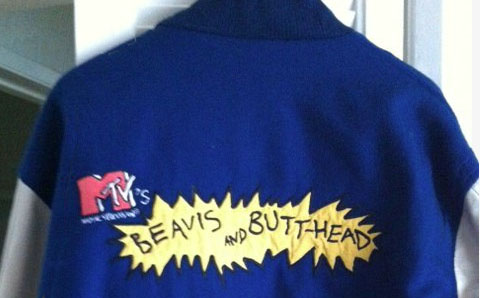
When it started airing on MTV in 1993, Beavis and Butt-Head was more than just a popular animated series, it was a cultural phenomenon. Its subversive humor centered around two terminally moronic teenagers became a hit with MTV’s viewership, not to mention a lightning rod for controversy and a focal point for discussion on the state of American culture: was the show promoting ignorance or a sly commentary on the inanity of contemporary society? The debate continued throughout the 1990s as Mike Judge’s dimwitted creations rocketed to stardom.

Tonight a new episode of Beavis & Butt-Head will air on MTV for the first time in 14 years. It remains to be seen whether the new incarnation can connect with a snarkier Internet-bred generation, but to mark the occasion, we thought it would be fitting to take a look back at the show’s roots. Cartoon Brew invited the show’s original producer, John Andrews, to write a personal essay recalling his experiences as a key member of the original crew and tell us about the behind-the-scene challenges of producing the show in the early nineties.

Andrews was hired in 1992 to produce MTV’s new series Beavis & Butt-Head and stayed for several years. He co-produced the 1996 feature Beavis & Butt-Head Do America with Abby Terkuhle. After a subsequent 13-year run at Klasky Csupo, he is now at Six Point Harness running 6 Point Media.

Beavis and Butt-Head

HOW BEAVIS SAVED MY LIFE
by John Andrews

I’m a fan of Mike Judge. In all my years working with animation creators, I have met very few others who have known their own creations with the thoroughness and vision Mike had from the very beginning. This is the true story of how Beavis & Butt-Head found me and changed my life.

* * * * *

As a budding animation producer with a few slightly tamer animation projects to my credit, mostly for PBS, I had the opportunity to jump into the job of producing the animated shorts and music video commentaries that MTV had ordered as the first season of Beavis & Butt-Head. For me this led to a five year run producing the series, co-producing the feature and launching a number of other MTV animated projects. But it all started with a leap onto a train that had already left the station, a series that already had an air-date, first scripts on the table and a whole lot of animation ahead with only a few months to make sense of it all and get something on air.

I moved to New York from Providence, Rhode Island, in 1981 with my rock band The Mundanes. The early eighties recession got the best of us and we all moved on. I settled in to a life of producing graphics and animation for TV and trade shows. I even won a few Emmys for the goofy Monty Python-esque animations that partner Todd Ruff and I put together for a business series called Adam Smith’s Money World in the mid to late eighties. But by 1990, life was getting dull.

Then I got the opportunity to produce the animation for a series called The Creative Spirit for PBS, underwritten by IBM. That series gave me the opportunity to sit at Chuck Jones’ feet for a day long interview/shoot and to meet many terrific animators including Alison Snowden and David Fine, Maciek Albrecht, the folks at Buzzco, Joey Ahlbum and several other denizens of the New York scene.

One relationship I gained out of working on that series was with John Canemaker. He created wonderful animations for the series and became a real friend in that period. One night I went to a party with John, a party thrown in honor of some animators from the film board of Canada. As we stood amidst the crowd, I said to John “Who should I meet in this room?” Without hesitation he answered “Linda Simensky”. Linda was then a part of the development team at Nickelodeon. Linda and I hit it off immediately, finding that we shared a taste for off-beat bands and went to a couple of shows together over the next few months.

* * * * *

With The Creative Spirit under my belt, I was ready for new work opportunities, but following the rule to never appear needy in the job market, when talking to Linda I always stressed how much I enjoyed my job but how open I was to anything else that might come along. Well one day she called to say MTV had signed Mike Judge to create a series called Beavis & Butt-Head based on some shorts Mike had done for Spike & Mike’s Sick and Twisted Festival. MTV’s VP of on-air promotion Abby Terkuhle had called her looking for producing candidates. It sounded good to me. So Linda helped arrange an interview.

The story continues after the jump.
Continue reading

HOUSEKEEPING: How to Send Stories to Cartoon Brew

Have an animated film or a piece of news to share? Here are some helpful tips for submitting to Cartoon Brew:

* If you are submitting an item, DO NOT SUBMIT using our personal contact forms or Twitter accounts. Submissions via our personal forms will be junked. Use our SUGGEST A STORY form, which is conveniently located in the right sidebar.

* An easier way to get our attention is to submit items via Cartoon Brew’s Facebook page. The benefit is that even if we can’t post it, it becomes part of the public discussion among nearly 5,000 Brew readers. Our FB page is quite active and we both both haunt it regularly.

* If you have a company press release, submit it to our CB BIZ news editor Chris at PR [at] cartoonbrew [dot] com

* Do not send links to film fundraising campaigns.We haven’t linked to a single fundraising campaign in over 18 months. That includes Kickstarter, IndieGogo and all their imitators. We instituted the no-fundraising policy as a fair way of dealing with the barrage of requests. If a film project is newsworthy for a reason other than the fact that it needs money, we may write about it AFTER the fundraising campaign is over, or we’ll post about the project without promoting the fundraising effort.

REMINDER: Outdoor Cartoon Screening in Manhattan Tonight

Cartoon Brew Student Animation Festival

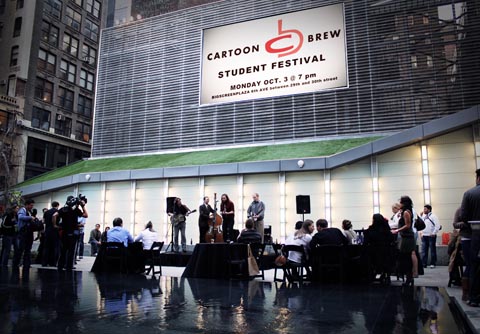
Tonight at 7pm in midtown Manhattan: a FREE outdoor screening of all the films in this year’s Cartoon Brew’s Student Animation Festival. If the weather doesn’t cooperate, there’s an indoor cafe where you can watch animation in comfort. Location is 851 6th Avenue (between 29th and 30th St., behind the Eventi Hotel).

SEE YOU THERE!