Restored Paramount “Noveltoons” on DVD

Okay, here is an unabashed plug for a video project near and dear to my heart. Animation archeologist/film-restoration hero Steve Stanchfield is ready to unveil his latest DVD masterpiece: Noveltoons Original Classics, a special DVD collection featuring twenty restored “Hollywood” cartoons produced by Paramount from 1943-1950.

Paramount’s in-house cartoon unit, Famous Studios (actually based in New York City), was staffed by a core group of artists from the former Fleischer Studio – in fact, just about everyone minus Max and Dave was still involved. The Noveltoons series became the launching pad for many well known (and not-so-well known) characters: Little Audrey, Baby Huey, Herman the Mouse, Raggedy Ann, Blackie Sheep, Spunky Donkey and others. Unlike other collections featuring some of this material, Stanchfield’s set features these cartoons digitally restored and mastered from original 35mm and 16mm film materials. For the specific cartoon titles, see Menu’s below (click thumbnails to enlarge).


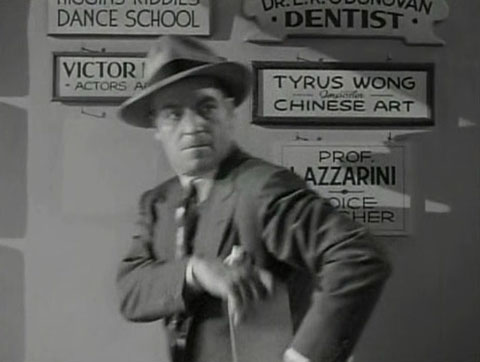
You may have seen some of these cartoons before – but you haven’t seen them look like this. Pristine, colorful, with their original Paramount movie titles. Believe me, this library has been sadly neglected for decades. Previous available copies of these cartoons are usually faded 16mm TV prints with replaced titles, film splices and dirt lines. Your jaw will drop when you see the quality Steve has managed to achieve (check the two frame grabs above, center and right; click thumbnails to enlarge).

Bonus features include commentaries from animators (Bob Jaques, Mike Kazaleh, etc.) and animation historians (including me), Still galleries featuring original model sheets, publicity materials, animation art and comic strips, plus a unique Baby Huey storyboard/final film comparison reel (image below):

Noveltoons Original Classics. Buy it now. I highly recommend it. Help support this kind of film restoration – by a dedicated animation historian, doing the work the major studios do not feel worthy of its time. And if I haven’t convinced you yet, here are a few excerpts from the disc (You Tube does not do this justice):

Music Video Roundup #4

Stop Hurting by Gareth Axford for group Nova’s Basement.


Set Loose Black Sail by Dave Brodsky

Music Video for NY based rock band “The Smashup” uses charcoal animation mixed with live action. Directed by David Brodsky, animation by Tim Kellen


The Shrine / An Argument by Sean Pecknold

Created by Sean Pecknold in Portland Oregon, for the group Fleet Foxes. Animators: Sean Pecknold & Britta Johnson; Character Illustrations: Stacey Rozich.

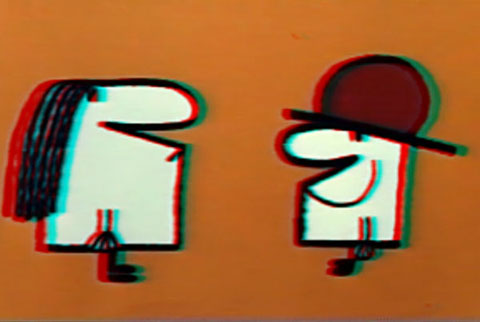
Bert & Harry Piel

Just for fun – and thanks to Chuck Howell, the Archivist at University of Maryland’s Special Collections in Mass Media & Culture – we are happy to show off these cool 1957 Bert and Harry Piel bar coasters. The characters were created in 1953 for a TV ad campaign by UPA New York, under Gene Deitch’s supervision. Jack Sidebotham designed the characters for the Cunningham and Walsh agency – and of, course Bob Elliot and Ray Goulding provided the voices. For more about this (and to see one more of these coasters), read Gene Deitch’s account on his blog.

“Smile Darn Ya, Smile”: To Color Or Not To Color a Classic

Way back in 1992, Ted Turner paid to colorized a batch of black and white Merrie Melodies from 1931-33. This was back before computers were employed to add colors, so the cartoons were shipped to South Korea, traced frame-by-frame (well, almost), new cels were inked and painted and shot under the camera – creating a “color” cartoon from a “worthless” black & white print. For more information on 1967-1992 colorized cartoons, click here. To see how well they did (or just to enjoy the tune Smile Darn Ya, Smile), check out the comparison below:

(via Golden Age Cartoons)

The Making of “Mickey’s Parade”

Stop-mo animator Joel Fletcher just posted the behind the scenes tale of a long forgotten Mickey’s Parade frozen treats commercial from 1991. The advertisement was one of the most complex stop-motion spots of the era, due to the sheer number of animated puppets and props. It is also a nostalgic flashback to a Disney licensed food product that is no more. Read all about it and see the commercial on Joel Fletcher’s blog.

MONDAY: “CARTOON DUMP” w/ Patton Oswalt

As many of you know, every month (on the fourth Monday evening) I co-produce a live comedy/cartoon show, Cartoon Dump, at the Steve Allen Theater in Hollywood. If you are in the area next Monday (1/23), this will be a great one to drop in on. In addition to our regulars, Frank Conniff (MST3K) and Erica Doering, our special comedy guest is once again Patton Oswalt. I’ll be there, showing an extra helping of really horrible cartoons. Showtime is 8pm. Ticket info is posted here. Check out the new FaceBook page for more information and updates.

French TV coverage of Tex Avery’s passing

Unlike the United States, the French considered Tex Avery a genius in his time. When he passed away (8/26/80), the French mourned – and here’s a small example: a TV news broadcast featuring actress/screenwriter and critic France Roche discussing the passing of Tex Avery from August 29th, 1980. I don’t recall such attention being paid on U.S. TV at the time.

(Thanks, Valentin Moretto)

Donald Duck @ Threadless

Threadless has teamed with Disney to create a contest to design a Donald Duck T-shirt. Normally I wouldn’t plug such a commercial venture, but I have to admit some of the entries are incredibly cool. One day left to score the designs – the winner will have his design printed on a limited edition shirt. A few of my favorites are posted above (Top: Zinkete; Center: TVSKyle; Botton: Rodgepodge). Check out the complete list of design submissions here.

(Thanks, Trevour Meyer)

Flea & Fly in “City Troubles” by Fernando Miller

Longtime readers of this blog know I have a “thing” for retro-style cartoons – i.e. new animated shorts that faithfully mimic a past era of animation. Today I’m proud to present the Internet premiere of one of the best I’ve ever seen: Fernando Miller’s Flea and Fly in City Troubles.

The film follows the antics of two homeless urchins in Rio, recreating the look and feel of late 1920s cartoons by mashing the styles of Otto Messmer with Hugh Harman and Rudolph Ising, with a pinch of Tex Avery and a nod to Tezuka (Broken Down Film, in particular). However Miller’s film is not simply a clever homage to old cartoons. It addresses real life problems of poverty and street children in modern day Brazil. Flea and Fly’s antics echo innocent behavior of 80 years ago, updated to reflect today’s realities: They sniff glue instead of drink booze; they also smoke, steal, bathe in public and urinate in the street.

I asked Miller, who works as a freelance animator in Rio, to explain the origin of his film:

“I had the idea for the film about 12 years ago. I was on a bus in Rio, my hometown, and there was this bunch of street kids on it, laughing out loud, slaping each other, screaming out of the window calling people names, and all this sort of things kids like to do to have fun. But the other people on the bus seemed terrified, as if those 10, 11 years old boys were about to shoot them or something. Everybody was so scared with the violence in the city, and the problem of abandoned kids living in the streets of Rio, that no one noticed, above all at that moment, that those were just kids acting as normal kids. On the other hand, those same people would smile at those exact same things while watching old fashioned cartoons – like Katzenjammer Kids – thinking about how inocent kids were at that time! So I wanted to show that things were not that different from the past, and try to create the same sympathy for nowadays kids, despite of the terrible situation they live in.

“That big church in the beginning and the end of the film is Candelaria Church, were in 1993 six street children got killed by police officers. It was a famous and terrible massacre every Brazilian knows well.

“All the places in the film do exist. Here’s a curious fact for animators: those two building behind the man selling food are where Animamundi Festival takes place. It’s across the street to Candelaria Church.”

With the current critical and artistic success of the live action “silent” film The Artist, perhaps Miller’s cartoon is coming out at just the right time. It would certainly make an appropriate short to accompany that feature. It sheds light on an important social issue with unusual finesse. Here, fresh from the festival circuit, is Flea and Fly in City Troubles:

“The Adventures of Tintin” Wins Golden Globe

Paramount Pictures/Nickelodeon Movies’ The Adventures of Tintin won the Best Animated Feature prize at tonight’s Golden Globe ceremony in Beverly Hills. Director Steven Spielberg accepted the award (video below) and seemed genuinely surprised.

How about you? Did you expect Rango, Puss In Boots, Arthur Christmas, or perhaps Cars 2 to win this award? Do you think a Golden Globe award will help Tintin’s chances with Oscar or Annie voters?