|
|
|
|
TAG FOR “Classic”Cartoon Brew's home for up-to-the-minute, unedited announcements and press releases direct from industry sources.
April 27, 2012 5:37 pm
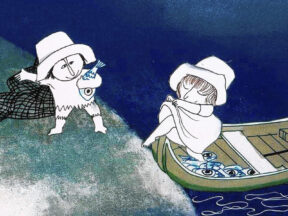
Kaj Pindal, who turns eighty-five years old this year, ranks up there as one of my all-time favorite animators. Pindal typically works with a very basic library of shapes, but his animation is whimsical, funny, and filled with graphic quirks and tics. It all adds up to a distinctive and appealing style that looks even fresher today amidst the proliferation of mechanical Flash and After Effects animation. The City: Osaka is not necessarily a Pindal classic—for that, see I Know An Old Lady Who Swallowed A Fly, King Size, or Peep and the Big Wide World—but I was delighted to discover such a pristine copy posted onto the NFB website. A commissioned film for Expo ‘70 held in Osaka, Japan, it was intended to give Japanese people a glimpse into Canadian life, which apparently consists mostly of deforestation and hockey. The spare black-and-white design of the film, as well as the two minutes of blank screen at the beginning (albeit with excellent jazz music), are due to the film’s original mode of projection. “It played around the clock for the duration of the World’s Fair on a screen made of sixty thousand individual light bulbs,” Pindal said. Kaj talks about his experiences associated with the film on the Kaj Pindal blog. Here’s a terrific documentary about Kaj Pindal called Laugh Lines from 1979: April 24, 2012 10:21 am
Jake Friedman emailed yesterday to tell me about BabbittBlog.com, a site dedicated to all things Art Babbitt. Jake has been researching a biography of the legendary animator for the last few years, and if the blog is any indication, there’s still a lot left to learn about Babbitt.
There’s no shortage of animation tips posted online nowadays, but this mass of how-to advice isn’t particularly well organized. Thankfully, Jonah Sidhom has created the Animation Article Database, an invaluable list of links to animation tips from industry pros, organized alphabetically. Canada’s only animator with three first names, Brandon James Scott, has an informative series of blog posts about creating Justin Time, a preschool animated series that is now in production on its second season. He takes the reader through the entire process from pitch to development to bible, and finally, production. April 20, 2012 2:32 am
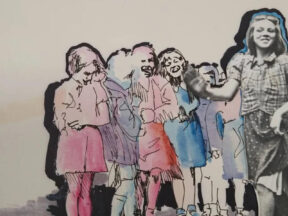
If not for the cutting and pacing of the film, it would be easy to imagine Walerian Borowczyk’s Les Astronautes had been made today—and not in 1959. The tinted collage cut-out style ages more gracefully than many other styles, and especially so when placed in the hands of a graphic master like Borowczyk. Borowczyk was born in Poland, but made this film after emigrating to France. Noted French filmmaker Chris Marker (La Jetée) is credited as a collaborator on the film, but he wasn’t involved in its production. Marker added his name as a favor to Borowczyk, who did not have a French work permit at the time. Your mileage may vary in regard to the film’s message. Les Astronautes tells the story of an inventor who builds a homemade spacecraft, and uses it to have various adventures, including peeping at women, visiting ‘human’ planets, and becoming involved in intergalatic warfare. There’s a bit of a twist ending, too. April 19, 2012 1:00 am
Ya’ know, I was just thinking that I haven’t done a post about Little Audrey in a long time. So to remedy that, here’s a fun children’s 78rpm Golden Record from 1951, featuring Mae Questel (Betty Boop, Olive Oyl and Little Audrey) with Mitch Miller and his Orchestra. The song is a lively variant of the Little Audrey theme song written by Buddy Kaye and Winston Sharples (first and best heard, swing-style, in Butterscotch and Soda (1948)). Little Audrey is, of course, a knock-off of Little Lulu – a minor player promoted to her own series after Paramount lost the rights to Lulu in 1947. Paramount then vigorously exploited the character with records, comic books, dolls and toys in the early 50s, long before it sold the rights to Harvey Comics. So let’s take a moment to pause and reflect on Little Audrey, pretty much forgotten today, part of another era of animated cartoons.
(Thanks, Chris Sobieniak) April 8, 2012 2:49 am
The documentary above offers a fascinating look at the Key Frame animation system designed by Marceli Wein and Nestor Burtnyk at the National Research Council of Canada. Besides the impressively futuristic vibe of their hardware setup, it’s also amazing to see the sophistication of their software. It may come as a surprise to many that shape tweens had been figured out as early as 1971. The Key Frame software was used in Peter Foldes’ pioneering vector-animated shorts Metadata (1971) and Hunger (1974). Here’s my question for the CG historians: what happened to vector animation between 1974 and the early-90s? After the films by Foldes, were there any other vector animation films in the Seventies and Eighties because I’m having trouble finding many examples. It seems to me that not many artists explored the possibilities of vector animation until Web animation in the mid-Nineties brought it back into vogue. (Thanks, Celia Bullwinkel) April 7, 2012 2:47 pm
CONTEST IS CLOSED! WINNERS WILL BE ANNOUNCED ON SUNDAY. I’ve got two copies to give away of TCM’s 3-dvd UPA Jolly Frolics set. It’s loaded with visual delights guaranteed to inspire any fan of the “cartoon modern” aesthetic. Simpy leave a comment—say anything you wish—and make sure to include a real email address so I can contact you if you win. (Your email remains hidden and will not be used for any purpose other than to contact the winners.) RULES: Contest will be closed at Saturday midnight (Eastern time). If you’ve won anything recently from us, you can’t win again. One entry per person. Multiple entries will automatically disqualify you. April 6, 2012 4:23 am
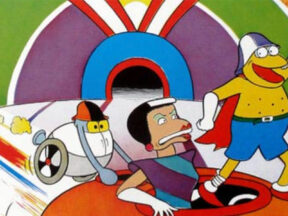
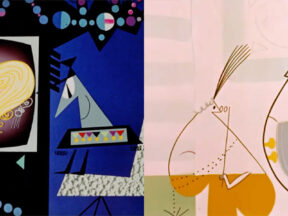
I watched all the UPA theatrical shorts back when I was writing Cartoon Modern The director whose reputation will benefit most from this collection is Robert ‘Bobe’ Cannon. While his stories tend to be formulaic and thematically repetitive, often times it seemed like he was the only director at UPA who knew how to put together a coherent film. (A good deal of that credit also belongs to his close collaborator T. Hee, who wrote most of Cannon’s films.) More than the stories though, it’s the way that Cannon animated characters, which looks even more refreshing today in light of all the generic Flash and After Effects animation. In Cannon’s work, the way a character moves is never separate from its design. Discovering a visually inventive way to animate a character from point A to point B is Cannon’s greatest strength. The two most famous films in the Cannon canon are Gerald McBoing Boing and Madeline, but his later efforts, especially Fudget’s Budget, Christopher Crumpet’s Playmate and The Jaywalker—all looking better than ever on this set—display remarkable confidence as a director. Below is some random visual eye candy from the “Jolly Frolics” shorts. We’ll be giving away a couple copies of the set this weekend so check back.
April 2, 2012 12:05 am
Dark Hall Mansion, who produces those cool Peanuts Specials limited edition posters by Tom Whelan, are at it again. This time they’ve commissioned Belgium artist Laurent Durieux to create a set of retro posters for 60s anime robot super star Gigantor. Only 75 copies of Gigantor: The Lab and Gigantor: Tokyo Night (below) were produced. If interested, you better check the site before they sell out. Tetsujin 28-go never looked so good!
March 26, 2012 10:00 am
Here’s a little treat I’d never seen before – and I don’t see it listed in any of the filmographies: a rare ten minute Felix the Cat sponsored short for General Electric. It was preserved by the Schenectady Museum who had it in their General Electric Archive. The film itself is quite good – the story concerns Felix’s midnight drive, to his wedding, in a car without proper GE headlights – and the print is in excellent shape. Animated by Otto Messmer (from 1925, or maybe 1927), The Cat and The Kit: (Thanks, Scott T. Rivers) March 22, 2012 3:50 am
To fully appreciate Opus III by German filmmaker Walter Ruttman, it’s worth it to first look at a typical cartoon from 1924, such as this one: Now, here is Ruttman’s short from the same year: This is not to claim that Ruttmann’s short is better. Rather, it’s an illustration of how abstract animation doesn’t become dated as quickly as representational animation because its creation is not predicated upon the stylistic trappings of its era. Eighty-eight years separate Ruttmann’s work from animation today, but the graphic forms used in his film are the same building blocks—raw and unadorned—used by artists today. A largely neglected figure in animation history, Ruttmann’s work influenced many who followed him, including Oskar Fischinger, Hans Richter and Norman McLaren. He holds the distinction of being the first filmmaker to publicly screen an abstract animated short—it was on April 27, 1921 when he presented Lichtspiel Opus 1 in Berlin’s Marmorhaus. Fischinger was in attendance at the theater that evening. Shortly after he made the short Opus III, he animated on Lotte Reiniger’s The Adventures of Prince Achmed, which was the first European animated feature. Reiniger said of Ruttman: “[He] invented and created wonderful movements for the magic events, fire, volcanoes, [and] battles of good and evil spirits.” Ruttman also made significant live action films, such as Berlin: Symphony of a Great City (1927). Ruttmann’s personal history is fascinating and far too complex to be covered in such brief space. A trained architect and painter, he worked as a graphic designer prior to becoming involved with film. He fought in WWI, suffered a nervous breakdown and spent time recovering in a sanatorium. Historian Giannalberto Bendazzi labeled him a “contradictory intellectual” because he was “a follower of the left [who] later unconditionally supported Hitler.” Indeed, Ruttmann was involved in the production of Leni Riefenstahl’s propaganda film Triumph of the Will in 1935. He died in July, 1941, from wounds suffered on the front lines as a war photographer. UPDATE: Stephen has followed this post with an excellent write-up about Opus III that places Ruttmann’s work in the context of art history and painting. (Hat tip, @FezFilms) March 20, 2012 7:00 pm
They’re out… and as Tony the Tiger would say: “They’re Grrrr-reat!” I will go out on limb right now and declare TCM’s UPA: The Jolly Frolics Collection the DVD of the year. This thing is loaded (full disclosure: I was involved in the process). It is beautifully and cleverly packaged and contains a 16-page booklet with brief essay by UPA historian Adam Abraham, capsule biographies of key UPA personnel, a UPA chronology chart with key events and a release chart timelime, plot synopsis and more… The three discs themselves are packed with incredible restorations of 38 UPA cartoons. These restorations are so good, they will force many to reevaluate their opinions of these films. Cartoons I’d long dismissed as inferior – The Oompahs, The Miner’s Daughter, Baby Boogie and others – are suddenly vibrant, colorful and clear; what the filmmakers intended, and a lot better than I’d thought. Compare the frame grab of from my personal bootleg video copy of The Man On The Flying Trapeze (thumbnail below left to enlarge) with the restoration (below, center) to give you a small idea of the difference. Even if you have no interest in UPA, I think you’ll come to understand their importance through this set. Sony went to great lengths to restore the cartoons on this collection – restoring original front and end titles (like the Fox & Crow title (below) from their first theatrical, Robin Hoodlum). Alas not every title could be restored (though most are), but what is here is from the original negs – and they are a pleasure to see anew. I’m not even mentioning the bonus materials (Concept art, model sheets, storyboards, color styling sketches, background, publicity stills, movie poster galleries – and more, including audio commentaries and a Leonard Maltin introduction). If you’ve ordered it, it’s on the way. If you haven’t – what are you waiting for?
Adam Abraham’s important new history of UPA – When Magoo Flew – has also just been published by Wesleyan University Press. I’m not going to review it right now – but I will be giving a copy or two away in a pop-quiz contest sometime on Thursday. Adam will be in L.A. a week from Friday to sign copies of the book at LACMA, at the UPA tribute I’m hosting on March 30th. (Tickets available now – hint, hint!). Adam has just launched a companion website for his book, When Magoo Flew.com, intended to utilize the archive of material he assembled while writing the book. More material will be added soon… but bookmark his new website now! March 10, 2012 8:50 am
Here’s some fantastic weekend viewing: episodes of Bob Godfrey’s seminal British TV series Do-It-Yourself Film Animation Show. The episode above, broken into multiple parts, features Richard Williams. The rest of the videos are on Charactermation’s YouTube Channel. A few months ago, we also posted Terry Gilliams’ appearance on the show. (Thanks, Joel Mayer)
|