|
|
|
|
TAG FOR “Classic”Cartoon Brew's home for up-to-the-minute, unedited announcements and press releases direct from industry sources.
December 17, 2008 12:21 am
An irreverent take on the holidays by Monty Python animator Terry Gilliam. This piece originally aired in 1968 on the TV series Do Not Adjust Your Set. 6 Comments » posted in Classic, Terry Gilliam December 16, 2008 3:00 am
Back in September I wrote several posts about a stash of Warner Club News magazines I came into featuring rare photos and information about the Warner Bros. Cartoon Department. Here’s one more. The photo above comes from the February 1958 issue and it shows the Commercial and Industrial Film animation crew in conference – left to right: Chuck Jones, Leo Salkin, Lou Scheimer, Maurice Noble, Owen Crump (producer), Carol Chaka (secretary) and Richard Hobson (executive). Dave DePatie (not pictured, was a production coordinator and editor in this division at the time). In 1956, Warner Bros. created the WBTV Commercial and Industrial Films Division which produced dozens of films – live action, animated and sometimes combining both. When animation was needed it was coordinated through the Cartoon Department, and utilized the skills of their veteran animators and directors. They created TV spots, many made exclusively for sponsors of Warner Bros, TV shows – for Eastman Kodak, Gillette, General Electric, Nabisco, Ford, Kelloggs, Crest, Camay, etc. Perhaps their biggest project was the Bell Systen Science series. My guess is that in the photo above was taken during the production of Gateways To the Mind (1958) which contained this scene below (which I found on You Tube, forgive the pitch to purchase the DVD, I’m not selling, but you can purchase it here): 3 Comments » posted in Classic December 16, 2008 12:51 am
A 1966 holiday interstitial that aired on CBS. 22 Comments » posted in Classic December 15, 2008 3:00 am
Here’s something you may not have seen. During the 1930s, MGM published a bi-monthly in-house magazine, MGM Shorts Story devoted to its numerous short subjects. Distributed primarily to its exhibitors and Loews Theatre managers, the oversized slick magazine devoted many of its pages to its latest cartoons and occasionally featured a cover story related to its animation studio. The November-December 1939 issue took a closer look at Harman Ising with this article below. This is basically a studio publicity piece, but its interesting to note Harman and Ising defending their use of animal characters (over humans) and the spin that having no “star characters” frees them to experiment with different ideas. (Click thumbnails below to read): 5 Comments » posted in Animators, Classic December 15, 2008 12:16 am
An excerpt from The Story of Christmas, a 1963 NBC special with artwork created by Sleeping Beauty art director Eyvind Earle. 2 Comments » posted in Classic December 14, 2008 12:57 am
The “twelve days of Christmas” technically begin after Christmas Day, but we’re starting them early. Every day between now and Christmas, we’re offering one holiday-themed piece of animation. To get things started, here’s a classic from the NFB: the Oscar-nominated 1963 short Christmas Cracker with segments directed by Norman McLaren, Jeff Hale, Gerald Potterton and Grant Munro. 4 Comments » posted in Cartoon Modern, Classic December 4, 2008 1:07 am
Contrary to what most animation histories would lead one to believe, the creative workforce during the Golden Age of animation in the 1930s and 1940s was not comprised entirely of white males. There were also women who worked in creative capacities, as well as artists of different ethnicities, particularly Mexican, Chinese and Japanese. Sadly their contributions have been obscured throughout the years and rarely acknowledged in any meaningful way by our art form’s historians. The history of Japanese artists is particularly interesting because most of them were interned during WWII. In one of the stupider moments in American history, the US government decided to forcibly remove tens of thousands of Japanese-American citizens from their homes and confine them in internment camps, an action that the government later admittted was based on “race prejudice, war hysteria, and a failure of political leadership.” Recently while browsing through this UC Library digital image archive, I stumbled across some rare photos that help to flesh out the story of Japanese-American animation artists. To start off, here’s a shot of Scooby-Doo designer Iwao Takamoto (also posted below) from 1945. Iwao was too young to work in animation prior to the war. He was recruited to work at Disney in 1945 at the age of 20. In an interview I did with him in 1999, he spoke about his experience being interned and how he entered the animation industry afterwards. By the early-1950s, he had became one of the most trusted clean-up artists at Disney and worked closely with both Milt Kahl and Marc Davis before beginning his illustrious H-B career in 1961.
Next is a photo of Bennie Nobori, who had worked at Disney prior to being interned. I’ve never heard of him but examples of his work from an internment camp newspaper—here and here—reflect a strong Freddie Moore influence.
Other Disney artists who were interned during WWII were veteran animator and writer Bob Kuwahara and Chris Ishii. According to Michael Barrier, Kuwahara was “the first Disney artist whose job was just to draw story sketches.” Kuwahara left Disney in 1937 to go to MGM, which is where he was working when he was taken away by the government. After the war, he moved to NY where, among other things, he created the theatrical cartoon character Hashimoto-san for Terrytoons. Read a short bio written by Kuwahara himself here. I’ve previously written about about Ishii’s WWII experience on the Brew. In that earlier blogpost, there’s a photo of Ishii working on the camp’s newspaper comic. Below is another photo from December 12, 1942, the day he was inducted into the US military. It has the following caption: “Chris Ishii two years ago worked as an artist for Walt Disney, he tried to join the army but was turned down for slightly flat feet, then his draft board classed him 1-A but before his hopes were realized he was evacuated from California and his new draft number said 4-C, undesirable alien. In the center Chris created, for center newspapers, a cartoon character “Little Neebo”, humorously depicting the trials and tribulations of a little Nisei boy in evacuation centers. Here Chris realizes his deepest ambition as he is finger printed by an army sergeant after having been sworn into the Army of the United States, to be sent to Camp Savage, Minnesota.”
After the war, Ishii became a top East Coast designer and eventually served as the creative director of UPA-NY in the late-1950s as well as co-owner of Focus Productions in the 1960s and 1970s. In the UC image archive, I found a photo of a wooden pin created by Chris Ishii featuring his character Lil’ Neebo.
Ishii, who had become an assistant to Ward Kimball in November 1940, went out on stike at Disney in 1941 along with the other Japanese-American artists who worked at the studio including Tom Okamoto, Masao Kawaguchi and James Tanaka. This is a 1943 photo of James Tanaka working at Famous Studios in New York. The caption accompanying his photo says, “James worked for five years in the studios of Walt Disney and secured his present position [at Famous] while at the Rohwer Relocation Center in Arkansas.”
The archive also has a photo of Tom Inada working at Famous. The photo caption says: “He had just finished a commercial art course at the Sacramento Junior College in California when all persons of Japanese ancestry were evacuated from the west coast. He lived for a year at the Tule Lake Relocation Center.”
And here’s a pic of Tom Inada and James Tanaka working together at Famous. Below is a 1945 image of Michiko Kataoka (second from left), who had been interned at Manzanar and was attending UCLA at the time of this photo. Judging from her age in the photo and the uniqueness of the name, I’d harbor a guess that she is the artist who went by the name of Michi Kataoka and who worked at UPA as a background painter for a brief period in the early-1950s.
Another female Japanese artist of note, Gyo Fujikawa, who had worked at Disney in the early-1940s, managed to escape internment. This excerpt from her LA Times obituary explains why:
If anybody can add more details about these artists or other Golden Age Japanese artists, please share. It’d be nice to have a comprehensive list available somewhere online. 28 Comments » posted in Animators, Classic December 3, 2008 8:00 pm
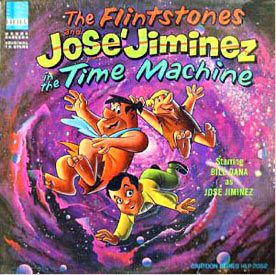
If you are reading this blog and didn’t purchase Volume 1 of Woody Woodpecker and Friends last year… well shame on you! You still can still order it here. If cost was an issue, or if Walter Lantz cartunes aren’t your thing, I urge you to seek out this special “spotlight collection”, Woody Woodpecker Favorites (box art above center) which goes on sale March 10th, 2009. The disc contains 15 Woody Woodpecker Cartoons (Knock Knock, Pantry Panic, The Barber of Seville, Ski for Two, Chew-Chew Baby, The Dippy Diplomat, The Loose Nut, Who’s Cookin’ Who?, Bathing Buddies, Fair Weather Fiends, Musical Moments from Chopin, Banquet Busters, Wet Blanket Policy, Sleep Happy, The Redwood Sap), plus bonus cartoons: Fish Fry with Andy Panda, Pied Piper of Basin Street a Swing Symphony, and these Tex Avery classics: The Legend of Rockabye Point (with Chilly Willy), Sh-h-h-h-h-h and Crazy Mixed Up Pup. If that isn’t enough, the disc includes two bonus episodes of The Woody Woodpecker Show: Episode #53 (Featuring Kiddie League, Charlie’s Mother-in-Law, The Bird Who Came to Dinner, Fish & Chips) and Episode #56 (Featuring Billion Dollar Boner, Coming Out Party, Romp in a Swamp, Pest of Show). Sounds like a bargain at $19.98 (it’s going for $13.99 on Amazon.com). Now you have no excuse not to try some classic cartoon goodness from Universal Pictures. |
EVENTS
RECENT BREW TV EPISODESBy Sitji Chou. A man tries to understand the futility of creating human connections when they’ve been impeded by the microcosmic void between material particles. By Nikolas Ilic. A story of a Scottish sheep farmer who shears his sheep and tosses them cliff side… By Dylan Hayes. Lesson 1: Everyone gambles, not everyone loses. Lesson 2: The world is full of traps. Lesson 3: You cannot win if you don’t take risks. By Jean Yi. A personal and humorous exploration of being the ‘Nice Girl’ and coming to terms with the label and all its different meanings. ANIMATION TWEETS
What animation creators are saying on Twitter.
SITES WE LIKE
© 2012 Cartoon Brew LLC. Cartoon Brew is a trademark of Cartoon Brew LLC. All other names and trademarks appearing on CartoonBrew.com are the property of their respective owners. The written content on Cartoon Brew is licensed under an Attribution-NonCommercial 2.5 Creative Commons license.
|