PRINCESS Trailer

Anders Morgenthaler's PRINCESS

Here’s the TRAILER for PRINCESS, a new hand-drawn animation/live-action feature from Denmark directed by Anders Morgenthaler. The film is playing at Cannes this month. The synopsis, from the film’s official website, makes it clear that this is a very different type of animated film:

The 32-year-old clergyman August returns home from years of missionary work abroad because of the death of his sister Christina, who – after going from greatness to the gutter as the famous porno star “The Princess” – has finally died of drug abuse. She has left her five-year-old daughter Mia with Karen, a prostitute. August pays them a visit to bring Mia home with him and become her guardian. Burdened by sorrow and guilt, he decides to avenge Christina’s death and brings Mia along on a crusade to clear his sister’s name of pornographic connotations. The mission escalates into a brutal and violent rout as August attempts desperately to protect the only thing he holds dear – namely Mia – forcing him to make a fateful decision.

While in the US, audiences have resigned themselves to accepting one ‘farting animal’ CG film after another, there is a mini-renaissance of mature, intelligent feature animation currently being produced in Europe, including PRINCESS, as well as Norway’s FREE JIMMY, and France’s PEUR[S] DU NOIR and RENAISSANCE.

Upcoming Halas & Batchelor Book

halasbook.jpg

HALAS AND BATCHELOR CARTOONS: AN ANIMATED HISTORY is a new coffeetable book coming out in August that is “part-history, part-tribute, part-critical analysis of the Halas and Batchelor Cartoon Studio,” a studio that existed in Britain for over fifty years (1940-1995). The studio was most famously responsible for ANIMAL FARM, the first British full-length animated feature, but they produced hundreds of other quality films, commercials and TV series as well. The book is co-written by animation scholar Paul Wells and Vivien Halas, daughter of studio founders John Halas and Joy Batchelor. According to the book’s press release, additional insights are offered by John Canemaker, Giannalberto Bendazzi and Richard Hollis. The book seems to only be available for pre-order at Amazon UK at the moment, but hopefully it’ll receive some US distribution as well. After this, I hope somebody will write a book about Britain’s other great animation outfit – W.M. Larkins Studio. Now there’s a studio that has received virtually no recognition in history books, even though they produced unbelievably cool films and commercials from the 1940s-1960s, and had a roster of superb artists working there including Peter Sachs, Philip Stapp, Bob Godfrey and Richard Taylor.

KRAZY KAT CARTOONS

mintzstaff1.jpg

In 1929, Charles Mintz (left) signs Ben Harrison and Manny Gould to long term contracts, to produce KRAZY KAT cartoons for Columbia Pictures release. (Not sure who the guy is on the right.) If you’d like to see a generous sampling of the cartoons they produced during that period, join us at the AFI Campus on Saturday in Hollywood, California. ASIFA-Hollywood is presenting its second program of newly restored 35mm KRAZY KAT cartoons at the AFI. We’ll also be crowning a new “Miss Krazy Kat” before the screening. Where? American Film Institute. When? Saturday May 20th at 3pm, in the Ted Ashley Screening Room (Warner Bros. Building), 2021 N. Western Ave. Here’s the map.

NANCY BEIMAN’S BOOK

Disney and Warner Bros. animator/director and teacher, Nancy Beiman is writing her first book: PREPARE TO BOARD! Creating Story and Characters for Animated Features. Here’s what Nancy has planned for it:beimanbook200.jpg

PREPARE TO BOARD! distills thirty years worth of notes from Cal Arts and on-the-job knowledge. I discuss Concept, Technique, and Presentation of character designs and storyboards. Most of this material is not covered in other books, which is what inspired me to write mine in the first place. A comprehensive glossary of story and design terms is also included. In addition to about 300 examples of my own artwork, illustrations will include examples of my students work on paper and in CGI. There will be some ‘guest appearances” by artists Dean Yeagle, Mark Newgarden, David Chelsea and Nina Haley; and materials from my collection of cartoon art (some of which I guarantee you have not seen before). And there are a few more surprises that are still ‘in progress’ as I write this, but they are worth waiting for.I’m printing my interviews with Ken Anderson, Ken O’Connor, and T. Hee as appendixes (there will be some wonderful and surprising illustrations included.) My Tex Avery interview appears as part of one chapter. Anderson’s interview is a stunner and the other two aren’t bad. None of the material has ever been published before and all of it concerns technical and ‘story’ issues (I thank my younger self for asking the right questions. Anderson’s, in particular, is terrific.) The rest of the contents will include: Story and Character Concept (first third), Technique (second third) and Presentation (third third.) There are about three hundred illustrations, some from my students (at RIT), some from other sources, most by me.

Sounds great to me. PREPARE TO BOARD! Creating Story and Characters for Animated Features and Shorts will be published by Focal Press in January, 2007.

More Disney Insignia

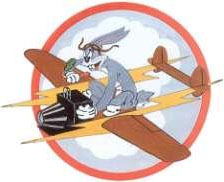
Donald Duck Insignia

A bit of a follow-up to all the recent posts about Disney insignia from WWII (here and here). There is currently an exhibition at the National Museum of the United States Air Force (Dayton, Ohio) called “Disney Pins on Wings.” The show, which runs through June 11, is apparently the “largest collection of original Walt Disney insignia artwork ever placed on public display.” If you’re not planning on visiting Dayton anytime soon – and as somebody who’s been there, I’d question why anybody would want to – fear not. Here’s a comprehensive set of photos from the exhibition for your online viewing pleasure.

The Donald Duck insignia above was drawn by animator John Sibley. This is actually a piece of art intended for Pete Docter’s amazing piece about Sibley in the upcoming ANIMATON BLAST #9. I couldn’t fit it into the issue, but this seems like an appropriate occasion to share the artwork.(Thanks, Jennifer Cardon Klein, for letting me know about the exhibition and photos)

POPEYE RESTORATION AT MOMA

New Yorkers: DO NOT MISS THIS ONE!The Museum Of Modern Art (as part of their annual film preservation festival) will be screening a fully restored color Popeye two reeler, ALADDIN AND HIS WONDERFUL LAMP (1939) this Sunday.The two-reel Popeye short will be playing along with the 1940 verison of “THE MARK OF ZORRO” with Tyrone Power. GO to this screening. This might be your only chance to see an actual full 35mm restoration of one of the Technicolor Fleischer Popeyes, since there’s still no agreement between Time Warner and King Features to get a real dvd release of the Fleischer/Famous/Paramount Popeye cartoons. Warner Bros. is preserving the Popeye cartoons regardless, and have had few public screenings of their restorations. Even if you’ve seen this short a hundred times, I guarantee you haven’t seen it like this. Full, rich, restored color; the original Paramount titles; with crystal-clear sound and picture. You are in for a real treat.ALADDIN AND HIS WONDERFUL LAMP will be screening twice: Sunday 5/21 at 3pm and one last chance on Thursday 5/25 at 8:15pm. Again, I beg you NOT to miss this rare opportunity to see this classic cartoon the way it was meant to be seen.(Thanks, Nelson Hughes)

Animation Blast #9 Update

Here’s the latest on ANIMATION BLAST #9. I spoke to my Canadian printer yesterday, and he says if everything goes according to plan, they’ll have the issue printed and bound by the week of June 5-9. It’ll be immediately shipped to LA, which means I should be receiving them the week of June 12-16. And then I’ll ship them out, which means you should be getting them by the end of June. If you haven’t pre-ordered yet, the issue will also be available at the San Diego Comic-Con. More details about that in a bit.

PS – If you’ve sent me an email anytime in the past three weeks, chances are you haven’t received a response. I’ll try to respond to everybody by this weekend.

SOCIETY OF ANIMATION STUDIES

sas.jpg

The Society of Animation Studies has their annual conference coming up July 7th through 10th at Trinity College in San Antonio, Texas. The theme of the conference this year is Animation at the Crossroads. Papers to be presented include Alan Cholodenko’s The Felicity of Felix, Michael Frierson’s J. Stuart Blackton’s Animated Films 1900-1910, Maureen Furniss’ John Whitney: The Early Years and Mark Langer on The Fleischer WWI Military Films.The Society for Animation Studies is an international organization dedicated to the study of animation history and theory. It was founded by Harvey Deneroff in 1987. Each year, the SAS holds an annual conference at locations throughout the world, where members present their recent research. For more information, contact president Maureen Furniss at mfurniss [at] calarts.edu.

AW PRUNES

awprunes.jpg

I usually don’t plug internet comic strips – most of the ones I’ve seen are pure crap – but Brew reader Larry Levine sent me a few samples of his strip, Aw Prunes, and I must admit I like his cartooning style. He draws funny, like he’s watched too many cartoons or something, and that’s good enough for me. Good luck, Larry!

DISNEY’S ABC’S OF HAND TOOLS

handtools33.jpg

In 1946, long before it owned the ABC Television Network or created alphabet spelling books for children, Disney made an industrial film for General Motors called ABC’S of Hand Tools. Bill Roberts directed this educational short, aimed at adults, which demonstrates the proper use of common tools. The interesting thing is that the film (and accompanying booklet) re-uses the character “Emotion” (an uncouth caveman, and caricature of Ward Kimball, from the 1943 wartime cartoon Reason And Emotion – also directed by Roberts), here with a new name, “Primitive Pete”. Bob Sokol posted a pdf of the entire booklet here. J.J. Sedelmaier sent us large scans (below) of several pages of his copy.

(Click on pages below for larger images)handtoolscvr4.jpghandtools1a.jpghandtools2.jpg

LASSETER LAST NIGHT – IN PARIS

lasseterparis2.jpg

John Lasseter sat down and answered questions at the French Premiere of CARS last night. Our friend Kinoo (of the French website, Pixar’s Room) has posted video and pictures from the event.

I had the luck to be at the premiere of CARS yesterday in Paris and attended the discussion with John Lasseter following the digital projection of the new movie (and the well received Ratatouille teaser). I was able to ask him a question about his future, as he has many resposibilities now following the merger with Disney, and if he will be able to direct another movie soon? His answer can be seen on the first video clip.

 This second video clip (below) shows Lasseter discussing his early cartoon influences, STAR WARS and TRON, the inspiration for CARS, and 2-D animation.(Thanks, Kinoo)

Stylistic Evolution in Crayon Shin-chan

crayonshinchan.jpg

My favorite anime critic, Ben Ettinger, recently wrote a piece about the long-running Japanese animated series CRAYON SHIN-CHAN and how since its debut in 1992, the animators’ styles have evolved and become more distinct and personal. Initially, the show remained faithful to the comic that it was based on, which from what I’ve seen is rather poorly drawn, but within a couple seasons the animators were pushing the look of the show into a more experimental (and even abstract) direction. Check out the revealing stills above – left is from a 1992 episode, right is from 1996. (Ben’s article also includes links to video clips.)

What strikes me as fascinating about this stylistic evolution is that it’s the complete opposite of the tendencies of US series. Here, the drawing in shows – most shows, at least – tightens up with every passing season, exemplified most clearly (and sadly) in America’s longest running animated series THE SIMPSONS, which hasn’t had an original character expression or bit of movement in well over a decade.

SIMPSONS producers, quite unbelievably, pride themselves on putting out a show that doesn’t exhibit stylistic evolution – and they certainly wouldn’t stand for anything that showed personal creativity or the sign of an individual’s hand in the production. Imagine a record label that asks a musician to compose one song and then replay that song for the rest of his career. No self-respecting musician would ever agee. But on the SIMPSONS, machine-like repetition of style is the order of the day. If a layout artist on the SIMPSONS draws ‘off-model,’ that’s viewed without question as an error, never as a creative choice on the part of the artist. It wasn’t always like that. THE SIMPSONS allowed artists some extent of creative feedom for quite a few seasons, especially during its earliest Klasky Csupo years, and also in some of the subsequent Film Roman seasons. By season six or seven, however, the producers had clamped down and decided that the show was going to exclusively be a platform for smug writing and dialogue, not for anything resembling art or animation. It’s refreshing to find that in Japan, certain animated shows still allow for artists to be a creative partner in the production of the series. Animation producers in the US could stand to learn from this and recognize that letting artists grow with a show can only be something positive.