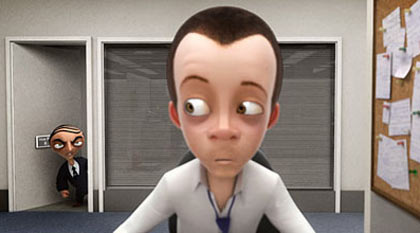
This nicely crafted, character-driven viral advertisement, The Ultimate Break, was produced out of Paris based Akama Studio.
I don’t know about you, but I can go for a Kit Kat bar right now.
(via Motionographer, with thanks to Kris Boban)

This nicely crafted, character-driven viral advertisement, The Ultimate Break, was produced out of Paris based Akama Studio.
I don’t know about you, but I can go for a Kit Kat bar right now.
(via Motionographer, with thanks to Kris Boban)
After being denied an Oscar nod for Best Animated Short, Aardman has posted Luis Cook’s award-winning short The Pearce Sisters onto AtomFilms. The fim’s official website is here and the site offers some interesting details about how the film’s unique look was achieved. Well worth a view.

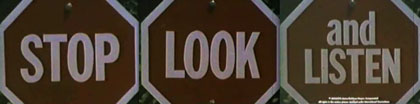
Back in April, we posted to a YouTube link of Chuck Menville and Len Janson’s Oscar nominated live-action pixilation short, Stop, Look and Listen (1967). Warner Bros. keeps removing it from the ‘net (it was a MGM short), but you can capture it on video via TCM tomorrow night (actually early Saturday morning). It’s being broadcast Friday Feb 1 (really the wee hours of Feb 2) at approximately 4:13 AM, as part of their 31 Days of Oscar programming. So set your TiVo or DVR’s.
(Thanks, Kermyt Anderson)
Every so often I find out about such an awesome piece of animation that I’m ashamed to admit I’ve never heard about it before. Tonight was such an instance when my friend Joshua Smith introduced me to the 1982 Hungarian animated feature Fehérlófia (aka Son Of The White Mare) directed by the legendary Marcell Jankovics. (Note: Other websites peg the film’s release date as 1980 and ’81. If anybody knows for sure, let us know.)
Admittedly I’ve never followed Jankovics’s work very closely. Like most indie animation fans I’m familiar with his award-winning short Sisyphus (warning: unintentionally NSFW soundtrack) and that’s about all. I had no idea that he’d also directed features, especially one as daringly experimental as this one. The first bit of Fehérlófia that I watched was this clip:
After watching this, I thought there’s no way there could be an entire film that maintains this visual intensity and innovation throughout. Then a search on YouTube revealed that the entire film is posted in eight parts and in fact it’s a pretty damn amazing piece of work. Visually, it’s rooted in a pastiche of late-’70s/early-’80s graphic styles yet it also manages to look remarkably fresh and contemporary. This ten-minute segment blew me away:
What the film lacks in the type of nuanced character animation that we demand from our US animated features, it more than makes up for with its experimental graphic animation and sweeping artistic vision. Joshua Smith tells me that he’s working to create an English fansub of the film. I hope he makes that available online so we can all learn if the story is as fascinating as the artwork.

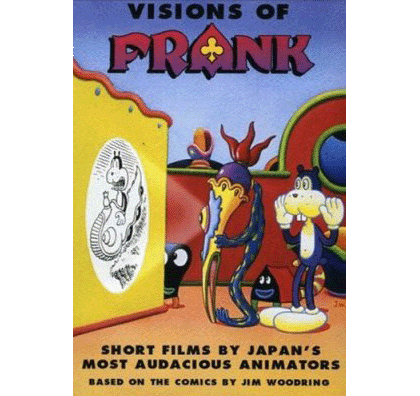
Visions of Frank is a dvd that came out last year collecting eight animated shorts by Japanese animators, all based on Jim Woodring’s wondrous comic creation Frank. The 45-minute dvd, which sells for $25 on Woodring’s website, also comes with a 16-page booklet, and includes Woodring’s own animated short Whim-Grinder. More info from the website:
VISIONS OF FRANK collects 8 wild Frank animations made by some of Japan’s most innovative and idiosyncratic filmmakers: Taruto Fuyama, Eri Yoshimura, art unit COCOA, DROP INC., Masaki Naito, Kanako Kawaguchi, Naomi Nagata. Each piece is an interpretation of a classic Frank comic and is scored by musicians from Japan and the USA. The films run the gamut of animation techniques: 3D CG, paper craft, clay, iron sand and traditional cel 2D…For each animation, you are able to choose between the original music and the newly composed music by other musicians. Participating musicians include James McNew (from Yo La Tengo), The Coctails, Dame Darcy, Kicell, Milk Yabe, and others.
A number of the shorts, if not all, are viewable on YouTube including this fine one:

Everybody has been jumping on the Flash bandwagon these past few years, but could 2008 be the year that animators begin abandoning the infamously buggy software for a more stable and artist-friendly program? Lili Chin and Eddie Mort, the creators of one of the earliest Flash-animated TV series ¡Mucha Lucha!, have announced on their blog that they’re through with Flash. The creative duo is currently wrapping up a feature in Flash called Los Campeones de La Lucha Libre, but they say that beginning with their next project, a short for Cartoon Network Asia, they’ll be switching to Toon Boom’s Harmony. The statement on their blog reads:
“Goodbye Macromedia Flash. After 8 years we are truly over you. Those buggy filters you tantalisingly tempted us with in Flash 8 were the last straw. And you got an ANNIE AWARD for your inadequate software? We’re looking forward to working in some new kind of HARMONY for Rocquita.”
Is this an isolated incident or has the exodus begun?

Another great eBay find.
The seller wants too much money for this admittedly historic Walter Lantz studio staff photo. Anyone got $4 grand to spare?
It’s dated September 1934 and it’s a who’s who of great names in the field (and it’s autographed by everyone as well), including Tex Avery, Ed Benedict, Cal Howard, LaVerne Harding, Bill Nolan, Leo Salkin and Lantz himself. Wow!
(Thanks, Kevin Coffey)
We already have enough problems identifying the sex of Tweety… Now this:

Today’s Family Circus by Bil Keane (father of Disney animator Glen Keane).

Congratulations to our friends Joost van der Bosch and Erik Verkerk of Ka-Ching Cartoons, who just finished a new 3D cartoon short which will premiere tomorrow at the International Film Festival Rotterdam.
The 3D Machine, an homage to classic horror movies, about a professor who invents a machine that can bring everything he draws to life, was produced using the old anaglyph (red and blue) 3-D process. Bosch and Verkerk’s previous film, The Shoebox will soon be featured on Cartoon Brew Films. The 3D Machine premieres at the International Film Festival, Rotterdam on January 29th at 5pm at the Stadsschouwburg of Rotterdam.

It was common practice back in the golden age to release publicity stills for every Hollywood feature, short and cartoon. Cartoon producers usually had a staffer gather several cels and backgrounds after filming, to create special setups for a publicity shoot (Martha Sigall did this at MGM in the late 1940s, early 50s). Warner Bros., of course, had several pieces of special publicity art created (with titles, done lobby card style) for each Looney Tune and Merrie Melodie.
Here’s a nice set of six stills (below) which were released for Popeye the Sailor Meets Ali Baba’s Forty Thieves. They were auctioned on ebay this weekend. I didn’t win them (they went for over $290.) so I thought I’d preserve them by posting them here. I have several like these from Sindbad but had not seen the Ali Baba set before. Click on each thumbnail image to see it full size.
In this day and age, when we can make frame grabs off a dvd at whim, these ancient still photos may no longer be needed… but they sure look great to me.

Anyone know the name of the cartoon this scene is from?
No prizes… just thought this was a cool image from a classic cartoon I was reviewing this week and thought it would be fun to post it. This rare cartoon is part of a DVD collection I’ll be plugging a lot this year. Consider this your first sneak peek.

Recently sold off on ebay was a series of six sample comic strips for a purported Oswald The Lucky Rabbit daily comic strip from the late 1930s. David Gerstein grabbed images of them, and Andrea Ippoliti posted them on his Classic Cartoons website.
Any further information on this attempt to make Oswald a regular in the “funny pages” is appreciated. Any ideas on who might have drawn this, or what year this was created?

I’m back, with more madness from the same studio that brought you Animal Soccer World. Someone has just posted (on YouTube) their shameless rip-off of Disney’s Aladdin.
The language is German, but the voice-acting is much more bearable this way. There’s even a German “fanpage” dedicated to this company, offering plot overviews and direct comparisons of the characters with the original Disney characters.
If you haven’t had enough, check the Dingo Pictures website for information (and trailers) of their other movies. And don’t miss their inspired sequel More Dalmatians. Why hasn’t Disney thought of this?
The bigger question, you may ask, is why am I so fascinated with this crap?
(Thanks, Marco Scandurra)

Last year saw the release of lots of rare animation (Popeye, Lantz cartoons, Oswald, etc.) but perhaps none so rare as a dvd that came out last winter: “Lost Classics from Zagreb Film”, a collection of many of the studio’s most experimental and distinctive early shorts, almost none of which have ever been released before. (Full disclosure: I was an unpaid consultant on the set and the dvd follows very closely the lineup of films that I’d suggested.)
There are no words to describe how happy I become when I watch these films. The Zagreb filmmakers were willing to try just about anything, and their films are packed with tons of inventive visual ideas. Sometimes the risks they took paid off handsomely, sometimes they flopped. One can’t help but admire their fearlessness though. They managed to create these films with limited resources, limited budgets and next to no animation training. The animators were self-taught and as a result their timing and the way things move can be utterly bizzare. Concepts like squash-and-stretch were foreign to a lot of these artist so they figured out graphic solutions of their own and came up with some wildly eccentric styles of movement in the process. Thematically, the films tackle a broad range of subject matter from alienation to militarization, topics that were hardly common fare in animated shorts of the time.
There is a downside to the dvd: The prints, which come directly from Zagreb Films, are unrestored and in fairly poor shape. This is doubly a shame because color and design are such an integral part of these films. Nevertheless, these films have never been available on any home video format, and not having any major studio support behind them, don’t hold your breath for a restored edition of these films anytime soon. This dvd is the only way you’re going to be able to see the following films:
Opening Night (1957)
Alone (1958)
The Great Jewel Robbery (1959)
The Inspector Returns Home (1959)
At the Photographers (1959)
La Peau de Chagrin (1960)
A Man and his Shadow (1960)
The Boy and the Ball (1960)
Perpetuum & Mobile, Ltd. (1961)
Boomerang (1962)
Typhus (1963)
The distributor, Rembrandt Films, also recently released DuÅ¡an Vukotić on DVD, a collection of the works of Zagreb’s most famous director. Owning this and the “Lost Classics” dvd will give anybody a solid collection of the studio’s early work. The films on the Vukotić dvd are:
Playful Robot (1956)
Cowboy Jimmy (1957)
Concerto for a Machine Gun (1958)
Revenger (1958)
The Great Fear (1958)
Piccolo (1959)
My Tail is My Ticket (1959)
The Game (1963)
A Stain on His Conscience (1968)
Ars Gratia Artis (1969)
UPDATE: Thanks to all who entered. The contest is now over. The correct answer was DuÅ¡an Vukotić’s 1961 short Surogat (also known as Ersatz and The Substitute). The two winners are Scotty Arsenault and Gail Veillette.
And here are a few frame grabs from the animated shorts on the “Lost Classics from Zagreb Film” set:


Minotauromaquia is an intriguing stop motion short I saw a few years back in Annecy. It’s directed by Spaniard Juan Pablo Etcheverry. The short will appeal most to those who are familiar with Picasso’s work, though the message should be clear to all. Jeff Hasulo’s blog Hydrocephalic Bunny also offers some nice thoughts about the film.