Why Nobody Wants To Watch Sony’s Features

According to Steve Hulett of the animation union Local 839, the execs at Sony are perplexed about why their films (Open Season, Surf’s Up) are underperforming at the box office:

“[Co-Chairman of Sony Pictures Entertainment] Amy Pascal asked animation executives why Pixar movies were doing so well and Sony Pictures Animation’s weren’t. This was a few months ago. A couple of the story artists who’d worked at other studios wrote up a little paper about what some other feature studios did, how they approached things. They passed it on to Penny and Sandy before those two left. Whether the paper got into Amy Pascal’s hands or not, I’ve got no idea …”

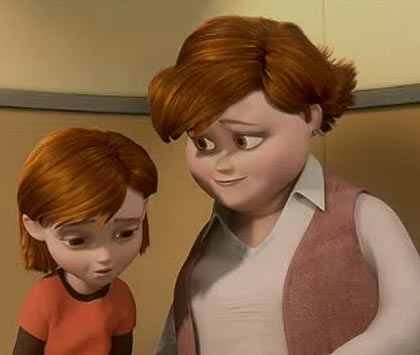
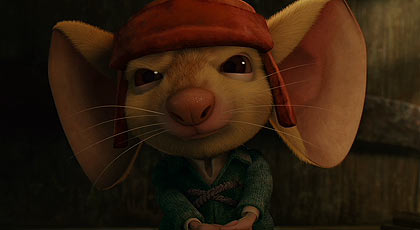
Of course, Pascal is the executive whose suggestion for improving Surf’s Up was to add “more poop,” but besides the obvious cluelessness, their problems can be boiled down to the lack of one key element in their films: vision. The films Sony produces, like those of many other studios, are filmmaking by committee. They have no coherent vision, voice or reason supporting them. They borrow a piece from Pixar, a bit from DreamWorks, and the result is a cobbled-together half-baked Frankenstein idea.

As much as I cringe at the DreamWorks animated features, I have to give credit to Jeffrey Katzenberg for sticking with an original and singular vision for the type of films his studio produces. For what it’s worth, he established the crass humor, celebrity-driven, parodic CGI style with Shrek in 2001. Look at the animated features that were released prior to Shrek and one doesn’t find a whole lot of similar films, though elements of this style were budding in Katzenberg’s Disney-era features. Katzenberg succeeded by doing something original that nobody else in animation was doing at the time, the very same thing that Pixar had done a few years earlier, with the primary difference being that Pixar’s formula was based on a foundation of artistic and narrative integrity.

Sony, on the other hand, seems to be headed down the same doomed path of Fox and Warner Bros. circa mid-’90s: copying the formulas of more successful studios with slight variations on their themes. There have been plenty of shake-ups at Sony Feature Animation in recent months, but I’ve yet to hear of anybody taking over their animation division who might encourage a shift towards an original direction.

Bedrock City

bedrockcitycast.jpg

Bedrock City, the kitschy little theme park in Custer, South Dakota, was created in 1966 by a coalition of local concrete makers.

Now, artist/photographer Todd Oldham has discovered the park’s inner coolness. Oldham has been creating a series of art books, called Place Space, devoted to unusual environments, covering a variety of subjects – from John Waters quirky Baltimore home to the creative living spaces of art students at the Rhode Island School of Design.

Ammo Books has just released Oldham’s latest, Bedrock City, a collection of photographs of the funky stone age recreation area with an essay (wrapped around the book on the poster/dust jacket) by architect/designer Michael Graves.

This book isn’t for everyone. It’s an art book that’s a piece of art in of itself, but the subject matter is a lot of fun (the book even comes with a set of souvenir postcards). Recommended to all sophisticated Flintstone connoisseurs out there.
bedrockbook.jpg
Oh, and if minimalist books about the citizens of Bedrock turn you on… I’ve got another one in the works I’ll be telling you more about in a few months.

Affordable Advertising on Cartoon Brew

A few months ago on Cartoon Brew we announced a new and affordable monthly advertising option on Cartoon Brew for independent companies, studios and individuals who couldn’t afford the standard rates that are charged by our ad partner Federated Media. We’ve just set up an Advertising page that offers all the details on this advertising option.

Also, here’s a shout-out to the advertisers who’ve already signed up. Yesterday, we put up two new Comic-Con related ads for:
Fleet Street Scandal
Hard Eight

Earlier advertisers include:
House Industries
Meathaus
House of Cool
Rembrandt Films

The Golden Years of Annecy

John and Faith Hubley
John and Faith Hubley in Annecy

Cima Balser, the wife of animation director Bob Balser, has written a fantastic piece for AWN about the early years of the Annecy International Animation Festival. As much fun as it is to attend the festival nowadays, I can only imagine the excitement of those glory years when one could mingle lakeside with the likes of Bobe Cannon, Chuck Jones, John and Faith Hubley, Pete Burness, Bill Littlejohn, George Dunning, Peter Foldes, Yoji Kuri, and all the other greats of animation that I so admire. Cima’s article is one of my favorite historical reads in recent months, and she offers many wonderful stories about the festival that I’d never heard, such as this one about the Hubleys:

“That was the year that John and Faith Hubley showed their Of Stars and Men. We had noticed that the French audiences were not restrained in any way from showing their regard for each film. As well as wild applause, there were equally loud boos, and worse yet, the sound of stomping feet walking out and slamming the door as loudly as possible.

“Each filmmaker, when their film was projected, was obliged to sit in the balcony box, which we all rapidly named “The Hot Box,” and take a bow — to either applause or boos, and in this case the boos were heartbreaking. John and Faith bowed and then exited as quickly as possible. I still firmly believe this is one of the most important and beautiful animated films ever made, and we tried to assuage their deep disappointment, and assure them this was a film for all time. Alas, it has been forgotten, which is a loss to all of us.”

Presto and Glago’s Guest

prestorglagos.jpg

Was privileged to see two new CG shorts last week: Disney Animation’s Glago’s Guest and Pixar’s Presto. Both films couldn’t be more different, yet both succeed in accomplishing their modest goals with style to spare.

Glago’s Guest is the second film from Disney’s new shorts unit, established by John Lasseter when hne took over the studio. The sole intent of producing new shorts at Disney is to experiment with style, test new techniques, and to develop new directors. Chris Williams was a story artist at Disney (Mulan, etc.) for fourteen years. His original tale of a Russian soldier stationed in a remote Siberian outpost is so far removed from what a Disney cartoon has been, it’s just what the staff needed to flex their muscles. To tell you what happens, or who his guests are, would ruin the experience – but the short is layered in luscious detail, and filled with more heart than most features ten times its length. It’s being released in 3-D on November 26th with Disney’s Bolt and it looks incredible in that format.

Pixar’s Presto is as perfect as any homage to classic Hollywood cartoons could be – especially with it’s opening title tribute to Disney shorts (against burlap) and MGM cartoons (note the type style). The story is a mash up of UPA’s Magic Fluke (1949), Avery’s Magical Maestro (1952), and Jones’ Case of the Missing Hare (1942) – magician versus his adversarial rabbit, who gets revenge via a magical hat. It’s the fast pace, strong poses, appealing characters and visual gags that turn this into a charming original entertainment – top notch fun from first frame to last. An absolute winner from Pixar. Catch it on the head of Wall-E this weekend at a theatre near you.

These shorts are special – that’s something we can’t usually say about short form films. I’m delighted Disney is producing films like these. Could a modern day equivalent of Melody Time grow out of such a program? After seeing these two, that wouldn’t be such a bad idea.

Grant Orchard’s Paintballing

There’s minimalist animation and then there’s Grant Orchard‘s work. His short Park Foot Ball (mentioned on the Brew back in 2006 is a masterpiece of graphic clarity and communication. I was pleased to learn in this interview Grant recently did with The Animation Show that Italian broadcaster Qoob has commissioned him to do ten more sports-themed shorts based on the pared-down graphic and aural approach of Park Foot Ball. The first of the ten new “Love Sport” shorts–Paintballing–can be viewed below. I can’t wait for the rest of the series.

Cartoon Dump Tuesday June 24th

jerrydumpsterdan.jpg

Live comedy! Horrible animation! And the return of “Dumpster Diver Dan”!

In case you’ve forgotten, Cartoon Dump lives on, live in Los Angeles every 4th Tuesday of the month at the Steve Allen Theater, 4773 Hollywood Blvd. Read our press! LA Review, Peter Sanderson at Quick Stop Entertainment, An interview with Compost Brite.

Hope to see you on Tuesday June 24th when we welcome this month’s special guests: Dana Gould (Simpson’s producer writer and comedian), actor-comedian-cartoon voice actor Ron Lynch and the original Tom Servo, J. Elvis Weinstein, as “Dumpster Diver Dan” (pictured with me above). If you haven’t been to the show in a while, we’ve got lots of new material (both comedy and animated) – and the Steve Allen Theatre is air-conditioned! Buy advanced tickets here!

Japanese Animators Unionize

Janica

Beginning this month, a group consisting of hundreds of Japanese animation artists have launched the Japan Animation Creators Association (JAniCA), an attempt at unionizing Japanese animation artists, especially those who freelance, and creating awareness of the generally poor working conditions of Japanese animators. More details about the formation of the group can be found at Anime News Network. To better understand the necessity of this group, this article describes some of the working conditions that Japanese animators have to endure:

One 32-year-old female animator is working in her second year at an animation company to pursue her childhood dream, but she works 12-hour days for half the salary of her former job. Another animator used to be a regular company employee with an apartment to himself, but had to move back with his parents since he could not afford rent on an animator’s budget. Without health insurance, he would not check into a hospital even when an illness worsened. One 59-year-old had to cut back due to deteriorating physical health, and now subsists on 120,000 yen (US$1,000) a month. Some of the 59-year-old animator’s former colleagues now receive public assistance or are now homeless.

(via TAG Blog)

Eric Goldberg’s Character Animation Crash Course!

Eric Goldberg

The long-awaited how-to book from master animator and director Eric Goldberg is almost here. Character Animation Crash Course! will be released next month and is currently available to pre-order on Amazon for $23. Here’s what Eric tells us about the book:

“Well, the animation book I’ve been writing for 25 years, based on my animation notes, has finally arrived! Well, almost… Character Animation Crash Course!, published by Silman-James Press, is 240 pages of cartoon goodness, all geared to getting great performances from your characters on the screen. It comes with an accompanying CD that has animation movie files of selected sequences in the book. You can watch them in real time, or frame-by-frame, and they all include X-sheets, inbetween charts, circled keys, and underlined breakdowns, so the tests can be analyzed while you read the book, revealing how the principles actually look in movement and why. Shipping date might be as early as mid-July. Also, I’ll be premiering it at the San Diego Comic-Con, signing copies at Stuart Ng Books, Friday July 25th from 2 – 4, and Saturday July 26th from 11 -12. Also, the book provides examples from classic cartoons that can be pretty easily-accessed in this DVD, YouTube, iPod age so you can see my inspirations from the Golden Age Masters. And because, frankly, I’m a big geek.”

Eric Goldberg

Tom Hignite’s Home Imaginators

Miracle Mouse

Tom Hignite, the Wisconsin home builder who thinks he’s Walt Disney, is back – in a series of local infomercials which ultilizes lush character animation created by a team of former Orlando studio animators he hired a few years ago. Since his misguided plans for making 2D animated features went bust, Hignite is back to building houses, using poor Flash animation (pictured above) to move his characters, and pretending he’s Uncle Walt in these TV spots. You can read the full story of Hignite’s wacky true-life adventures in this Milwaukee Magazine article – and, if you can stomach it, watch one of his informercials here.

The Business of Stereoscopic 3-D Films

Shrek

Stereoscopic 3-D filmmaking is either the latest film fad or the future of theatrical animation. For those who know their film history, all indicators point toward it being the former. This Portfolio article by Kevin Maney is one of the better pieces I’ve read about the topic:

“Studios are latching onto 3-D for much the same reason that Bob Dole took Viagra. Most of Hollywood’s businesses are making money–for all Katzenberg’s complaining, DreamWorks’ first-quarter profit was up 69 percent–but the sector that makes Hollywood feel best about itself, theatrical showings, is deflating, in large part because the difference between seeing a movie in your local multiplex and on a 52-inch high-definition TV in your family room is not that vast.”

Earlier post about 3-D on Cartoon Brew

(article link via Kottke)

Sleeping Beauty at the Academy

sb2.jpg

A newly restored, digitally remastered version of Walt Disney’s Sleeping Beauty (1959) will be presented on Friday, July 18, at 7:30 pm at the Samuel Goldwyn Theater in Beverly Hills. Following the screening, a team from Walt Disney Animation Studios including Dave Bossert, creative director of special projects; animator Andreas Deja; Theo Gluck, director of library restoration and preservation; and Terry Porter, sound department chief and head rerecording mixer will participate in a panel discussion hosted by Leonard Maltin.

According to the Academy press release:

This new digital restoration of “Sleeping Beauty” comes from 4K scans of the camera original successive exposure Technirama negative. The 7.1 audio remix was created from the Disney Studio’s 35mm mag elements, including the original 3-track stereo music masters, which were recorded in Berlin in 1958.

Tickets are $5 for the general public and may be purchased online at www.oscars.org, in person at the Academy box office or by mail. Doors open at 6:30 p.m. The Samuel Goldwyn Theater is located at 8949 Wilshire Boulevard in Beverly Hills.