Swindle and Esopus

SWINDLE and ESOPUS

It’s always exciting to see animated films and animation artists receive recognition in mainstream art publications. Achieving this type of acceptance has been an uphill battle for many years, but it seems that nowadays, art publications are increasingly opening their doors to animation-related stories. For example, SWINDLE MAGAZINE, a top-notch art/culture quarterly with a heavy West Coast bent, has an interview with David Weidman in their latest issue (#4). They call him “one of the friendliest, most jovial 85-year-olds you’ll come across,” and having interviewed Dave for my 1950s animation design book, I can attest to the accuracy of that statement. Animation was an important part of Weidman’s career, but he also spent a lot of time producing his own artwork, including beautiful silk screen prints that can be purchased at WeidmansArt.com. The only downside to the SWINDLE article is that the writer isn’t particularly well versed in animation history so he’s unable to ask Weidman specific questions about his animation career and find out exactly what he did at UPA (and other studios like Storyboard and Hanna Barbera). There’s also some errors, like the chronology of when Weidman worked on the ill-fated John Hubley feature FINIAN’S RAINBOW. Pretty minor stuff. Overall, it’s great to see a classic animation artist receive an 8-page spread (and the back cover) of a classy publication like SWINDLE.

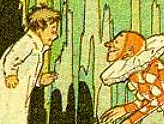
The equally commendable East Coast arts publication, ESOPUS, also has an animation feature in their most current issue (#5). No errors are to be found in this article because it’s written by John Canemaker. In the piece, entitled “Let a Thousand Drawings Bloom,” John examines a scene from “The Nutcracker Suite” sequence in FANTASIA, and discusses the contributions of the scene’s various artists including development artist Elmer Plummer and fx animator Cy Young. The piece, which includes a beautiful color sketch by Plummer and four pages printed on translucent paper to recreate the light table effect, serves as something of an ode to the painstaking, labor-intensive process of creating hand-drawn animation. Though hand-drawn animation is becoming increasingly obsolete at modern studios, Canemaker believes that animation on paper has an effect that today’s digital creations cannot replicate. He writes:

While much is gained using the new technologies, there is a certain sense of loss, too. There’s the touchy-feely aspect of artifacts that represent the solid residue of human imagination; they don’t exist in the digital world as they do in these thought-filled lines on tactile paper. By feeling the paper, holding it in one’s hand, one is able to get a sense of the artist and the artist’s mental processes, not to mention the effort that went into making the sketch.

Props to both SWINDLE and ESOPUS for publishing these stories and treating animation with respect. Hopefully we’ll see more magazines doing these type of animation stories in the future.

Corpse Bride Director in Montreal

Mikek Johnson

FPS magazine began an excellent series of lectures last summer called the Animation Innovator series. Their first guest was animation legend Ray Harryhausen, and the series continues next Wednesday, October 26, with a presentation by CORPSE BRIDE director Mike Johnson. The event takes place in Montreal at Concordia University (Hall Alumni Auditorium, 1455 de Maisonneuve Blvd. West, Montreal, Quebec). Johnson, who has also worked on THE NIGHTMARE BEFORE CHRISTMAS, JAMES AND THE GIANT PEACH and THE PJS, will discuss the making of CORPSE BRIDE and show puppets from the production. The presentation will also include a screening of Johnson’s short film THE DEVIL WENT DOWN TO GEORGIA. Ticket info and further details are at the FPS website.

One Froggy Tune

One Froggy Evening

Most Brew readers have likely seen Chuck Jones’s ONE FROGGY EVENING (1955) more times than they can count, but do you know the answers to the following questions:

Were the songs “real” songs or were they written especially for ONE FROGGY EVENING?
Who wrote them and when?
Are these all turn-of-the-century songs?
What are the songs really about – what are the rest of the lyrics?

This neat little WEBSITE answered all those questions and told me more about the classic Jones short than I ever wanted to know.

DISNEY’S TOTORO DUB

totorowide.jpg

Sunday night I’ll be moderating a Q&A at the Hollywood Film Festival closing night World Premiere for Disney’s dub of MY NEIGHBOR TOTORO. Hayao Miyazaki’s 1988 animated classic has been re-dubbed by an all-star cast including Dakota Fanning, Timothy Daly and Pat Carroll. It’s one of Miyazaki’s best, and it’s currently getting hard-to-find on dvd. October 23rd at 7pm at the Arclight Cinema on Sunset Blvd. More info HERE.

MEET JANET WALDO

judyjetson.jpgShe was Josie, Judy Jetson and Penelope Pitstop…. to name but a few. Women In Animation is hosting a luncheon with voice actress Janet Waldo, at the Smoke House in Burbank, on Saturday November 19th.

The latest in WIA’s series of “Where The Bodies Are Buried” Salons will feature the legendary Ms. Waldo, who’ll tell us what it was like working in cartoons in the early, non-corporate days. If you want to hear the unauthorized version of the Golden years of Animation, reserve a place for yourself on Saturday. November 19, at The Smoke House (one of the last remaining Old Industry watering holes), from 12 noon to around 3-ish. $23.00 per person.Menu: Choice of chicken teriyaki, caesar salad with blackened salmon or caesar salad with chicken. Coffee or tea included. No-host bar (they offer a martini cited by the Los Angeles Times as legendary). Pre-pay recommended, as seating is limited.

Please RSVP to (310) 535-3838 by November 16th. The price of the event is $23.00, Send your check to: WIA/Waldo Salon P.O. Box 251, Topanga, CA 90290. Please specify your food preference. The Smoke House is at 4420 Lakeside Drive, in Burbank, across from the Warner Bros. lot. Valet parking available.

KRAZY KAT SCREENING

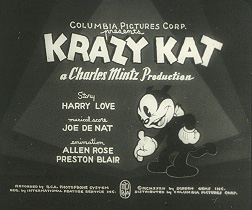
krazyasifa1.jpgASIFA-Hollywood will be screening a dozen extremely rare KRAZY KAT cartoons on Saturday October 29th at 3pm – at the AFI in Hollywood.Columbia Pictures KRAZY KAT cartoons are hard enough to see as they are. Originally made for theatres (1929-1939) and later released to TV in the 1950s, the series has been unavailable for viewing for the last 40 years. Though based on the George Herriman comic strip, the Columbia cartoons were the end of a continous line of shorts that began in 1916. By 1929, producer Charles Mintz (the man who took Oswald Rabbit – and the entire animation staff – away from Walt Disney, forcing him & Ub Iwerks to invent Mickey Mouse) had evolved the character from Herriman’s neurotic female into a happy-go-lucky song & dance man – not so different from such early 30s characters such as Bosko, Oswald, Mickey Mouse and Flip the Frog.The twelve cartoons being screened by Asifa next week were never part of the 50s television package, never distributed in 16mm and have not been seen since their original release in the late 20s and early 30s. They contain various characters drinking liquour, vicious ethnic stereotyping and hints of pre-code sex! Several have surreal Fleischer-like imagery and extreme rubber-hose animation – and all contain hot jazz soundtracks typical of their day. Asifa will be screening brand new restored 35mm prints, each retaining their rare original titles.If you enjoy oddball black & white 1930s animation, if you are into funky early sound cartoons – or if you think you’ve seen it all – you haven’t seen these! I urge you to join me on Saturday October 29th. Take it from me: these will never be released on DVD. More information here.

EYE CANDY

candyman.jpg

Coolest video this year: Try Telling That To Your Baby by Montreal’s Fluorescent Hill, a directing team comprised of Mark Lomond, Johanne Ste-Marie and Darren Pasemko. The song isn’t so great, but the visuals are superb. More stuff here.

Lomond writes a bit about the production of the video:

The video is made from several thousand photos of candy, which were then digitally painted and composited together. Animation was completed with cg cutouts, stop motion, video, and plain ol’ drawings. The mouths are all 2d and although we were tempted to go 3d for the bulk of the project, we opted for ulcers, headaches, and passion.

Dahl/Disney’s Gremlins are Back

Gremlins

Somehow I missed the news that Dark Horse Comics is working on a February 2006 re-release of the 1943 Roald Dahl children’s book, THE GREMLINS, illustrated primarily by animator Bill Justice (with the above cover reportedly by Mary Blair). The book has long been out of print, and copies run in the hundreds, and often thousands, of dollars. In the early-1940s, GREMLINS was being prepped as a full-length animated feature by Disney, and a lot of development art was created, but this book is ultimately the only thing that Disney ever released. Dark Horse is also planning to release a 3-issue comic book mini-series with new Gremlin adventures. Who knew WWII lore was so popular. What’s next: a Kilroy revival?

Update: Noted animation historian Jim Korkis writes:

It was Mark Kausler who identified for me that the cover of the original book was done by Mary Blair. The interiors were done by Bill Justice and Al Dempster, two longtime Disney artists. In fact, Bill was responsible for some of the gremlin designs and worked closely with Dahl. When I contacted the editor at Dark Horse, he said he wanted to make the reprint like a “DVD” with some extras but they hadn’t decided yet what those extras would be. I did offer them the extensive article that I did for the yet-to-be-published World War II issue of “Persistence of Vision” magazine on the unmade film.

Pictoplasma Animation Festival

Pictoplasma is holding their first-ever animation festival, CHARACTERS IN MOTION, on November 25-26 in Berlin. It is being billed as a “two-day celebration of contemporary character design in animation, music visuals and motion graphics.” Besides screeenings, there will also be lectures by Shynola and Fons Schiedon. Cartoon Brew friend Harald Siepermann gave an enthusiastic review of last year’s 1st Pictoplasma Conference On Contemporary Character Design & Art so this animation-specific event may also be worth checking out.

50s Design Book and Blast #9 Update

Clark's chewing gum storyboard by Ray Favata

Here’s a quick update on the two biggest projects that I’m dealing with at the moment. First, the latest on the Chronicle book. It’s now officially titled CARTOON MODERN: STYLE AND DESIGN IN 1950S ANIMATION and I’m happy to report that it’ll be wrapped up within the next month or so. The page count continues to climb, and at the moment it’s looking like the final total will be 200 pages. Even with this many pages, it’s been a complex and challenging assignment for my book designer to fit in all the artwork that I want to have included in it. But he’s managing to do a superb job of packing in the visuals, while keeping the art at a decent size and giving the page layouts room to breath. Our goal is to make sure there’s no superfluous pages in this book; every page is going to have a rare piece of art or photo. I can’t wait to share the results with everybody in April ’06.

Also, this week, I started working full-time on the long-delayed ANIMATION BLAST #9, in hopes of meeting the new December release date. I’m incredibly excited about starting up again on this issue and finally finishing it up. I’m also really excited to announce a major new article in this issue that is written by MONSTERS INC. director Pete Docter. The article gives some long-overdue credit to the amazing (and amazingly forgotten) Disney animator John Sibley (1912-1973), who is best known for his animation on the Goofy shorts, including HOW TO RIDE A HORSE, TIGER TROUBLE and HOCKEY HOMICIDE. Pete’s a big fan of his work and he spent a long time tracking down and interviewing Sibley’s colleagues and researching Sibley’s animation style. The piece he’s written is nothing short of incredible, and sheds all sorts of new light on Sibley’s life and work.

One piece that will no longer be in BLAST 9 is “Buy! Buy!: A History of Studios From The Golden Age of TV Commercials.” I’d started this piece long before I started working on the 50s design book, and what ended up happening is that I incorporated most of the article’s research into the book. It seems kind of redundant to reprint the same info in the BLAST now, so I’m giving the space over to more original research like the Sibley piece. I’ll have an updated contents listing on the BLAST #9 preview page soon.

Thanks again so much for everybody’s patience on this issue. I’m going to try my best to make this the strongest issue of the BLAST yet and not let anybody down.

ASIFA’S ANIMATION ARCHIVE

tonypencil.jpg

Steve Worth has been working like gangbusters to get Asifa-Hollywood’s Animation Archive up and running. The Animation Center at 2114 W. Burbank Blvd. is open to the public and Steve has started a blog to report on its progress, the fund raising status and new archive acquisitions. Steve is also seeking volunteers to help create a massive online art archive.

Now that we have the network and scanner up and operating at the ASIFA-Hollywood Animation Archive, we are ready to begin digitizing material for the archives. If you are available any time on Tuesdays or Thursdays between 1pm and 9pm, drop an email to me at sworth@animationarchive.org and let me know when I can expect you. I’ll have material ready for you to help out with. The more participation we get from volunteers, the faster the Archive will reach “critical mass”… the point where it begins to be functional to researchers. Every bit of help moves us closer.

I’ve seen what Steve is up to first-hand. It’s a huge job, and extremely worthwhile. Preserving this material – and making it available to animators, historians and everyone else – will inspire present and future artists, give insight into the process and be a lasting resource we can all appreciate. If you live in the area, please check it out. Or better yet, help Steve continue his work.