.png)
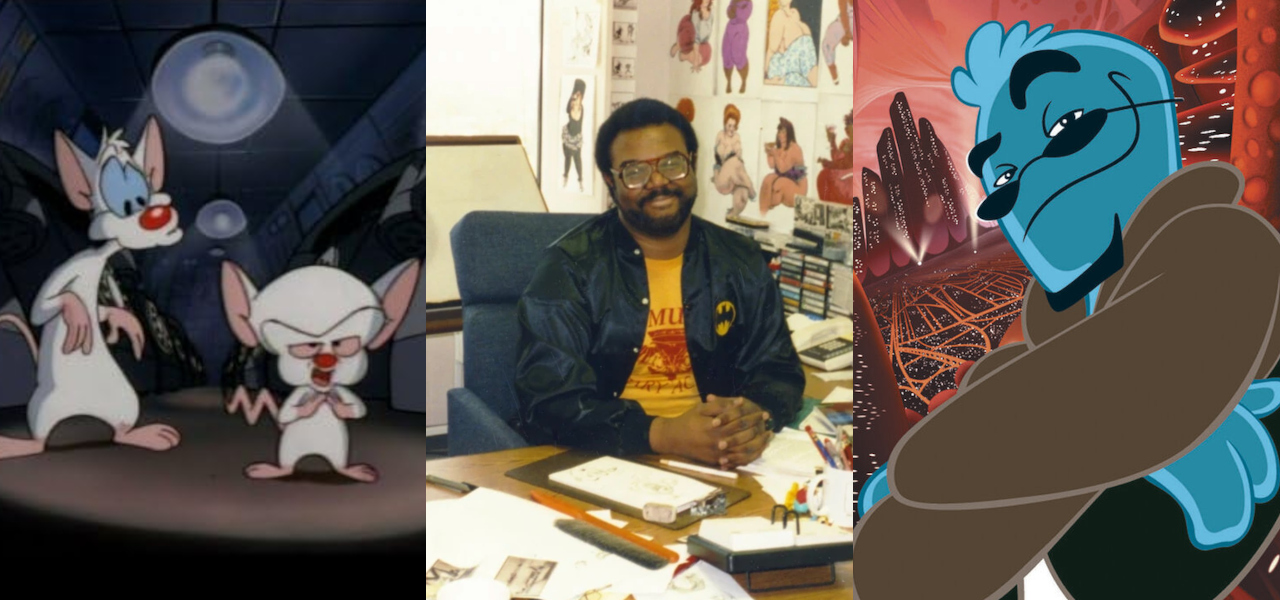
Barry Caldwell, ‘Animaniacs’ And ‘Osmosis Jones’ Storyboard Artist, Dies At 68
Barry Caldwell, a veteran storyboard artist, writer, and director whose credits spanned Animaniacs, Pinky and the Brain, Tiny Toon Adventures, and the feature Osmosis Jones, died this month at 68.
Over a career that lasted more than four decades, Caldwell moved easily between roles, working as a storyboard artist, director, and designer. He left his mark on shows that defined a generation of television animation, helping shape the rhythm and visual style of Warner Bros. Animation’s resurgence in the late 1980s and 1990s. His work was especially important to the fast-paced, gag-driven storytelling that became a hallmark of that era.
Born in New York City in 1957 and raised in Brooklyn, Caldwell described his childhood as “very safe…very loving,” even though he grew up in the projects. He spent much of it drawing and watching television, taking in “pretty much everything from the ’30s to the ’60s” through New York’s local broadcasts.
He began making comic books as a child, stapling together pages of his own stories. According to his mother, he even brought them to school and sold them for a penny each. “I was surprised I took that kind of initiative,” he said in an interview on Deborah Anderson’s BlkWmnAnimator YouTube channel. The comics were often left unfinished, abandoned after a handful of pages once he ran out of ideas, but the impulse to create was already there, and the origins of a prolific storyboard artist were established.
Caldwell studied at the School of Visual Arts, where he initially planned to become a newspaper cartoonist. A class taught by Will Eisner broadened his perspective, introducing him to European comics and a wider range of storytelling approaches. Animation, however, appealed to him less as a technical pursuit than as a way to tell stories. “I discovered very quickly that I enjoyed it,” he said, “but not enough to want to do it professionally. I was much more interested in the storytelling aspect.”
That focus stayed with him throughout his career.
After moving to Los Angeles around 1980, Caldwell entered the industry during a period of rapid hiring at Filmation Studios. He later described the experience with dry humor, calling it a “storyboard cattle call.” As he put it, the standard seemed simple, “Did you know which end of a pencil was the eraser and which one was the point? Okay…here’s a script.”
He went on to work across many of the defining television productions of the 1980s, including Fat Albert and the Cosby Kids, The New Adventures of Zorro, The Tom and Jerry Comedy Show, He-Man and the Masters of the Universe, The Smurfs, and Chip ‘n’ Dale Rescue Rangers.
By the early 1990s, Caldwell was part of the group of artists shaping Animaniacs and its spinoffs. These productions helped reshape television animation at the time, with denser writing, faster pacing, and a return to short-form, skit-like storytelling. In that environment, storyboard artists played a central role in determining how scenes worked on screen. Caldwell approached that responsibility with a strong emphasis on filmmaking fundamentals, stressing composition, pacing, and character interaction. As he explained, all of those elements had to be working at once.
In a particularly relatable portion of the BlkWmnAnimator interview, Caldwell spoke openly about occasional feelings of self-doubt, noting that even after winning awards, “apparently this never goes away.” To ground himself, he would look at the display case in his home, which held his Emmy, Peabody, and a letter from Steven Spielberg, and remind himself, “they gave this to you…and they weren’t fooled.”
One of his proudest professional experiences came later, working on the feature Osmosis Jones. He saw the film as a rare break from the conventions of American animation. It was contemporary, not a musical, and built around an unusual premise. He described it as “the first animated buddy cop movie,” and valued the chance to work on something that pushed against familiar formulas.
Those who knew him described a thoughtful and reserved presence. He identified himself as an introvert and rarely sought attention, but he was generous with his time and knowledge. Younger artists often came to him for advice, and he made a point of being direct and honest. “I always told them the truth,” he said.
When asked what a documentary about him might focus on beyond his work, Caldwell gave a characteristically simple answer. He said he tried to be “as good a friend and family member as I could be…always there for anybody who needed something.”
It was a modest way to describe a career spent shaping stories, influencing colleagues, and helping to define a generation of American animation.
Special thanks to Deborah Anderson, whose wonderful interview informed the majority of this obituary.