brewmasters
JERRY BECK
bio & contact
view posts by jerry
AMID AMIDI
bio & contact
view posts by amid
TAG FOR
“Classic”
by jerry
February 22, 2010 12:00 pm


Friday will mark Tex Avery’s 102st birthday. To commemorate, the students of North Dallas High School, Avery’s alma mater, the place where Avery picked up the “What’s Up, Doc?” tagline he later gave to Bugs Bunny, are decorating the halls of the school with a mural of characters he created.

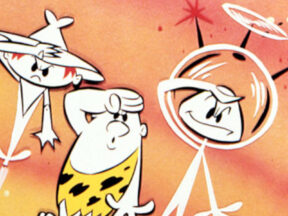
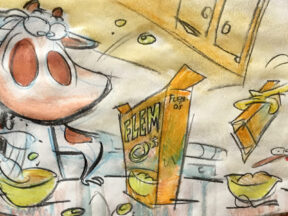
In another tribute to Avery’s genius, I highly recommend the latest post by Chris Lopez on his ComicsCrazy blog. Chris has posted over 40 vinatge MGM model sheets from various Avery classics: Lucky Ducky, Little Tinker, Bad Luck Blackie etc. The one above is from Screwball Squirrel, drawn by Claude Smith.

(Thanks, Oliver Coombes, Kevin Kidney and Peter Kurilecz)

by jerry
February 22, 2010 3:00 am


Long before Hanna Barbera’s Oscar-winning cat and mouse, a decade before Van Beuren’s rubber-hose human pair, a comical duo named Tom and Jerry created mischef on movie screens in animated theatrical short subjects that have long been forgotten - and are perhaps lost for all time.

In the image above, Tom is the man and Jerry is the mule. This was a stop-motion Tom and Jerry series, filmed in Los Angeles in the 1920’s, modeled and animated by Joseph Leeland Roop, a stop-motion pioneer who today is just as forgotten as the films themselves. Lee Roop, his grandson, is presently preparing a book about the animator and provided Cartoon Brew with tantalizing information about the original Tom & Jerry films.

Lee says J.L. Roop worked on twelve shorts for producer Lloyd C. Haynes, released between 1923-1924. All are (as of this writing) lost films. If anyone has any clues to their whereabouts, please contact us. The titles are:

The Incomparable Aerial Comedians in Fly-Time by H. C. Matthews
The Amiable Comedians in Throbs and Thrills (”A Snappy Railroad Comedy Drama”) by H. C. Matthews
Gasoline Trail by Bumps Adams
Tom’s First Fliver by Bumps Adams
Tom Turns Sleuth by Doris E. Kemper
Tom Turns Farmer by Doris E. Kemper
Tom’s Charm by Marshall Roop
Moonshine Frolic by Glen Lambert
Tom Turns Hero by Doris E. Kemper
The Jungle of Prehistoric Animals by G. E. Baily Ph. D.
The Hypnotist
Tom Goes on Vacation

Lee Roop provided this biographical information:

Joseph Leeland Roop was born in Kentucky on December 22, 1869 and died on December 22, 1932 in Glendale California. He was a sculptor most of his life and his work can be found in Indiana, Kentucky, and California.

When he died he was working for the Natural History Museum of Los Angeles and made most of the Early California History miniature dioramas which most are still on display. He also started and almost finished some of the statues at the Page Museum in Los Angeles (The La Brea Tar Pits) but died before he finished them and Herman Beck finished them and got the credit. You can find the picture of the saber tooth tiger on the internet.

He worked on the 1925 version of The Lost World making and animating some of the dinosaur scenes. His picture is on the Ray Harryhausen website as a early pioneer. He worked on the 1926 version The Gorilla Hunt, making the gorilla model and animating the scenes. He carved a fourteen foot wooden indian which is still in San Bernardino.

Lee sent three images (thumbnails below - click to see larger image). 1. a trade advertisement for the Tom & Jerry series, 2. An article from the May 1924 Popular Mechanics magazine, 3. Second page of P.M. article:

This is the kind of stuff I crave, new information on the unsung pioneers of animation history. Mr. Roop will keep me informed on the progress of his book - and I thank him for sending us this little preview.

by jerry
February 12, 2010 1:30 pm


Over at Bob Shea and Lane Smith’s wonderful Curious Pages blog, they’ve posted the classic Jim Flora children’s book, The Fabulous Firework Family (1955). Flora is best known for his distinctive designs for RCA and Columbia Record jackets, magazines and various commercial art projects of the 40s and 50s. The Fabulous Firework Family launched Flora’s second career as a children’s book author and illustrator.

The book was acquired by Terrytoons during the Gene Deitch era (1956-1958) and the resulting film turned out to be the last cartoon Deitch personally produced at the studio. Al Kouzel directed and, though Flora was involved with adapting the story to the screen, the final result wasn’t entirely successful in translating the charm of the original book.

It’s illuminating to compare the book to the cartoon. Below is a pan-and-scan TV version of the Terrytoon, sans credits. (The original CinemaScope version of the film, with full credits, will be screened March 2nd at my Wide Screen Cartoons program at the CineFamily/Silent Movie Theatre).

by jerry
February 11, 2010 10:30 am


Warner Bros. and TCM are running a Classic Film Festival in Hollywood on April 22nd-25th, showcasing restored prints of more than a dozen classic movies on the big screens of the historic Chinese and Egyptian Theatres. Robert Osborn will be hosting in person, Jerry Lewis will introduce The King Of Comedy, Tony Curtis will present Some Like it Hot and Leonard Maltin will introduce a program of classic MGM and Warner bros. live action shorts.

However, for cartoon buffs, here’s a big screen program we’ve been waiting decades to see publicily:

Removed from Circulation: A Cartoon Collection – Presented by author Donald Bogle

Donald Bogle, author of Bright Boulevards, Bold Dreams: A History of Black Hollywood, will present cartoons that have been kept from the public eye because of negative racial or cultural stereotypes. The collection includes several classic Warner Bros. cartoons. Bogle will provide insight into the racial attitudes of the times in which the cartoons were created. Titles include Clean Pastures (1937), Coal Black and De Sebben Dwarves (1943), Goldilocks and the Jivin’ Bears (1944), Hittin’ the Trail for Hallelujah Land (1931), The Isle of Pingo Pongo (1938), Sunday Go to Meetin’ Time (1936), Tin Pan Alley Cats (1943) and Uncle Tom’s Bungalow (1937).

My sources say all the infamous Censored 11 cartoons will be screened. A complete list of all previously announced programming for the TCM Classic Film Festival is available here. Festival passes and additional information are available at www.tcm.com/festival.

by amid
February 8, 2010 1:52 pm


Disney Ink-and-Paint Girl

Patricia Zohn writes about Disney’s ink-and-paint girls in this month’s Vanity Fair. She started researching the topic after speaking to her aunt, Rae Medby McSpadden, a former ink-and-paint artist. Most of the facts will be familiar to animation history buffs, but it’s a well-written slice-of-life piece that adds color to the bygone days:

During Snow White, it was not at all unusual to see the “girls”—as Walt paternalistically referred to them—thin and exhausted, collapsed on the lawn, in the ladies’ lounge, or even under their desks. “I’ll be so thankful when Snow White is finished and I can live like a human once again,” Rae wrote after she recorded 85 hours in a week. “We would work like little slaves and everybody would go to sleep wherever they were,” said inker Jeanne Lee Keil, one of two left-handers in the department who had to learn everything backward. “I saw the moon rise, sun rise, moon rise, sun rise.” Painter Grace Godino, who would go on to become Rita Hayworth’s studio double, also remembered the long days merging into nights: “When I’d take my clothes off, I’d be in the closet, and I couldn’t figure it out: am I going to sleep or am I getting up?”

by jerry
February 5, 2010 12:05 am


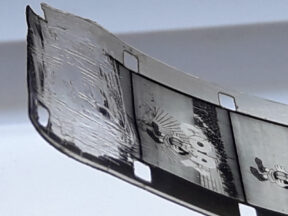
I did a post about Cathedral Films back in 2007 when we found a connection between this religious film strip producer and Bill Hanna and Gene Hazelton. Filmstrips are still in a side-alley of animation history that has yet to be explored. Artists from MGM, Disney and others worked on these after hours. Here’s another filmstrip somebody posted in its entirety on the internet, and artwork here is pretty good (note Paul Frees as the voice of the ocean). Anyone recognize the art style?

by amid
February 3, 2010 9:17 pm


Scribble Junkies, the new commentary blog by animators Bill Plympton and Pat Smith, is heating up. Yesterday, Bill posted about why he thinks the “Pink Elephants on Parade” sequence in Dumbo is the “weakest point” of the film. Today, Pat followed up with an entry about why that sequence is “the single most influential piece of animation” that he’s seen. It’s fun seeing two solid animators duke it out over a classic piece of animation that we normally take for granted.

by jerry
January 29, 2010 3:00 am


Film historians have long declared the year 1939 the pinnacle of Hollywood movie making. But what about the cartoons?

Cartoon buff Ted Watts is reviewing all 158 Hollywood cartoon short subjects (and one feature) produced in that banner year, 70 years ago, one at a time in release order, on a new blog called Cartoons of 1939.

Ted provides plot information, credits and lots of frame grabs. It’s a fun idea. If you want to start at the beginning, click here.