.png)
Why The Anime Industry Lacks Unions And How That Could Change: A Veteran Producer Speaks
Stay informed with free updates
Sign up to get our news digest — delivered directly to your inbox twice a week.
One of the bleaker themes running through our coverage is the poor conditions in which anime artists work. Pay is notoriously low and hours are long. Hopes for better things through the intervention of global companies like Netflix have yet to really be fulfilled.
Central to this discourse is the lack of unions in the industry. The topic is addressed in a fascinating conversation between veteran producer Masuo Ueda and character designer Terumi Nishii. Drawing on their experiences of the anime industry, the pair have discussed what effects unionization might have and why it is slow in coming.
The chat can be watched in two parts to Nishii’s Youtube channel, with English translation by Renato Rivera Rusca:
Ueda is a veteran of the industry: he has worked at Sunrise and Aniplex, serving as president and CEO of the latter’s subsidiary studio A-1 Pictures. He and Nishii, whose credits include Jojo’s Bizarre Adventure: Diamond Is Unbreakable, suggest six reasons why anime artists remain underpaid and unorganized:
Studios tend to work with small budgets they can’t control.
Ueda points out that only a few high-profile studios, like Ghibli, raise their own budgets, which they can do because they have strong brands. Others depend on orders from production committees or major producers like Netflix. If they don’t successfully bid for these commissions, they have no work. This helps squeeze overall budgets.
There’s anxiety that unions would cost studios work.
This is a common argument against unionization everywhere: someone, possibly abroad, will always be willing to work for less than the negotiated minimum, and so will get the job. “There’s always someone worried about being out of work, so they accept the lower offer,” says Ueda. This is true of studios as well as artists, which is why bidding for orders leads to such low budgets.
Most artists are freelance.
Many artists were on staff in the postwar decades, when major studio Toei Doga did have a union. Nowadays, the financial climate is worse and freelancers are prevalent, which makes it harder for them to organize.
Studios are now run by businessmen.
“In the old days, the people who started anime studios had a philosophy,” says Ueda, citing artists like Osamu Tezuka and Tatuso Yoshida. But now “salarymen” are taking over, often because studios are now owned by big corporations. Animators’ welfare is less of a priority for them.
Artists are apathetic.
When labor group Janica was founded in 2007, Nishii recalls that colleagues “had a lukewarm reaction”: few believed unionization would work. Janica failed to secure widespread changes in the industry, which has only added to the disillusion. “When they look at Janica, [artists] feel that [unionizing] is especially bothersome,” Nishii adds.
The industry’s small size makes things harder.
“If you take a look around, you can recognize most of the people,” says Ueda. “So if your goal is to form a union, it’s likely to be very tough to realize.” Though Ueda doesn’t say this explicitly, there may be a fear that moves to unionize will antagonize employers, who are unlikely to forget.
Ueda notes that anime voice actors and screenwriters do have union representation, and believes the rest of the industry can get there too. He has one key recommendation:
The unionization effort should start with senior artists.
The likes of animation directors and character designers, as well as renowned animators, are crucial to successful productions, and should use their bargaining power. “I believe that the first step would be to build up that sort of leverage,” says Ueda. With time, representation could expand to others. He adds that fans can do their bit by “supporting” unionization.
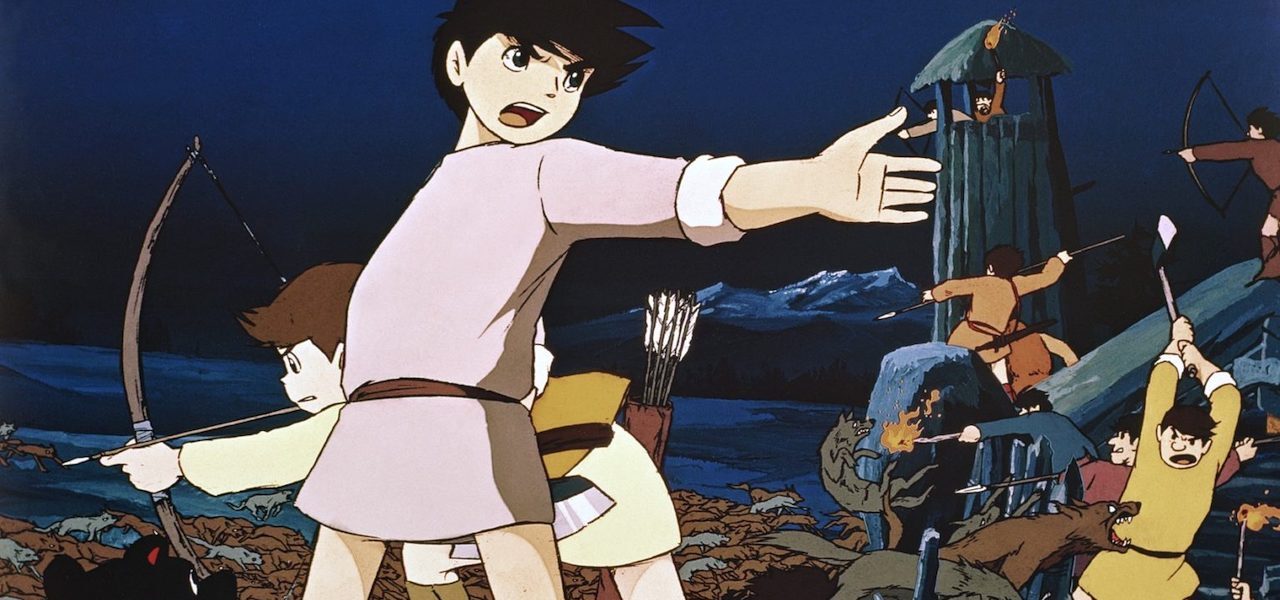
Image at top: “The Little Norse Prince” (1968), produced by Toei Doga. Its director Isao Takahata was a prominent member of the union.