.png)
How Olivier Clert’s Storyboarding Instincts Cracked Xilam’s ‘Impossible’ ‘Lucy Lost’ Adaptation
Stay informed with free updates
Sign up to get our news digest — delivered directly to your inbox twice a week.
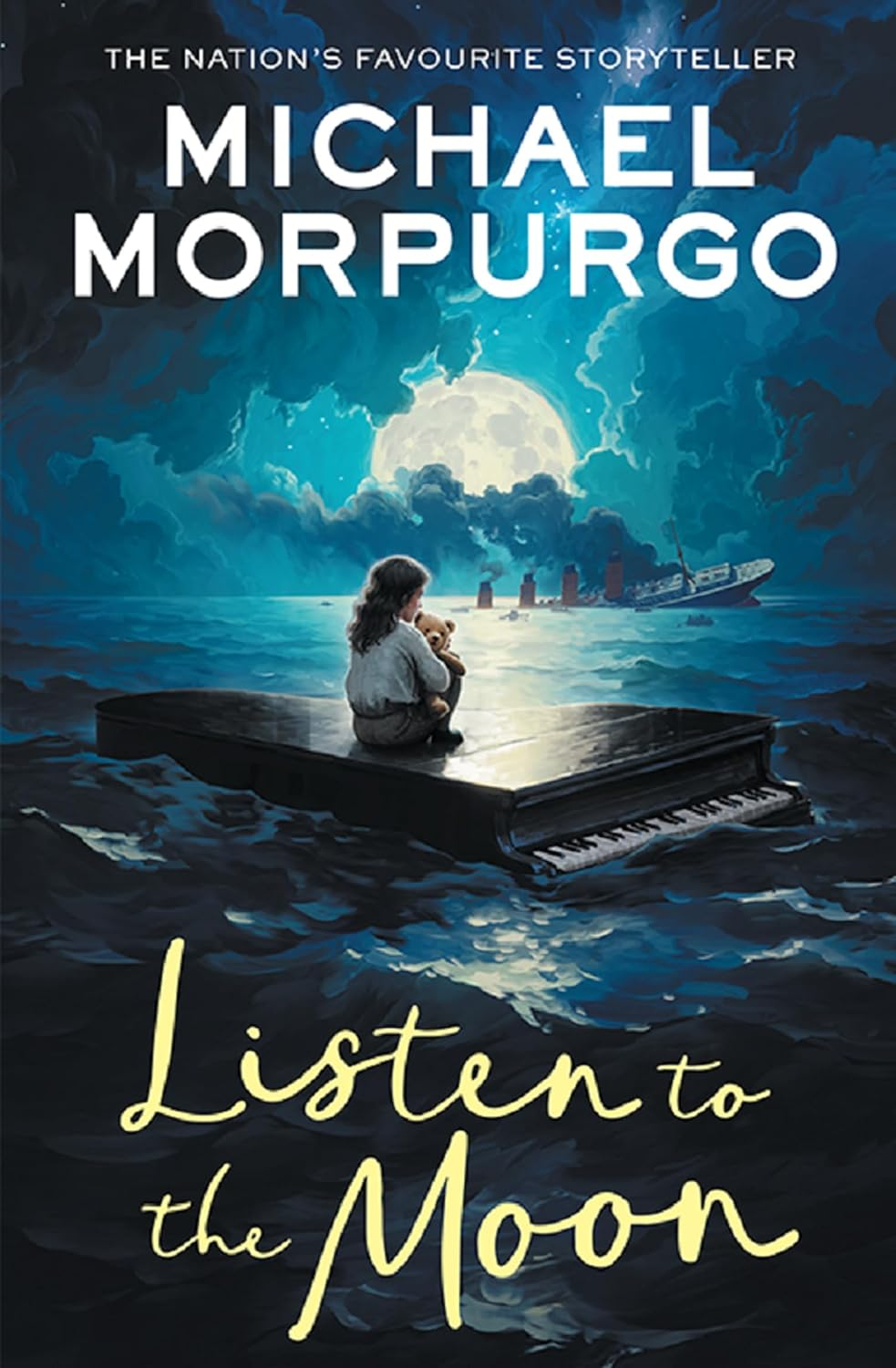
It took nearly a decade, but leading French producer Marc du Pontavice has finally cracked the feature adaptation of Michael Morpurgo’s celebrated novel Listen to the Moon.
The Xilam founder and Oscar nominee acquired the rights in 2017 after stumbling across the novel almost by accident. Morpurgo, whose books include War Horse and Kensuke’s Kingdom, had never had one of his works adapted using animation. Du Pontavice immediately saw the potential in the story of a mysterious white-haired girl washed ashore on the Isles of Scilly during wartime.
Adaptation
The producer also quickly discovered that the adaptation process would not be easy.
“We struggled for many years,” du Pontavice told Cartoon Brew during a conversation at this year’s Cannes Festival. “The structure of the book was impossible to adapt straightforwardly.”
The breakthrough arrived when storyboard artist and filmmaker Olivier Clert joined the project. Instead of following the novel’s parallel structure, Clert reshaped the story around Lucy herself.

“Once we decided that we wanted to tell a story about Lucy, which is not the case in the book, it helped us make the right decisions,” Clert told us. “What to keep from the book and what kind of liberty we could take.”
According to both, that decision changed things almost immediately, and a path forward suddenly became clear.
In Morpurgo’s novel, the Lucy character remains mute throughout, and the story is largely observed through adult perspectives. In the film, Lucy becomes active, expressive, and emotionally central, with plenty of engaging dialogue. Clert also merged the book’s separate narrative threads by bringing Milly, a young girl who exists in another storyline in the novel, directly into Lucy’s world.
Du Pontavice calls Clert’s inspiration the idea that finally unlocked the film. “It made the character far more compelling from our point of view,” the producer said.
The resulting feature, now titled Lucy Lost, premieres at this year’s Cannes in the festival’s Family Screenings section before heading to Annecy’s main feature competition. Produced by Xilam, the studio behind I Lost My Body and Oggy and the Cockroaches.
A Timeless World
One of the first things that stands out about Lucy Lost is how carefully it avoids locking itself into a rigid historical framework.
The film is set on the Isles of Scilly, off the southwestern coast of England, during wartime. Yet Clert deliberately stripped away many historical specifics. The goal was to create something closer to a folktale. The film makes the British islands feel like something from a fantasy novel.
“We didn’t want to add too much history to the story,” Clert said. “It’s almost a tale that happens on an island, and it’s not connected really to the real world.”
That approach extends to nearly every visual decision. The islands feel authentic but universal, like they could rest off the coast of any number of countries. The houses, costumes, and landscapes suggest the past without becoming museum pieces.

Du Pontavice said that it was essential if Lucy Lost was going to appeal to younger audiences. “Kids don’t relate to history,” he explained. “You have to make it more than a period story.”
The filmmakers traveled to the Isles of Scilly during production, taking thousands of reference photographs and immersing themselves in the islands’ folklore. Stories of shipwrecks, isolation, and superstition became foundational pieces of the film’s atmosphere.
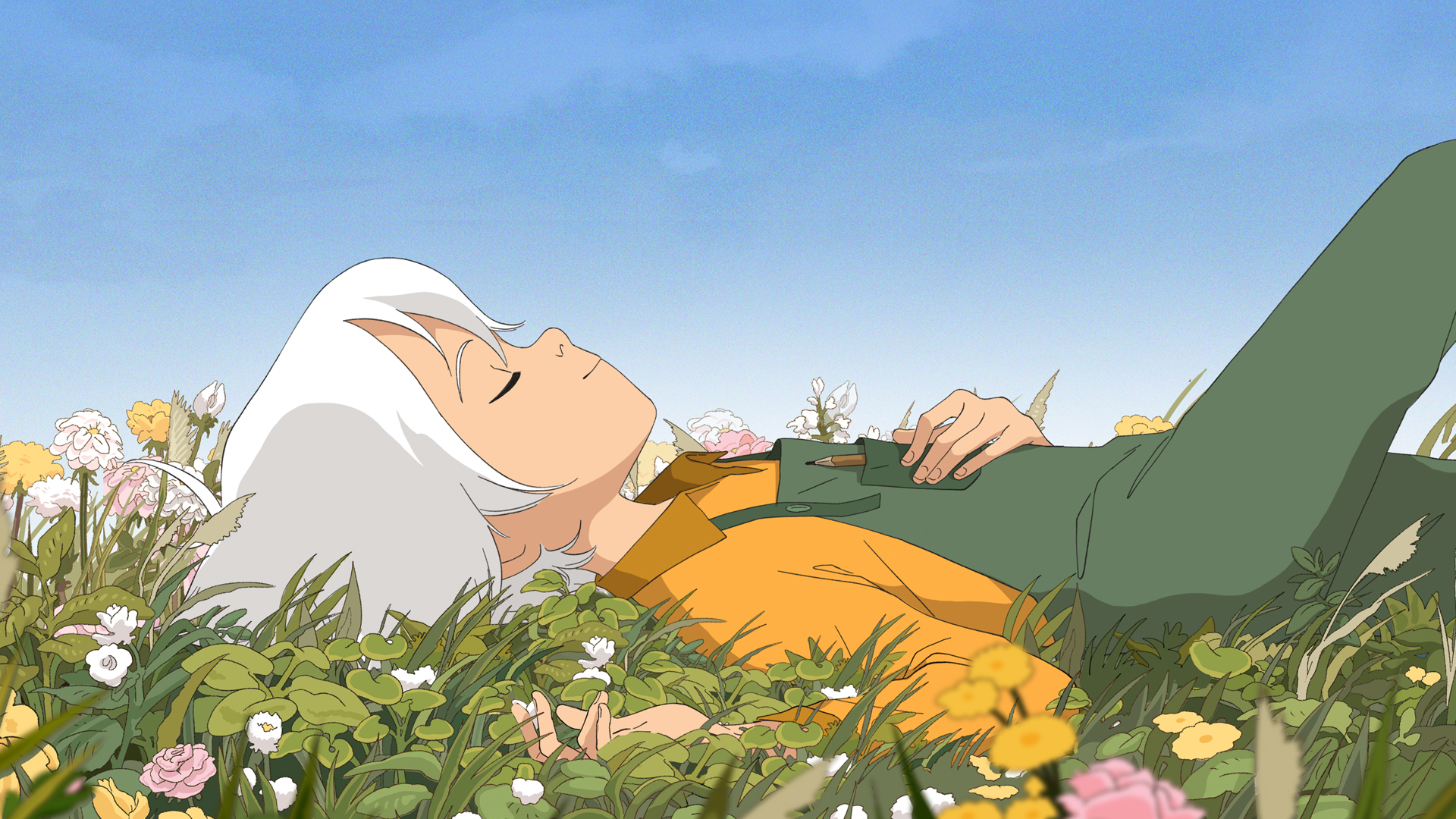
One local legend in particular shaped Lucy herself. While researching Scilly folklore, Clert encountered stories claiming that white hair marked witches. That detail does not exist in Morpurgo’s novel, but it became central to the film’s visual identity and, indeed, its core narrative.
“Lucy’s white hair becomes the sign that, at some point, she came face to face with a darkness she should never have seen,” Clert said.
The hair also immediately separates her from the island community. Lucy feels uncanny before anyone says a word.
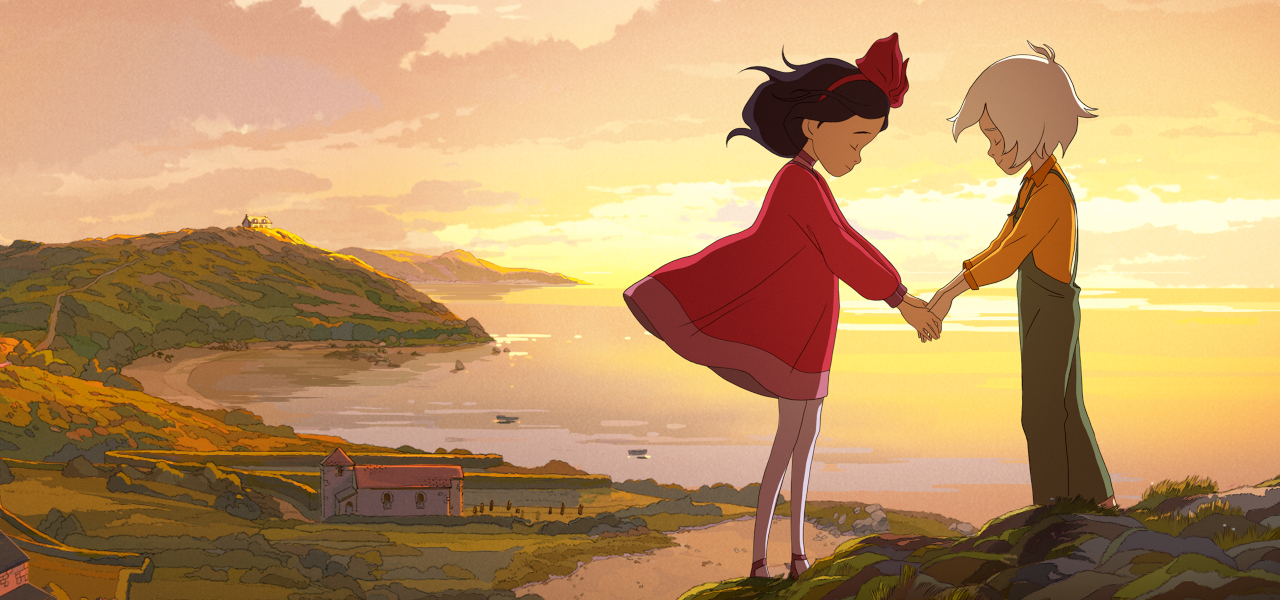
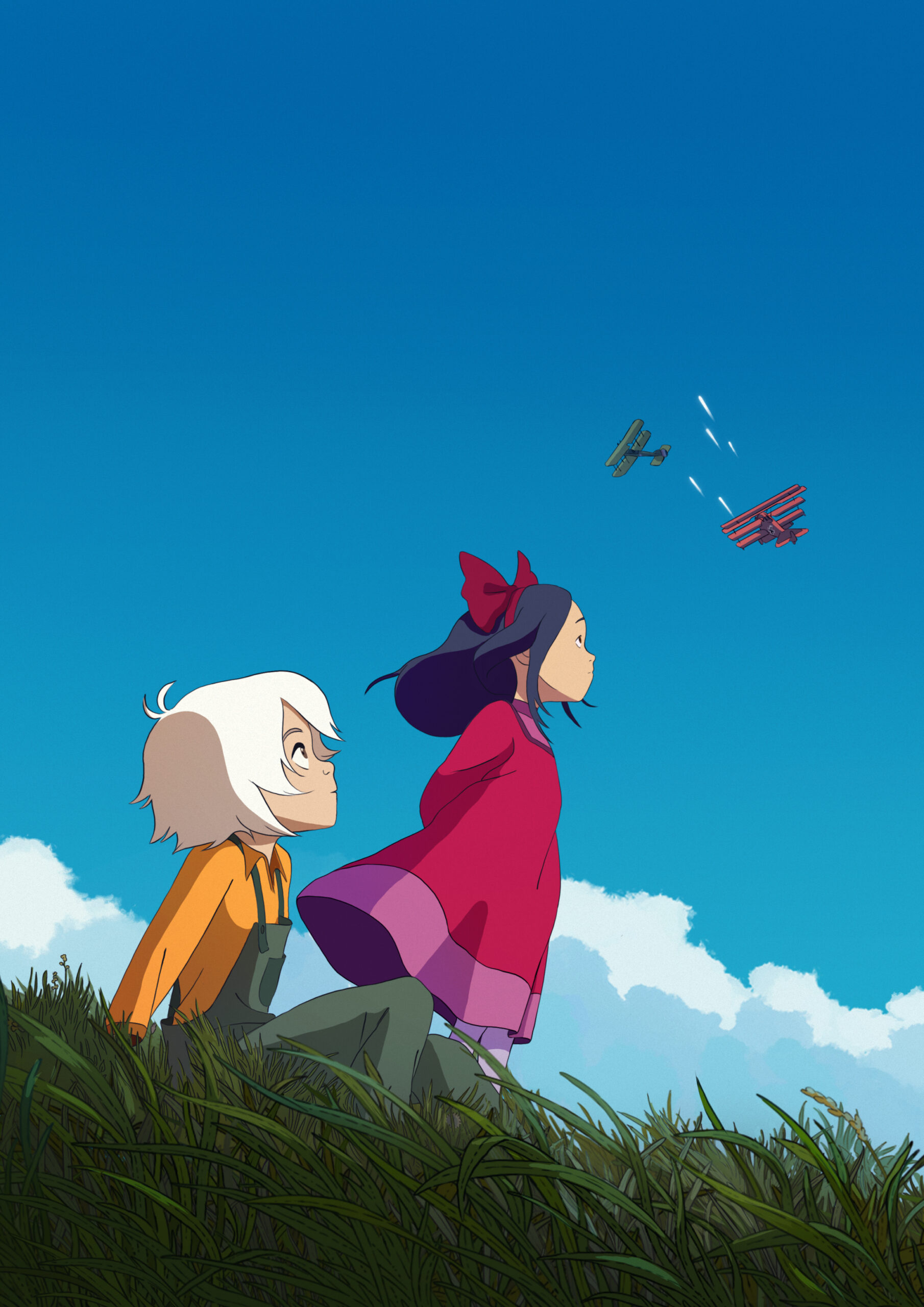
Milly was designed as her opposite. Where Lucy is quiet and fragile, Milly bursts onto the screen with acrobatics, shouts, bright red clothes, and exaggerated confidence and energy. Long before the film nails down who or what Milly truly is, she feels disconnected from the grounded world around her.
“Lucy needed to have this version of the little girl,” Clert said. “You need to have this character who pushes Lucy to overcome her own difficulties in her world.”
The visual contrast between the two girls became one of the film’s strongest storytelling assets and visual tools.
Storyboarding as the Film’s Backbone
Clert comes from an animation background, including work on the Oscar-nominated Klaus from director Sergio Pablos, and his work as a storyboard artist helped fundamentally shape Lucy Lost.
Long before production began, Clert was already drawing scenes as he was adapting the screenplay. “At the beginning, it was twenty drawings of the main moments of the movie,” he said. “Then I went back and filled the gaps.”
Eventually, those sketches evolved into roughly 1,800 storyboarded shots completed by Clert over five months. For du Pontavice, that process became invaluable and inspirational. “I’m a very visual person,” the producer said. “It was an immense help to understand where he was going the whole time.”
The producer describes storyboards and animatics as the moment when an animated film truly reveals itself. “Once you have an animatic that works, you know the film is going to work,” he said. “The rest is artistry and execution.”
Clert’s storyboard-heavy process also helped shape the film’s unusually fluid relationship between realism and imagination.
Lucy Lost repeatedly breaks from its primary visual language during dream sequences, flashbacks, and moments where Lucy’s inner life overtakes reality. One standout sequence transforms drawings in Lucy’s picture book into living imagery, like a human-scaled pop-up book. Another renders traumatic memories through rough painterly, almost experimental sketches.
“I wanted to explore Lucy’s mind,” Clert said. “A thought is not like a shot and a shot and a shot.”
Those moments allow the film to drift into abstraction without losing its emotional clarity, an absolute necessity for a film built around a mystery that takes its time to slowly reveal itself.
Rejecting Formula
In the film’s press materials, Du Pontavice openly frames Lucy Lost as a reaction against the increasingly standardized direction of mainstream animation.
“My generation grew up with old Disney films which contained real drama,” he said in the production notes. “We also grew up with Japanese animation, which doesn’t shy away from complex subjects.”
That influence can be felt throughout the film. Lucy Lost never talks down to children, nor does it soften its central themes. The villagers’ suspicion of Lucy escalates from whispered comments to outright hostility and near-violence. Children mirror the fears and prejudices of the adults around them.
“There’s a kind of contamination,” Clert said. “A gradual slide into madness and hatred against an entire group that eventually narrows down onto one person simply because she is different.”
The filmmakers repeatedly emphasized how much the story gained new relevance during production. Clert said that when he first began writing the adaptation, some scenes felt exaggerated. Later, as production neared its end, they no longer did.
“We recorded adults shouting, ‘No foreigners here!’ around the time Trump was making similar statements,” Clert said. “We were all struck by how strongly it resonated.”
The film’s themes of fear, exclusion, and scapegoating sharpened as global events unfolded throughout production.
Hitting the Right Tone
At the same time, Lucy Lost maintains an almost dreamlike softness. The film’s emotional tone depends heavily on light, color, and particularly music.
Clert said lighting was integrated directly into the storyboard phase from the beginning. Sunrise and sunset dominate much of the film, creating an atmosphere suspended between realism and fantasy and one that fits perfectly with its costal setting.
Composer Anne-Sophie Versnaeyen reinforced that feeling with a score that moves between intimacy and mythic scale. “I love music in movies,” Clert said. “It’s a great tool to communicate emotion.”
He initially temp-tracked the animatic using Versnaeyen’s earlier work before eventually recruiting her to score the feature itself. The diverse soundtrack blends strings, choir, and unusual instruments like the Cristal Baschet into something simultaneously delicate and mysterious.
“The movie needed something intimate and subtle sometimes,” Clert said, “and sometimes something wide and epic.”
Handcrafted Animation in an AI Era
At a time when much of the animation industry is focused on efficiency, automation, and artificial intelligence, du Pontavice sees Lucy Lost as a statement about the value of human craftsmanship.
The production involved more than 500 people, including around 300 artists. “It relies on a huge amount of drawing,” he said. “It’s simply impossible to make with AI.”
That perspective has become increasingly central to Xilam’s feature strategy. Following the success of I Lost My Body, the studio began leaning further into auteur-driven projects that resist formula and prioritize strong artistic identities.
“We have to respond by going in the opposite direction,” du Pontavice said. “By trying to push further into what AI cannot do.”
Lucy Lost embodies that philosophy in nearly every hand-drawn frame. The film’s linework was even transferred onto film stock during post-production to soften the perfection of digital imagery. According to the production notes, the process allowed the line art to sink more naturally into the color without introducing heavy grain.
For all its technical sophistication, though, Lucy Lost ultimately succeeds because of something much simpler. At its core, this is a timeless story about children trying to understand a frightening world that adults themselves barely understand. And an exquisitely crafted one, at that.