.png)
‘Nobody’ Director Yu Shui On Crafting China’s Biggest-Ever 2D Animated Hit
Stay informed with free updates
Sign up to get our news digest — delivered directly to your inbox twice a week.
Better late than never, the immensely popular animated film Nobody is showing at this year’s Annecy after its release in China and a quiet release by CMC Pictures in the United States in 2025.
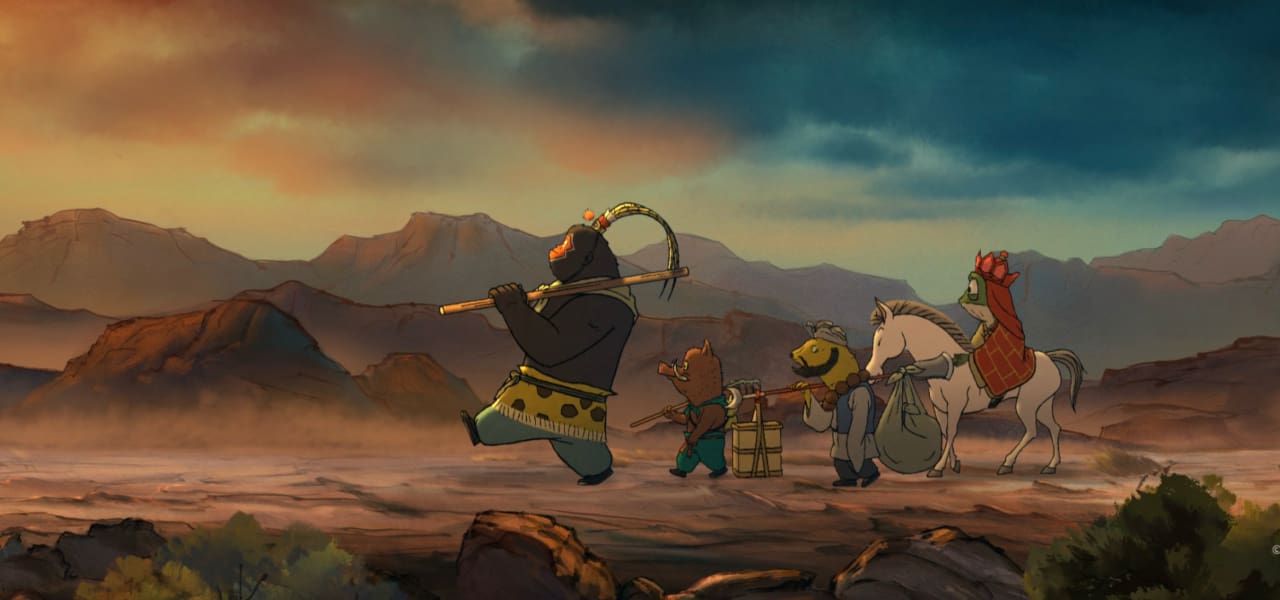
Domestically, the film, produced by Shanghai Animation Film Studio and directed by Yu Shui, is the highest-grossing 2D animated film ever. Adapted from Shui’s short of the same name from the anthology series Yao: Chinese Folktales, it’s an underdog story about Yaoguai (spirits or monsters, basically) who, in order to transcend their lowly social position, impersonate the main characters of Journey to the West (the monk Tang Sanzang and his disciples, one of whom is the Monkey King, Sun Wukong) so they can beat that famous crew and achieve immortality first.
That spin on a story which, by Shui’s description, is “a universally known literary classic,” finds new life by decentralizing Sun Wukong and his companions, who are the focal point of most adaptations of Journey to the West. Shui adds, “Very few works feature Yao as the main characters, especially nameless minor ones. Observing the world of Journey to the West from an alternative perspective offers a completely fresh experience.”
Though much of the adventure is played for laughs, it has its fair share of heartfelt drama too, and, appropriately, according to director Yu Shui, was also founded on a synthesis of visual styles inherited not just from the history of Shanghai Animation Film Studio but also from both Chinese and Western traditions of painting and animation. Ahead of the film’s screening at the Annecy Festival, Cartoon Brew spoke to Yu Shui about the making of Nobody.
Cartoon Brew: How did Nobody evolve from the original short film, and when did you first begin working on the feature?
Yu Shui: When the storyboard for the animated short Nobody (from Yao: Chinese Folktales) had just taken shape, we decided to move forward with a feature-length adaptation because the storyboard looked like it had a lot of potential. The short film featured vivid characters and an interesting story, but its narrative scope was too limited to sustain a feature film. We faced three options: expanding the existing story, writing a sequel, or creating a prequel. In the end, we chose none of them. Instead, we decided to rewrite the story entirely. So, at the end of 2021, we began writing the script for the feature film.
There’s a very unique blend at the core of Nobody‘s visual style. I was hoping you could talk me through the origins of this look.
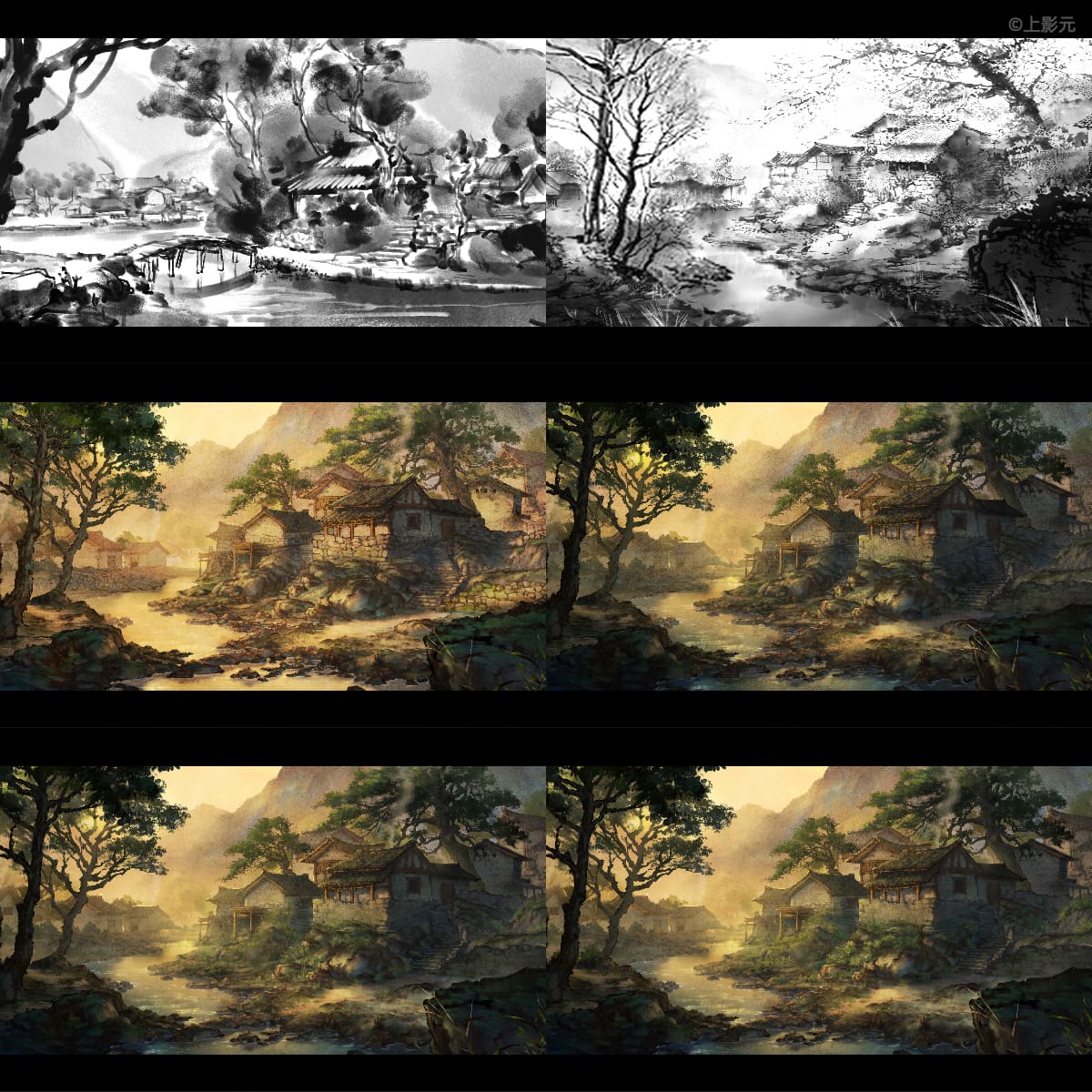
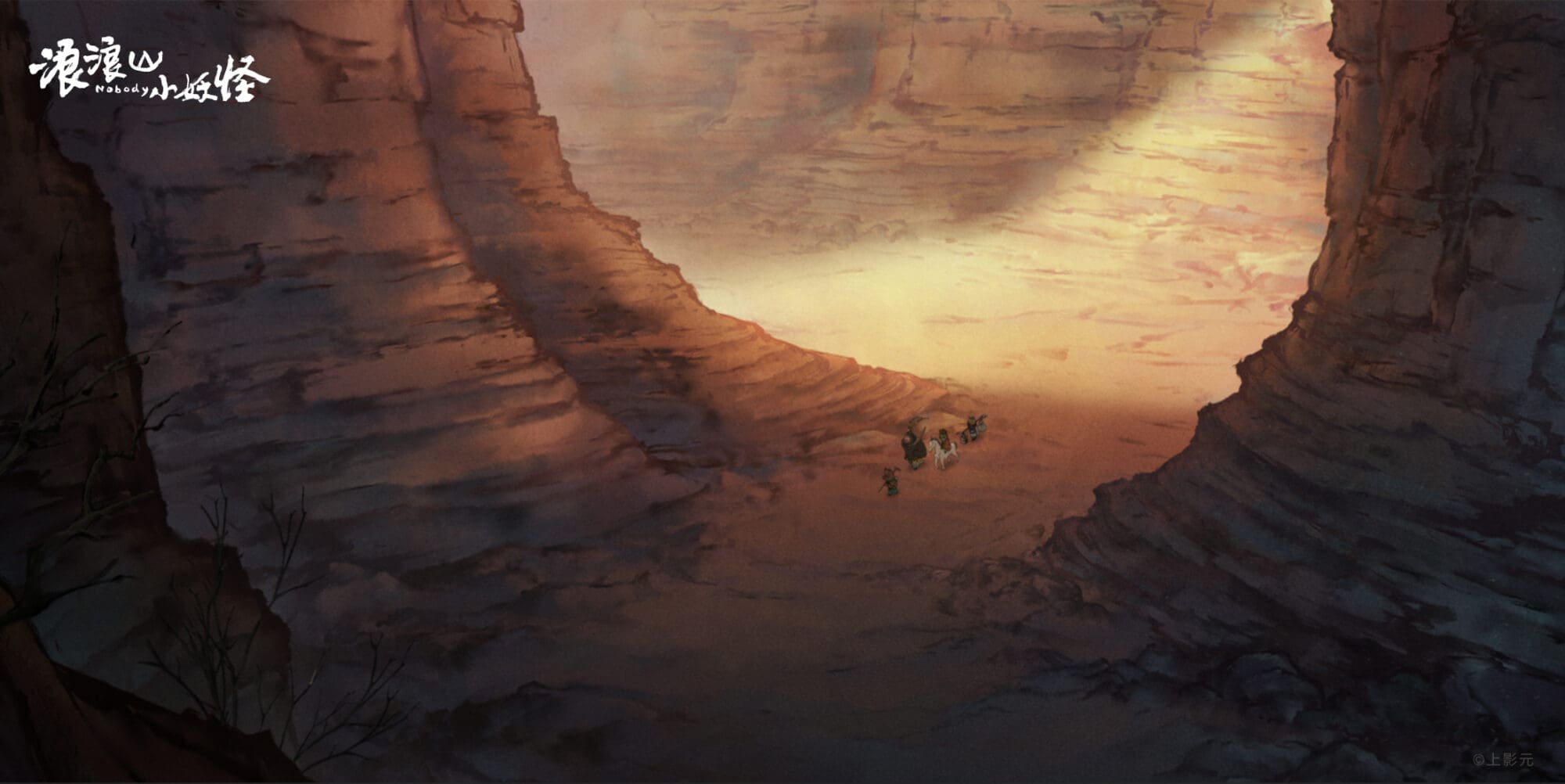
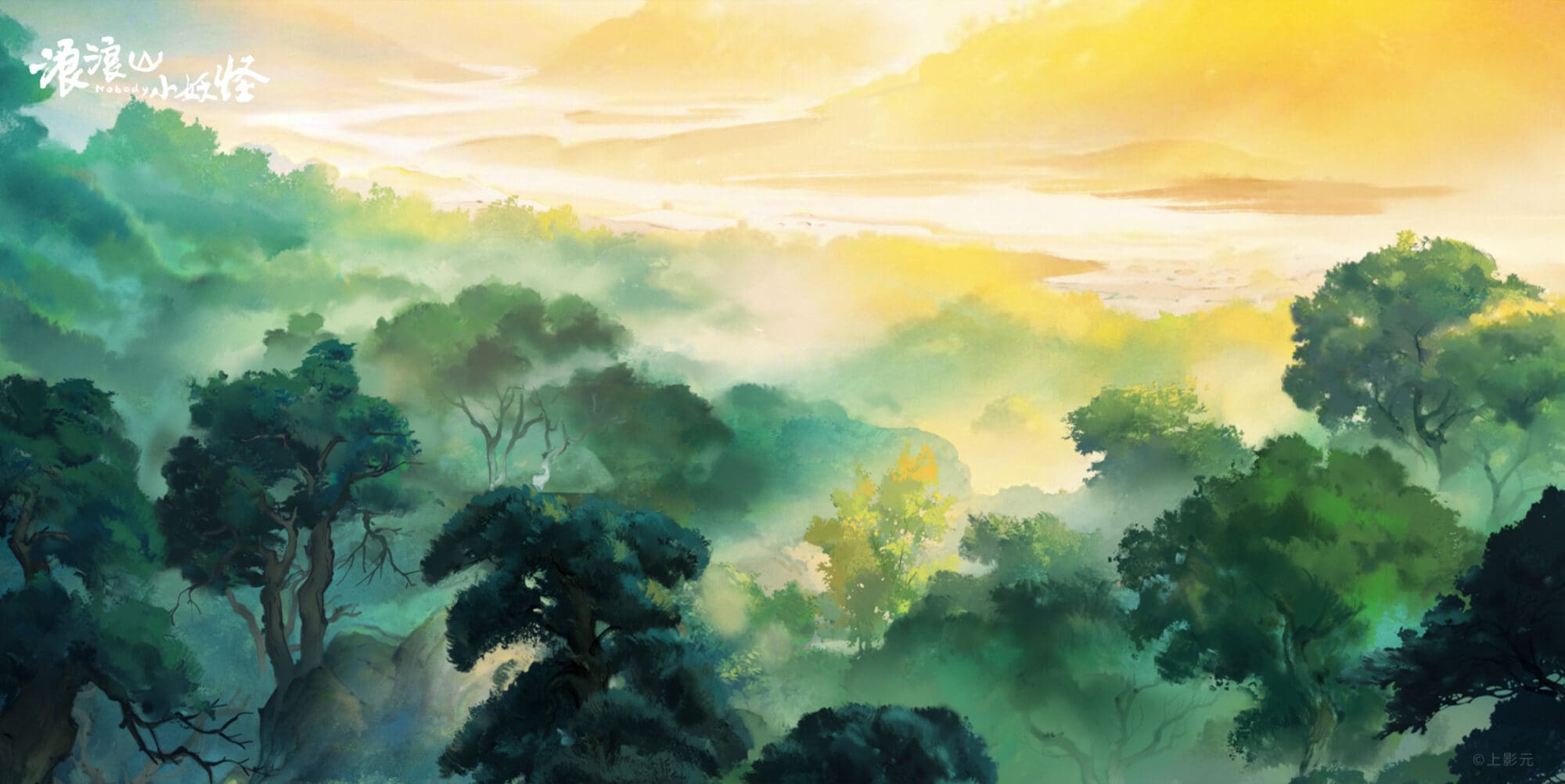
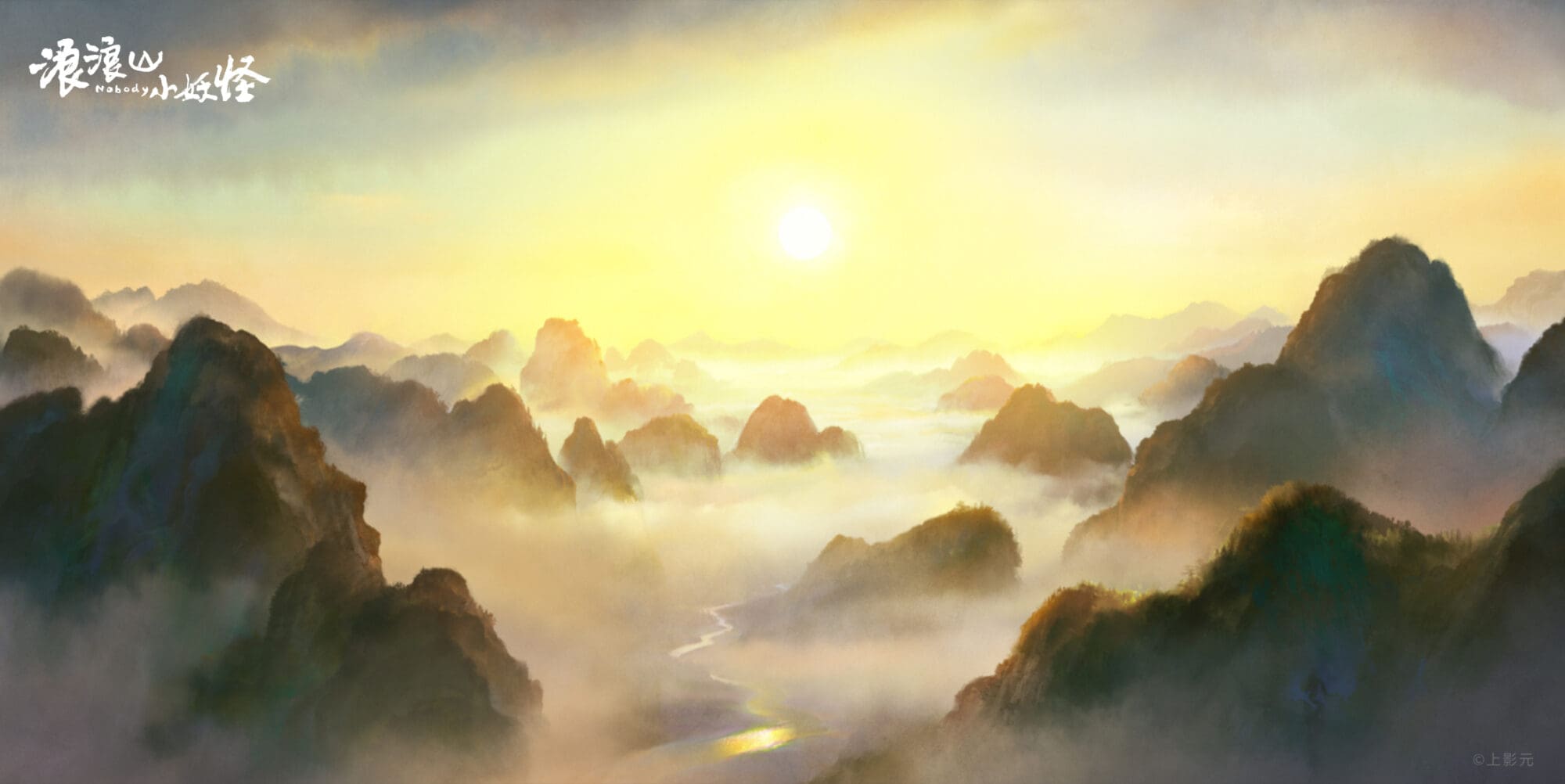
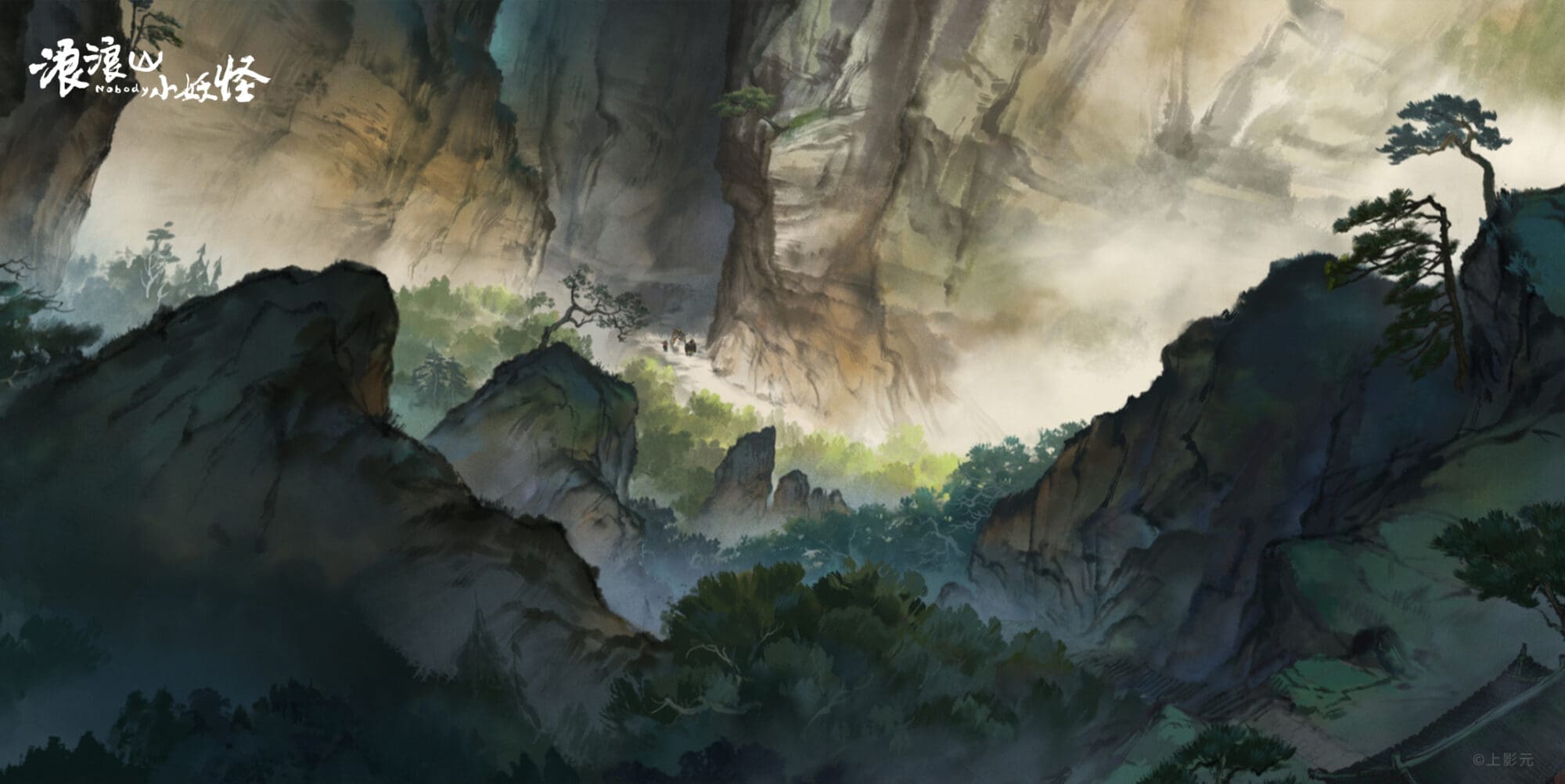
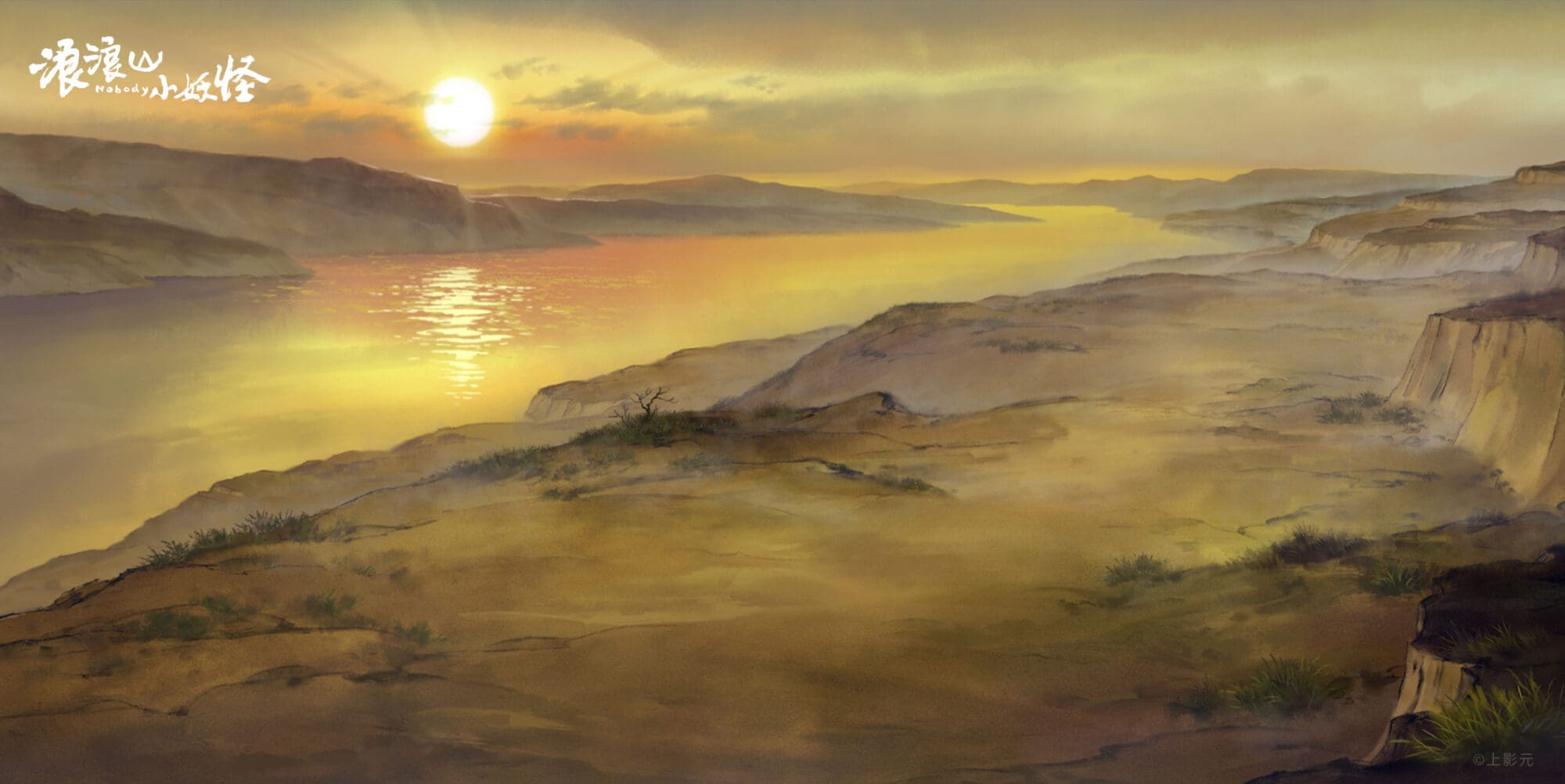
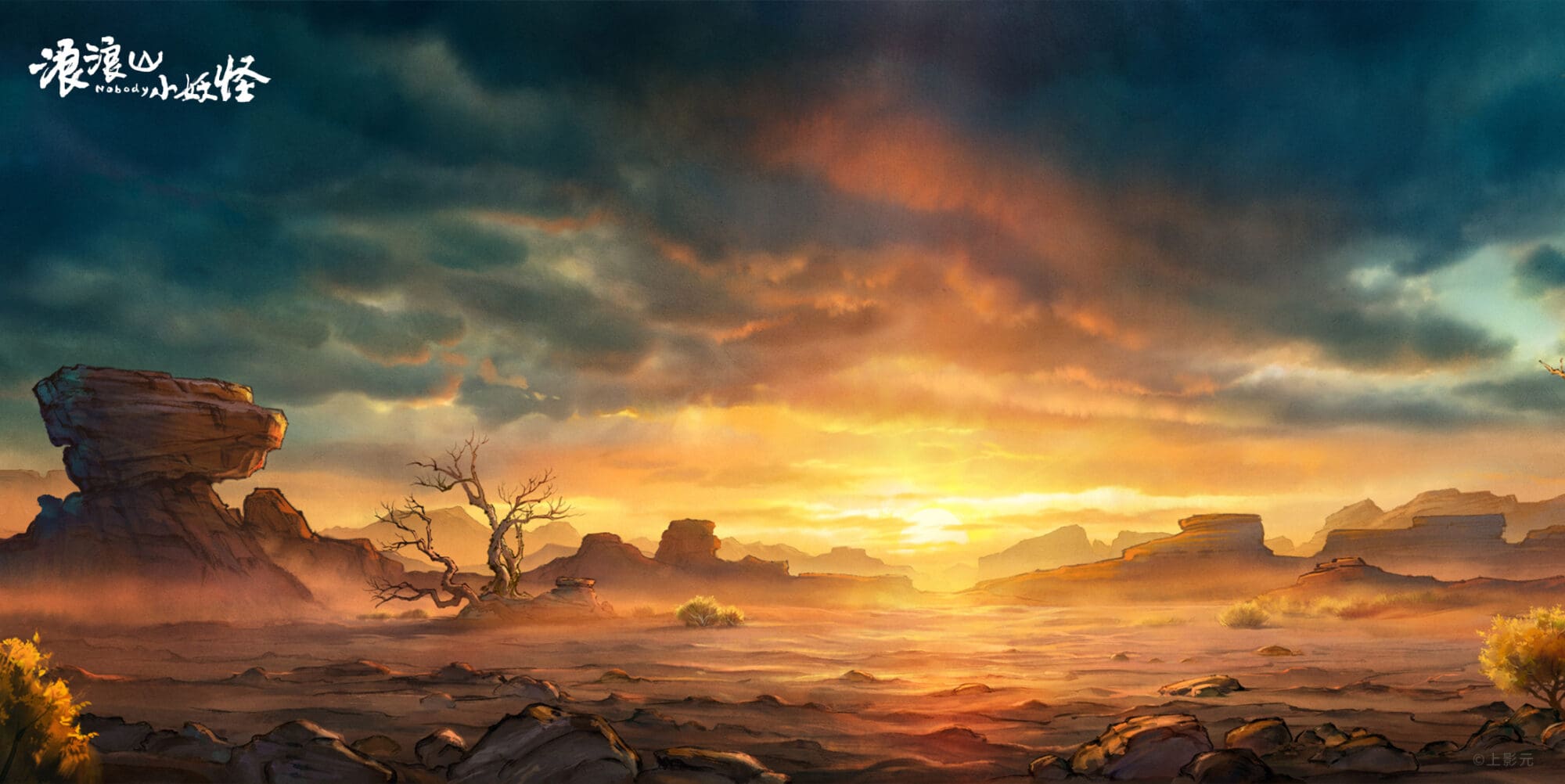
We have been looking for ways to combine the freehand brushwork of traditional Chinese painting with the realism of Western painting. The ink smudges, negative space, and unique methods of depicting mountains, rocks, and trees found in Chinese painting create the uniqueness of the film’s art. The perspective, structure, and use of light and shadow in Western painting can create a believable environment and an immersive audiovisual experience. As a result, experimentation with the art style is one of the areas where the film devoted the most effort.
Speaking of environments, the background paintings are beautiful and make an interesting contrast to the more cartoonish character designs. How did your team approach their creation?
Our art director first began painting in the traditional Chinese style on rice paper, seeking the right touch and exploring how to translate the aesthetics of Chinese painting into digital form. We customized a set of unique brushes specifically for Chinese painting within our digital software and had the art team systematically study traditional Chinese painting techniques for depicting forms such as mountains and rocks. The Chinese approach to painting these subjects differs markedly from Western painting. In Chinese art, the darkest ink tones are placed at the tops of rocks to suggest vegetation, whereas in Western painting, darker shades are typically applied to the bottom or shadowed areas to reflect the physical principles of light and shadow.
This fusion of Chinese and Western approaches to natural landscapes allows the visuals to stand out with a distinctive aesthetic while still preserving a strong sense of immersion. As for the background style, we primarily drew on traditional Chinese painting techniques, and we were also greatly inspired by many of the artistic animated shorts produced by Shanghai Animation Film Studio in the last century.
In fusing these visual traditions, what tools were you using to create the film?
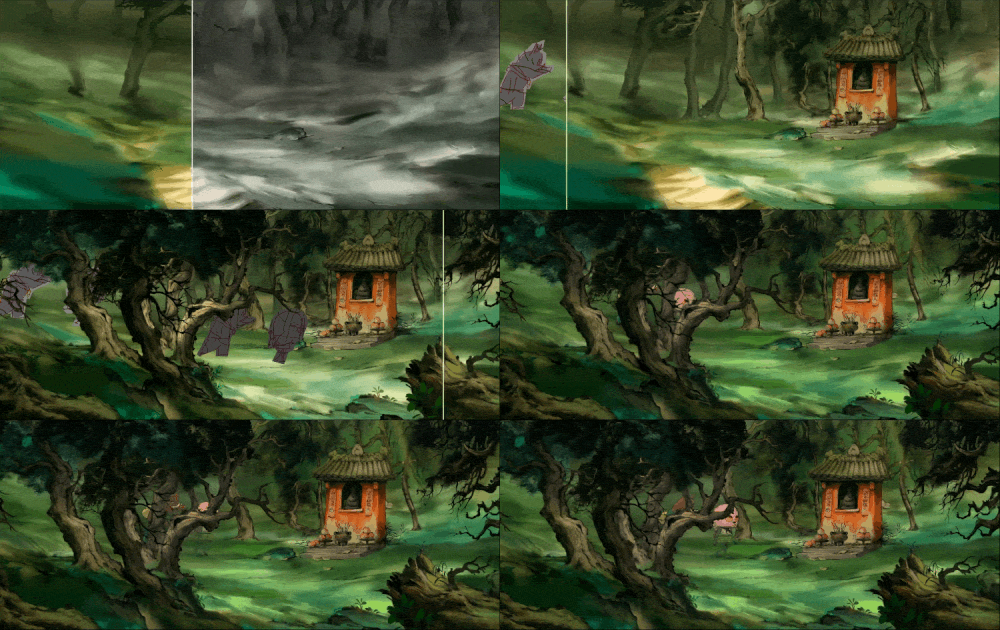
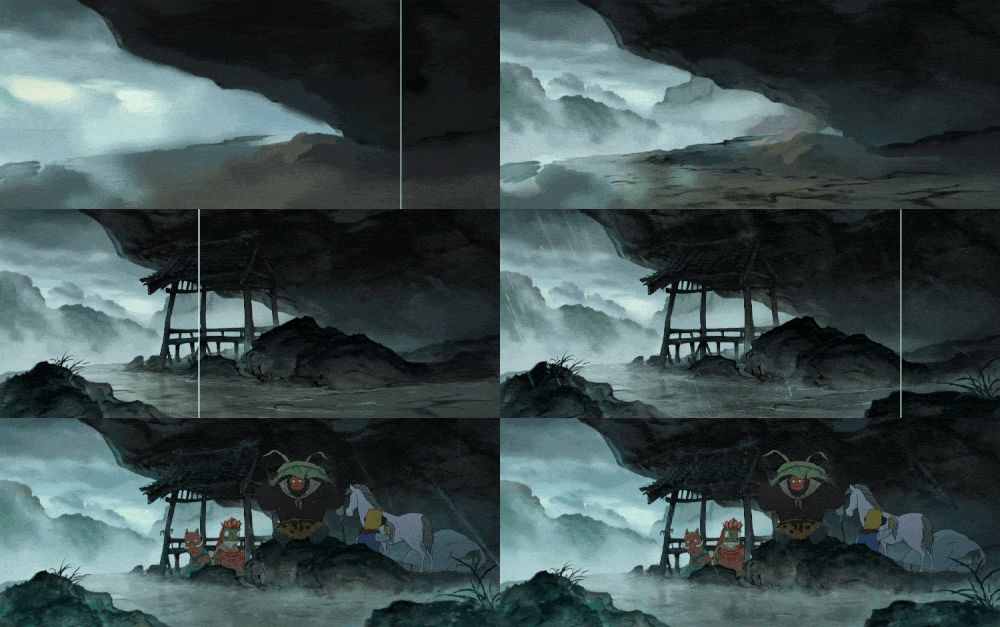
Actually, we used the most common 2D production techniques and software. The main focus was continuously seeking better visual results from a painterly perspective. The most difficult part is that this background painting style places very high demands on artists, and we simply cannot find enough high-level talent. During industrialized production, ensuring that the style does not suffer any loss of quality is a major challenge.
We differentiated the backgrounds by difficulty. Panoramic views, time-consuming pieces, and the most challenging backgrounds were assigned to our best artists, while less demanding scenes were handled through standardized production workflows.
The linework really stood out in the character designs, especially against the softer lines of the backgrounds. What inspired your approach?
My inspiration comes from two sources: the inherent whimsy of the Yao characters themselves and traditional Chinese art. In the 1980s, China saw a trend of picture-story books with strong ethnic characteristics, but as Japanese manga gained popularity, this style gradually faded away. For this project, we drew on some of that picture-story-book style and blended it with contemporary elements, resulting in a style that is both innovative and grounded in a broad popular tradition.
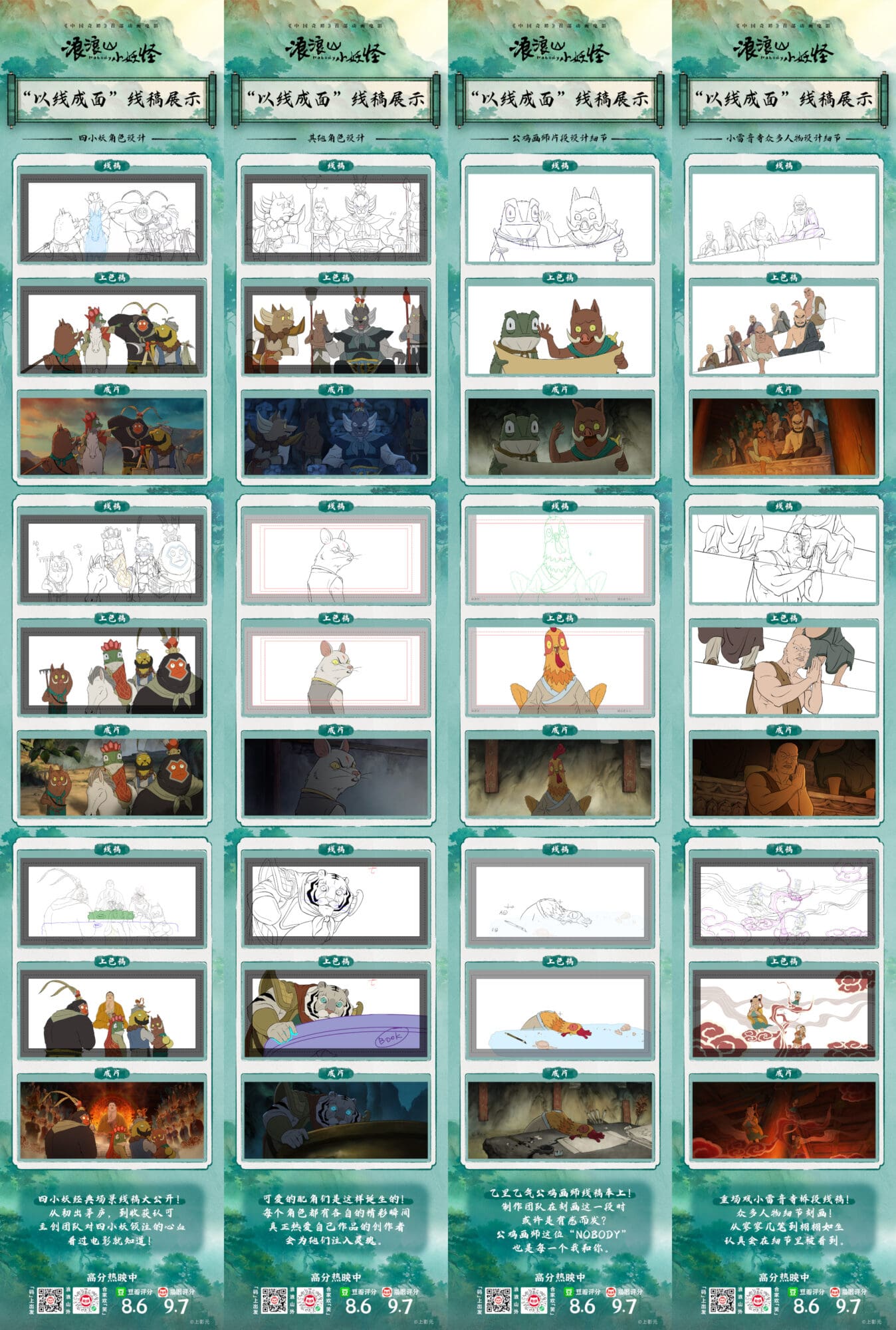
In terms of character linework, this was indeed a challenge because we needed to convey the rhythm of the lines themselves. We made corresponding adjustments based on shot scale. The closer the shot, such as a close-up, the thicker the lines. The wider the shot, such as a long shot, the thinner the lines.
At the same time, when considering brushwork and deciding where lines should be thicker or thinner, it’s difficult to rely solely on the individual skills of each animator in a large-scale collaborative production. To some extent, we needed to quantify the process. We created detailed guidelines for character modeling and line drawing, and through continuous communication and iteration with the production team, we found the best way to present it.