.png)
‘The Violinist,’ Singapore’s First Animated Feature In 15 Years, Explores War And Friendship Across Eight Decades (EXCLUSIVE TRAILER)
Stay informed with free updates
Sign up to get our news digest — delivered directly to your inbox twice a week.
At next week’s Annecy, The Violinist, an ambitious Asia-Europe co-production directed by Ervin Han and Disney veteran Raúl García, will make its world premiere in the festival’s official competition.
Produced by Singapore’s Robot Playground Media, Spain’s TV ON Producciones, and Italy’s Altri Occhi, Cartoon Brew has been given exclusive access to the sweeping historical drama’s first teaser.
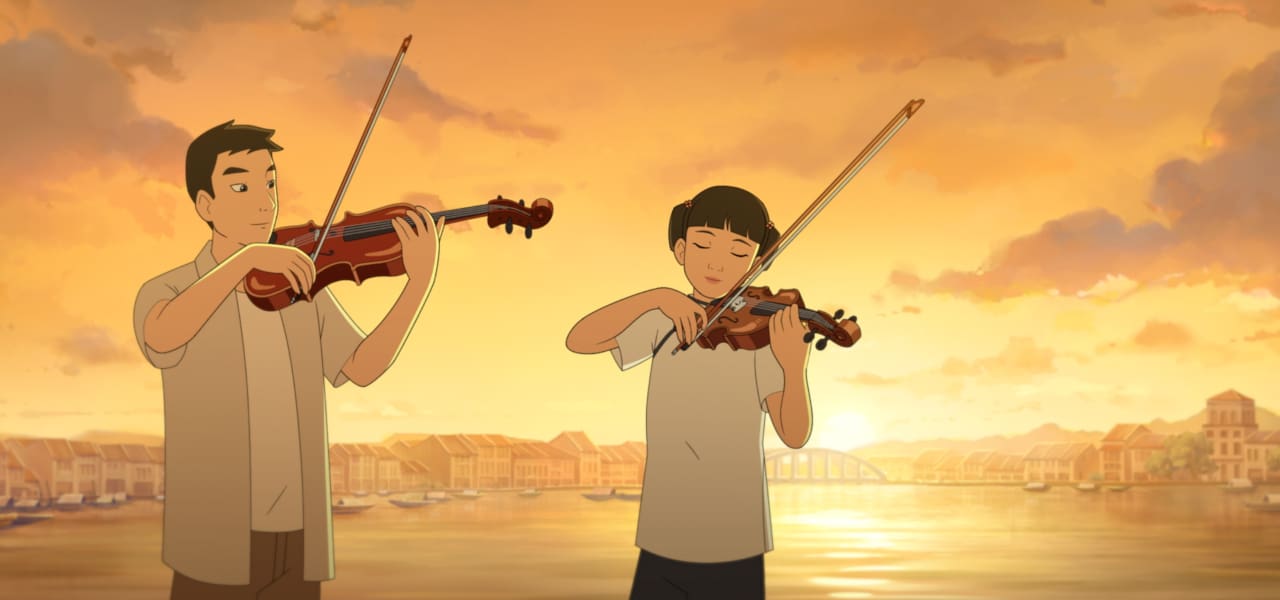
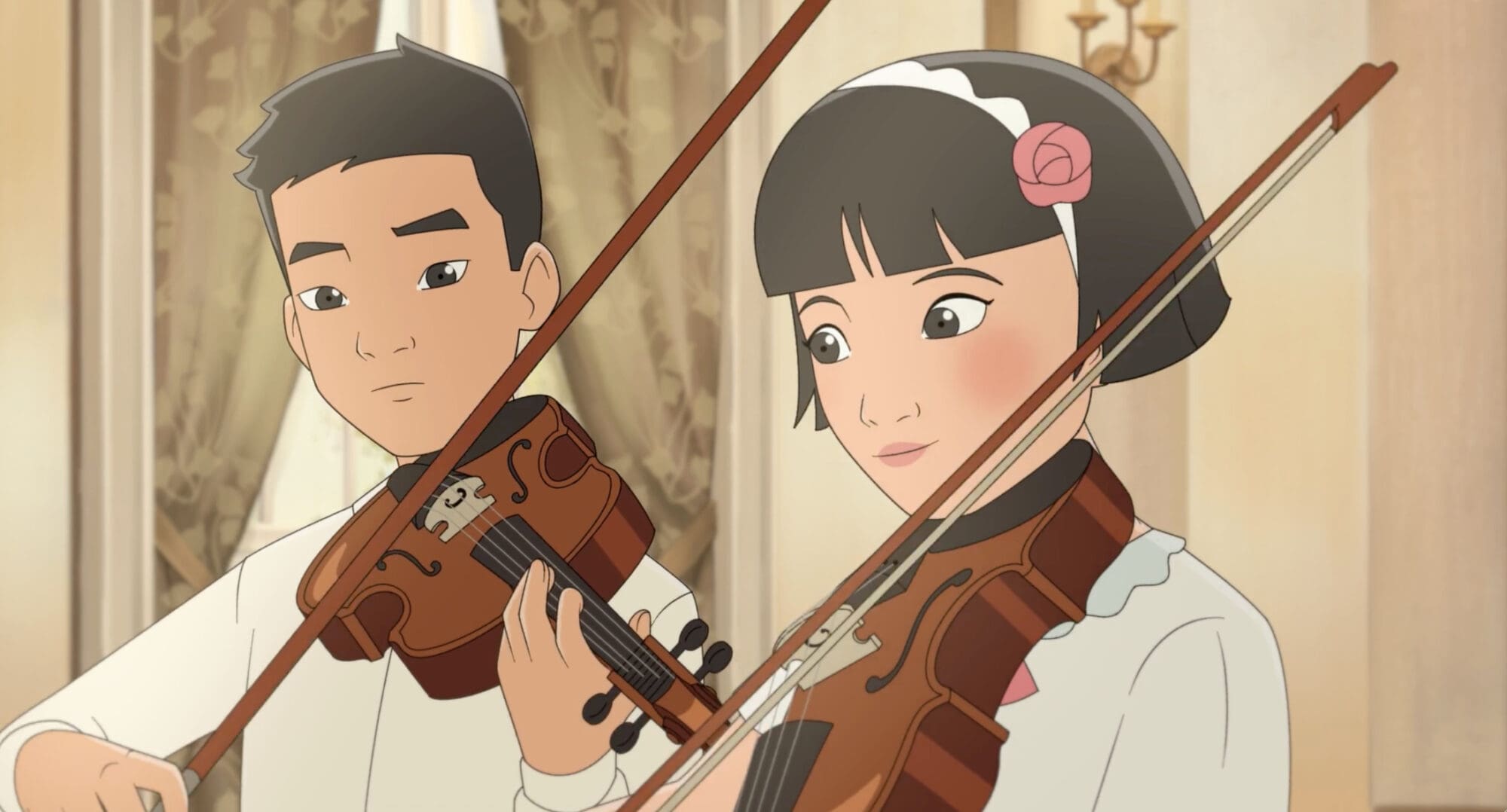
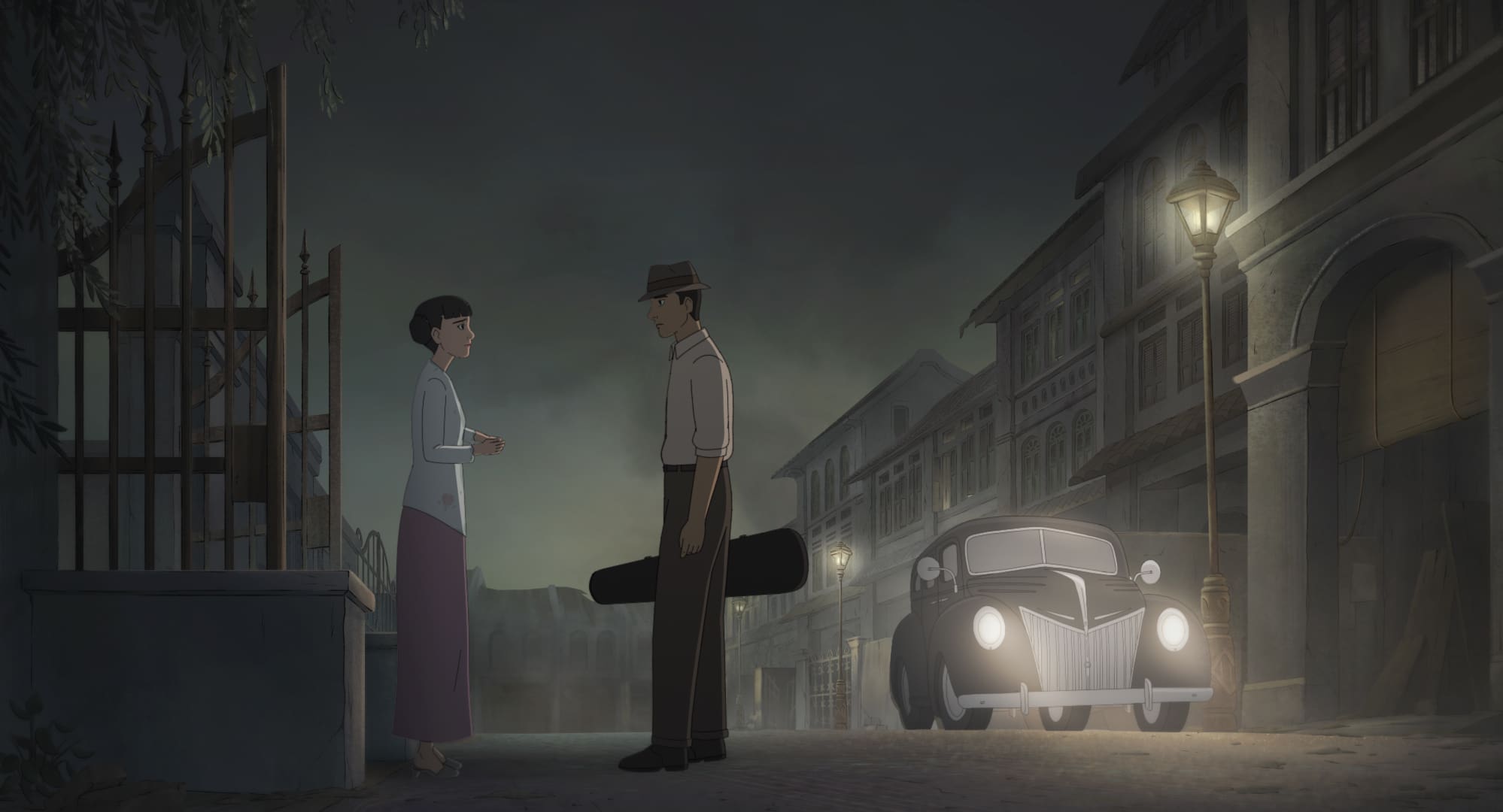
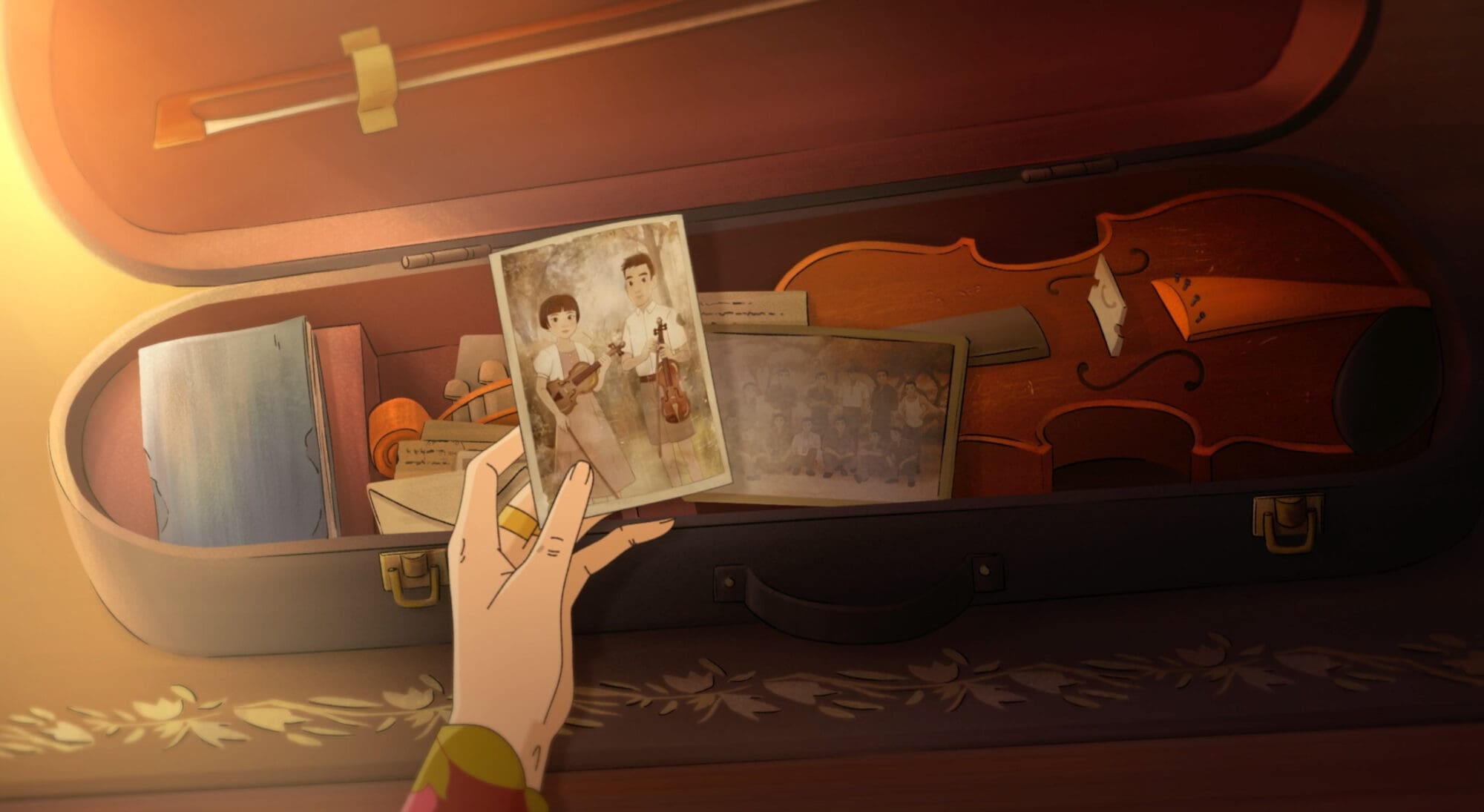
The Violinist is a decade-spanning historical drama that follows two childhood friends whose lives are shaped by war, separation, and a lifelong connection to music. Spanning nearly eight decades, the film begins in pre-WWII Singapore and unfolds against the backdrop of the Japanese occupation and the dramatic social and political changes that followed across Southeast Asia. At its center is the story of Fei and Kai, two gifted young musicians whose shared love of the violin endures long after history pulls them onto different paths.
The project marks a milestone for Singapore animation. It is the country’s first animated feature in more than fifteen years and the first official co-production between Singapore and Spain. Combining artists from across Southeast Asia and Europe, The Violinist blends hand-drawn animation, CG-boosted set pieces, and a powerful original score by Ricky Ho and Isabel Latorre.
Ahead of the Annecy debut, we spoke with Han and García about the film’s unusual international production, its historical setting, and the challenge of building a story where music is as important as any character on screen.
Cartoon Brew: Can you talk a bit about the co-production structure? It’s unusual to see a feature animation co-production between Singapore and Europe, especially on this scale.

Raúl García: It was complicated from the beginning because this is the first co-production between Spain and Singapore. Singapore is a small country, and financing a feature entirely on its own is very difficult. We knew we had a great project and wanted to make it happen together, but co-production is never simple.
As more countries came on board, we had to figure out how to divide the work in a way that felt seamless. We couldn’t have audiences noticing shifts in style or differences in how the characters behaved. Fortunately, Ervin’s script spans decades and multiple locations, so it gave us natural ways to assign sequences to different teams. Certain periods of time and certain places could be handled by different partners while still feeling like one cohesive film.
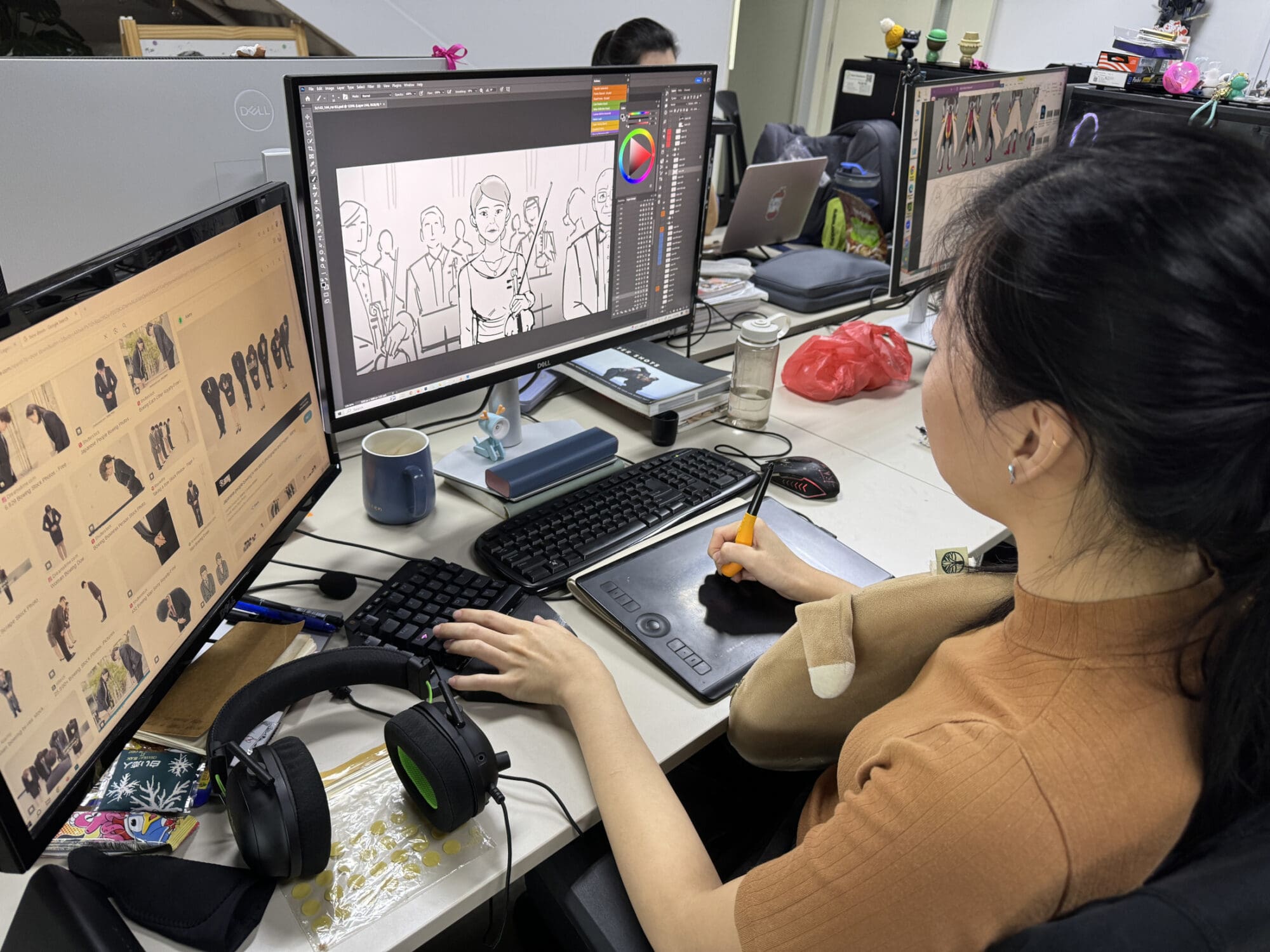
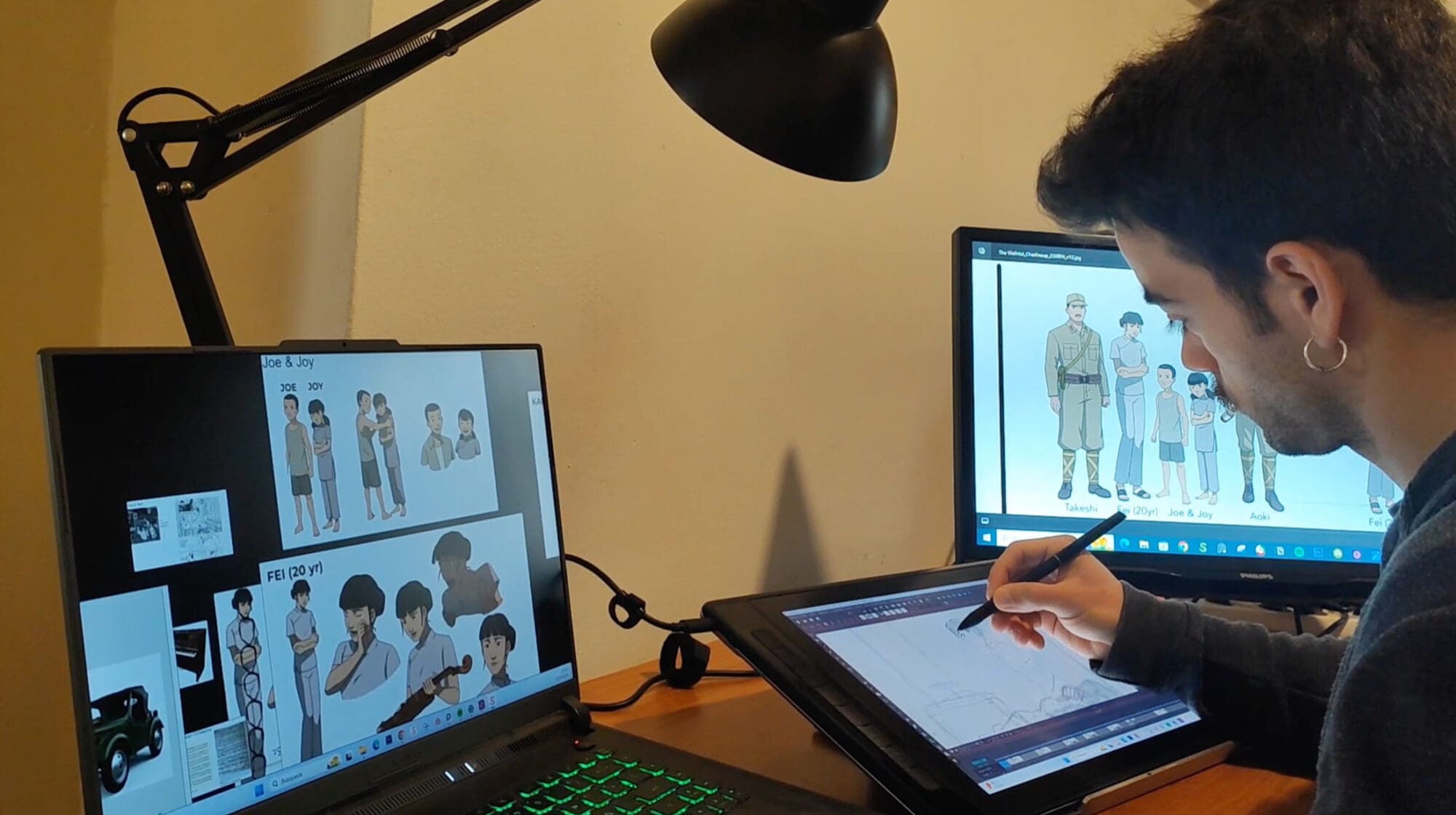
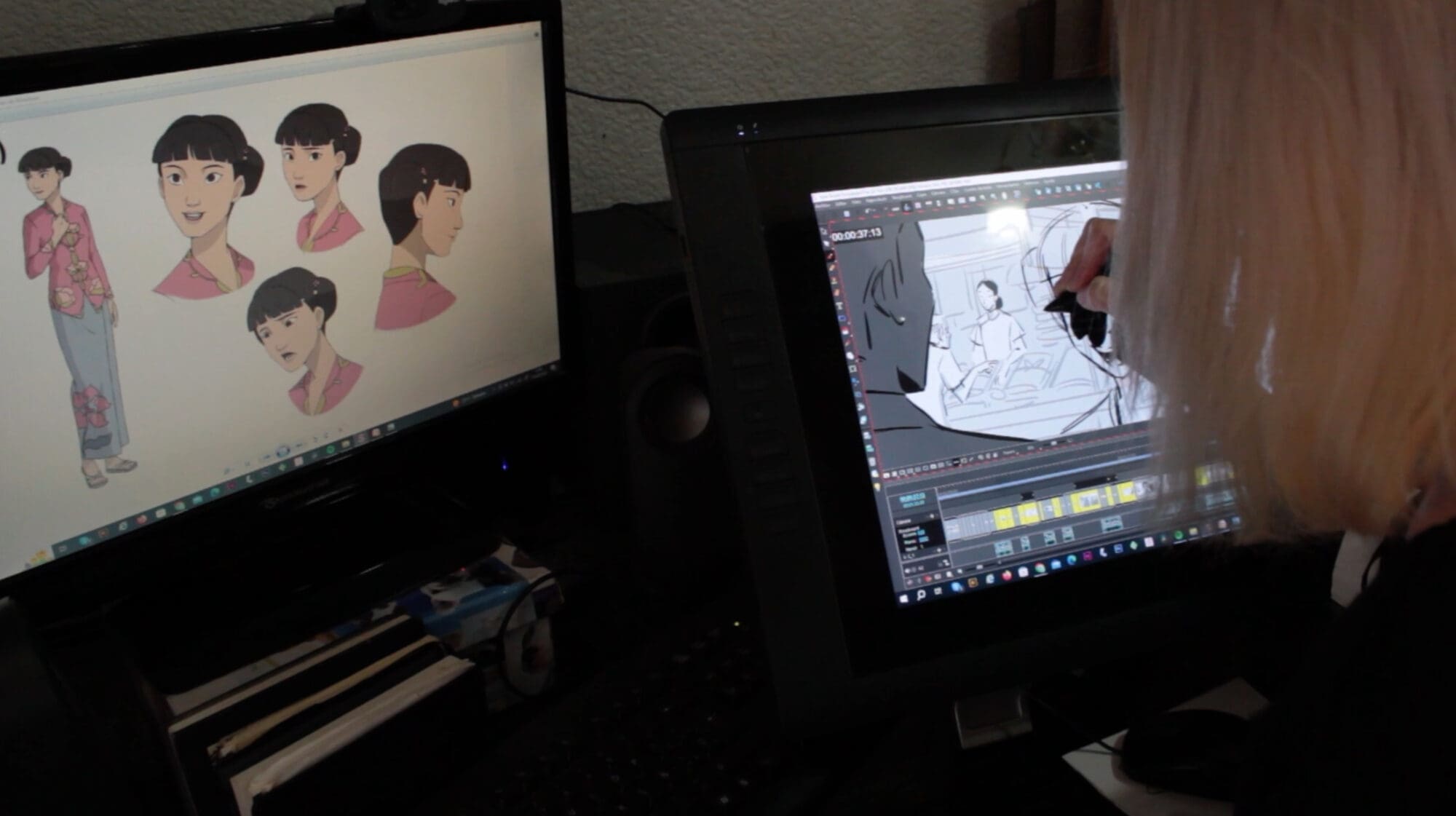
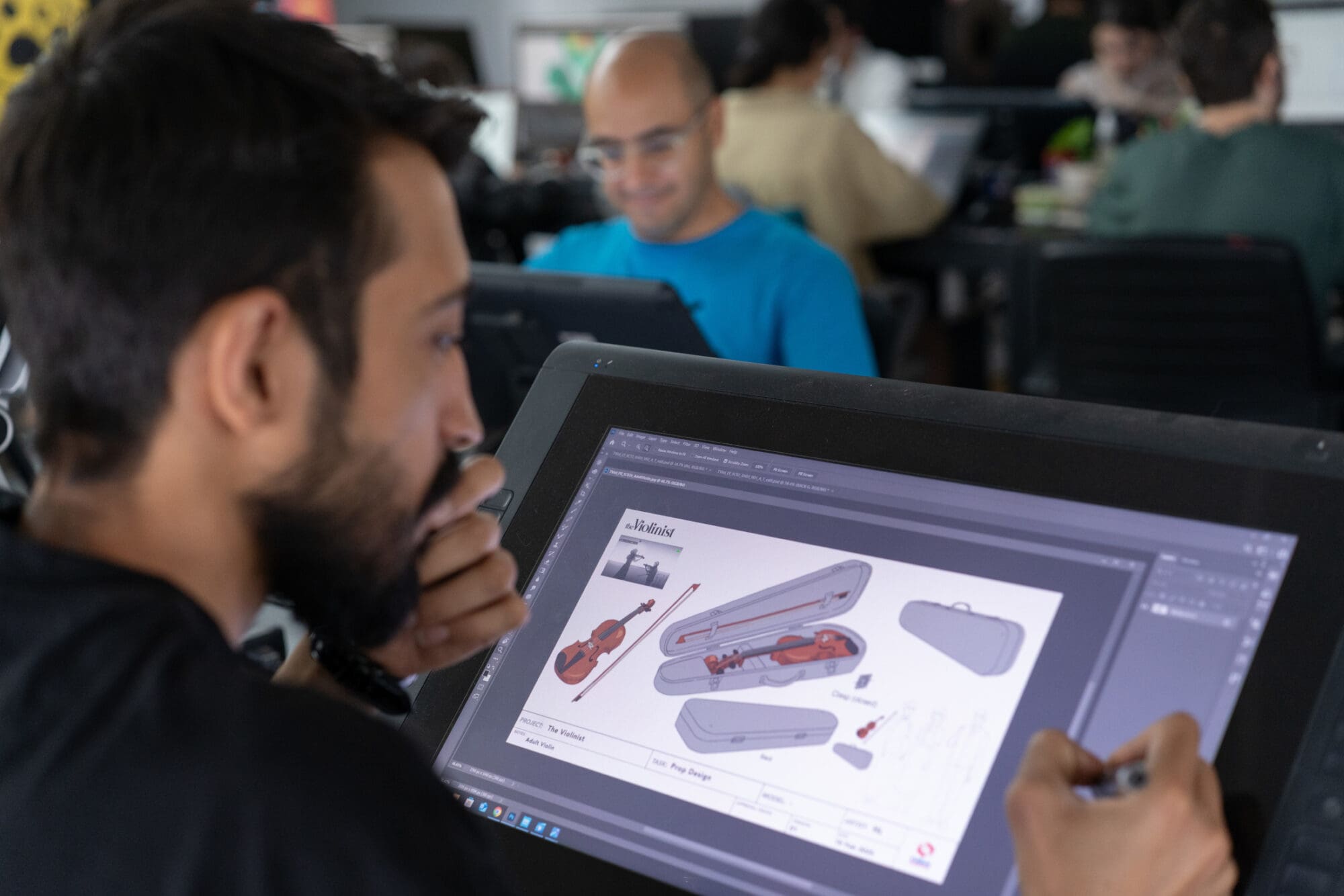
How did the two of you first meet, and how long had this project been in development?

Ervin Han: I co-founded Robot Playground Media in 2013. The dream was always to tell local stories through animation and eventually make an animated feature. Singapore has an animation industry, but it’s mostly focused on series work and service work. There hasn’t really been a feature film culture.
I started writing The Violinist on New Year’s Day in 2017. It was raining, and I still remember sitting down to begin. I wanted our first feature to be about who we are and where we come from.
I met Raúl seven or eight years ago in Singapore. We hit it off immediately. What I think attracted him to the script was that it was deeply rooted in Southeast Asian history and culture, but it was also a universal story about people and relationships. Because it was our first feature, I knew I needed someone with experience to help guide a young team. Bringing Raúl aboard was one of the best decisions we made.
García: When I started teaching at Lasalle College of the Arts in Singapore, I tried to meet everyone working in animation there. We were introduced through mutual friends and immediately connected.
Ervin showed me some of his short films about places in Singapore that no longer exist. I kept telling him those stories deserved a bigger audience. Then he showed me an early version of The Violinist, and it was obvious this wasn’t a short film. It needed a larger canvas.
Living in Singapore also made me curious about a history I knew very little about. All those things came together in this project.
The film is incredibly ambitious. It spans decades, multiple countries, and major historical events. Did that scale create challenges while developing the project?
Han: Absolutely. But from the beginning, we weren’t trying to make a historical documentary. The film is rooted in real events, but it’s really about how people experience and remember history.
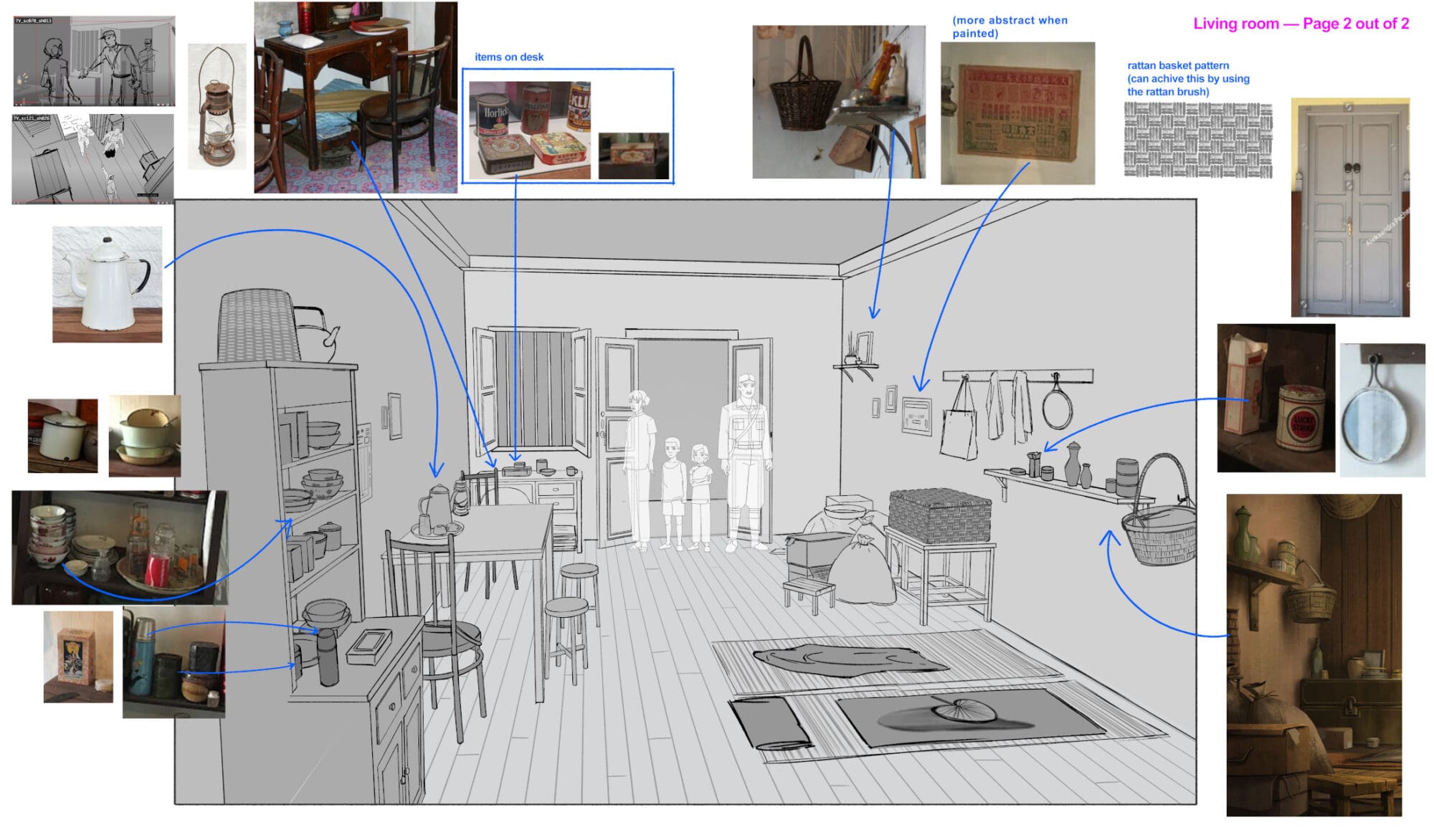
History is lived through friendships, losses, love, and music. We wanted audiences to feel those things rather than simply learn facts. At the center is this relationship that unfolds across decades. The story deals with memory, identity, independence, and self-discovery, but ultimately it’s about two people finding their own paths through life.
To me, life is neither happy nor sad. It’s bittersweet. That’s the emotional truth we were trying to capture.
García: Music is really the third protagonist of the film. It’s what keeps these people connected. Through music, we experience their suffering, their dreams, and their hopes. It becomes the emotional thread running through the entire story.
The film explores a part of World War II history that many international audiences may not know. How important was that aspect of the project?
Han: When we travel to markets in Europe or North America, we’re often reminded that many people don’t realize Southeast Asia spent centuries under colonial rule before the war.
You can still see those legacies in architecture, legal systems, and culture throughout the region. It’s a complicated history, sometimes painful, but always fascinating. Hopefully, the film introduces some of that history to audiences around the world.
García: From a Western perspective, our understanding of World War II has largely been shaped by American and European narratives. We know Pearl Harbor and Hiroshima, but much of Southeast Asia remains a blank spot.
What interested me was putting faces and culture behind those events. At the end of the day, we’re telling a love story, but placing it within this historical context gives it greater weight and meaning.
Some of the film’s biggest moments combine hand-drawn animation with cg environments and ambitious camera movement. How did you approach that balance?
García: We chose to make the film primarily in 2D because it suited the story and its emotional tone. At the same time, there are sequences that demanded something larger in scale.
Finding the balance between 2D animation and 3D environments involved a lot of experimentation. We had to figure out how far we could push each technique without breaking the visual language of the film.
Han: We knew there were several major set pieces that would anchor the film. The first air raid sequence, for example, was created with Studio Igloo in Thailand. Another large action sequence was handled by a Vietnamese studio.
One thing I’m very proud of is that we were able to collaborate with artists across Southeast Asia. Those larger camera moves and CG-heavy moments were used sparingly. Because they appear only at key moments, they carry more impact.
In some cases, we even removed music from those scenes and relied entirely on sound design. We wanted audiences to feel the stakes of what was happening.
As you’ve said, music plays an enormous role in the film. How did you handle creating a score that matches what you needed from this third lead character?
Han: We always knew there would be a central violin sonata connecting the characters. Fei and Kai spend much of the film apart, but music keeps them connected.
The sonata evolves alongside them. Early on, it’s hopeful and youthful. By the end, after a lifetime of searching, grief, and self-discovery, it means something very different.
We worked with two wonderful composers. Ricky Ho composed most of the original music, while Isabel Latorre brought another perspective from Spain. Music is truly the soul of this film. It’s both part of the world of the story and part of the emotional storytelling itself.
I think animation is uniquely suited to a story like this. The medium allows music to carry emotion in ways that would be much harder to achieve in live action.
García: Ricky and Isabel brought together Eastern and Western musical traditions. That reflects the larger idea behind the film. Music is a universal language that exists beyond war, beyond borders, and beyond conflict.
The visual design feels influenced by anime, but it never feels like it’s imitating anime. How did you develop the film’s look?
García: As with the production setup, we wanted to combine European sensibilities with influences from Japanese animation. The result is something that sits somewhere in between.
Every story needs its own visual identity. We weren’t interested in copying a style. We were trying to find the style that belonged to this story.
There are even different approaches within the film. The historical montage sequences use a visual language closer to period illustrations and wartime publications.
Han: We weren’t trying to imitate any single tradition. Anime was certainly an influence, especially in terms of expressiveness and nuance. But we were equally inspired by European filmmakers and artists.
It’s actually a quieter film than people might expect. Music serves as an anchor, a source of comfort and dignity during extraordinary circumstances. That emotional restraint influenced many of our visual choices.
One detail that stands out is how accurately the violin performances are animated.
García: We were obsessive about it. We wanted the history to be authentic, but we also wanted the music to feel authentic.
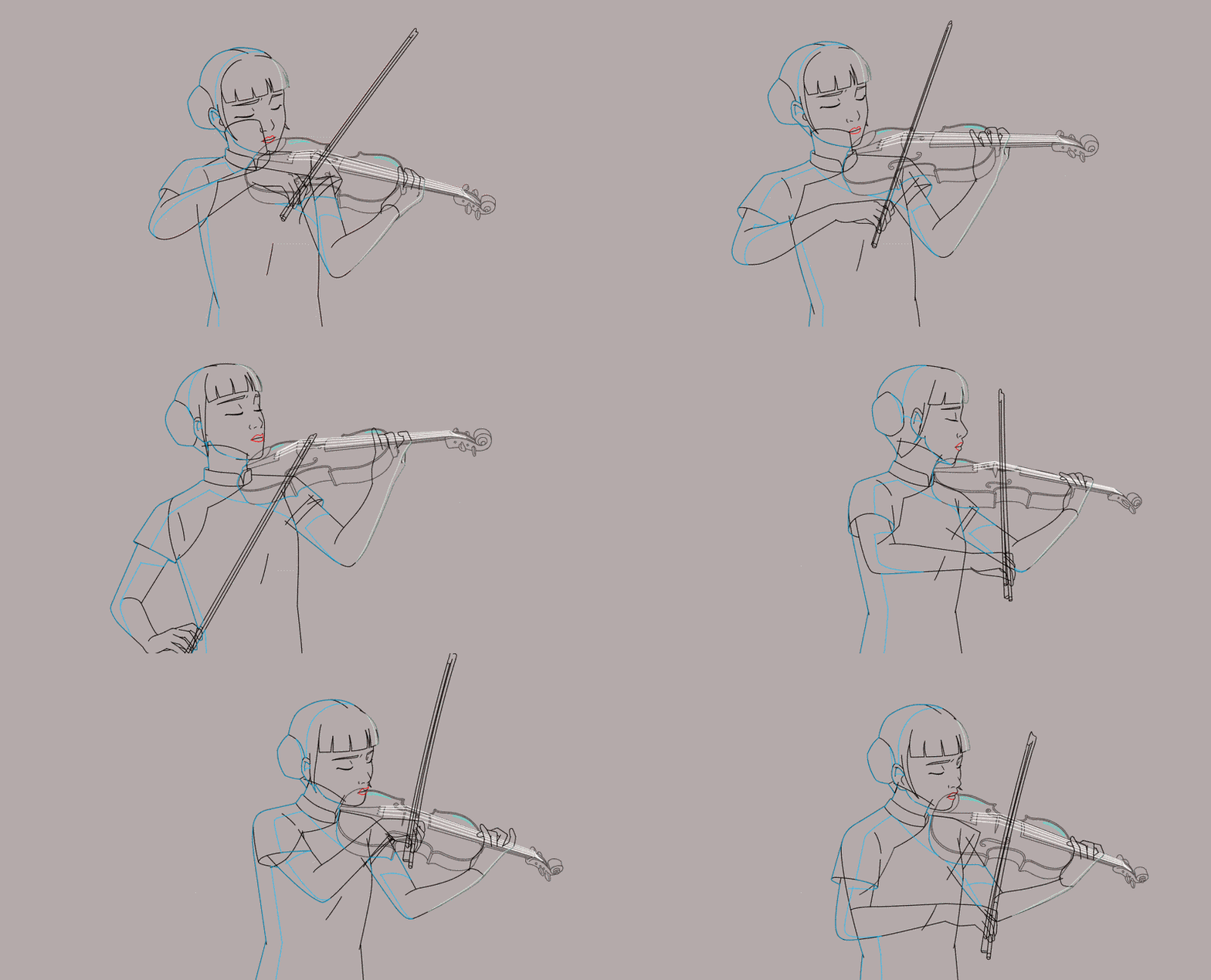
We created a dedicated unit whose only job was animating violin performances. The finger positions had to match the music. We wanted musicians watching the film to believe what they were seeing.
Too often in animation, or even live action, you see someone playing an instrument, and the hands don’t match the notes. We wanted to avoid that completely.
Han: We had a team in Singapore working on violin animation for about a year and a half. None of them actually played violin when they started. We had violins in the studio and spent a tremendous amount of time studying performance reference.
The film is called The Violinist. We knew we had to get it right.