.png)
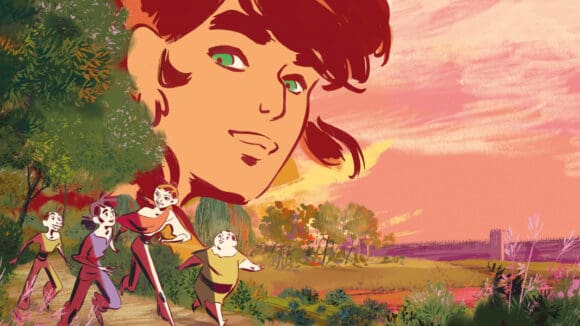
‘When We Fail, What Do We Do Next?’: Sébastien Laudenbach On Hope, Failure, And ‘Viva Carmen’
Stay informed with free updates
Sign up to get our news digest — delivered directly to your inbox twice a week.
Much like the famous line from Bizet, animation is a gypsy’s child. It has never known a law.
If one were to push the metaphor further, animation could also be defined as an art form that reinvents itself with every artist who touches it, a rebellious medium that resonates deeply with Bizet’s iconic character Carmen, the heroine of his eponymous opera, the most-performed opera in history.
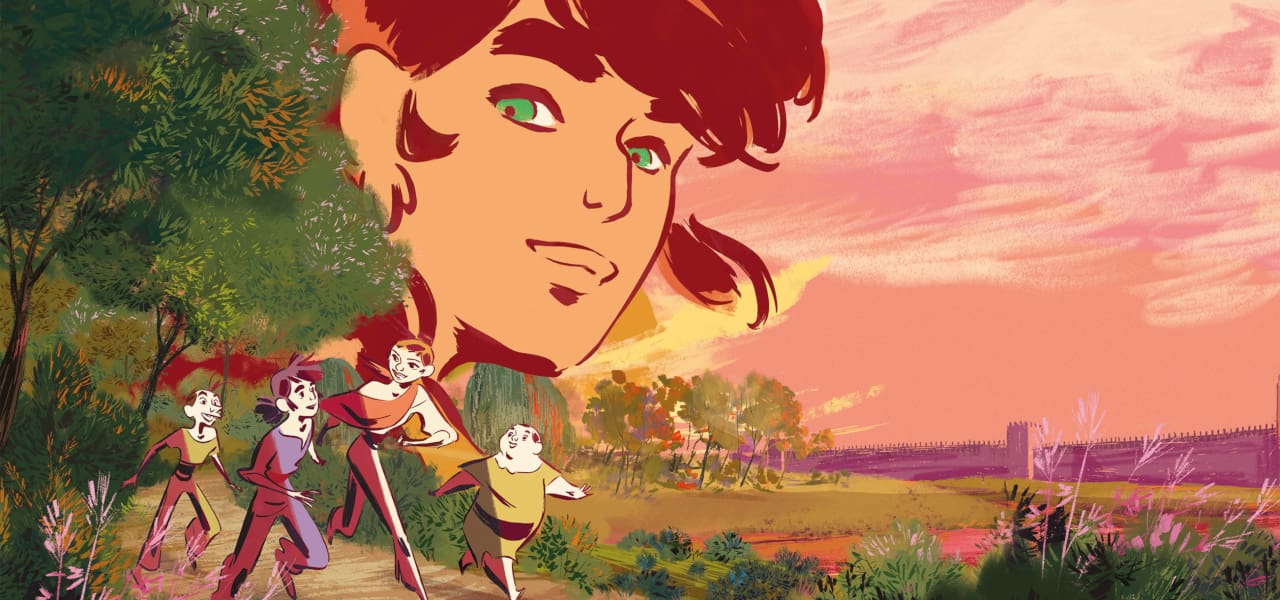
In both Carmen and in animation, Annecy Cristal and César winner Sébastien Laudenbach found his calling. Ten years after The Girl Without Hands, the acclaimed co-director of Chicken for Linda! returns to Annecy with Viva Carmen, a modern retelling of the 1875 operatic tragedy told from a child’s point of view.
Along with three of France’s most remarkable artists, he has brought a vivid, colorful version of Carmen to life. Rather than shying away from the story’s tragic elements, the film embraces them while offering a much-needed seed of hope for the future.
The film was produced by Folivari, with France 3 Cinéma, Région Auvergne-Rhône-Alpes, and La Garde Montante Films participating. Haut et Court Distribution will release the film in France. Global Constellation is handling international sales.
Coming straight from Cannes Directors’ Fortnight to Annecy’s feature competition, Viva Carmen is a strong contender for this year’s Cristal. Ahead of the festival, we spoke with Laudenbach about his take on Carmen and the creative team he assembled to bring it to the screen.
Cartoon Brew: How did you end up retelling your own version of Bizet’s Carmen?
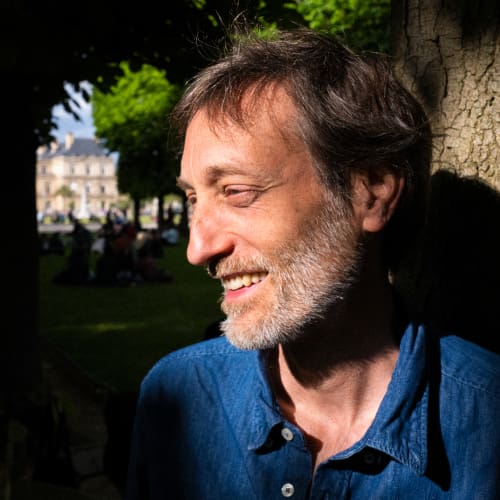
Sébastien Laudenbach: It was around eight years ago, following a discussion with my friend and producer Pierre-Henri Léon, who said to me, “What would it be like to follow Carmen from a child’s point of view?”
At the beginning of the opera, we meet a child chorus, and as we kept on exchanging around this idea, our Carmen took shape. Our pitch remained the same: our children know that Carmen is going to die, and they will do everything to prevent it.
After that, we quickly met with screenwriter Santiago Otheguy, Folivari, our main producer, and the story resonated with them all. Damien Brunner (Folivari) most of all, because his mother was Spanish, he’s a music and opera lover himself, and a trained architect with an appreciation for Andalucian architecture. Carmen struck a chord.
Children are the protagonists in the majority of your films. How does that choice connect with what you wanted to convey in this particular story?
Very early on, Santiago and I decided to make a film that could also appeal to a young audience. At that time, we were in the process of making the pilot for Chicken for Linda, and having the same approach for this story seemed important to me.
These are concerns I share with Chiara Malta, concerns that actually came from her since she’s the one who initiated Chicken for Linda. Together, we believe in making films that are accessible to young audiences, but not necessarily adapted.
If a child doesn’t understand everything in a film, it’s not a big deal. However, we want them to be swept in the moment, moved by the characters, perhaps even amused. In Chicken for Linda, even if there were some funny moments, it remains a drama.
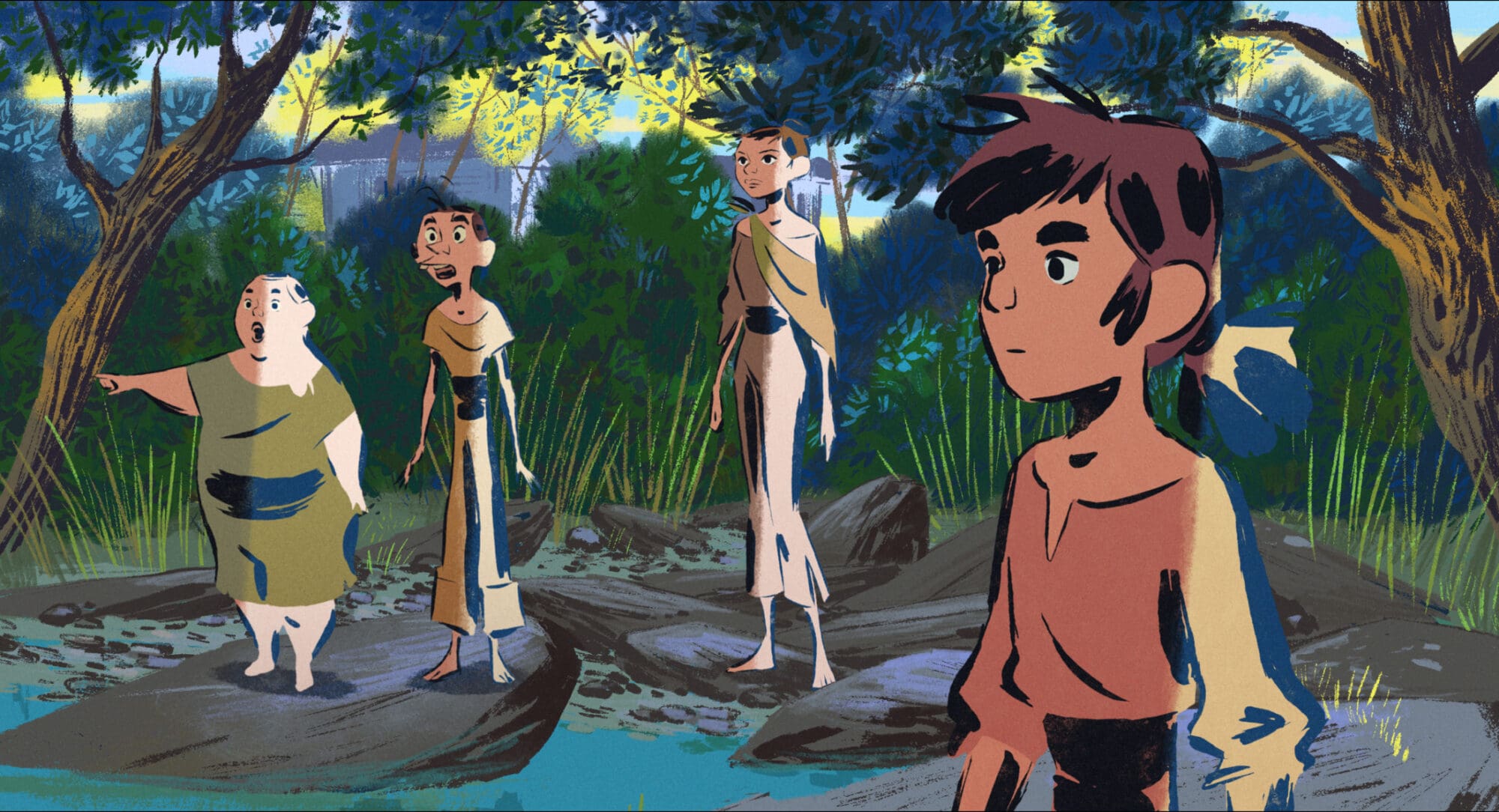
There’s something about your Carmen that also reminds of classic Disney films, such as Sleeping Beauty. Beautiful, family-friendly, but at the same time, it doesn’t shy away from showing violence and tackling difficult topics. Is that what you were aiming for with Carmen?
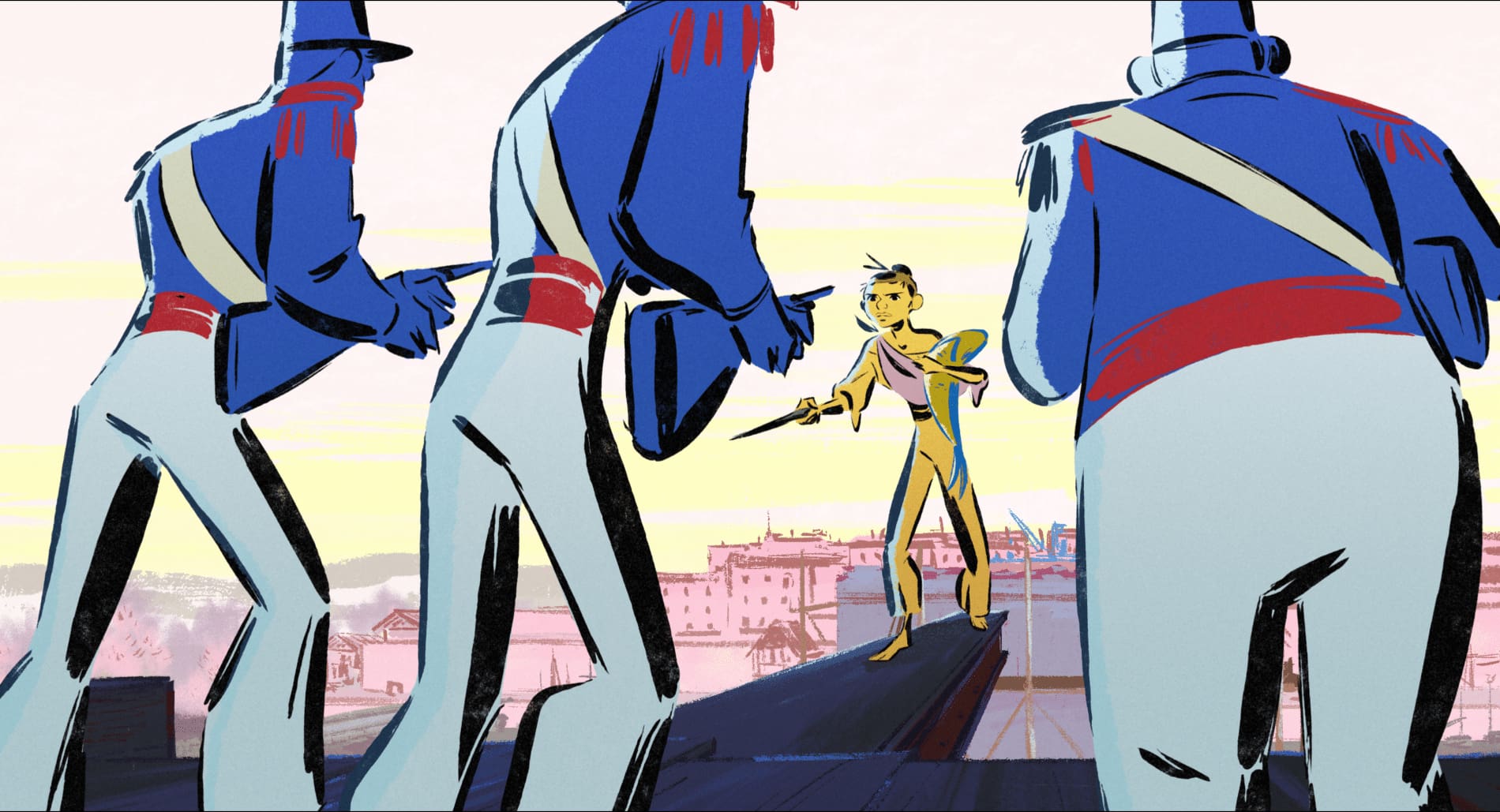
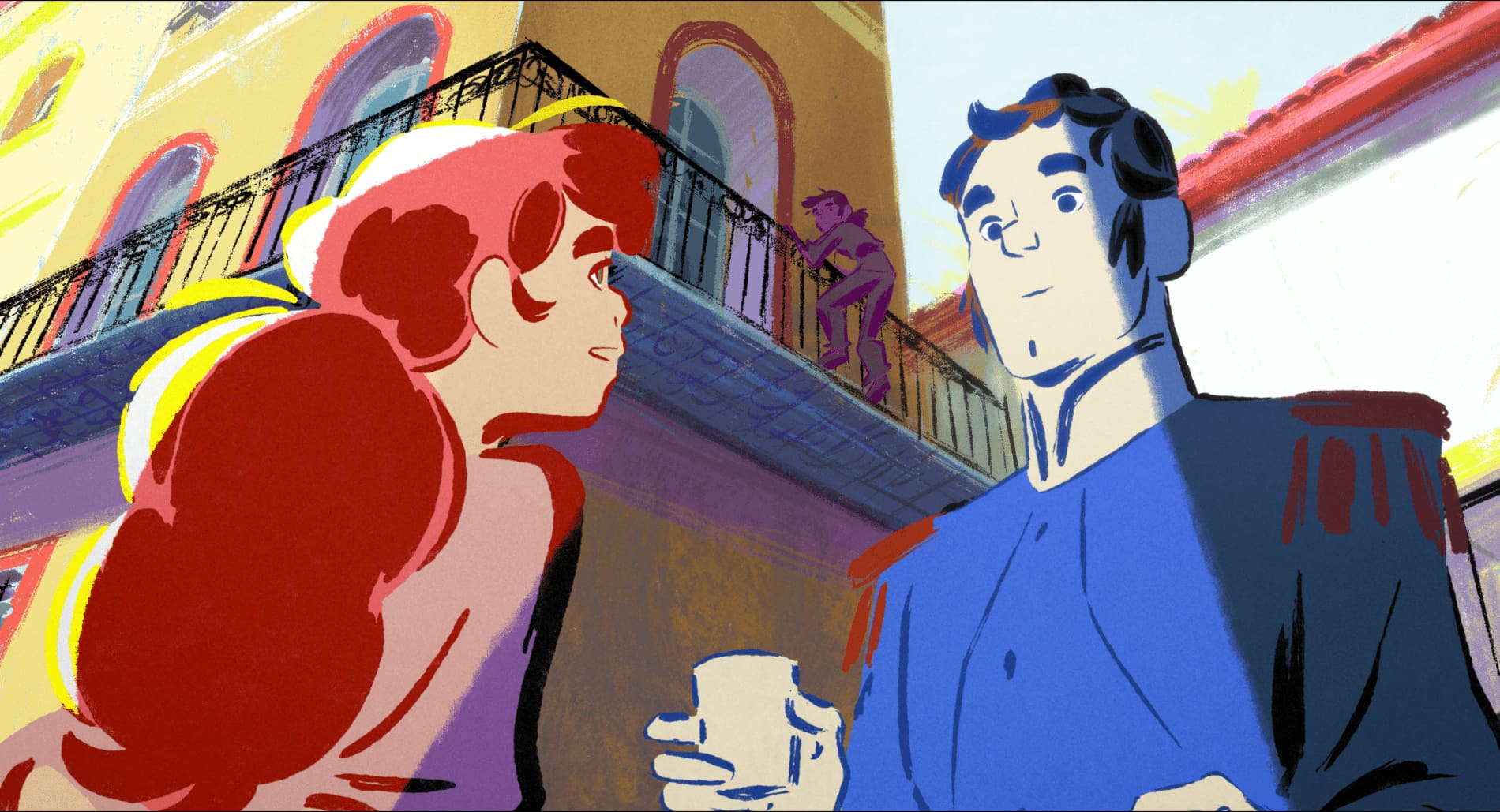
Exactly. I feel that with our Carmen, we’re tackling some difficult topics in a certain direct way. Carmen is, after all, the story of a femicide. How does one tell such a tragic tale for a young audience? Within the film, there are particularly violent sequences, especially the one with the storm in the rain, where the lieutenant grabs Carmen and tries to kiss her by force.
It is also thanks to my team that I was able to achieve this balance between a film accessible to the young audience, one that could also satisfy people familiar with the opera, and people who knew nothing about it.
Speaking about your team, could you elaborate on the artists you recruited to work with you on this new feature? How did you collaborate with Élodie Rémy (head of production design), Éléa Gobbé-Mévellec (head of character design), and Cyril Pedrosa (graphic designer)?
When I started thinking about Carmen, I was faced with an issue: I couldn’t draw anything for the project. I think it was partly because my mind was on Linda at the time, but I also couldn’t visualize it. When I met Cyril (who has a background in animation and wanted to come back to it), he immediately created spaces, characters, and very concrete elements for the film.
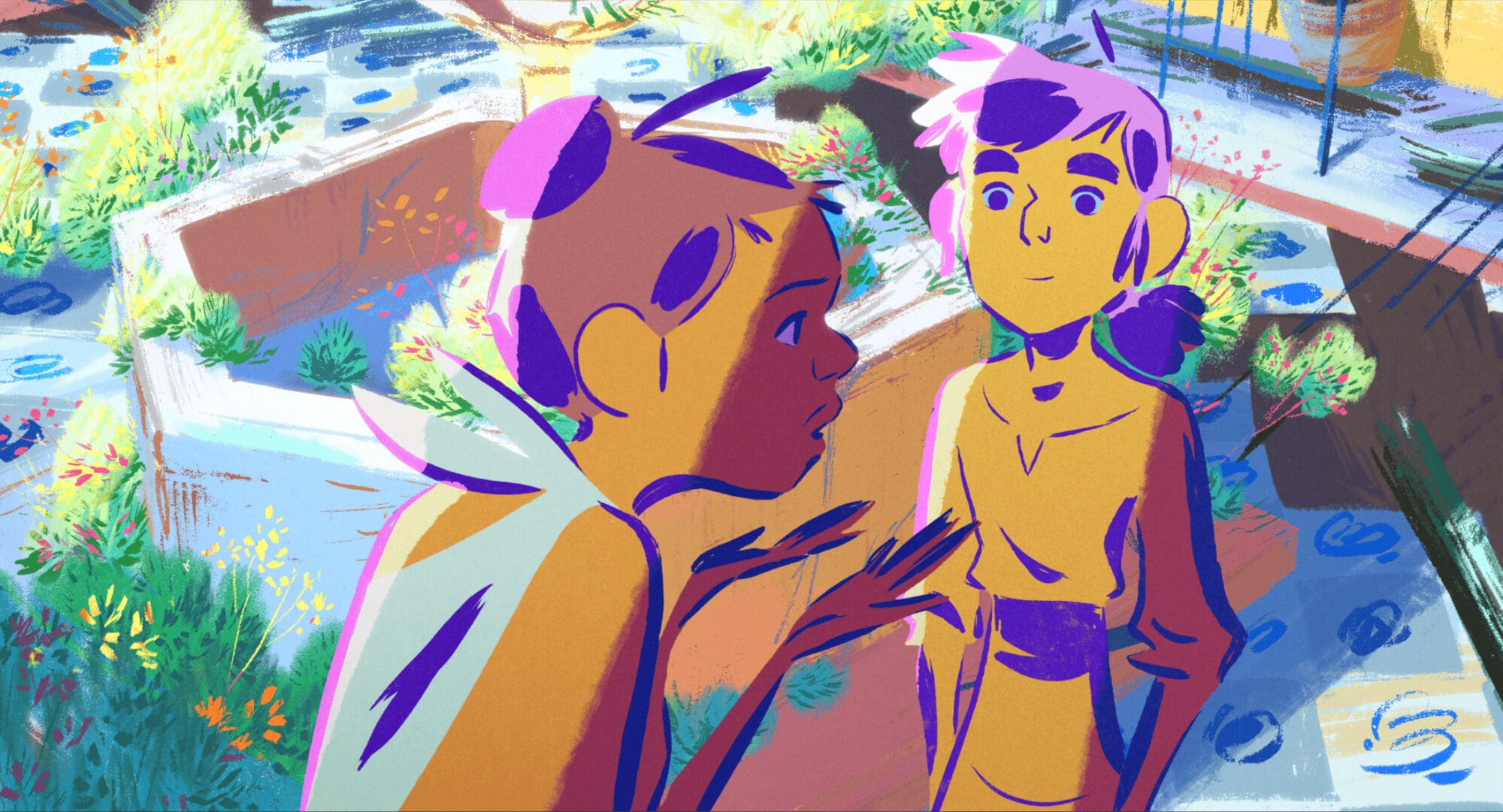
Both he and Elodie went to Sevilla to do some scouting, and they came back with lots of drawings and photos; it was very enlightening. It was then that we realized that the film would need strong contrasts between light and shadow, vivid colors, and vibrant characters. That’s when Eléa joined us.
The three of them really worked together as if they were a single entity. Today, when they look at the images, they can’t tell who did what. Elodie created the colors, Cyril dabbled with the sets, Éléa crafted magnificent characters… There was porosity between all departments, and as everyone truly admired each other’s works, that was beautiful to witness.
How did you feel as a director, giving up the reins in that way?
As a director, I always describe myself as a ship’s captain. At the beginning, there aren’t many of us on the ship, the horizon is hidden in the mist, but we know more or less our bearings. But more importantly, I want to underline how much of a collective film Carmen is. And it’s also a film about the collective: the Women’s group on the hill, but also the children’s group throughout the film, and the actions they take at the end of our story.
As a captain, I was the one making the final decisions, steering the project, but it was mostly discussions. Carmen’s character was an interesting challenge because we quickly realized that everyone had their own version of her. We worked a lot to fine-tune our approach, and we achieved something that is a mix of each of those different Carmens.
Carmen is also a deeply musical film. How did you tackle this part of adapting Bizet?
Co-composers Amine Bouhafa and Isabelle Laudenbach had real fun taking loads and loads of motifs from Bizet. Well-known ones, but also lesser-known ones, mixing them together as they went on a musical treasure hunt. Again, people familiar with the opera will recognize elements, but I think that our duo’s approach will also help the film become a gateway for those who still have to discover the original Carmen opera.
How are you feeling today, bringing the film to Annecy after eight years of work?
To be honest, I don’t know. I love making films, and I loved making this one. But at the same time, I feel people are focusing on the colors of Carmen, on the aesthetics, but not as much as the characters or the staging. These are also carefully crafted aspects of the film that I feel are a bit overlooked when it comes to animated features.
What was also important to me with Carmen is addressing failure. How do we, adults or children, accept it? Today, many children’s films talk only about success. But when we fail, what do we do next? Well, we try to change the world.
To me, animation is a very good way to talk about these subjects. It’s a very free, subjective, and unique way of representing the world around us. Blending colors, movements, and sensations that aren’t realistic per se is something quite unique to animation.
We’re not going to change the world with a film, but still, if we can experience something together, that’s not so bad.