.png)
Hasbro Prevails In Long-Running ‘Peppa Pig’ Copyright Case Against Vietnam’s ‘Wolfoo’
Stay informed with free updates
Sign up to get our news digest — delivered directly to your inbox twice a week.
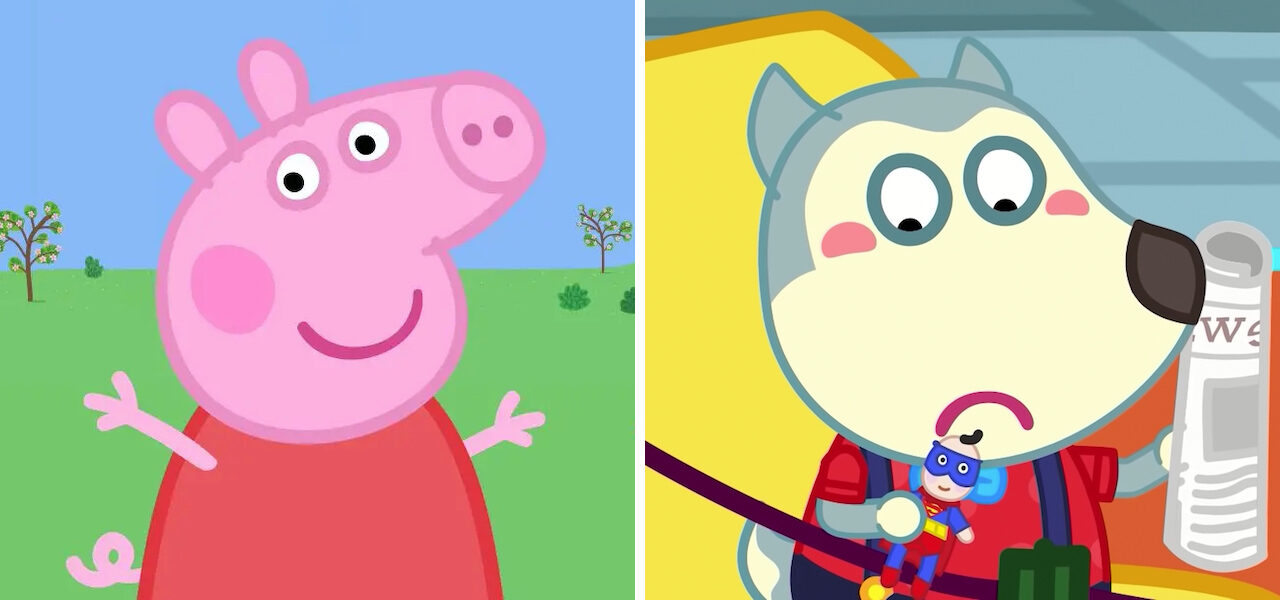
Hasbro has come out on top of its long-running copyright dispute with the Vietnamese company behind Wolfoo, a hugely popular children’s animation franchise accused of copying material from Peppa Pig.
A London High Court judge ordered videos featuring Wolfoo to be removed from online platforms, including YouTube, after finding that the series repeatedly used audio taken from Peppa Pig. The copied material included character voices, expressions such as “Hooray!,” and other recognizable sounds from the preschool series.
The court described the infringement as “prolific” and “longstanding,” far worse than initial reports indicated when the suit was first announced. Audio from Peppa Pig was identified throughout the sample of 92 English-language Wolfoo videos examined by the claimants, as well as in roughly three-quarters of the foreign-language videos studied.
Wolfoo, which launched in 2018, follows a young wolf and his family in stories aimed at preschool-age children. The franchise became an enormous online business for SConnect, expanding across numerous YouTube channels and into several languages.
As we reported in 2022, then-Peppa Pig owner Entertainment One and the show’s original production company, Astley Baker Davies, sued SConnect over alleged copyright infringement, trademark violations, and passing off. Hasbro acquired eOne in 2019 and retained the Peppa Pig brand when it later sold most of the company’s film and television assets to Lionsgate.
Hasbro initially argued that Wolfoo imitated the appearance, artwork, characters, and overall presentation of Peppa Pig, potentially leading young viewers to believe the two properties were connected. The case that reached summary judgment, however, centered on entirely copied audio, which could be demonstrated through forensic spectrogram analysis.
SConnect acknowledged that an independent contractor had used Peppa Pig audio in videos made before mid-2020 but maintained that the company had not known where the sounds came from. It also claimed that subsequent episodes used original audio produced in-house.
The court rejected that defense, ruling that SConnect remained responsible even if the initial copying had been carried out by a contractor. The judge also found evidence that infringing material continued to appear after 2020 and that some videos removed from one channel had simply been transferred elsewhere.
SConnect argued that any removal order should be limited to the specific videos analyzed in the case and challenged its application across international markets. The court nevertheless granted a broad injunction covering the U.K., the European Union, the U.S., Vietnam, and other territories protected under international copyright agreements.