
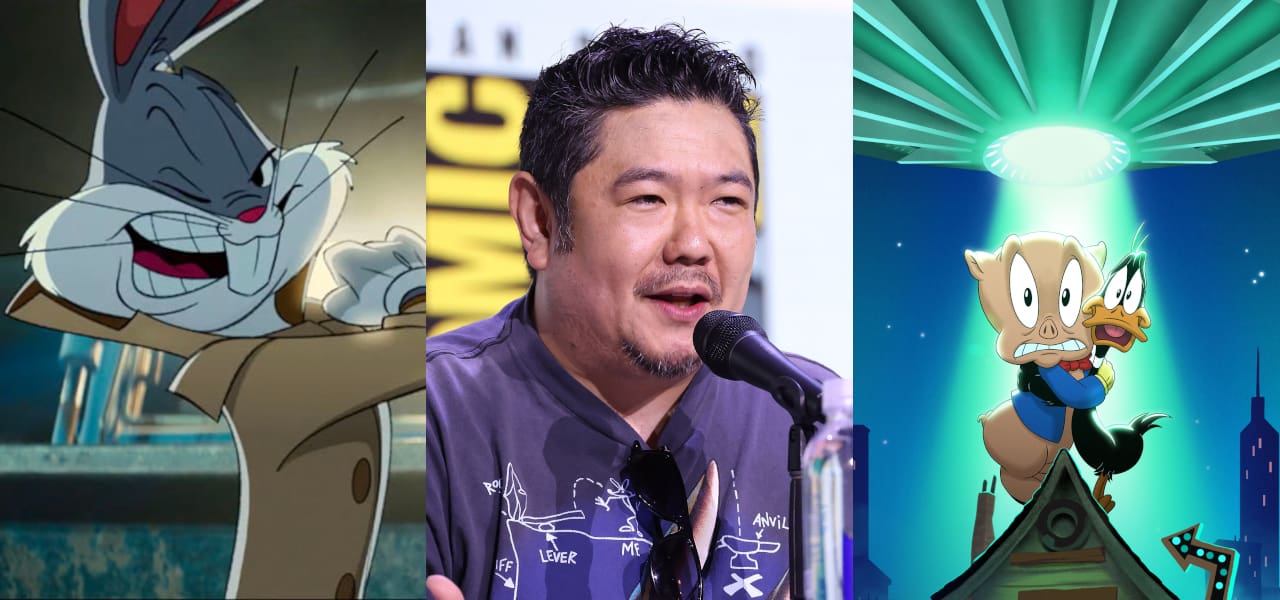

Eric Bauza, Looney Tunes Voice Actor And Tireless Champion Of Animation, Dies At 46
Stay informed with free updates
Sign up to get our news digest — delivered directly to your inbox twice a week.
Eric Bauza, the remarkably versatile voice actor who brought new life to some of animation’s most enduring characters and became one of the medium’s most passionate public advocates, died Sunday, October 25. He was 46. According to Los Angeles County Medical Examiner records cited by Variety, the cause was hypertensive cardiovascular disease.
Bauza was among the busiest and most consequential voice actors of his era. His work reached across studios, franchises, and audiences, from preschool television to adult comedy, superhero adventures, and theatrical features. He had already built a career of extraordinary range, with every reason to expect decades of memorable performances still ahead.
View this post on Instagram
His importance went far beyond the number of characters he could perform. Bauza understood cartoons from sketch to screen. He knew their history, credited the people who made them, and used his growing visibility to advocate for their future. That enthusiasm was evident in his interviews, convention appearances, and animation programming
He was a performer who could make familiar characters feel immediately recognizable while also fitting them into contemporary situations and storylines. That combination made him an especially important steward of the Looney Tunes.
Born December 7, 1979, in Scarborough, Ontario, Bauza grew up in a Filipino immigrant family and watched Saturday morning cartoons with his brother. His interest in voices developed alongside his interest in drawing. Speaking with Caroline Cao for JoySauce, he recalled studying miniature reproductions of animation artwork in Chuck Jones gallery catalogs, using a magnifying glass to examine the characters. He also remembered recording messages that his family mailed to relatives in the Philippines, an early opportunity to play with a microphone.
That childhood fascination led him into animation production as he got older and began to think about a professional life. As he explained in a 2009 interview with Jason Anders for Fülle Circle, Bauza joined Spumco as a college intern in 1999–2000 while studying radio, television, and film at Centennial College. He worked as a production assistant and made his ambitions to perform voices abundantly clear.
An early opportunity arrived on The Ripping Friends. One of his first characters, Future Cat, also offered an unexpected Cartoon Brew connection: Bauza said in the Fülle Circle interview that he based the voice on this site’s co-founder, Amid Amidi.
In the interview, he explained:
For the voice, John thought it would be funny to base it off of a former Spumco colleague, and one of Cartoon Brew’s co-founders, Amid Amidi. Amid has a very distinct voice. I can’t explain what it sounds like without Amid killing me. You just have to hear him talk in person – it’s like magic. I thought it was a weird choice, but for some odd reason the voice worked.
Bauza subsequently played Stimpy in Ren & Stimpy “Adult Party Cartoon”, while contributing layouts and editing animatics. There, his cross-disciplinary work extended to music and sound effects, and he learned the rhythm of a sequence, how the separate elements of a cartoon performance fit together.
That experience matters in understanding his later career. In animation, a voice actor’s performance becomes part of a larger whole. Each pose, held expression, and sudden movement needs to work with the voice actor’s performance. Because Bauza had worked directly with those elements as a visual artist, he could approach a recording session with an appreciation of the artists who would turn his delivery into a finished scene.
His major early roles included Rodolfo Rivera, the heroic White Pantera and Manny’s father in Jorge R. Gutierrez and Sandra Equihua’s Emmy-winning El Tigre: The Adventures of Manny Rivera.
He later played Foop in The Fairly OddParents, Lord Stingray in Superjail!, Buhdeuce in Breadwinners, and Belly Bag in Uncle Grandpa. His action credits included Destro, Storm Shadow, and Tunnel Rat in G.I. Joe: Resolute, and Tiger Claw in Nickelodeon’s Teenage Mutant Ninja Turtles.
Bauza also inherited characters whose personalities audiences already knew intimately: the title character of The Adventures of Puss in Boots, Baby Fozzie in the reimagined Muppet Babies, and Woody Woodpecker in Universal’s feature films. His commercial work also included Saturday morning cereal mascots Lucky the Leprechaun and the Trix Rabbit.
Yet he was candid about the difference between impersonating a voice and acting a role. Speaking with Victoria Davis for Animation World Network in 2023, he said: “What gets you through that door and allows you to stay in the room is the good acting.”
He credited working alongside experienced performers and directors with helping him develop that ability. He described learning the craft through criticism, uncertainty, and the trust of collaborators who kept giving him opportunities.
His recurring relationship with Uncle Grandpa creator Pete Browngardt proved especially significant. In a 2015 Comic-Con roundtable, Bauza recalled first encountering Browngardt’s original short while working at his drawing desk. The cartoon interrupted his work because it immediately made him want to collaborate with its creator. Years later, that relationship would extend into Browngardt’s Looney Tunes Cartoons and The Day the Earth Blew Up.
Bauza had begun voicing Marvin the Martian on The Looney Tunes Show in 2011. His responsibilities eventually expanded to Bugs Bunny, Daffy Duck, Tweety, Porky Pig, and numerous others across different productions. In Space Jam: A New Legacy, he voiced Daffy, Porky, Foghorn Leghorn, Elmer Fudd, and Marvin.
Filling the shoes of legends like Mel Blanc required careful judgment. These characters carry decades of accumulated expectations, but their performances must still serve the scene and the larger story. Bugs needs confidence and comic timing; Daffy needs the conviction that his latest unreasonable demand is entirely justified. A recognizable voice might catch a viewer’s attention, but the actor’s performance is what will keep them watching.
Bauza’s work on The Day the Earth Blew Up: A Looney Tunes Movie offered an impressive and concentrated demonstration of that skill. Playing both Daffy and Porky, he brought the two sides of a relationship to life. In the same scene, he would deftly deliver the instigator and the worrier, the explosive reaction and the hesitant reply, the aggravation and the affection.
Speaking with Rachael Harper for SciFiNow, Bauza said he recorded Porky first to preserve his voice before tackling Daffy’s more demanding outbursts. He also emphasized the years of collaboration behind the film, crediting Browngardt, Alex Kirwan, and the artists and writers whose work gave him the foundation for those performances.
His contributions received increasing recognition. Bauza won three Children’s & Family Emmy Awards for Looney Tunes Cartoons, Bugs Bunny Builders, and his performances as Bugs and Daffy in Teen Titans Go!
According to the Variety obituary, at the time of his death, Bauza was in pre-production on Bye Bye Bunny: A Looney Tunes Musical and The Dragon Masters. In August 2024, Bauza posted a recording of the singing audition he said landed him the role in the former.
Here’s my singing audition that helped me book “Bye Bye Bunny: A Looney Tunes Musical ” — with screenplay and lyrics by Emmy Award winner Ariel Dumas (The Late Show with Stephen Colbert) and music and orchestration by Pulitzer Prize, Tony and Grammy winner Tom Kitt (Next to Normal). Wish we could’ve seen this one come to fruition — would’ve been a good one 🎞️ 🎥 🍿 🥕🐰#StandWithAnimation @papertiki
— Eric Bauza (@bauzilla) August 17, 2024
Bauza’s public-facing career carried particular significance for Filipino and Asian audiences, and he knew it. Bauza became the first person of color to voice Bugs Bunny, prompting an enthusiastic response from viewers who recognized themselves in the person behind the microphone.
He understood why that mattered. In the JoySauce interview, he welcomed the possibility that his career could encourage people who felt unheard or assumed such opportunities were unavailable to them:
I like that there was a reaction, and there were people that were very proud and excited to see a person of color in the driver’s seat. And for me, no matter what your heritage is, no matter what you look like, no matter what your cultural background is, if this is a story that allows you to use your voice or encourages you to use your voice—if you’re shy to use your voice, or you feel like you’re not heard—then I feel like it’s a story that will inspire you in that way. It’s a positive thing and a good thing that encourages people, who didn’t think they have a chance, that it is possible.
As a performer passionate about the history of his craft, Bauza’s love of animation also included a willingness to examine its shortcomings. In hosting the CBC documentary series Stay Tooned, Bauza explored representation, stereotypes, sexuality, and commercialism in cartoons, speaking with artists and commentators about the ideas embedded in entertainment that audiences often first encounter as children.
Speaking with Pat Mullen for POV, he explained: “It’s good to talk about them, examine them, and learn from them as opposed to sweeping them under the rug.”
He also discussed the need for authentic representation behind the microphone and in storytelling, and challenged the tendency to dismiss animation’s importance to adult audiences.
When Warner Bros. shelved Coyote vs. Acme, Bauza became a public advocate for its release. At the 2024 Annie Awards, he brought that campaign to the stage in Daffy Duck’s voice.
In interviews, he repeatedly returned to the care these characters deserved. In a September interview with Movieland, he said, “Every time I hop into the booth to do something new with these characters, it’s like being on the job for the first day.”
Bauza is survived by his son. Fatherhood had added another dimension to his work, he said in the AWN interview, including a growing affection for preschool programming and the experience of watching cartoons together. His son, he said, could recognize his voice even in shows Bauza had forgotten recording.
Bauza’s death is an enormous loss for animation, both in the recording booth and in the public conversation around the medium. He helped keep historic characters alive through new performances, supported the artists creating their next adventures, and shared the pleasure of that work with audiences. Although cut far shorter than it should have been, he leaves behind a remarkable legacy that overshadows any individual role he played.
Pictured at top: L-T – Coyote vs. Acme; Eric Bauza at San Diego Comic-Con 2025 – Credit: Gage Skidmore; The Day the Earth Blew Up