.png)
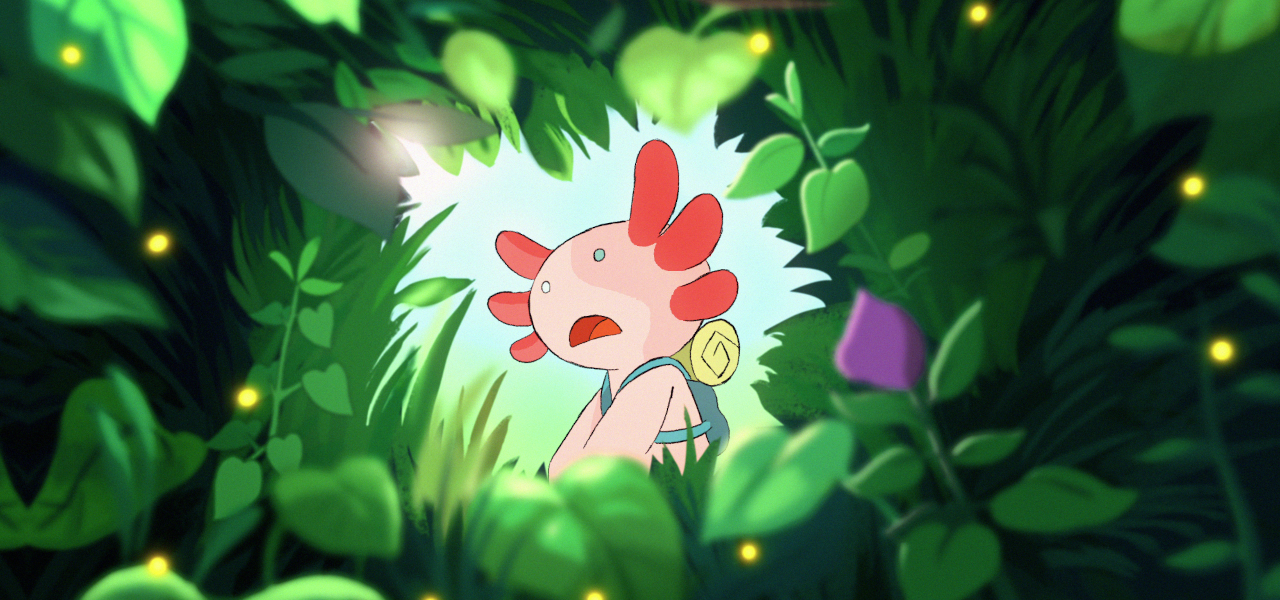
Big Emotion In A Tiny Amphibian’s World: The Making Of The Indie Epic Short ‘Axolodyssey’ (EXCLUSIVE)
Stay informed with free updates
Sign up to get our news digest — delivered directly to your inbox twice a week.
Axolodyssey is a hand-drawn animated short from Studio Fresco Animation, an independent collective of artists working across studios and countries. Animated entirely in TVPaint, the film brings together contributors with backgrounds ranging from major U.S. studios to smaller outfits in Europe and Asia, all collaborating on a project that began as a personal idea during the pandemic and gradually expanded into a full production.
Directed by Jon Densk, the film follows Jojo, a young axolotl left alone in a fantasy-inspired version of Mexico’s lakeside ecosystems. As he sets out to find his lost family, the story unfolds as a journey through unfamiliar environments populated by strange creatures, fleeting companions, and looming threats. Alongside its adventure framework, the film draws on real-world inspiration from the endangered status of axolotls and their native habitat, grounding its fantasy in an ecological context.
We recently caught up with Desnk to talk about his film, and the filmmaker gave us exclusive access to a short clip, which we’ve linked below.
Pandemic Origins
The project began, like many pandemic-era works, as a personal experiment. “It started off as just something that I was making… I had not made a film before… There was just nothing else to do at the time,” Densk recalls. What followed was a slow evolution from exploratory storyboards into a full production, funded partially through Kickstarter.
Even then, the economics were unconventional. “All the money that I got from Kickstarter went to everybody else… they were already starting to do it just for free because they just liked the project, and I felt horrible.” The result is a film powered largely by goodwill and shared enthusiasm, with artists, some carrying credits at major studios, contributing time and effort to a shared vision.
A Short And Maybe More
Axolodyssey clocks in at around 12 minutes, but was almost something far larger. Early versions were significantly longer until a blunt piece of advice from a colleague who works at Pixar reshaped the project: “She was like, you need to cut this in half.”
That editorial discipline paid off. The finished short now functions as what Densk describes as “a good test pilot for what could be for a larger story.” Plans are already underway for a graphic novel adaptation and a feature-length version, suggesting that Jojo’s journey is far from over.
East Meets West
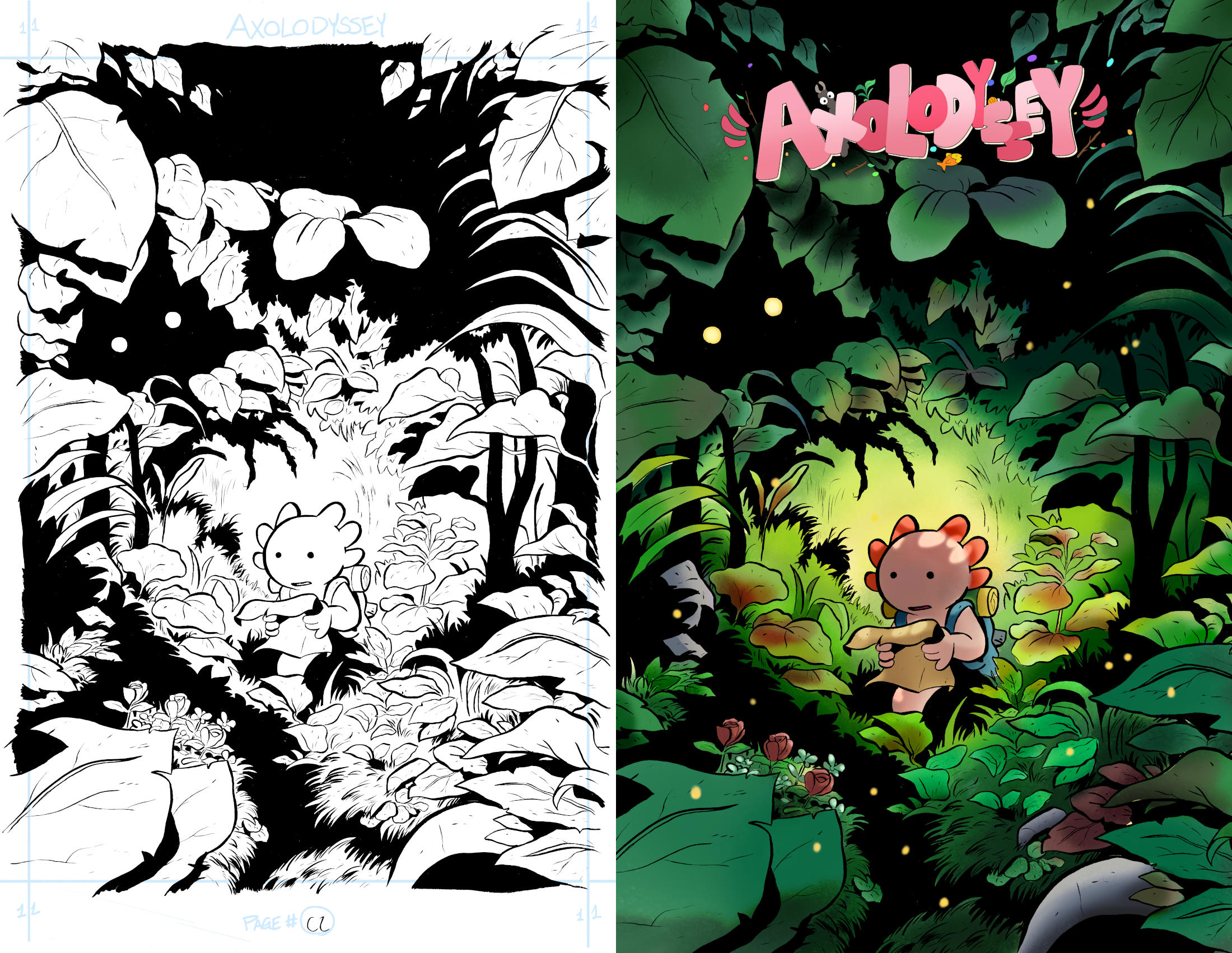
Visually, Axolodyssey borrows from multiple animation traditions. Densk, trained in what he calls “the Disney way,” having trained under Nashville-based Disney vet Tom Bancroft, set out to merge that foundation with the sensibilities of Studio Ghibli. “My intention was to take inspiration from my favorite studio, Studio Ghibli, and take everything I’d learned on Western animation and bring them together,” he explains.
Here’s that exclusive clip we mentioned earlier to give a closer look at the film’s charming aesthetic in motion:
That creative choice made the project a perfect fit for producer Usman Riaz, the filmmaker behind the standout Ghibli-inspired Pakistani feature The Glassworker.
In Densk’s film, characters move with a restrained naturalism, deliberately reducing the exaggerated squash-and-stretch associated with American animation. The environments lean into saturated color and childlike perspective. As Densk describes it, the goal was “more like how a child would see this little world instead of it being like an illustrator’s world.”
And yes, there is a cooking scene. “You have to,” he jokes.
Monsters, Humans, and the Shape of Threat
One of the film’s more striking design choices is its depiction of humans. Rather than clearly defined figures, they appear amorphous and looming, more like environmental hazards than traditional characters.
“There was so much that I had learned about how humans affect axolotls in real life. I wanted them to be kind of gelatinous and amorphous… almost like grime,” Densk says. Their glowing yellow eyes reinforce a predatory ambiguity. They are not outright villains, but they feel dangerous.
Frog’s Eyes
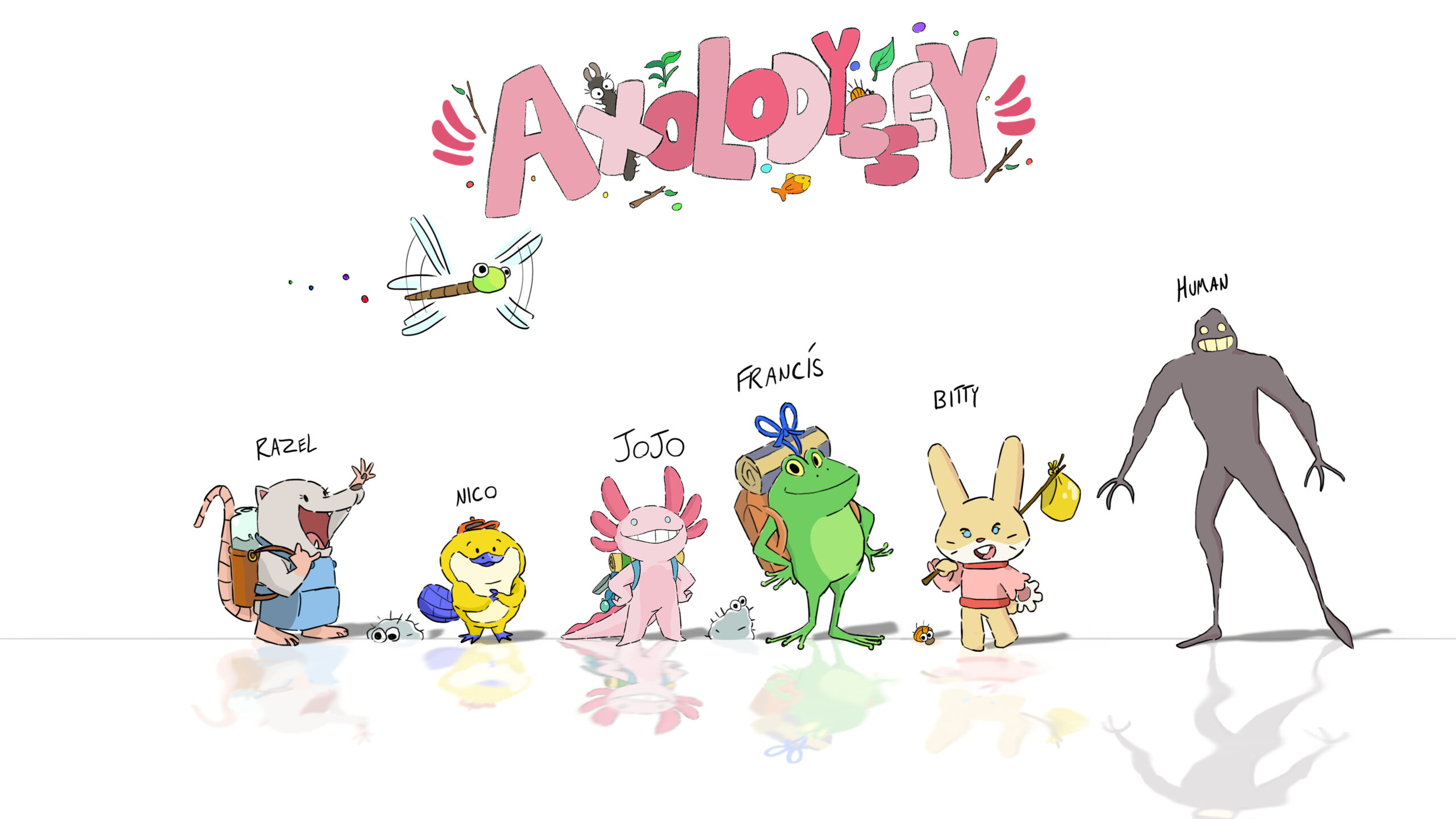
Character design across Axolodyssey leans toward simplicity, with dot eyes and graphic silhouettes, except for one notable outlier: a frog named Francis, who has fully rendered pupils.
The distinction was not heavily planned. “I just drew him that way one day… and I was like, oh yeah, this design looks really good,” Densk admits. It still serves a narrative function, subtly elevating the character’s presence. “He’s like a little bit more of a star compared to the others… it was a happy accident.”
Building the Plane While Flying It
The production process behind Axolodyssey was far from conventional. Densk wrote the story directly through his storyboards, a choice he regrets and does not plan to replicate on future films. “I did a crazy thing where I wrote it with storyboards,” he says, crediting his background in comics for the confidence to try.
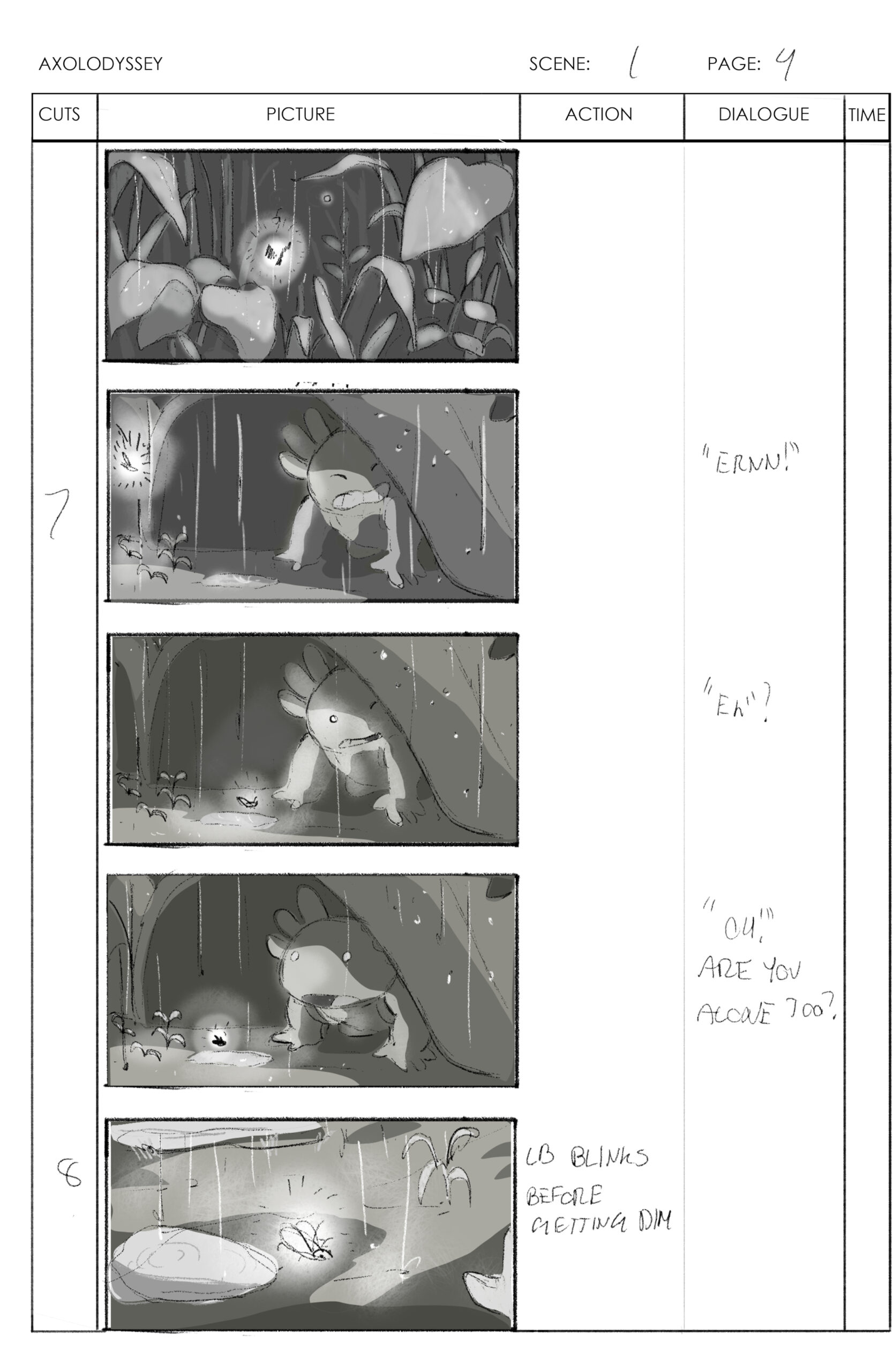
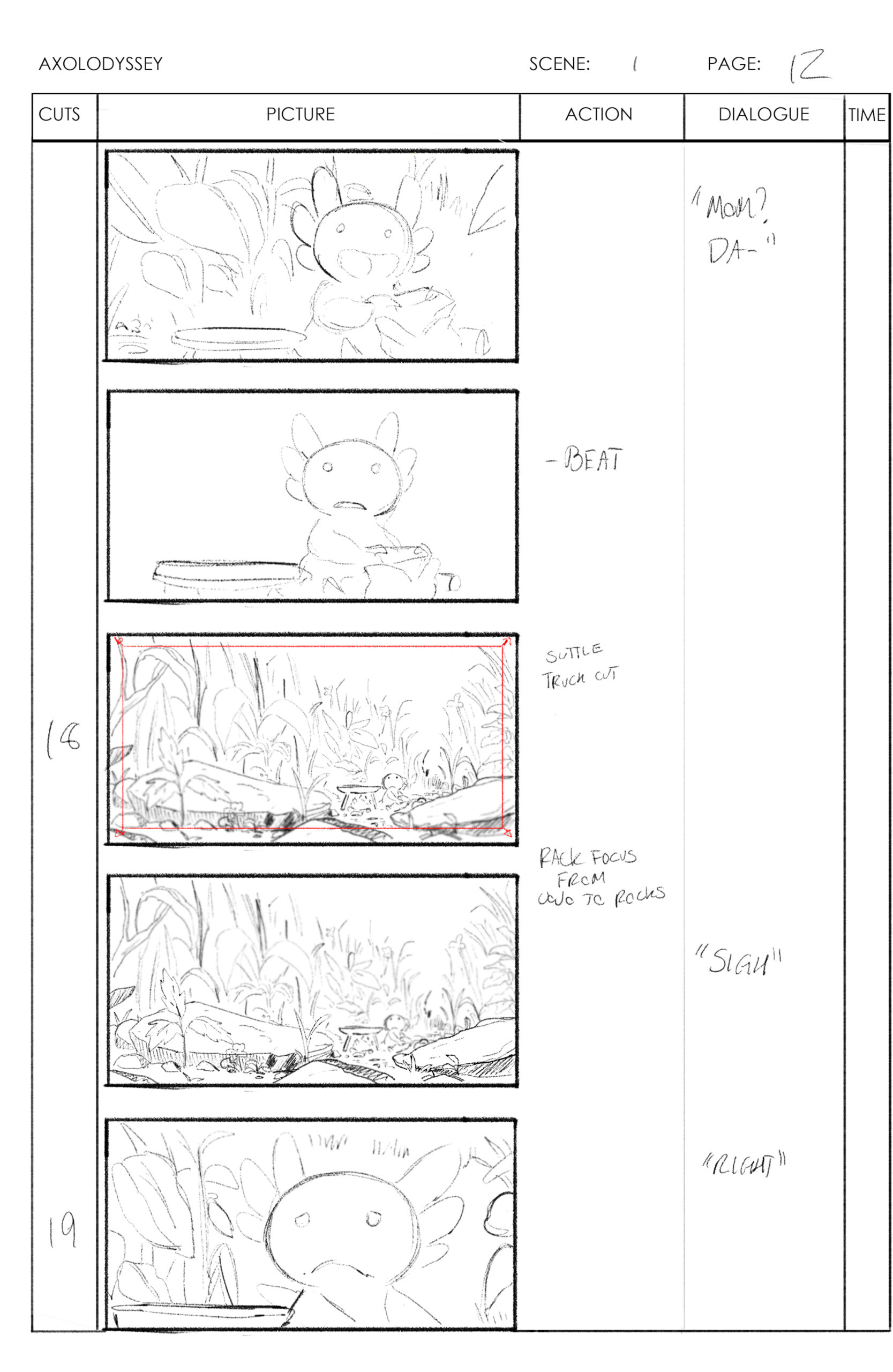
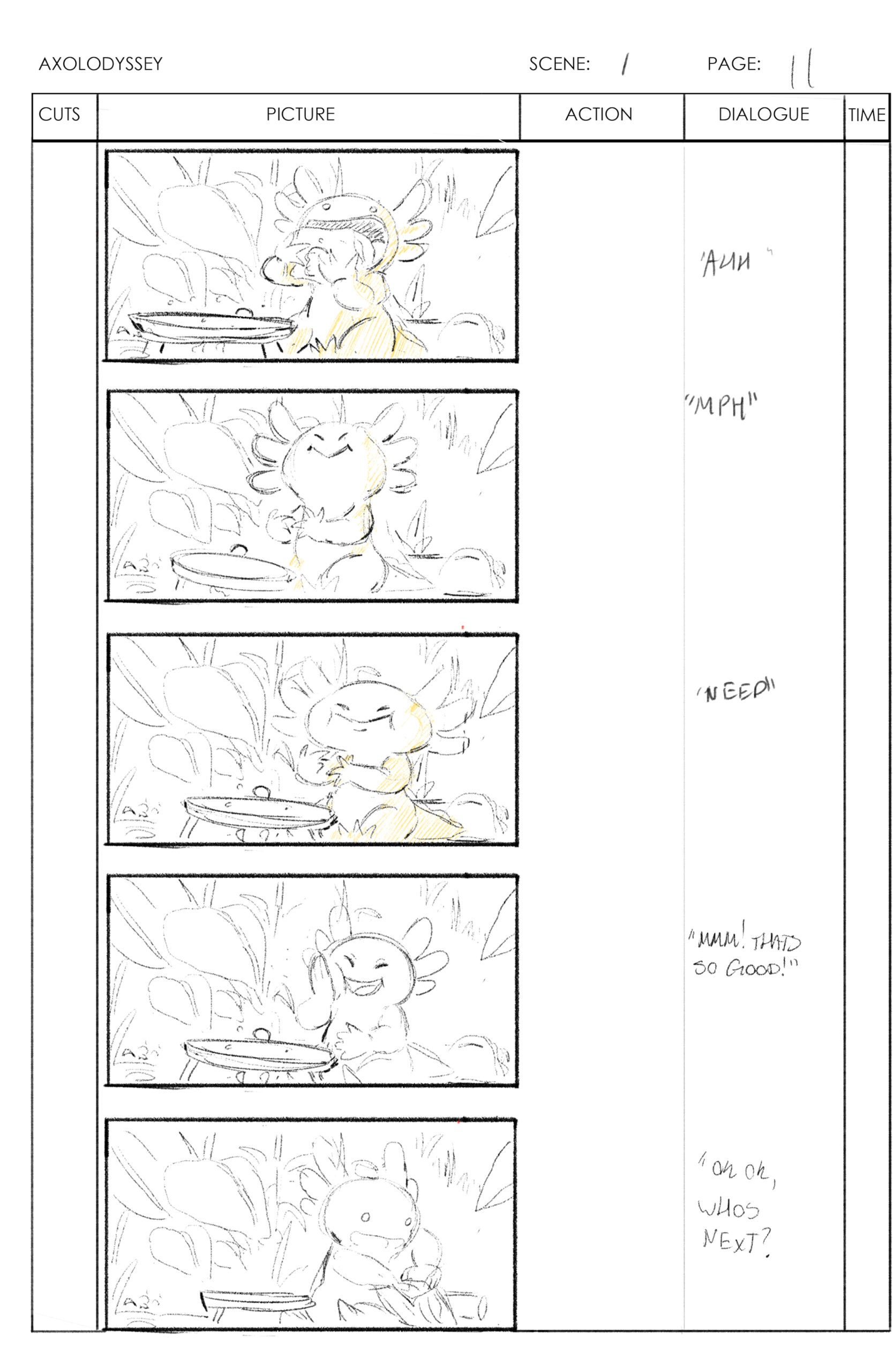
That approach came with trade-offs. “What I didn’t realize much later is [Miyazaki] most definitely has at least like an outline… that was my mistake,” he explains with a nod to his idol’s story-crafting preferences. The learning curve stretched the timeline to roughly two years of solo development followed by two years of production.
Even once the team expanded, Densk remained deeply involved in layout, animation, and direction. “It just was faster for me to do them… people have jobs, and if I don’t for a month, I’m just going to go nuts.”
National Geographic
The film’s premise stems from a surprisingly recent discovery. “I just learned about [axolotls] in one National Geographic video in 2020,” Densk says. What began as curiosity about an endangered species evolved into something more personal.
“At the time, I had not seen my family for a year and a half… I was isolated. And it was almost like… kindred spirits with these little lizards.” That emotional throughline anchors the film’s fantasy elements in lived experience.
Festival Circuit and Beyond
Currently, Axolodyssey is prepping for its festival run, having submitted to several summer and fall events. “We’re basically just waiting,” Densk says. A public release is planned for Thanksgiving weekend, though the team is keeping options open depending on what happens on the fest front.
Long term, Densk envisions the film extending beyond the screen. One goal is to bring it back to the axolotl’s real-world home. “I want to give it to like a zoo in Mexico and just have the film play for free for children. Like, this is yours, use it how you see fit.”
For a project born in isolation and built through collective effort, that sense of giving back feels central to what Axolodyssey is trying to do.