.png)
Former Pixar Story Artist Matt Jones Turned A Pandemic Zoom Class Into A Feature-Length Animatic
Stay informed with free updates
Sign up to get our news digest — delivered directly to your inbox twice a week.
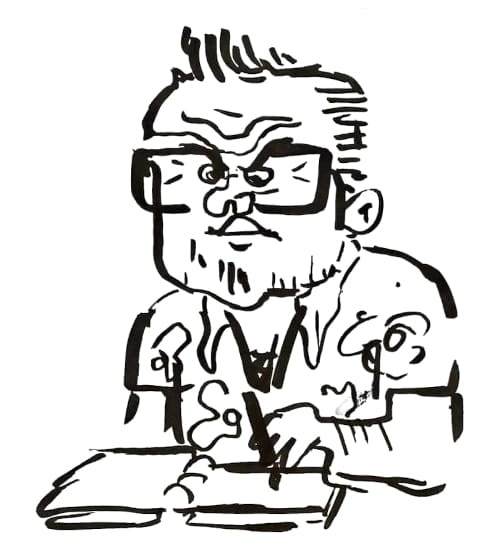
When the pandemic shut down in-person teaching, story artist Matt Jones (Across the Spider-Verse, Chicken Run: Dawn of the Nugget, Maya and the Three) faced the same problem as every animation educator: How do you keep students engaged on hours-long Zoom calls?
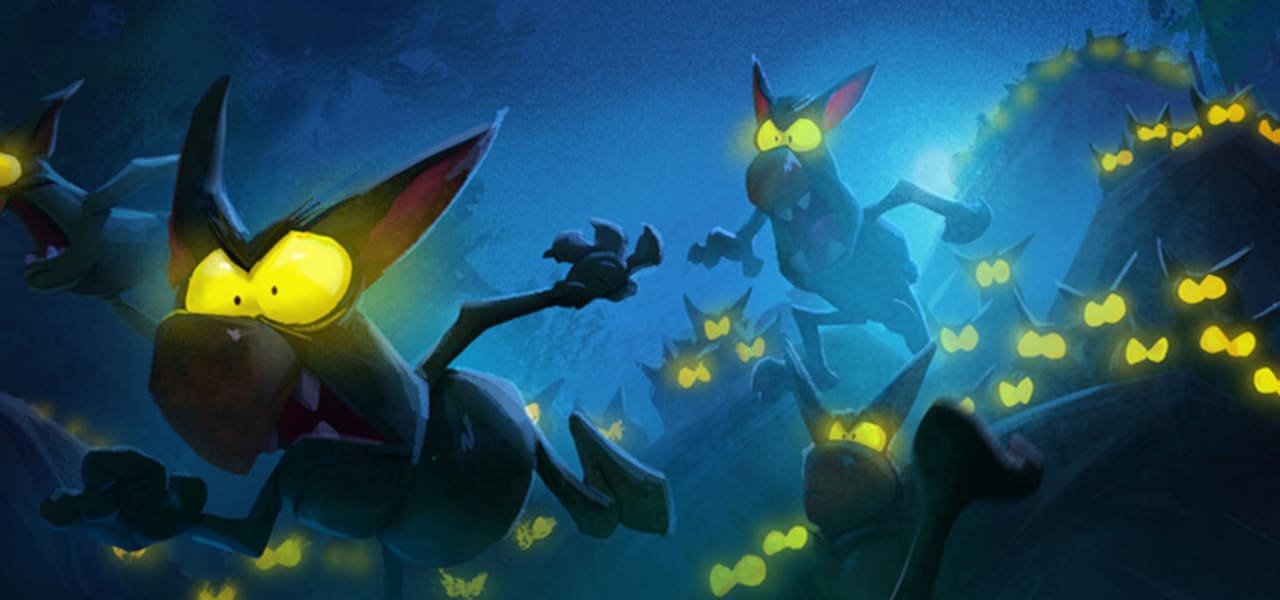
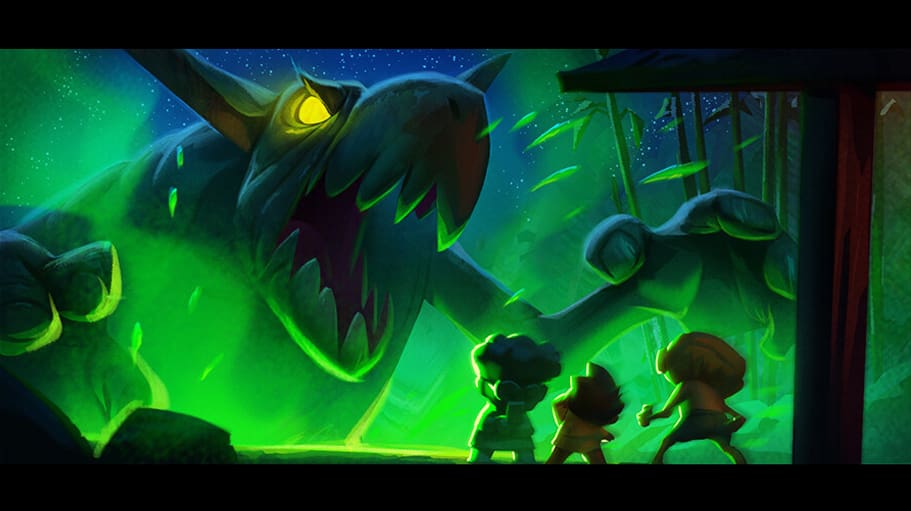
His answer was as ambitious as it was unique. Jones wrote an original feature, YOKAi, an anime-inspired horror film for kids, and had his students storyboard the entire thing. In the process, they would learn how a feature is built and produce work they could use in their portfolios.
The result is a feature-length animatic complete with voices, sound effects, and music. After spending about a year editing it, much of that time working alone, Jones posted the finished film on YouTube, with each artist credited on screen during their scenes.
Jones was teaching story at Concept Design Academy in Los Angeles when lockdown hit, inspiring him to launch his own online class. At first, he took a more traditional art-school approach. “I had everybody doing shorts to encourage them to be writers and their own filmmakers,” he told Cartoon Brew. “But that was chaos, because everybody wanted to do their own thing, obviously, but they were resistant to notes from me. And we all had to get on the same page as each other. And somebody suggested, why don’t you come up with something, one single project that we could all work on?”
That suggestion also raised an ethical question: Should students be asked to work on a film owned by their teacher? Jones says the project was conceived as a noncommercial educational exercise, with the students receiving credited work they could freely use.
“As long as everybody’s on the same page, and it wasn’t set out to be a commercial venture or anything, it was to give them something sort of copyright-free,” he said. “And it worked.”
The approach also reflected a larger debate about what animation schools should prepare students to do. Individual shorts encourage students to become filmmakers themselves, while a collaborative feature more closely resembles the production pipeline that many will encounter in their first industry jobs.
Jones sees value in both. “Ethically, part of me feels like, should we funnel them straight into capitalism and corporate animation, or should we encourage directors? And we need both, probably.”
Writing A Feature On A Public Deadline
Jones credits his years in Pixar’s story department, where he worked on Inside Out and Finding Dory, with giving him the skills to develop YOKAi quickly. After announcing the class for January 2022, he had only a few months to prepare the script.
“Having a public deadline helped me,” he said. “I had from November to the new year to write this thing, to outline it. I got going, I had the outline, I had Act 1 for the first class, and then I got them going through ten weeks. And as they were going on Act 1, I could write Act 2 and get to Act 3.”
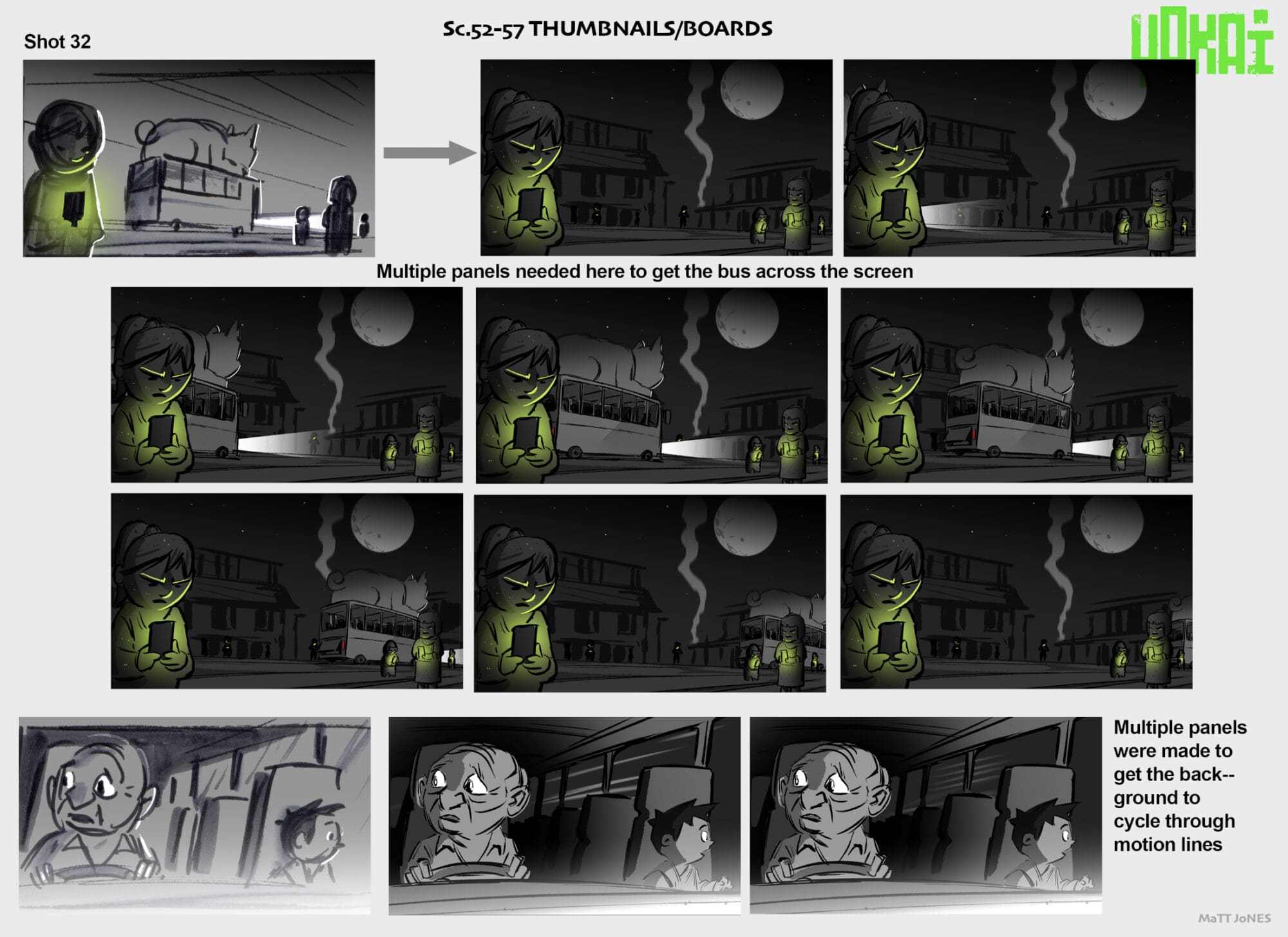
Jones ran the class several times over Zoom, in versions ranging from six to ten weeks, with four-hour sessions. Its structure evolved as he figured out what worked. Lectures and practical demonstrations gradually gave way to assigning each student a sequence and holding group feedback sessions, the closest approximation of a studio story room he could create remotely.
Jones’s varied background, which took him from a small studio in Wales to London commercials, Corpse Bride, Pixar, and Aardman, also helped him manage the production. “It was that background of doing a bit of everything that helped me with the YOKAi too, because then I could design the characters, design the world, and hand out the art department stuff to the students as well.”
An Honest Education
The curriculum extended beyond the mechanics of storyboarding. Jones ended each course with a session about surviving the job itself. “I talked about keeping healthy as a storyboard artist, from your posture and mental health and sustaining a career for years, and also financial health. And then I told them stories about pitching to studios. But I don’t have any tips for that, because I failed miserably to get anything going,” he said with a laugh.
Jones believes animation education could go further in prepping students for the real world by teaching production, finance, and budgeting alongside the creative disciplines, giving graduates the tools to establish their own companies rather than depending entirely on existing studios.
“A lot more students would be prepared to create their own studios when they graduate, and that might start to change the dynamic of the industry, which would be great, especially if that was backed up by government financing.”
The Payoff
The animatic, featuring some lovely color keys by Ukrainian artist Kate Fedorchuck, went online two years ago and attracted only a few thousand views, but the project remains an interesting model for how online animation education might operate beyond the pandemic.
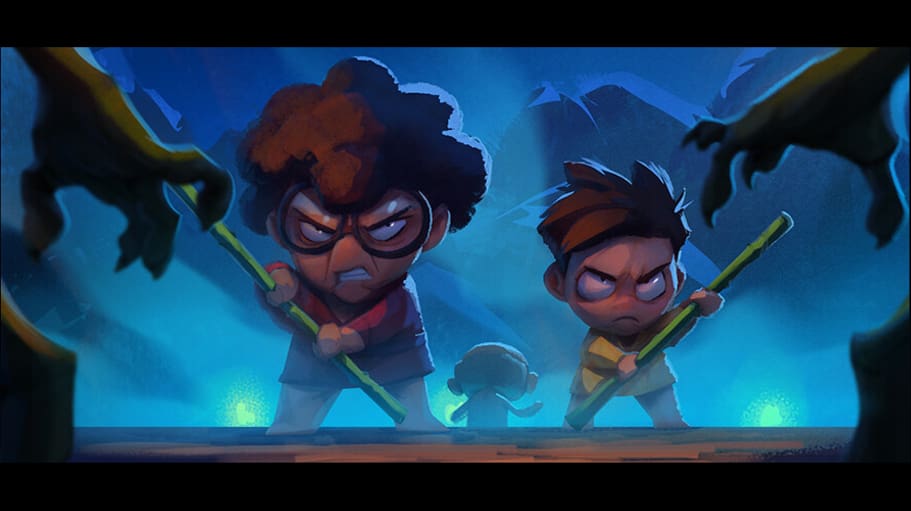
“I thought it would be a bigger splash than that, because it was a singular achievement,” Jones said. “I sort of missed the deadline in a sense, because I finished it a year after the pandemic.”
The delay was caused by an extensive editing process. “It took so long to edit, just the vast amount of material there,” Jones said. “I had great help from a lot of industry friends, but I edited a lot of it myself in the end, just to get it done.”
Although the animatic didn’t hit YouTube until 2024, it still served a very important purpose. By the time that was done, a lot of the students who had worked on it had already found jobs. Some of the kids I taught ended up at Netflix, Sony, and Disney.”
Could It Scale?
Asked whether the model could be expanded into a virtual studio-school that covered the entire pipeline and produced a student feature, with working professionals heading individual departments, Jones was cautiously optimistic. “In theory, yeah. You’d have to have somebody tracking the assets, obviously, like in a real studio. It would get complicated very fast. You might be able to train students in production management. You’d have to have all positions, I think.”
Such a program would also need a clearer system for compensating participants if its work became commercially successful. Jones believes the answer is shared ownership of the outcome rather than students simply providing unpaid production labor.
“Ideally we’d solve the distribution problem that we all struggle to crack, and we profit share,” he said. “That’s the best way. And I think all media should go that way in this new era.”
Jones has since left Los Angeles and returned to his native Wales, shifting his attention to his own shorts, drawing on the skills he developed at larger studios while pursuing work on his own terms.
“I’m just trying to focus on my own work, investing in myself,” he said. “There’s a whole wave of us doing that, and there’s shorts coming out of this, and little schools, and indie features. I think we’re in the process of an exciting wave of industry change.”
YOKAi may not have found the audience Jones initially imagined, but the finished animatic makes a persuasive case for his larger idea: A virtual classroom can teach students not only how to create individual scenes, but how to build something much larger together.