About Amid Amidi

test

“Ants in My Scanner” by François Vautier

Installing an ant colony in a scanner and scanning it every week doesn’t sound like the ingredients for filmmaking success. But Paris-based François Vautier managed to uncover the exquisite visual possibilities within that concept. His camera and editing choices push the project from nature documentary into experimental film territory.

Vautier’s description of Ants in My Scanner:

Five years ago, I installed an ant colony inside my old scanner that allowed me to scan in high definition this ever evolving microcosm (animal, vegetable and mineral). The resulting clip is a close-up examination of how these tiny beings live in this unique ant farm. I observed how decay and corrosion slowly but surely invaded the internal organs of the scanner. Nature gradually takes hold of this completely synthetic environment. The ants are still alive: the process will continue…

(via Kottke)

Box Office Report: “Lorax” Beats “John Carter”

John Carter

An animated film led the US box office for the second week in a row: Illumination Entertainment’s The Lorax dropped 44% from its first week for an estimated earning of $39.1 million. Its two-week total now stands at $122 million, making it the top grossing film of the year to date. It is currently pacing $3.5 million ahead of Illumination’s biggest hit Despicable Me, which went on to earn $251.5 million domestically.

This weekend also saw the debut of John Carter, the first live-action feature from Pixar director Andrew Stanton (WALL·E, Finding Nemo). The megabudget sci-fi film, with a reported production cost of $200-300 million and marketing costs of $100 million, was positioned as Disney’s next “tentpole” property, along the lines of the Pirates of the Carribean franchise. It opened weakly, as expected by most industry observers as well as the Disney studio itself, with an estimated $30.6 million, on a par with the opening for Disney’s Prince of Persia, which opened with $30.1 million. It trailed the debut of last year’s sci-fi Cowboys & Aliens which opened with $36.4 million. The film’s saving grace may be its overseas performance, where it has opened powerfully, especially in Russia, and has already racked up over $70 million.

One can’t even begin to imagine the pressure that Stanton is under, but he hasn’t been particularly graceful in dealing with the film’s critical reception. In interviews, Stanton has been defensive about the film’s budget, and over the weekend, he wrote an oddly worded tweet that blamed moviegoers as “jaded” if they didn’t enjoy his film:

Andrew Stanton tweet

Studio Ghibli’s The Secret World of Arrietty added an extra $402,000 boosting its US total to $17.6 million. It is the fourth highest-grossing anime film ever released in the US, behind only Pokemon: The First Movie, Pokemon: The Movie 2000, and Yu-Gi-Oh! The Movie.

Jean “Moebius” Giraud, RIP (1938-2012)

Moebius

RIP, French comic artist and illustrator Jean “Moebius” Giraud, who has passed away from cancer at the age of 73. This is a good place to begin learning about his work. His best known film design work is in live-action, like The Abyss, Alien, TRON and The Fifth Element, but he also contributed to a number of animation projects including Little Nemo: Adventures in Slumberland, Space Jam and Time Masters (below). He was revered in France where they exhibited his comic art with respect and appreciation.

Moebius influenced many people in our industry. I’ve collected some of the animation community’s reactions on Twitter:

Rare Episodes of “Do-It-Yourself Film Animation Show”

Here’s some fantastic weekend viewing: episodes of Bob Godfrey’s seminal British TV series Do-It-Yourself Film Animation Show. The episode above, broken into multiple parts, features Richard Williams. The rest of the videos are on Charactermation’s YouTube Channel. A few months ago, we also posted Terry Gilliams’ appearance on the show.

(Thanks, Joel Mayer)

Everybody Wanted to Sue Disney in 1940

Walt Disney and Lawyers

It’s no secret that the Walt Disney Company is fiercely protective of its intellectual property, but the law works both ways, and they’ve been accused of wrongdoing almost from the moment that Walt’s company became successful. While researching my upcoming biography of Ward Kimball, I found a reference to a “Mann lawsuit” in his notes from 1940. Ward wrote about how animator Fred Moore had been questioned by Mann’s attorneys, as well as how animator Ham Luske had testified on the stand.

I became curious to learn more about what the lawsuit was all about. The plaintiff was Ned Herbert Mann, a well respected veteran special effects artist who had started his career working with the production designer William Cameron Menzies on The Thief of Bagdad (1924). Mann believed that he had patented an animation process back in 1934 that was similar to Disney’s and he was trying to prove that Walt had traced the mouths of characters off of photostats while producing Snow White. The Disney company was eventually able to prove that the claim was completely baseless and the judge dismissed the case.

The only information I could find online regarding the case was an article from the St. Petersburg Times from June 29, 1940. You can read the entire article below. The article is fascinating, not just for the information it provides about the Mann case, but also because it lists some of the dozens of other cases filed against Disney at the time. According to the Disney studio’s attorney Gunther Lessing, “The trouble seems to be that almost everybody sees one of his brain children somewhere in Disney’s cartoons.” Some of the cases against Disney at the time included:

* Adriana Caselotti, the voice of the character Snow White, had sued Disney because some of the songs she sang had been released as records, and she wanted a share of the record profits. The case was thrown out when Lessing produced a document that proved “she had signed all her rights in her performance to Disney every time she put her signature to her paycheck.”

* A guy in California filed a lawsuit because he claimed that one of the dwarfs used his laugh or “an exact imitation.”

* A woman filed a lawsuit which claimed that while Disney hadn’t copied her words or music, he had infringed on the spiritual feeling of her work.

* A gas station operator in Minnesota claimed he had sold 15 gallons of gas to an animator who was on vacation, and that he had suggested to the artist that the Disney studio produce Pinocchio.

The article also talks about how Disney had sued a biscuit company that was making unauthorized Mickey, Pluto and Horace Horsecollar animal crackers. The Disney company sued for $24 million dollars, but eventually settled out of court for $8,000.

Here’s the entire piece:

Walt Disney and Lawyers

TEASER: “The Master’s Voice” by Guilherme Marcondes

It’s been a while since we’ve heard of a new personal project by Guilherme Marcondes (Tyger, Into Pieces), but this teaser for his next short suggests that it’s been worth the wait. The Master’s Voice–a mix of live action, drawn and CG animation–is “the story of the city-island of M., a decadent metropolis inhabited only by ghosts and ghouls.”

CREDITS
Continue reading

Dick Clark is Selling His Flintstones Home

Dick Clark Flintstones Mansion

File this one under “Things I Did Not Know About Dick Clark.” Apparently, he owns a one-bedroom Flintstones-inspired home in Malibu, and the LA Times reports that he’s selling it for $3.5 million, though the asking price doesn’t reflect the value of the home so much as it does the 23-acre plot of land it sits on. If you’re curious, here’s the full home tour in all its stone-age goodness.

Dick Clark Flintstones Mansion

(via Laughing Squid)

BOX OFFICE REPORT: “The Lorax” is a Hit

Lorax

Illumination Entertainment’s The Lorax exceeded expectations and debuted in first place with a stunning $70.2 million last weekend. That places it in eighth place for all-time biggest openings for an animated film, and fourth-best for a non-sequel animated film. The success of the film validates the producer-driven approach to animated filmmaking taken by Illumination head Chris Meledandri, who exercises tight control over the casting, writing and creative direction of his films. It’s a page straight of Jeffrey Katzenberg’s DreamWorks playbook and, for better or worse, Meledandri is proving that it can work for producers without the initials JK.

Meanwhile, in its third weekend, Studio Ghibli’s The Secret World of Arrietty grabbed $1.5 million from 1,431 US theaters. The film landed in 14th place, but had the lowest per-theater average of any film in the top 20. Its US total now stands at $16.8 million.

“Bino and Fino” is Nigeria’s Answer to Nickelodeon

Bino and Fino

Nigerian animator Adamu Waziri is the creator of a new animated series Bino and Fino, an African-produced preschool TV series that aims to show a more acccurate representation of children growing up on the African continent. In the interview below, which is well worth viewing, Waziri talks about how Africa is portrayed by Western entertainment companies: “When Disney does something about Africa, you get singing animals, safari. You don’t see any buildings, you don’t see any people in a house, you don’t see people living a normal urban life, like in Lagos, Abuja, wherever in Africa you are.”

It’s not just misrepresentation by American media conglomerates, but also underrepresentation. Nick and Cartoon Network have African channnels that make no effort to represent their viewership in those regions. In Africa, Nick airs Dora the Explorer, The Mighty B!, and Ni Hao, Kai-Lan but features no African characters in its TV series.

In this recent CNN article, Waziri talks about the challenges of home-grown animation in Nigeria. Sponsors still aren’t used to the slow production time of animation, especially when Nollywood features are produced in a month or less, and many Nigerians still have a “West is best” mentality. But he maintains a positive outlook and recognizes the possibilities for animation in the world’s second most populated continent: “Nigeria and other parts of Africa aren’t poor, you have businessmen, the infrastructure, the ability to link up and make studios, finance it and sponsor it and make the market–stop waiting for Disney to do it, do it yourself.”

Stop Motion Freud by Cesar Coelho and Luciano do Amaral

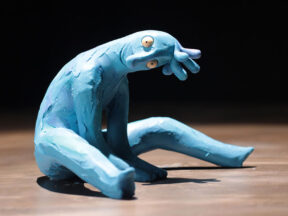
When done well, the tactile quality of stop motion is one of the true joys of animation. I can’t take my eyes off of this beautifully articulated and brilliantly caricatured stop motion animation of Sigmund Freud created by Rio de Janeiro-based Campo4 Studio. More impressive, Stop Motion Works suggests that the animation was achieved primarily through low-tech means with no jointed facial armature mechanisms, computer printed facial masks, or cable controls. Bear in mind, there’s a few wires and greenscreens in the video above because the animation was later composited into a TV mini-series called Afinal,o que querem as mulheres?, a show that I know absolutely nothing about except that it’s better than anything on American TV.

“The Story of Animation” by David Tart

Story of Animation

The Story of Animation is a tongue-in-cheek “cartoon modern”-styled educational short that aims to introduce potential advertising clients to the animation process. The short was written and directed by animation veteran David Tart, and the animation was supervised by Magnus Moller of the Danish animation studio Tumblehead. And if you feel like you already know the animation process inside-out, then check out this short about how greeting cards get made.

(Thanks, @webacion)

Music Videos Earn Art World Respect in Cincinnati

Spectacle Cincinnati

The music video has evolved vastly over the past decade, and in the Internet age, it seems as if every song is accompanied by a visual counterpart, animated or otherwise. The mass of videos being produced today has paved the way for “Spectacle: The Music Video”, which is, as far as I know, the first major museum show about the art of the music video. The curators are Meg Grey Wells and Jonathan Wells, who created RESFest and currently runs Flux.

The show opens tomorrow evening at the Contemporary Arts Center in Cincinnati and Dan Deacon will be performing live. “Spectacle” runs through September 3. If you attend, please give your impression of the show in our comments.

A description of “Spectacle”:

Although it has had an enormous influence on pop culture, music, cinema, fashion and advertising–music video as an art form has yet to receive consideration in a museum context. Spectacle changes all that. This is the first time a contemporary art museum has examined the music video format through a diverse exhibition–employing immersive environments, photography, video screenings, objects and interactive installations.

Spectacle features important examples from music video history, from the early pioneers and MTV masters who expertly used the medium to define their public identities, like Devo, Beastie Boys, Michael Jackson and Madonna, to artists like OK Go and Lady Gaga who follow in their footsteps today.

Spectacle also reveals the important contributions music video has made across genres. For example, many new filmmaking techniques prevalent today were first tested in music videos. And some of today’s most innovative cinematic figures–David Fincher, Michel Gondry, Spike Jonze, Mark Romanek and others–developed their signature style through experimentation with music videos.

The exhibition presents the changing landscape of the art of music video, highlighting the genre’s place at the forefront of creative technology, and its role in pushing the boundaries of creative production. With innovation and exploration as hallmarks–from the A-Ha ‘Take on Me’ video, to Chris Milk, Radiohead and others introducing new forms of interactivity and viewer participation–it is apparent that music video as an art form is constantly being redefined.

Good News, Bad News for Interns

The Wall Street Journal reported yesterday that, according to a study by the nonprofit National Association of Colleges and Employers, employers plan to hire 8.5% more interns this year. This data is based on a poll of 280 companies, “most of them large firms that recruit on campuses, between November and January.” While American companies plan to hire more than 40,000 interns this year, the projected average intern wage will fall to $16.20, from $16.70 last year.

If you’re working in animation and have interned at a company recently, share your experiences in the comments. Is your studio paying you at least $16 an hour to intern? We already know that many unpaid internships in animation are illegal, and that some studios pay professional full-time employees less than average intern wages. Knowledge is power, especially in the animation industry.

A Tribute to African-American Animation Artists

Black Animators

I can’t let Black History Month pass without making mention of the fantastic Facebook gallery called African-American Animators–Past & Present. It’s disheartening to think that for the first fifty years of American animation history, there were no black animation artists. Frank Braxton broke the color barrier in the mid-1950s, and animation (and America as a whole) has changed much since then. Now, we have this wonderful tribute to the diversity and talent of the black animators who work in our industry, many of whom I’m proud to call friends, others who I’ve featured in my ‘zine Animation Blast (Ed Bell, Phil Stapleton, Milton Knight), and even one of my animation teachers (Lenord Robinson).