.png)
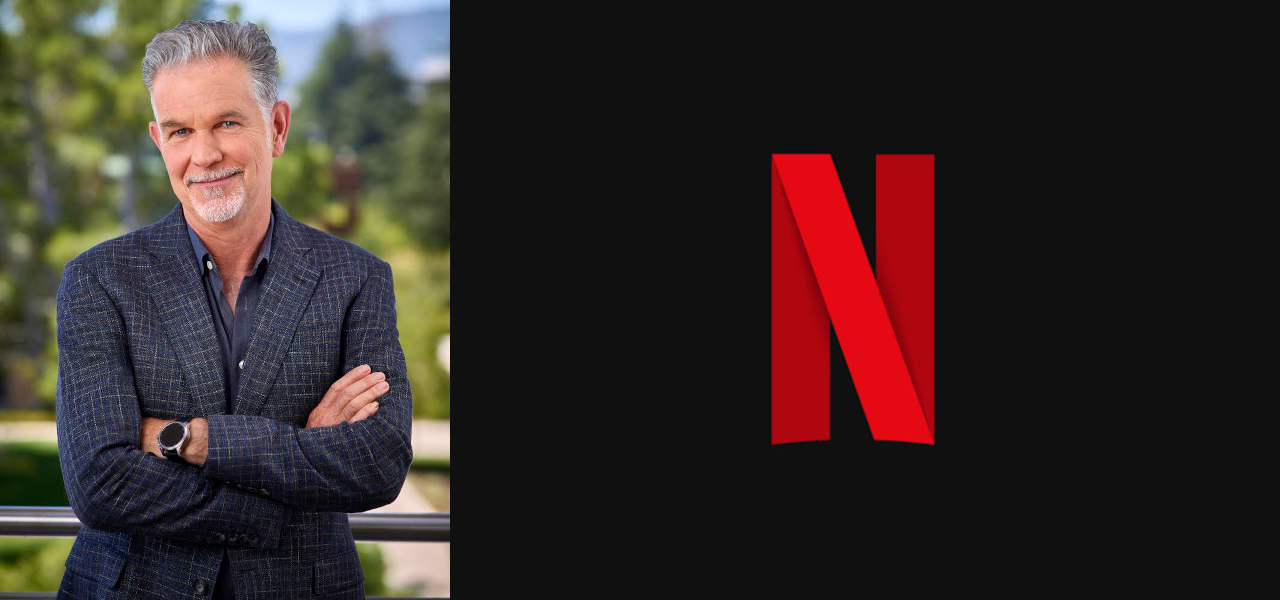
Netflix Founder Reed Hastings Exits Board After Launching Animation’s Streaming Era
Stay informed with free updates
Sign up to get our news digest — delivered directly to your inbox twice a week.
Reed Hastings’ decision to step down from the board of Netflix this June closes the final chapter of one of the most consequential executive tenures in modern media.
After nearly three decades guiding the company from a DVD-by-mail novelty into a global streaming powerhouse, Hastings leaves behind a business that reshaped distribution across film and television. For better or worse. Or a bit of both.
In our world of animation, Hastings’ legacy is more about strategy rather than direct creative involvement. He did not come up through animation, nor was he closely tied to Netflix’s artistic output in the medium. Even so, he consistently prioritized animation in Netflix’s long-term roadmap. In 2021, he outlined an ambition for Netflix to compete with The Walt Disney Company in animation, framing the medium as central to subscriber growth, global reach, and repeat engagement.
During his tenure, Netflix expanded aggressively into animation, backing both feature films and series while pursuing partnerships with established creators and studios. The output has varied in quality and impact, but the scale of investment helped accelerate a broader shift toward streaming-first animation. That shift opened new pathways for talent and diversified where animated projects could originate and find audiences.
The shift did not come without its drawbacks, of course. Layoffs, cancellations, and numerous turbulent productions were frequent, though there is some truth to the idea that these things were always around, just not widely reported decades ago. Netflix has also been a source of scorn for fans of theatrical distribution, and there are very real questions that linger about how some of the platform’s titles could have performed had they been given the opportunity to screen in cinemas and build household name buzz that, until last year, Netflix hadn’t managed with any of its originals.
Hastings consistently reinforced animation as a strategic pillar, and that legacy appears likely to remain in supportive hands. Current co-CEO Ted Sarandos has regularly spoken glowingly about the company’s animation divisions and several of its titles, such as KPop Demon Hunters, Leo, and The Sea Beast.
Beyond the boardroom, Hastings also developed a reputation for speaking openly on political issues. While Disney was jumping into bed with the Trump administration during the president’s disastrous first term, Hastings publicly pushed back against inhumane immigration reform, warning that Trump’s actions were “hurting Netflix employees around the world” and calling them “so un-American it pains us all.”
Love him or hate him, Hastings’ departure marks the end of an era of major media disruption.
Jamie’s Take: From here, it feels like Netflix and its leadership take more flak than they really deserve. When you look at how other companies of a similar scale operate, and the sheer volume of animation Netflix produces and distributes, it is hard to frame its impact as anything other than a net positive for the industry.
I also met Hastings at Series Mania years ago when I was still at Variety. He was friendly, engaged in our short conversation, and clearly one of the sharpest people in the room. In an industry full of questionable figures, he always came across as one of the good ones, at least as much as any billionaire can be.