.png)
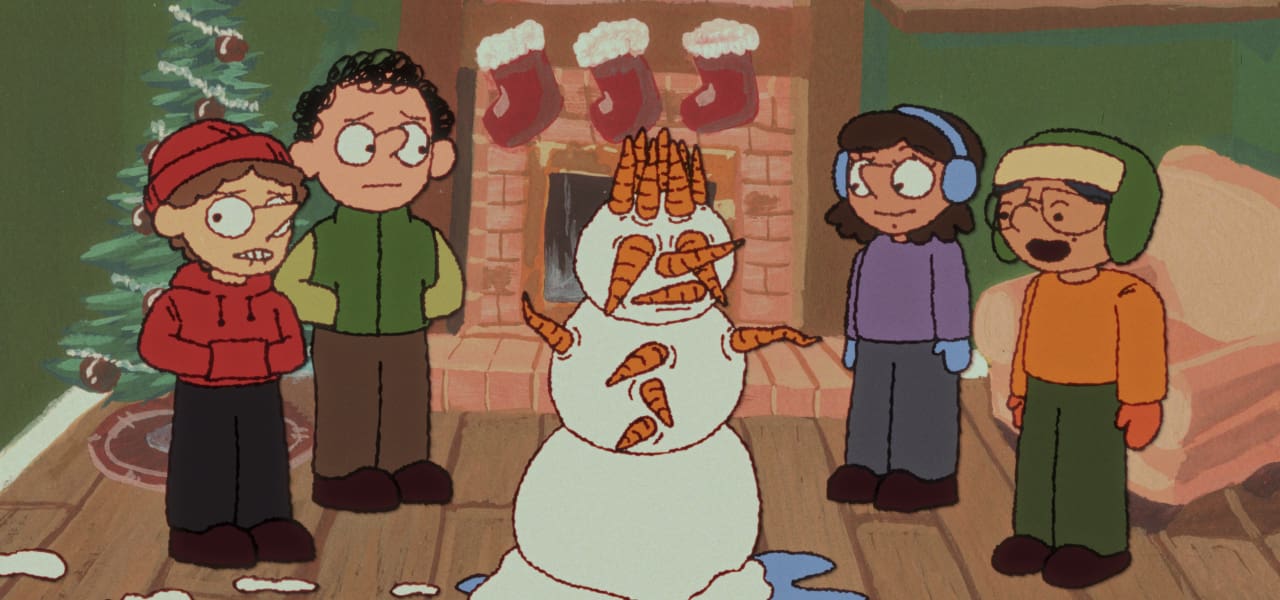
Meet Wabie Velasquez, A Self-Taught Musician-Turned-Animator Building One of the Internet’s Favorite Indie Cartoon Series (EXCLUSIVE)
Stay informed with free updates
Sign up to get our news digest — delivered directly to your inbox twice a week.
He may not be a household name yet, but musician-turned-self-trained animator Wabie Velasquez is creating something magical online. Leaning on a nostalgic yet entirely unique look, a familiar group-of-kid-friends setup, and sound and music that will feel familiar to anyone who grew up with mid-20th-century TV animation, Velasquez is quickly building a devoted and significant fandom for his eponymous digital-native cartoon shorts.
Having grown up loving cartoons, he enrolled in a single 2D animation class in high school for fun, but never imagined himself pursuing the medium professionally.
“I just never thought that I was good enough at drawing to pursue it as a career,” he tells Cartoon Brew. “I had a bunch of art friends, and we’d all sit around drawing during lunch, and they were always so cracked, and they all went off to art school.”
Instead, he started a band, focused on songwriting, and eventually dropped out of college to pursue music full-time. Animation only entered the picture later, and almost by accident.
Animation as Survival
The circumstances that pushed Velasquez toward animation were not especially glamorous.
After moving to New York, he found himself increasingly isolated. “I hate New York,” he says with a laugh that’s just bitter enough to indicate more than a little truth in the sentiment. “I lived there for three years, and it was a bad time. Like, I got mugged, I got beat up on the subway. New York really spat me out.”
The experience left him reluctant to leave his apartment. Rather than spend that time idly, he taught himself how to animate using Blender.
“I was afraid to leave my house, so I learned 3D animation so I could make music videos.”
The choice was a practical one since Blender was free, and tutorials were readily available online. He spent months teaching himself the software while creating visuals for his music. He still wasn’t thinking seriously about 2D animation just yet.
Everything shifted when he and his girlfriend Rachel Rhodes, a SCAD graduate and accomplished artist herself, released the ridiculously charming Changes, a short based on one of her poems.
“Rachel wrote that poem,” Velasquez explains. “I was thinking we could turn it into a children’s book. But then you have to manufacture, talk to people that manufacture and stuff. And then I figured animation was probably the easiest way to go.”
“Easiest” is a relative term. The film took roughly two months to complete, and Velasquez was effectively learning the process while making it, with his beginners mistakes standing out as some of the most endearing bits of animation. The bit where the dog walks through a door at around the 1:25 mark and awkwardly closes it behind him is particularly memorable.
“I was definitely learning as I went, watching a bunch of tutorials and stuff,” he says. “You could see the animation quality get better throughout the video, just because I was learning how to use it.”
The finished short attracted only modest attention initially. “Maybe 400 people saw it,” he recalls.
And that could have been the end of the story, if Velasquez’s music connections didn’t open another door for him.
A Portfolio of One
Shortly after releasing Changes, Velasquez noticed that the band Arlie was looking for an animator. Although his entire portfolio consisted of a single completed short, he fired his shot.
“I literally sent him that video, and I was like, ‘This is my entire portfolio. What do you think?’”
The timing proved perfect. Arlie wanted an aesthetic inspired by Peanuts and Schoolhouse Rock, which happened to align almost exactly with what Velasquez had been teaching himself as he focused on 2D animation.
It was an ambitious commission. The band needed approximately eleven minutes of animation on an extremely compressed schedule, so a newcomer may not have been the most obvious choice.
“He was asking for 11 minutes of animation in like a month,” Velasquez recalls. “And then I was like, okay, yeah, I could probably do that.”
In retrospect, Velasquez says he bit off more than he was safe chewing with that first gig. “I didn’t really realize how tough it would be.”
Having taken the commission, he wasn’t going to let inexperience or the tight deadline derail him. “I was staying up very late a lot of the time,” he says. “I really got my 10,000 hours in. I speed-ran it.”
Nostalgia With A Twist
Velasquez’s original shorts that followed the Arlie commission would establish a formula that has become the Wabie signature.
On the surface, they feel nostalgic and comforting. The character designs evoke classic mid-century TV shorts and specials. The pacing recalls educational films and childhood cartoons like Peanuts or Schoolhouse Rock. The similarities are, however, mostly skin deep.
Pushing to create a narrative contrast to the sweet aesthetics, in each Wabie short, something goes catastrophically wrong.
The ideas can come from anywhere, and Rachel and Wabie maintain a shared notes app filled with sketch ideas. One early concept was deceptively simple: “Bean Boozled challenge, one bean kills you.”
That premise eventually evolved into one of the shorts that helped launch the series and a following that has proven extremely devoted.
“We were trying intentionally to go for that Peanuts vibe,” Velasquez says. “I feel like a lot of people know the feeling of the teacher dims the lights and they wheel out a TV because they don’t have any curriculum for the day and then they just put on a Peanuts special.”
According to Velasquez, there is a purpose to the familiarity.
“The style itself immediately lulls you into a sense of security. So when the off-kilter stuff happens, it hits extra hard.”
For the supporting cast, Velasquez and Rhodes recruited real-life friends to play cartoony version of their younger selves.
“These are all my real friends,” Velasquez says. “Everyone in it is based on somebody.”
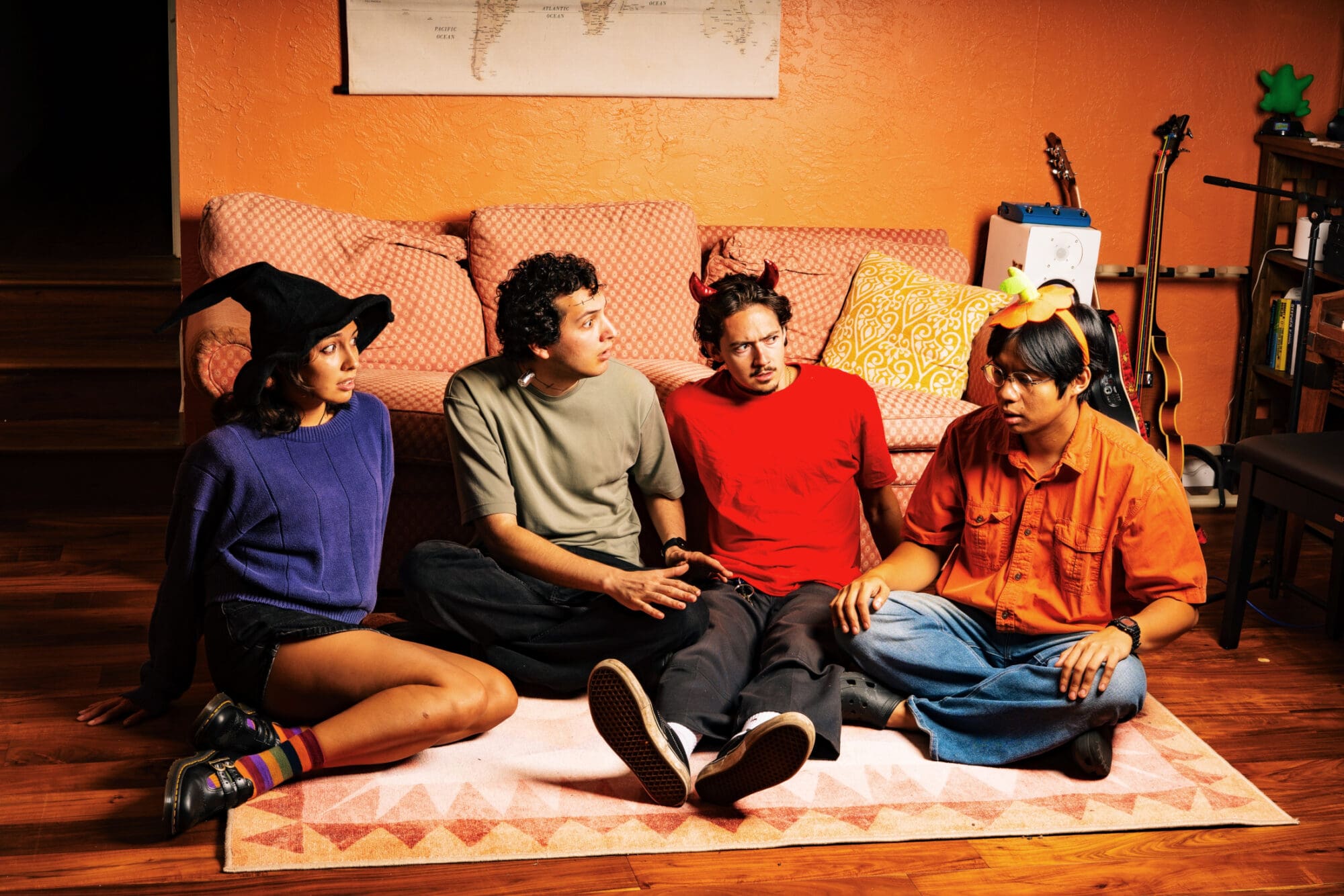
Characters use the names and likenesses of people he knows, including Rachel. Because he cares so much for the real people behind the characters, Velasquez found it difficult to place them in danger, “So I just put the onus on me.”
It’s a case of art imitating life. “In real life, I also have very bad luck.”
He tells stories about being mugged, getting beaten up, suffering skateboard injuries, and somehow becoming the only person in a crowded California beach to get stung by a stingray.
“There were like thousands of people in the water that day,” he recalls. “And then I was the only one that got stung by a stingray.”
The result is a protagonist who routinely absorbs the punishment while everyone around him watches in disbelief.
“It’s just easy to write,” he says with a self-deprecating laugh.
View this post on Instagram
A Style All His Own
The Wabie cartoons are instantly recognizable for their wobbly line work, textured characters, and painterly backgrounds that give the films a handmade quality that fans of digital animation can’t get enough of right now.
Part of that comes from the early internet animation of Velasquez’s childhood. He cites Flash-era creators and remembers being fascinated by the old “line boiling” effect that made drawings appear alive.
“I found out that Blender has a built-in modifier for adding that wiggle in,” he says. “And I just like the way it looks.”
The backgrounds reflect a different set of influences. “I use gouache, which is pretty much like watercolor.”
Velasques cites Classic Disney productions as major reference points for the shorts’ scenery.
“A big inspiration for me is the backgrounds for Sleeping Beauty,” he says. “Very almost gothic.”
Another especially influential piece of Disney history was the short educational film Four Artists Paint One Tree.
“This was huge in deciding the style I wanted to go for,” Velasquez says. “The painted look for the background is so beautiful.”
He also points to hand-painted television animation.
More Than Shorts
What began as a collection of standalone skits has slowly evolved into something larger, although the underlying formula remains deceptively simple.
“What is something that all kids have done or can relate to?”
The stress of picture day, trading Halloween candy, playing in the snow, and a million other mostly mundane activities are all potential sources of off-the-wall misfortune for the Wabie character.
More than that, those shared memories also create a familiar emotional foundation that viewers can relate to. It also leaves them wanting more. As the audience has grown, Velasquez and Rachel have started thinking more seriously about expanding the world.
“We’ve been slowly gearing up to expand upon it,” he says. “Longer form stuff.”
The challenge is, expectedly, as much logistical as it is creative.
“Part of expanding upon it is me just figuring out how to scale it up if I’m doing all this stuff by myself.”
That means painting backgrounds, animating scenes, recording dialogue, and managing production while maintaining the high level of quality that attracted viewers in the first place.
“Trying to figure out the most efficient way to do that without sacrificing on the quality” is one area that Velasquez says he’s unwilling to compromise.
Student to Teacher
One of the more surprising developments in Velasquez’s career has been his emergence as an animation educator.
As his profile grew, Velasquez was asked time and again to talk about his process and what it takes to make a Wabie cartoon. Initially, he was hesitant.
“People were asking me for a tutorial,” he says. “And I was like, I don’t know what I’m doing.”
Eventually, he decided that wasn’t a good enough reason not to share what he had learned, and wanted to pay forward the help that he got from so many tutorials while teaching himself.
“Since I’ve learned so much from YouTube,” he says, “I felt like I might as well. I did put a big disclaimer in the tutorial saying, ‘I don’t know what I’m doing, so this is just how I do it’” he laughs.
Unready for the eventual response from followers, Velasquez says the experience has been overwhelming and humbling.
“I’ve had people reach out saying, ‘Oh, I started animating because of you.’ That’s the best feeling of all time.”
An Indie Future
Animation has increasingly become more than a side project, and, for now at least, even replaced music as Velasquez’s primary creative outlet. He recently completed a lengthy music tour that he partly viewed as a transition point.
“I was kind of treating it like a quasi farewell tour,” he says. “Animation has just been so much fun.”
His enthusiasm has not gone unnoticed, with studios and networks joining the ranks of his fans and several reaching out to explore possible collaborations.
For now, however, Velasquez appears less interested in speed-running toward a traditional career in animation than in continuing to learn, experiment, and build his audience organically.
“I’m not trying to rush into anything.”
It’s an attitude that mirrors the way he got into animation in the first place. There was no master plan, just a desire to develop a new skill he could do from the safety of his apartment, and one that could thrive alongside he and Rachel’s music and storytelling impulses.
So, for now, Velasquez sits in an enviable position. He has a small but extremely affecting body of work and a rapidly growing fanbase that desperately wants to support him. Suitors will surely continue to call, but in the meantime, Wabie and Rachel are going to keep doing things their way and at their own pace.