.png)
Guillermo Del Toro On What Artists Lose To AI: ‘You’re Never A Master; You’re Always An Apprentice’
Stay informed with free updates
Sign up to get our news digest — delivered directly to your inbox twice a week.
Guillermo del Toro has never been shy about his feelings on the rise of generative AI in the screen industries, but during a recent Reddit AMA, the Oscar-winning Pinocchio (and so much more) director offered a clear, detailed explanation of what he believes is lost from the creative process when artists use AI as a means to an end.
In one response, del Toro argued that much of an artist’s most important work happens long before an image is ready for the screen, during the long process of developing an idea:
The three-quarters of the process that gave you the chance to think of the idea that people don’t think about without that process. Meaning, AI can get you to the middle really fast, but there’s a dialectic with the process that gets you to that top 10%.
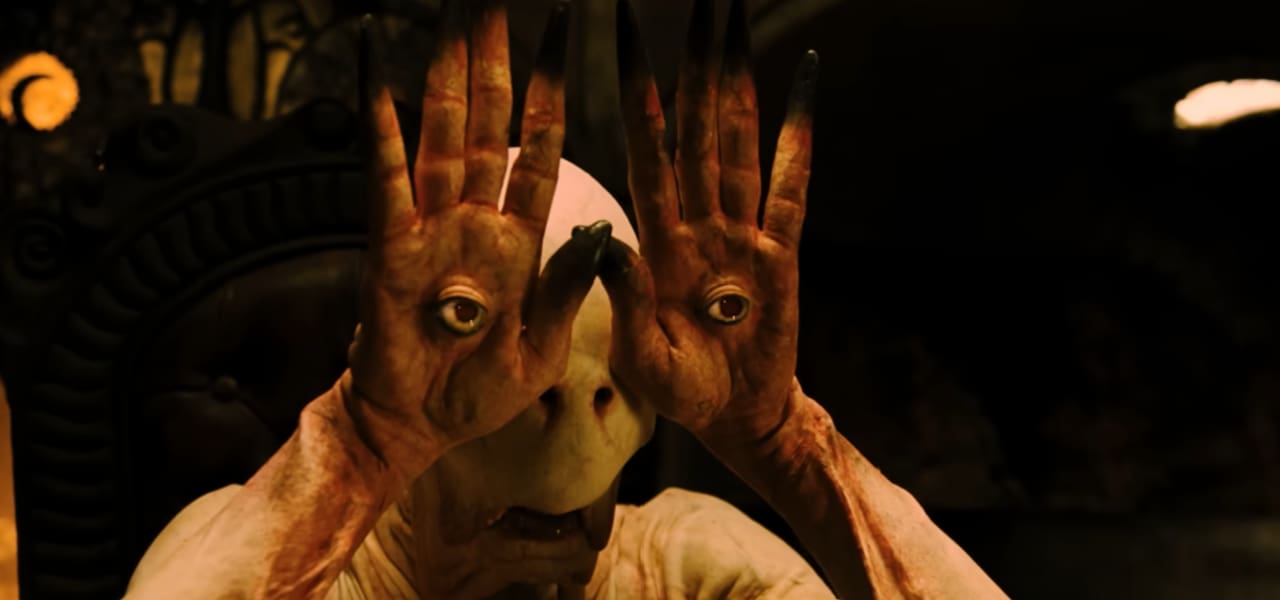
His answers weren’t just hypotheticals. The filmmaker brought receipts from decades of crafting distinct, much-loved stories. He described the development of the Pale Man, the iconic eyeless creature from another Oscar-winning film of del Toro’s, Pan’s Labyrinth:
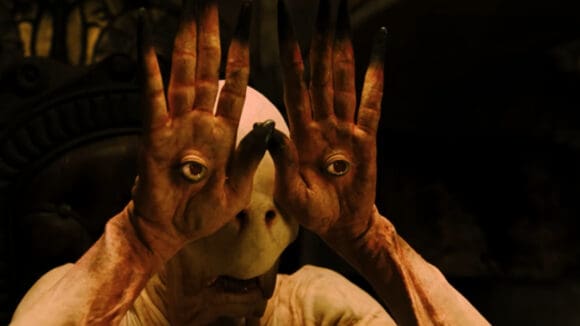
We sculpted it as an old man, with a face. And then I said, “Let’s take out the face.” This happened because I saw a photo of a manta ray and the poster for Don Coscarelli’s Phantasm. That combination, which happened at two different times during a week or a month, are not permutations that are chemically part of an equation. They are alchemy. And then I said, “Take out the face,” and then I said, “Let’s put the eyes on the hands.”
According to del Toro, that kind of discovery can only emerge from spending time with an idea, not in the fractions of seconds it takes a model to pump out dozens of images:
This triangulation happens because I spent a month or two months living with the idea of this creature. And it’s not linear.
AI is like a super-fast engine that makes semi-sentient permutations of things that are already done. Creation is things that have never been done. Coming to exist.
Del Toro also shared a popular refrain about how AI tools are eliminating the apprenticeship through which artists develop their craft:
And the second thing is the loss of the apprenticeship that one has as an artist. You’re never a master; you’re always an apprentice.
Again, del Toro connected an idea to a practical production from his past, recalling a conversation with Christopher Nolan about a scene in The Odyssey in which Matt Damon floats in a stormy ocean. When del Toro asked Nolan how they achieved the sequence, the director told him they put Damon in an actual storm at sea.
And you’re gonna find that 30% of a great image occurs accidentally. You know, either a drop of water hits the lens, or the camera shakes. I remember when in 1993, ’94, Jim Cameron and I became friends very fast. And we were looking at Terminator 2. And he was showing me the scene where Robert Patrick is in the back of the car, and he breaks the window with his arm. And he said, “You see those flares?” I said yeah.
He said, “We put them there, because the audience thinks an image is real, if you put an accident in it.” That’s true. And I agree. The accident is vital. And the best accidents are things you don’t court. They just occur from the interaction with reality.
In another answer, del Toro discussed his continuing preference for puppets, makeup effects, physical sets, costumes, and props, despite having shot digitally since Pacific Rim:
I enjoy the fact that we are at this point in which each of us is waging a battle for something. Chris Nolan goes for absolutely shot on film with the IMAX camera, which implies a huge effort. And he’s questing for that. I’m questing for puppets and makeup effects and real props and so forth. Each of us quests for something different, and I think that it’s beautiful that there are people completely dedicated—PTA, Nolan, Quentin—to shooting on film. And other people, we can pursue digital cinema.
He also discussed his creature-design philosophy and how his monsters are often inspired by classical illustrations and artists rather than contemporary screen creatures:
I love to base/bounce ideas off classical illustrators like Edmund Dulac, Arthur Rackham, John Bauer. People that illustrated fairy books in the early 1900s and late 1800s. I don’t like to base any of the designs on what people are doing in the last couple of decades.
And there’s an ornamental vocation I have in which most of my creatures have decorations, which come straight from Mexico. The giant kaijus of Pacific Rim are very much like the Alebrijes in Mexico. The faun has these concentric circles in the wood and in his forehead. Hellboy has these grooves on his skin. I like the ornamental nature of these things because I don’t like the flesh looking like flesh. When you see the ghost in The Devil’s Backbone, I wanted it to look like a broken porcelain doll.
Because that communicates the fragility of the ghost. I’m not linear in that.
Del Toro finished up his answer on creature design by returning to the Pale Man and the importance of subtraction:
In designing, it’s not always what you put in the creature, but what you take out. If you think about it, the fact that the Pale Man has no eyes, and then has eyes in his hand. The Angel of Death has no eyes, but the wings have the eyes. It’s what you don’t put where.
You have to play with that.
For Del Toro, what seems to matter most in the debate about AI in filmmaking is that the time spent living with an idea is irreplaceable and unrepeatable.