Chomet Insists Dior Ad Was Hand-Drawn, But Acknowledges ‘Automated Interpolation’
Stay informed with free updates
Sign up to get our news digest — delivered directly to your inbox twice a week.
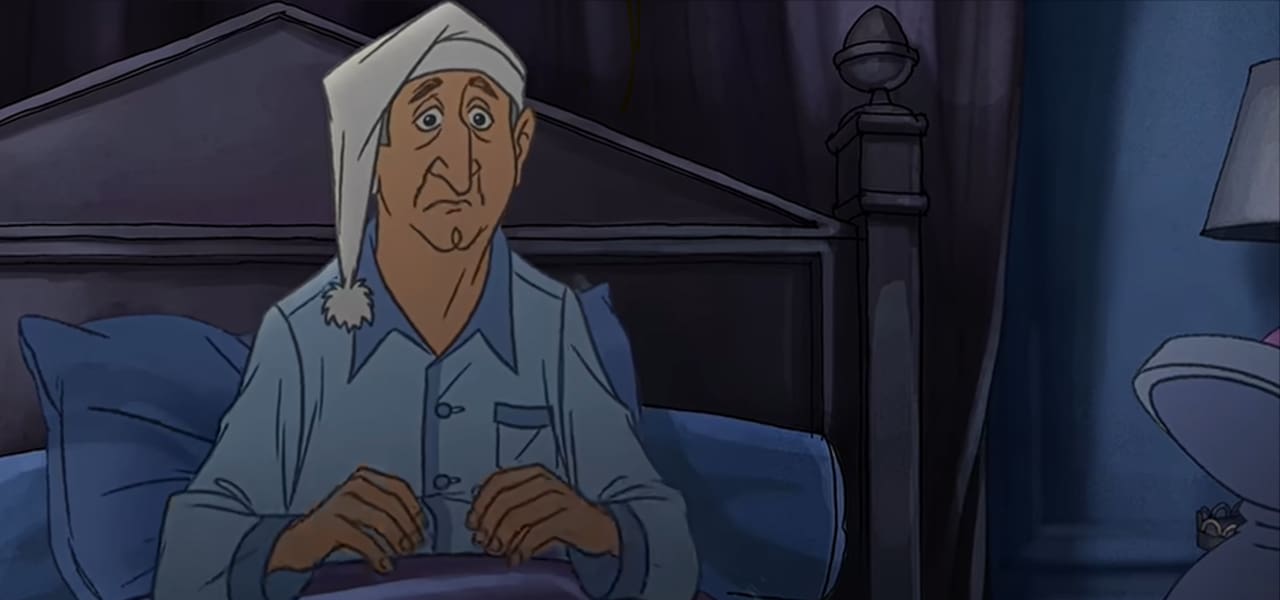
Four-time Oscar-nominated French director Sylvain Chomet has responded to questions about the potential use of generative AI in a new ad campaign he helmed for luxury fashion brand Dior, which had been explicitly promoted as hand-drawn in the original materials released with the short, including a behind-the-scenes video.
Speaking exclusively with Variety, Chomet and his producer Aton Soumache unequivocally rejected viral speculation that many of the frames of the short were generated using artificial intelligence. According to Soumache, the ad was created over seven months by a team of 20 artists, six of them animators.
While denying claims of AI use, Soumache did tell Variety: “We used an automated interpolation system for a very small part of the process, but the film itself is traditional 2D animation.”
It’s an interesting distinction that deserves a bit of scrutiny. First, the original ad was presented as hand-drawn by Dior in its exclusive announcement with WWD (Women’s Wear Daily): “The film we’ve created together for Dior is all hand-drawn using techniques that go back to the 1940s,” Dior’s creative director Jonathan Anderson said in the piece. That description, however, leaves out a major detail about the production process, according to the filmmakers’ own explanation.
Automated interpolation is not necessarily the same thing as generative AI, and encompasses a range of different technologies, including but not limited to AI-powered tools capable of synthesizing new frames. Neither filmmaker identified the software used or explained precisely how the process worked.
Soumache characterizes the interpolation as a “very small part of the process,” which also leaves considerable room for interpretation. Is he referencing a small percentage of the finished frames, the number of shots, or maybe a limited portion of the production schedule? Without knowing what he’s referring to, or even which technology was used, it’s impossible to a concrete conclusion regarding the extent of automation in the finished film.
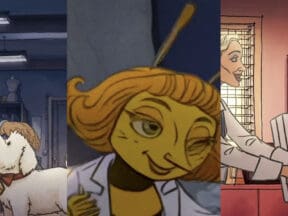
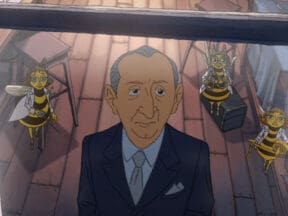
Of the extra fingers, blurry tree stars, morphing dog collar, and uncanny bee tailors that fueled the original speculation, Chomet offered a more conventional explanation: that his team employed established animation techniques in which exaggerated or overlapping shapes convey movement. Unlike the unspecified interpolation system, these techniques have existed for generations in animation production. They’re foundational to the craft of hand-drawn animation. Whether they explain every instance identified by viewers online is another question, and one that cannot be settled by a general explanation of the technique.
None of this proves that generative AI was used. Nor does the employment of artists over a seven-month production necessarily rule it out.
And that’s been the main problem since the beginning of this ordeal. The language from primary sources was explicit in describing the film as hand-drawn. Now, the filmmaker and producer have acknowledged that intermediate frames were generated through interpolation. But they have not provided sufficient evidence to remove doubt about the potential use of AI.
Until they or Dior provide more specific information about their interpolation tools and workflow, their statements have done little to assuage suspicions.
Given Dior’s status in the fashion industry and its emphasis on the short as a celebration of traditional craftsmanship, greater transparency would go a long way toward resolving the questions surrounding its production.