.png)
Chinese Animated Feature ‘Niu Lai’ Turns Online Mockery Into Big Box Office Bucks
Stay informed with free updates
Sign up to get our news digest — delivered directly to your inbox twice a week.
Beauty is in the eye of the beholder. And in China, a new animated feature made by just two people on a shoestring budget has become one of the country’s unlikeliest box-office hits of the year, proving the theory holds true in animation, too.
Niu Lai, also translated as Here Comes the Cow or The Arrival of the Ox, opened in China on August 5 with no marketing, no promotion, and no trailer. During its first ten days, the film reportedly earned just 7,700 yuan ($1,070), with fewer than 300 tickets sold nationwide.
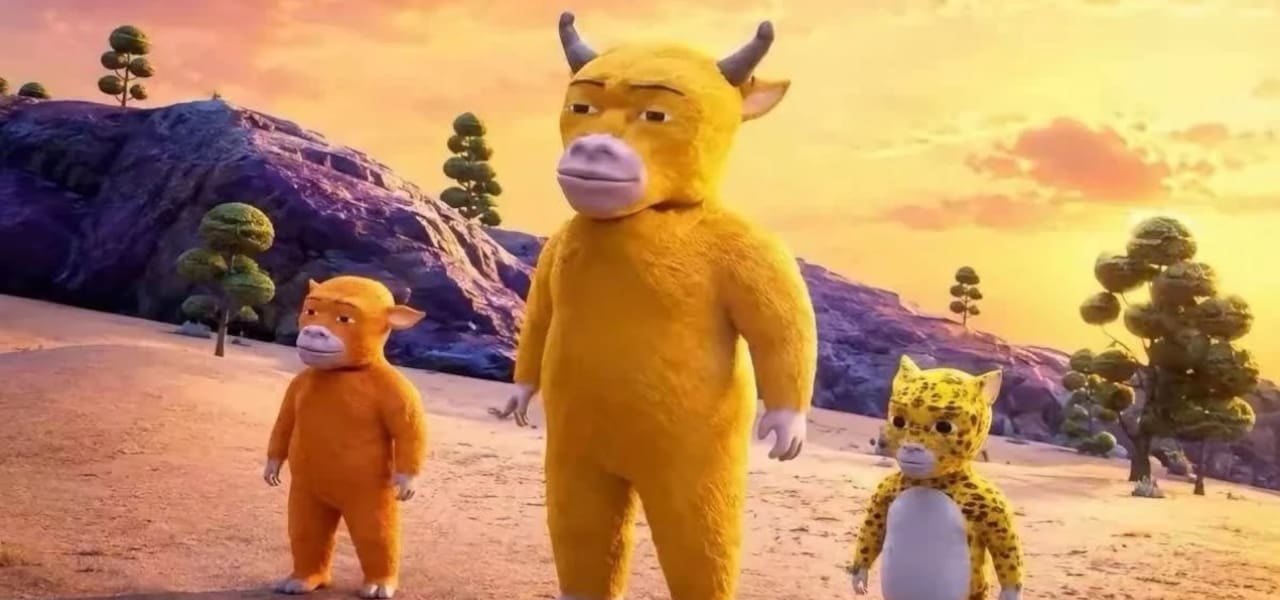
Then people began sharing clips online, and a love affair blossomed between Chinese moviegoers and the film with a face that only a mother, or film buff sick to death of samey-looking, AI slop, could love.
A newly released animated film called “Niu Lai” (牛来) is going viral for all the wrong reasons in China.
People are calling the visuals “disaster-level” , the entire production team was basically just two people: the director and the screenwriter. After 9 days in theaters, the… pic.twitter.com/l7RM9ZER67
— Tong Bingxue 仝冰雪 (@tongbingxue) August 15, 2026
Much of the early attention mocked the film’s stiff animation, unconventional voice acting, and difficult-to-follow story. But as Niu Lai hit certified meme status, curiosity drove audiences into theaters. The film has now grossed more than 14.9 million yuan ($2.1 million), according to Chinese ticketing platform Maoyan, placing it alongside far more expensive releases in the country’s daily rankings.
The film follows a newborn calf and a skylark through an abstract dream sequence exploring love, courage, perseverance, and sacrifice. Xin Yumeng and Sun Lifang, reportedly a mother-and-son team, made it over five years and served as the film’s writers, directors, producers, voice actors, and principal crew.
Some viewers have embraced the film’s visibly handmade aesthetic as a welcome counterpoint to polished studio animation and the genAI slop flooding online platforms and even theaters in some smaller countries. Other wet blankets within China’s film industry have been less enthusiastic, arguing that its ironic popularity has come at the expense of more accomplished productions.
Whether audiences are laughing with or at the film, Niu Lai has turned that laughter into a genuine theatrical phenomenon that most indie filmmakers dream of.