International Anime Producers Discuss Challenges And Benefits Of Co-Production At TIFFCOM
Stay informed with free updates
Sign up to get our news digest — delivered directly to your inbox twice a week.
TOKYO, Japan — Recent years have seen more co-productions in anime, and there is clearly a growing curiosity about the potential for features to find extra support outside Japan.
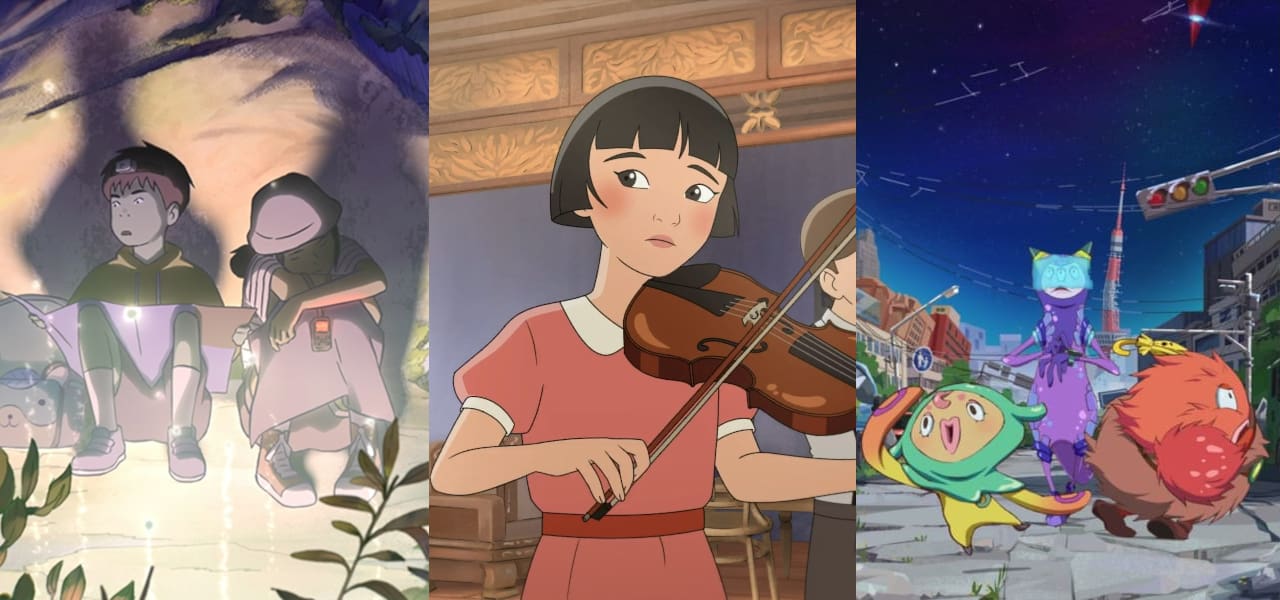
A session at TIFFCOM on Thursday, October 29, described international co-production as “anime’s new frontier.” The panel, moderated by Masao Kawano, program manager at Into Global, included Ervin Han, co-founder and CEO of Robot Playground Media and co-director of recent Annecy winner The Violinist; Foliascope CEO Ilan Urroz; and Salamander Inc. CEO Taiki Sakurai, a producer whose screenwriting credits include Ghost in the Shell: Stand Alone Complex.
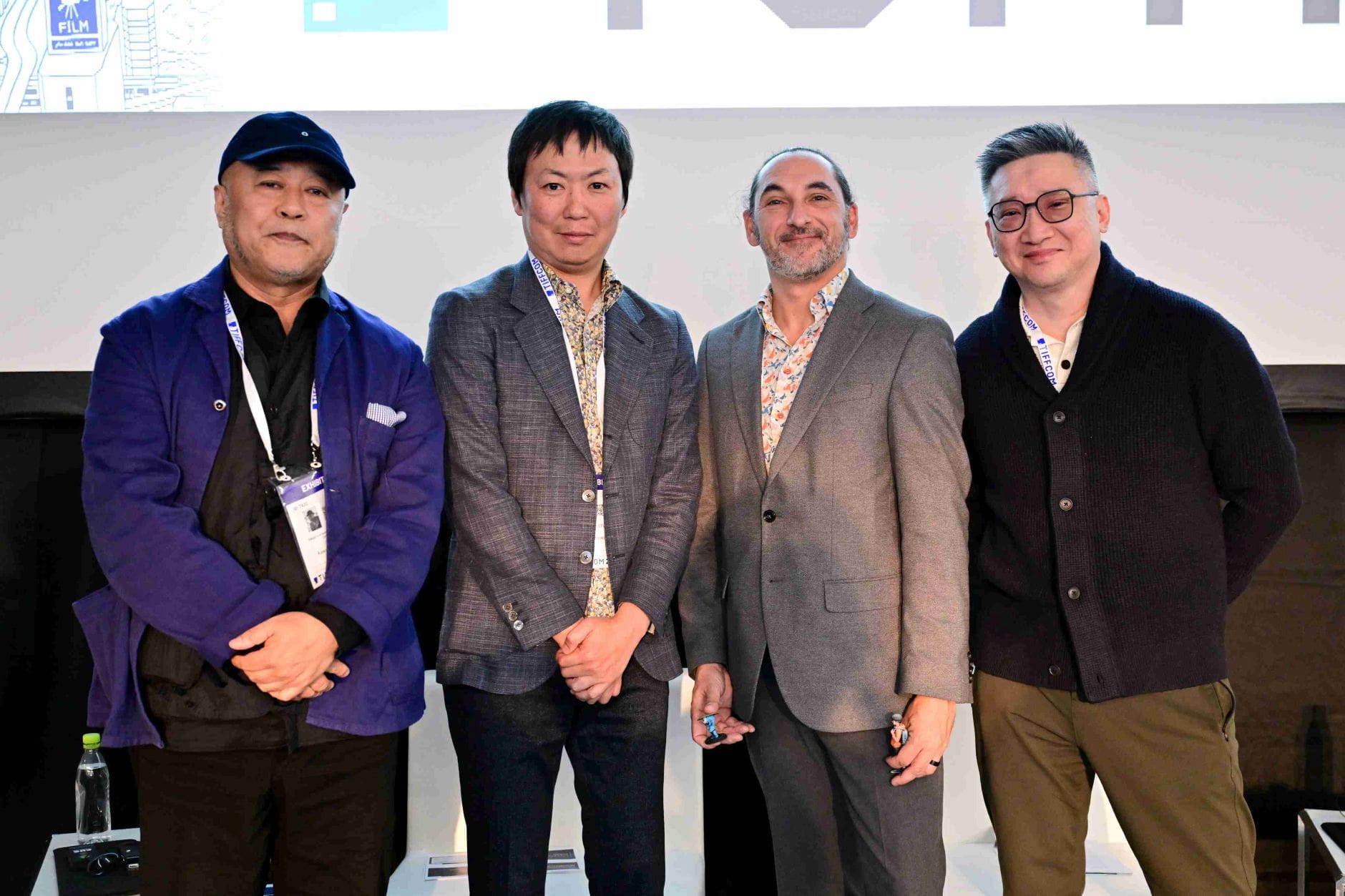
The talk was split into three distinct parts, covering the “key challenges and opportunities of international co-production,” financing models and deal structures, and going to market. Han spoke first, mentioning that TIFFCOM was where he met a co-producer as well as the composer on The Violinist. He then discussed his aims for Robot Playground, looking to find “culturally-rooted stories from Asia and introduce it to a global audience.”
Han took a moment to introduce Robot Playground’s new project, The Banquet for Hungry Ghosts, showing a trailer for one of the anthology’s stories, Egg Fried Rice. Han noted that, somewhat similarly to The Violinist, Banquet will be a “majority Asian co-production with minority European components,” with production across Singapore, Malaysia, Taiwan, and Ireland. “So the production studios are based around Southeast Asia,” Han said, “and Ireland looks after music and audio posts as a minority partner.”
After Han’s quick briefing on his ongoing projects, Urroz introduced Foliascope’s work as well as the project the company would be pitching at the Tokyo Gap Financing Market, Back to Tomioka. Urroz highlighted co-production partners in Poland, Hungary, and Belgium, as well as creatives from Japan. “That’s exactly what we want to achieve with this movie: mixing the culture, mixing the artists coming from France, from Europe, from Japan, living in a different country but sharing the same spirit; animation can be the medium to turn to any audience about feelings, about love, about friendship.”
Urroz noted that the company was already developing marketing around the film, with merchandise including a board game designed by Antoine Bauza. Foliascope has also sold the film’s subscription streaming rights to Crunchyroll, with the companies working together to release a Japanese version.
The Foliascope CEO pivoted to discussing French systems for co-production, which the panel moderator had described as “enviable” at the opening of the session. “We are super lucky in France,” Urroz said. “We have public funding for lighting, development, production, also [innovation] funds for our studio or pipeline, we have also this incredible fund for foreign production cinematography. You can be from any country in the world: if you have a co-producer in France for a little part, you can ask for money from the French system.”
“Of course, with the internationalization of production, we have also the international tax credit. It’s a tax rebate, but we have also this very very useful paper visa, talent visa,” he continued. Urroz pointed out that in America, it is much more difficult to bring in a crew from another country to work for one to three years, and said the process in France is faster. “We made the stop-motion animation feature film The Inventor with Jim Capobianco, a veteran of Disney and Pixar,” Urroz said, adding that the production used the international tax credit.
Urroz also said these funds enable studios to embrace sustainable production. “With the French system, we are capable of transforming all our studios into positive generating solar studios, all our productions are made with solar energy,” he said. “It’s an incredible fund, an incredible system, but totally open for foreign co-production.”
Urroz also pointed to Creative Europe’s MEDIA program. “We have 27 countries in the European space, but it’s open to other countries around Europe,” he said. “It’s a system that directly helps the development of new feature films, up to 60,000 euros by co-producer, and you can have up to four co-producers […] then after you can ask for an image fund that also provides some funds for distribution, for marketing, etc.”
“The very basic difference between financing in Asia and Europe is the fact that in Europe, as even a solution, you know, in some ways they are very fortunate to have a very established, structured system for financing, particularly within the EU, to the extent that a majority of the budget could be financed if it’s you know, structured the right way through soft monies, incentives, and grants, and broadcaster pre-sales,” Han said.
“In Asia, most of it is private financing. This is a fundamental difference that I’ve actually found sometimes requires quite a bit of understanding for Asia to co-produce with Europe. In Asia, there is some amount of government financing, but by and large, I think it’s maybe up to 20% at most, if you’re lucky. And the majority has to be raised privately through structured financing, through private equity, sometimes specific private equity investors, family offices.”
Asked about the pros and cons of international co-production for anime, Sakurai said he felt Japanese animation was still viewed from a narrow perspective, which complicates funding when certain expectations are tied to the term “anime.” At the same time, he has found a “high level of tolerance” when a project aligns with those expectations.
Following the other panelists’ points about government support, Sakurai highlighted that even the greatest successes are generally not made overnight. He referred to the success of Makoto Shinkai—a director he called a “genius”—who also needed many chances to break through and succeeded following 14 years of support from his producer.
Han went on to say that one real challenge for many producers in Asia is securing support from broadcasters. “It’s also why we have to go overseas. I mean, the whole idea of a [co-production] is that it’s not just finding money; it’s finding partners with complementary strengths and partners who believe in your story, in your film, in your tv series, in your project. To do it together because you cannot do it alone. You know, I think that principle is very important. Once their understanding is there, then we try to find a way.”
Just as TIFFCOM as a whole suggested a general interest in co-production, the panel showed the financial incentives driving that interest, alongside Japanese companies’ hopes of deepening their connections with global audiences. Urroz and Han’s observations highlighted a key attraction: the more extensive government support available in countries such as France compared with financing systems in Asia.