.png)
Great Cartoon Vampires In Animation History
Stay informed with free updates
Sign up to get our news digest — delivered directly to your inbox twice a week.
For Halloween this year, we’re taking a look at some of the most memorable vampires throughout animation history, so pour yourself a cup of blood and dive in!
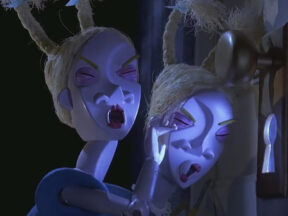
We’ll start things off with a vampire cartoon that deserves more attention: Mina and the Count, all about a short-fused vampire named Count Vlad who develops a soft spot for a happy-go-lucky young tyke. Rob Renzetti (future creator of My Life as a Teenage Robot) made six Mina and the Count shorts that aired on Cartoon Network’s anthology series What a Cartoon! and Nickelodeon’s similar Oh Yeah! Cartoons in the mid-‘90s. Neither network picked it up as a series, but the characters are charming, and Renzetti’s boldly outlined and slickly stylized design work is always a pleasure to look at. That’s Mark Hamill (a.k.a. Luke Skywalker) doing the voice of Vlad.
— Cartoon Study (@CartoonStudy) October 31, 2025
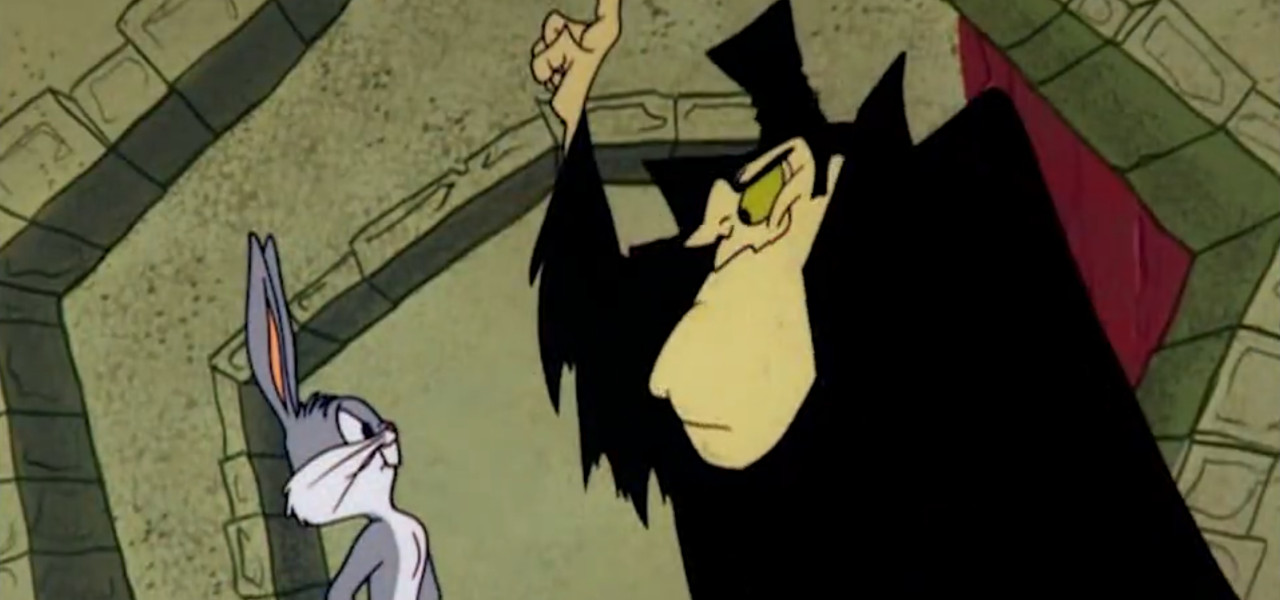
Despite the popularity of Dracula in Universal’s classic monster movies, vampires rarely appeared in cartoons during the golden age of animation. Dracula briefly shows up among other monsters in Disney’s Mickey’s Gala Premier (1933), Walter Lantz’s Wax Works (1934) and Terrytoons’ G-Man Jitters (1939), but the earliest cartoon I’m aware of to prominently feature a vampire is Transylvania 6-5000 (1963), in which Count Bloodcount foolishly attempts to match wits with Bugs Bunny. This was director Chuck Jones’ last cartoon with Bugs before the Warner Bros. cartoon studio shut down, and it boasts stylishly spooky layouts by Maurice Noble & Bob Givens and a great scraggy vampire design by Jones himself. Several of Bloodcount’s lines were later sampled in the Gorillaz song “Dracula.”
— Cartoon Study (@CartoonStudy) October 31, 2025
There are reports of audiences fainting in terror upon seeing Bela Lugosi’s performance in Dracula (1931), but by the 1960s, vampires were viewed as charmingly quaint in the wake of more realistically chilling horror films like Psycho (1960). The old movie monsters were now being played for laughs in sitcoms like The Munsters and novelty songs like “The Monster Mash.” Count Dracula’s appearance in the underrated Rankin-Bass stop-motion feature Mad Monster Party? (1967) is in that same campy vein.
— Cartoon Study (@CartoonStudy) October 31, 2025
Another early cartoon vampire is Count von Krolock, who appears in an opening credits sequence added to the U.S. release of the live-action Roman Polanski flick The Fearless Vampire Killers (1967). It isn’t clear who created these titles, although the designs look like the work of Lew Gifford (of Schoolhouse Rock! fame). Polanski apparently hated this sequence, but I like it better than the movie it’s attached to.
— Cartoon Study (@CartoonStudy) October 31, 2025
Unlike witches and Frankenstein’s monster, who are consistently portrayed as green in cartoons, animators have never settled on a standard color for vampires. Sometimes they have pale skin, but it’s not out of the question to see them painted green, blue… or even purple, like the mad scientist vampire in the DePatie-Freleng short Transylvania Mania (1968), directed by Gerry Chiniquy. Four years later, a slightly more iconic purple vampire would make his debut on Sesame Street.
— Cartoon Study (@CartoonStudy) October 31, 2025
Most of the stock vampire tropes are derived from folklore or Bram Stoker’s 1897 “Dracula” novel, but the idea of vampires being vanquished by sunlight was actually an invention of the 1922 silent movie Nosferatu. Vampires’ aversion to the sun is used for humor in numerous cartoons, including the classic Pink Panther short Pink Plasma (1975), directed by Art Leonardi. Distilling the typical Slavic vampire-speak down to a simple “bleh bleh bleh” was an inspired choice.
— Cartoon Study (@CartoonStudy) October 31, 2025
In terms of TV cartoons, a vampire popped up for a quick joke in a 1964 episode of The Flintstones and a few more found their way into the Beatles cartoon in 1965, but one of the first vampires to get significant screen time is Batty Man, a criminal mastermind who faced off against Underdog in 1967. I love how unashamedly cartoony the designs in these early TV cartoons were before they got the blood sucked out of them, so to speak, and we wound up with the more realistic comic book-derived aesthetic that dominated American TV animation of the late ‘60s and ‘70s. As for this clip specifically, there’s a pretty glaring animation error when we cut from Underdog to a man carrying dishes without switching the background, but it’s hard to quibble over such a charming sequence. I love those shots of Batty Man wordlessly raging at Underdog.
— Cartoon Study (@CartoonStudy) October 31, 2025
TV cartoons for kids have gotten a lot of mileage out of vampires over the years, despite the fact that the vampire’s primary schtick – sucking blood out of people’s necks – isn’t something you can really show on a children’s program, particularly after the ACT (Action for Children Television) cracked down on cartoon violence in 1968. Several cartoons in the 1970s tried to work around this by having vampires “bite” people by shooting lasers out of their eyes, but some more recent cartoons have managed to put a clever twist on the vampire legend that also ties into the theme of the show; in Hi Hi Puffy AmiYumi, the vampires suck talent out of rival rockstars, and in My Life as a Teenage Robot, the villainous Gigawatt is an “energy vampire” that sucks the power out of electronics. Here are just a few of the many vampires that have appeared in kids’ cartoons in the last several decades:
— Cartoon Study (@CartoonStudy) October 31, 2025
In addition to one-off villains and side characters, there have been several children’s cartoon series centered around vampires, including Ernest the Vampire, Little Dracula, Mona the Vampire, School for Vampires, Bunnicula, Monster High, Vampirina, etc. If you were a kid in the 1980s, you had not one but two cartoon series about vampire ducks to choose from: Filmation’s Quacula and Cosgrove Hall Productions’ Count Duckula. Of the two, Quacula has the better pun title, but Duckula is the funnier show.
— Cartoon Study (@CartoonStudy) October 31, 2025
Cartoon vampires have even shown up in tv commercials, most notably Count Chocula, the undead spokesman for the sugary General Mills cereal of the same name. Chocula was designed by illustrator Goerge Karn, who also created the earliest incarnation of the Trix Rabbit. Chocula made his first screen appearance in this 1971 ad by Bill Melendez, who famously directed the Charlie Brown holiday specials. Look for a very Peanuts-esque child at the end there.
— Cartoon Study (@CartoonStudy) October 31, 2025
Most cartoon vampires are takeoffs of Bela Lugosi, but the Dracula character from The Grim Adventures of Billy and Mandy takes inspiration from a different source: the 1972 blaxploitation film Blacula. C.H. Greenblatt, future creator of Chowder, came up with this character by imagining what Blacula would be like as an old man, adding, “I basically crossed Redd Foxx and James Brown, made him speak in the third person, and voilà – Dracula was born.”
— Cartoon Study (@CartoonStudy) October 31, 2025
One of the most popular cartoon vampires is Marceline the Vampire Queen from Adventure Time. Although she occasionally drinks blood, what she actually craves is the color red, which she sucks out of strawberries, bowties, etc. Marceline became a more wholly sympathetic character as the series progressed, but I think I prefer her early appearances when she is both fun and intimidatingly unpredictable (not to mention having a more oval-shaped head and floppy noodle limbs). In the original series bible, creator Pendleton Ward described her as a “wild rocker girl,” adding, “For Finn, Marceline embodies the allure of a daredevil. She’s fearless in her actions and words and generally throws life to the wind… or rather, she throws un-life to the wind.” Here she is in her debut, “Evicted.”
— Cartoon Study (@CartoonStudy) October 31, 2025
Vampires have had a big presence in anime, from feature films like Vampire Hunter D and Blood: The Last Vampire to series such as Trinity Blood, Hellsing, Vampire Knight, Shiki, Jojo’s Bizarre Adventure, etc. (not to mention the anime-inspired Castlevania). The first anime vampire I’m aware of comes from the goofy 1968 series Monster Kid, based on a manga by Motoo Abiko, in which the young prince of Monster Land journeys to Tokyo with his three supernatural servants: the Wolf Man, Frankenstein’s Monster, and Dracula. I don’t know what’s being said here, but the drawings are so joyfully silly that it hardly matters.
— Cartoon Study (@CartoonStudy) October 31, 2025
The Father of Manga himself, Osamu Tezuka, also created his own vampire character: Don Dracula, who tries to adjust to modern living in Tokyo while sharing a mansion with his servant Igor and daughter Chocola (no relation to Count Chocula). The manga was published in 1979, and it was turned into a short-lived anime series in 1982. Tezuka’s style is synonymous with anime, but you can tell he was looking at American animators like Tex Avery with some of these wild reaction shots.
— Cartoon Study (@CartoonStudy) October 31, 2025
For something darker: the gothic post-apocalyptic anime feature Vampire Hunter D (1985) is one of the films that helped to popularize adult-skewing anime in the west, and it remains a cult classic. Its sequel – Vampire Hunter D: Bloodlust (2000), directed by Yoshiaki Kawajiri – pushes things even farther, boasting more lavish animation and a stronger blend of action and pure horror. Here’s an impressively choreographed fantasy battle between D and Carmilla from Bloodlust.
— Cartoon Study (@CartoonStudy) October 31, 2025
I’ve never watched the anime series Hellsing Ultimate, but in looking for animated vampires for this list, the sadistic anti-hero Alucard was consistently ranked as one of the greatest, if not the greatest, anime vampire, so I would be remiss if I didn’t give him a mention here.
— Cartoon Study (@CartoonStudy) October 31, 2025
Indie animators have taken the vampire legend in unusual directions. Kali the Little Vampire (2012) by Portuguese animator Regina Pessoa explores the theme of lost childhood by taking on the perspective of a melancholy young vampire who longs to live in the sunlight. The short was animated digitally, but Pessoa was careful to maintain her personal style – which she developed by engraving on plaster and paper – and the end result looks like a moving linocut. That’s Christopher Plummer doing the narration.
— Cartoon Study (@CartoonStudy) October 31, 2025
Vampires are frequently subjected to villain roles, but Dracula is the protagonist of the popular Hotel Transylvania films. Director Genndy Tartakovsky, creator of Dexter’s Laboratory and Samurai Jack, did a great job injecting the exaggerated poses and snappy movements of his 2d work into this computer-animated world. According to Genndy, “That’s the whole goal of the director, to have such a strong point of view that you can watch that movie, and go, ‘only Genndy could have done that.’ I’m always very concerned about being homogenized, that nobody can tell who directed what movie.” In case there was any doubt, the first Hotel Transylvania film ends with a 2d animated sequence drawn in Genndy’s distinctive style. As he concluded, “For me, no amount of detail or realism can compete with something that is hand drawn, because it’s the ultimate personal expression.”
— Cartoon Study (@CartoonStudy) October 31, 2025
And speaking of that special charm you only find in traditional animation, the recent French animated feature Little Vampire (2020), directed by Joann Sfar, is bursting at the seams with hand-drawn appeal.
— Cartoon Study (@CartoonStudy) October 31, 2025
And all that without even mentioning some of the animated vampires that never saw the light of day (which might be a good thing for a vampire): Don Bluth was developing a Dracula animated feature in the ‘90s, with a script by Joss Whedon, but it was abandoned after the financial failure of Titan A.E. And speaking of Joss Whedon, a planned Buffy the Vampire Slayer animated series never made it past the pilot stage. And on Batman: The Animated Series, Bruce Timm kept pushing to use Nocturna, a gothic seductress who wants to turn Batman into a vampire, but the network nixed her.
And on the horizon: Jorge Gutiérrez, creator of El Tigre and director of The Book of Life, is currently working on an “unhinged” new series called El Guapo Vs The Narco Vampires, which looks spectacular based on the production art.
Who are your favorite animated vampires? Let us know in the comments below. We’ll end things for now with a classic Simpsons scene.
— Cartoon Study (@CartoonStudy) October 31, 2025