.png)
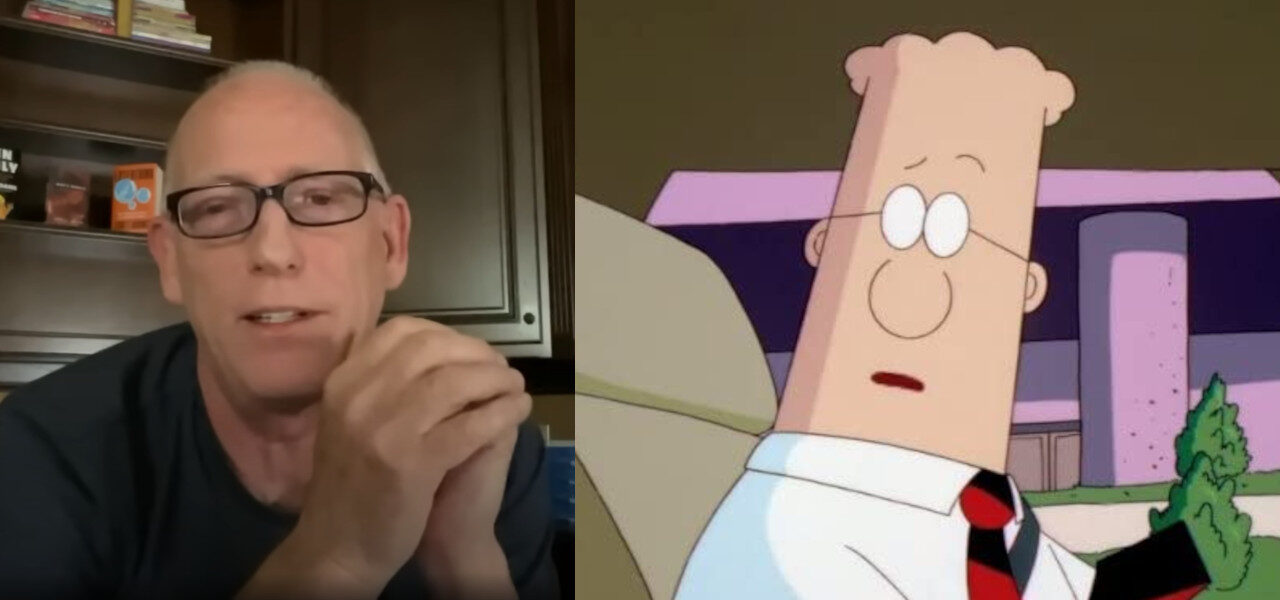
Scott Adams, Racist Streamer And ‘Dilbert’ Creator, Dies At 68
Stay informed with free updates
Sign up to get our news digest — delivered directly to your inbox twice a week.
Scott Adams, the cartoonist who created Dilbert and briefly translated its office culture satire into an animated series during the ‘90s cable TV boom, has died at 68 from prostate cancer.
While Adams built one of the most commercially successful newspaper strips of the late 20th century, his career ended in public disgrace after a series of racist remarks led to the collapse of his syndication and his effective exile from the mainstream comics and animation industries.
Adams launched Dilbert in 1989, drawing directly from his own experience as a corporate office worker. The strip’s deadpan critique of management culture struck a nerve in the cultural zeitgeist of the time, and by the mid-‘90s, Dilbert had become a mega-brand, launching bestselling books, licensing deals, and an animated series. For a brief period, Adams was among the small group of newspaper cartoonists whose work successfully crossed into animation during the era when networks were mining the funny pages for adaptable content.
The Dilbert animated series ran for two seasons on UPN from 1999 to 2000 and boasted an impressive creative pedigree. Executive produced by Adams, the show featured minimalist animation that felt perfect for spoofing mundane office culture and dialogue-driven humor. Though short-lived, it stands as a cultural artifact of a transitional moment in adult-aimed TV animation, arriving between King of the Hill and the later boom of cable and streaming originals.
Adams’s direct involvement in animation never again reached that level, and his relationship with the broader creative community disintegrated over the following years. In 2023, he posted a video in which he made overtly racist statements about Black Americans, remarks that were widely condemned and led most of the newspapers and distributors still publishing the strip to sever ties with Dilbert. Adams’s downfall was immediate, self-inflicted, and unambiguous.
In the years after losing syndication, Adams continued producing work for a smaller, ideologically aligned audience and remained outspoken online, often misguidedly framing his ostracism as a free-speech issue.