‘Somewhere Out There’ Directors On Don Bluth, Taking On Disney, And The Cost Of Going Independent (EXCLUSIVE CLIP)
Stay informed with free updates
Sign up to get our news digest — delivered directly to your inbox twice a week.
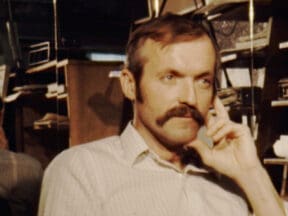
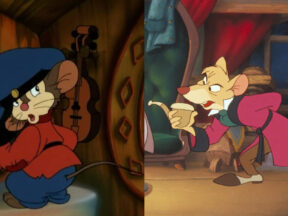
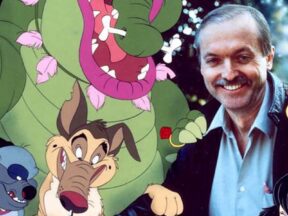
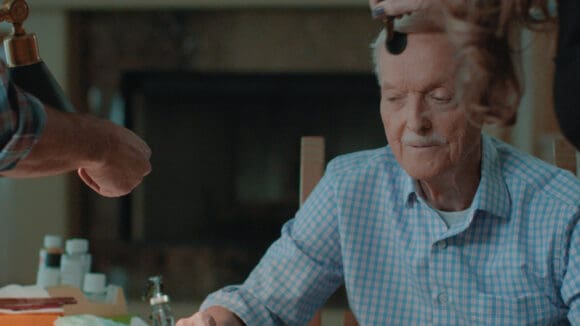
In Don Bluth: Somewhere Out There, the legendary director behind fan favorites like The Secret of NIMH, An American Tail, and The Land Before Time looks back on his decision to leave Disney and build an independent animation studio. Bluth tells the story himself, recalling what it took to get those films made and why some of his later work fell short of his own expectations.
The feature-length documentary, directed by Dave LaMattina and Chad Walker, follows Bluth from his 1979 departure from Disney through the independent years that produced The Secret of NIMH and An American Tail, and on to his return to studio filmmaking with Anastasia at Fox. Drawing on material from Bluth’s archive at the Savannah College of Art and Design, the film traces the choices he made to keep his studio running, including the compromises he’d once left Disney to escape.
LaMattina and Walker, who met at Blue Sky Studios and later made I Am Big Bird, planned to interview a roster of people about Bluth’s career. Their first conversation with the animator put an end to those designs and inspired a redirect towards a more autobiographical endeavor, with Bluth now responsible for reflecting on his career. The good and (a lot of) the bad.
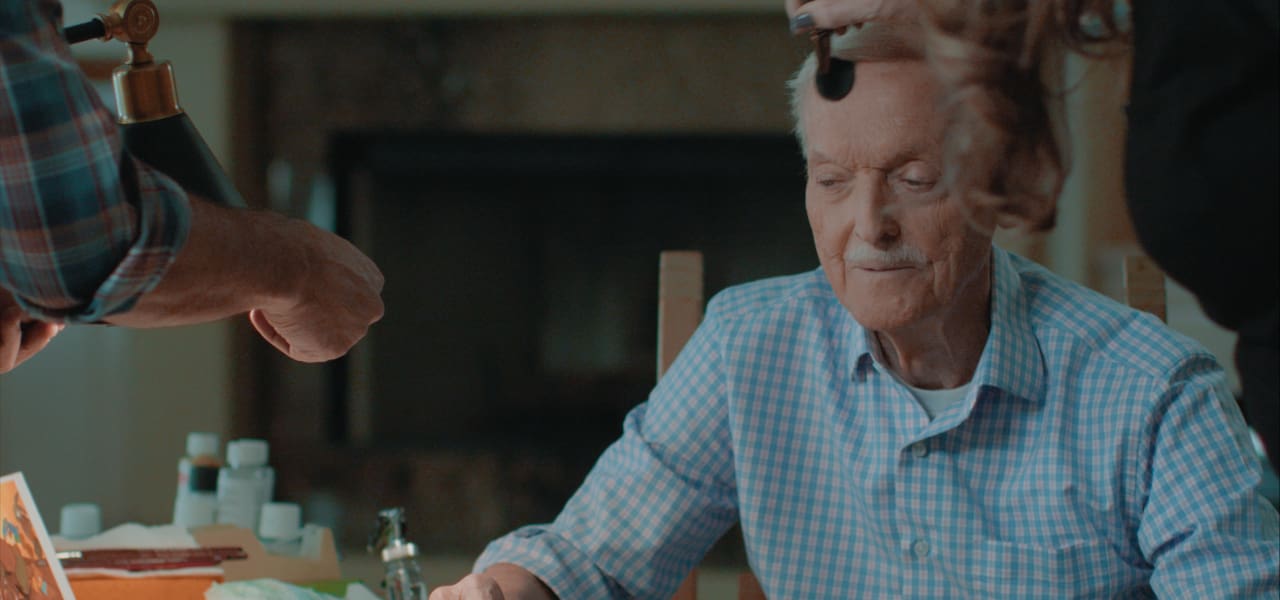
Ahead of the documentary’s November 20 release on Amazon, we spoke with the directors about why they let Bluth tell his own story, what they found in his archive, and what it was like to show him the finished film. We’re also debuting an exclusive clip from the documentary, in which Bluth talks about inspiration and listening to the “blue note.”
Cartoon Brew: Why did you want to make a documentary about Don Bluth now?
Dave LaMattina: Chad and I met working at Blue Sky many years ago. I think we’ve always been intrigued by the artist’s process. That started almost by accident when we did this film about Caroll Spinney, who played Big Bird on Sesame Street.
Sometimes the “why now” is answered by the subjects themselves. Don said yes, right? He’s someone who has always held a fascination in our lives. I think there comes a point in every artist’s life when they are prepared to look back and be honest about their journey and themselves. And so the “why now” is partially, yes, Don is still with us. I love, as I think Chad does, to talk to an artist about their art while they’re still living, rather than do a full retrospective with material we have from them.
Sometimes you get someone that’s just ready to talk, and I think Don was very honest in this film. He was very open with us from the beginning, and we took a lot of our cues from him. As he reflected and was pretty honest, that really drove where we were going with the film.
Chad Walker: It was Dave who said, “Hey, this is a really fascinating story about Don Bluth.” And I was like, “Well, someone had to have made this already.” We were both really shocked that no one had. We approached him because we love animation and we love talking to creative people about their process. He was like, “Come on out.”
We went out and talked to him, and I was just blown away by how thoughtful he was, how poetic he was in the language that he would use. All of that influenced the movie, along with the archive we had access to. I think we went into it thinking, “This will just be this kind of straight celebration of Don Bluth because we love all of his movies.” But then you talk to him, and you’re like, “Wow, this is so much deeper than this.” This idea that villains are everywhere and they’re not necessarily people. They can be part of your own personality, like the alter ego. All this stuff fueled his creativity, and we found it really, really fascinating.
Don is very much the narrator of the film. Was that always the plan, or did it come out of those first conversations?
Walker: When we started out, we were thinking, “Okay, this is the basic structure of what this documentary could be.” We had all these people we were going to interview, as we did with the Big Bird movie, to support the narrative. We even had a plan to go to Ireland and talk with some people over there because he had such an influence on that industry.
I know it’s kind of a cliché, but the movie tells you what it’s going to be. From the moment we sat down and started talking to him, we were just so fascinated hearing him talk to us. We were talking about making movies with a legend, and we weave that throughout the movie. He’s kind of teaching us, “Here are all the steps to how to make a good movie.”
Very quickly after that first interview, we dug in and grabbed some of that archival stuff. We were like, “Man, there’s just something really special here about allowing this movie to feel like a conversation between us and a master.”
LaMattina: One of the unsung parts of this film is the archive. Don’s entire archive lives at the Savannah College of Art and Design. SCAD was an awesome partner for us in that they just kind of let us take everything. They had old film reels, they had tapes in every format, and it wasn’t digitized. We were like, “Look, if you let us digitize it, we’ll give everything back to you.”
I think we were the first people seeing a lot of this stuff since it had been captured in the first place. A lot of people aren’t going back and rewatching the outtakes from a canned sales reel that Don is trying to make to sell the movies and stay alive.
I don’t think we were expecting to walk in and find this story that had heavy art-versus-commerce themes. Don is in every single way a pure artist, but his love and his passion are maybe the most commercial of arts there is, and something that you’re really hard-pressed to make by yourself in a garage.
As we started to see what he captured over the years with new eyes, we brought some of our own journey to it. We are not Don Bluth by any stretch of the imagination, but we are people who came from a studio system and decided to leave on our own to do the things that we care about. I think we identified with that journey a lot. Then it was more about, “What is the story that really captures Don for who he is?” His interviews really dictated what the movie became.
Don is candid about what didn’t work. With him telling the story, how did you decide when to challenge his account or bring in other perspectives?
LaMattina: We start on all these things from a place of love, truthfully. We love Don. When we started the Big Bird film, I don’t know that we necessarily would have challenged Caroll to talk about certain things. With Don, I think we’ve done this long enough now that we know it actually is a disservice to a legend like that to not ask some of the hard questions.
This is maybe the first film we’ve done where you do hear our voices in some of the conversation. I can tell you I was very nervous to ask him, “Why did you name the studio Don Bluth Studios when you left with other people?” I was like, “I don’t know how this is going to go.” He answered it in a really honest and awesome way.
He may have answered those questions in the room very honestly and candidly, but when we sat down and watched the film back with him, I was still having full-on flop sweat. I didn’t know how he was going to respond to seeing this come to light on the screen. To Don’s credit, when he watched the film, he was like, “I didn’t necessarily realize that I had this ego that I’m talking about, but I definitely did, and you guys got it.” He was cool with it, which was awesome.
Walker: If we felt in those conversations like he was being false, we probably would have been like, “We need to go find the truth in other voices or other archival talking heads.” But when we sat there, we were like, “Wow, this guy knows.” He knows exactly why those movies didn’t work. He starts cutting corners. The reason why he left Disney, now he’s forced to do the same stuff. To me, that realization on his part was very powerful.
We bring in Siskel and Ebert to tell you, “Yeah, everybody, these movies aren’t working.” Those are the external voices that support what he’s saying. He was just so honest that I personally didn’t think we needed to bring anyone else in to pile on.
LaMattina: Chad edited the film as well, and he has a real brilliance at finding moments in archival footage. I mentioned the canned sales reel before. We have these outtakes where Don is doing the marketing push. I think it was around Thumbelina and A Troll in Central Park.
Chad had the idea to pull from those outtakes to see Don doing the “I’m on camera, I’m trying to sell this because this is something I have to do.” Then you see the moments after they call cut and see Don’s reaction. Don, in those moments, is telling us more than someone looking back and saying, “Oh, well, he had to go commercial.” Paired with the current interviews, I think that’s really telling. It became a much more personal story than I was anticipating at the start of this.
Don had to believe in himself to take on Disney, but he couldn’t have done it alone. How did you make room for the people who built the studio with him?
LaMattina: He is really a true auteur, and we wanted to experience the film through his lens. Don takes the credit, but he also takes the criticism and he takes the failure. If you were to look at who lost to Disney, it would be Don. It’s not anyone else who was at the studio.
I don’t think we thought at the beginning that we were going to be experiencing this as much of an internal war between ego and commerce and faith as we did. It really did feel like we just wanted to live inside Don’s head. All the people who were an important part of it, we showed them through how Don saw it. That was the creative decision, because it is this moment of his life where he’s incredibly introspective. We wanted to live in that memory of his and bring that to life.
Walker: It was important for us that the world knew how important Gary [Goldman] and John [Pomeroy] were. We definitely were like, “Well, they have to be in there.” I feel like we did that through archival footage so that it fit the style of the movie.
There’s one thing he says in the movie that, if you think about it, is like, “Oh, that’s why he couldn’t beat Disney.” It’s when he says he still draws six hours a day. That’s his love. He was never going to stop doing that. That’s the part of everything that he loved. But you could not be as successful as Walt Disney if you’re still drawing six hours a day. He says it very early in the movie, “I wish I was a better businessman.” And that was kind of it. He loved the art.
Bluth’s line about wishing he were a better businessman stuck with me. What surprised you most in those conversations?
LaMattina: He says at some point in the film, “To make a good movie, you need a good script. And we never had one.” And then he says, “We just have to keep people working.” So they have to go ahead.
I saw that firsthand from our time in the industry. We worked with some of the most magnificent artists at Blue Sky Studios. I would put them on par with everyone else out there. It all comes down to story. I’m not critiquing the writers we worked with at Blue Sky. I’m just saying the artistry that Don had was there, and so was that obligation to keep people working and to take care of them.
It’s why Chad and I have purposely stayed very small as a production company and don’t have 300 people or anything. If you wanted to make these big studio pictures, particularly at that time, you needed all these people, and you had to keep them working. You couldn’t go from one project to the next and not have a story, and they just didn’t have the time to do it.
I was really struck by his awareness of that fact. You leave Disney, you do The Secret of NIMH, and it comes out, and it’s all the things that you wanted to do. Then the reality of the business catches up to you and damns you to repeat those same things. Part of it is so admirable because you want to make sure everyone has a job and you want to take care of all these people, but it’s almost tragic to become that thing that you wanted to break free from. Then you have that moment that comes with age of understanding, “Oh, okay, well, I get why they were like that.” That really stuck with me.
Walker: He makes NIMH, which is glorious and everything he wanted it to be. Critics love it, but it’s a commercial failure. You follow that with Dragon’s Lair. They just rush it out. It’s more cartoon than film, and it makes more money than NIMH. It’s a blockbuster. It’s like, “Oh, man, this business is fickle.”
The thing that I connected with the most in the story, and that for me was the most surprising, was Don’s awareness of his ego and how he named them. “The ego is me, but I have this alter ego that fights.” This concept of our ego and how it shapes our behavior is something that really fascinates me. It was very surprising to hear the way he perceived the benefits and the negatives of his ego and alter ego.
At one point in the movie, we’re discussing villains in his life. You see commercial imagery, which could be a potential villain. We see imagery of his father, because he had a rough relationship with him. We go to Roy and Disney because they’re really battling him. And we ask him, “But is an alter ego also villainous?” And he’s like, “Oh, yeah. Oh, yeah.” That, to me, was really shocking, really surprising. I loved our conversations with Don, man. I loved him.
This interview was lightly edited for length and clarity.