‘The Hiring Bias Is Endemic’: Animation Industry’s Diversity Problem Debated At MAF
Stay informed with free updates
Sign up to get our news digest — delivered directly to your inbox twice a week.
“Is the animation industry doing enough for people of color?” Framing the question already suggests an answer, and that answer is no. But where do we go from here? How can the industry remove the roadblocks preventing people of color from thriving, and is breaking away from mainstream studios the only way forward?
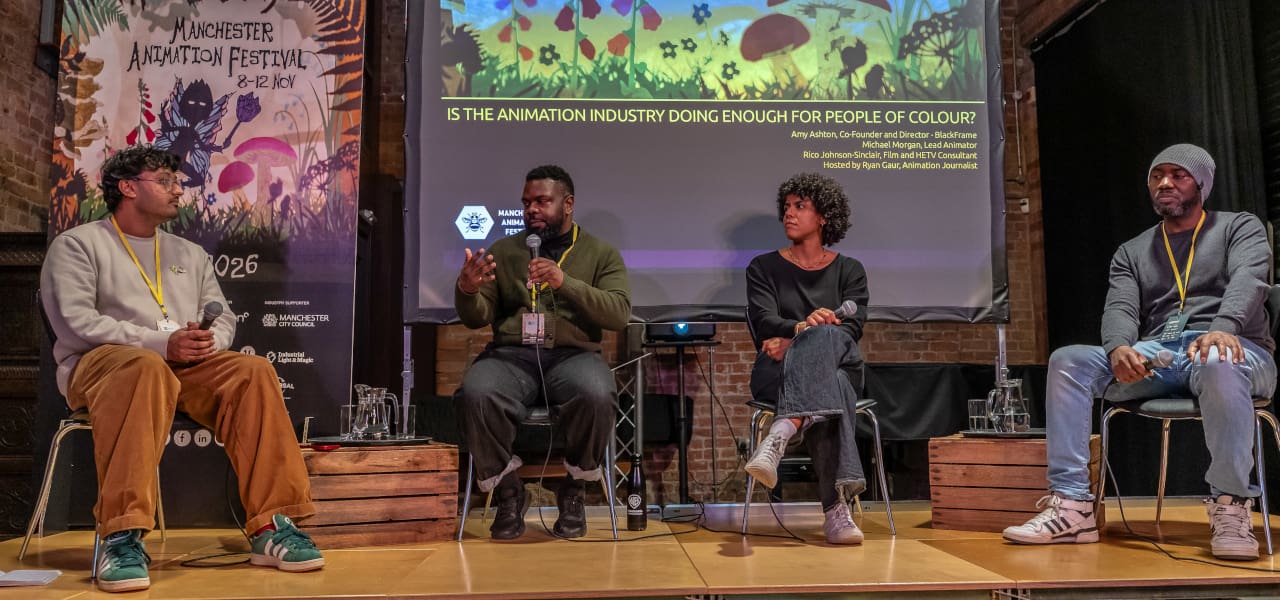
In one of the highlights of this year’s Manchester Animation Festival industry program, three U.K. panelists gathered to discuss the representation of people of color in positions of power within the British animation industry and beyond. The discussion was moderated by London-based writer and Cartoon Brew contributor Ryan Gaur.
The following report draws on the wide-ranging, 80-minute discussion.
Advocating For Creative Access
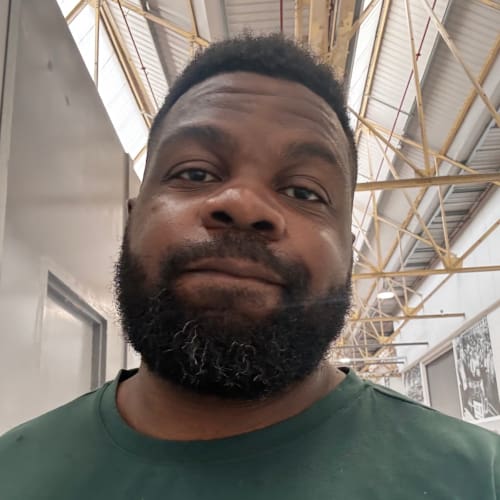
“The hiring bias is endemic in the animation industry,” says talent development and inclusion expert Rico Johnson-Sinclair. “On one hand, there’s external pressure on organizations to hire more historically marginalized people, but the reality is that it ends up with people stuck in entry-level jobs because there’s no one to invest in them. And that’s largely because there aren’t enough people in positions of power to be able to advocate for different voices in the medium.”
For Amy Ashton, co-founder and director of BlackFrame, a newly launched initiative that amplifies Black talent in animation, it’s also about questioning the motivations behind these decisions.
“I’ve been advocating for creative access for 12 years now, and I have seen a kind of stagnation in the lack of representation. People do get opportunities to take the next step, but whether companies are implementing these schemes in the right way remains questionable. I think the question we need to ask is what is the intention behind it, because that has to be in the right place.”
Raised on movies, video games, and comics of the 1980s, Michael Morgan has been navigating the industry for almost 20 years. As a senior animator, mentor, and internationally experienced artist, he’s repeatedly witnessed the gap between representation at universities and within studios.
“When you get to the studios, sometimes even if there’s about a thousand people, I can count on my hands how many Black people there are, a few Asians as well, but not many. And at the supervisor level, it’s very low as well.”
Debunking A Common Myth
For all three panelists, hiring bias and the lack of representation extend well beyond the animation industry. But these problems are also directly connected to the common misconception that talent from underrepresented communities is difficult to find. That perception was one of the reasons Ashton co-founded BlackFrame in the first place.
“It started as a way to attract these talents, but also to build a database for that community,” she explains. “Our very first event was sold out, and even among the attendees, the conclusion was: we’re actually all here. I think it’s time to address industry people and people in positions of power, opening their eyes. But then again, it’s a fine line to navigate because on the one hand, you want to broaden exposure to talent, but on the other hand, you don’t want to be (or feel) hired because of your identity.”
For Johnson-Sinclair, that misconception also stems from studios and organizations being reluctant to adapt, instead focusing on finding people who fit into their established systems. That, in turn, provides an excuse to avoid rethinking their structures, coaching programs, and initiatives to better accommodate underrepresented talent.
The Bigger Picture Behind The Screen
To enter the industry and build a sustainable career, Morgan recalls having to jump through numerous hoops while constantly striving to deliver his best work.
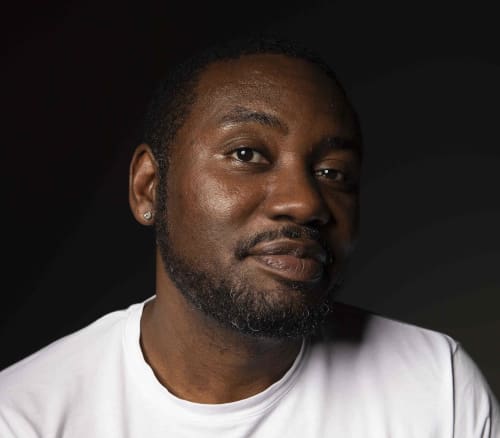
“And actually, the pressure you put on yourself is too much. When I worked on Guardians of the Galaxy, there were about six Black guys, no Black women on the team. And it was always about making sure our work would speak for itself. And while the external pressure we spoke about earlier gained some traction around 2020 [in the wake of international Black Lives Matter protests following George Floyd’s murder], now it has almost gone the other way around.”
It’s one thing to put characters of color on screen. It’s another to have people from those communities writing their stories and creating the artwork behind the scenes.
Continuing that line of thought, Johnson-Sinclair linked the industry’s retreat from diversity initiatives to broader political developments.
“The regression of historically marginalized people and advocacy for their rights really does coincide with the change of U.S. administration. From my perspective and within organizations, I’ve been working in a setting where the narrative is ‘we can’t do this because we’re scared of repercussions from Donald Trump.’ It’s that explicit. For some organizations, they’ve pivoted into being very quiet about their support, and others have just taken this as the perfect excuse to give up. And because we live in the UK, where a lot of money comes from this industry, it affects us as well.”
When budgets shrink, he continued, major studios make decisions based on their perceptions of which audiences are worth investing in.
“Now, that doesn’t necessarily mean you have to stay within these organizations. I think it’s actually down to us to topple the system, the structures that currently exist, and build around them. Once you have your audience, you can go out there and build something for yourself.”
Finding Your People
Whether someone chooses to navigate the established studio system or pursue a more independent path, Ashton stresses the importance of not doing it alone.
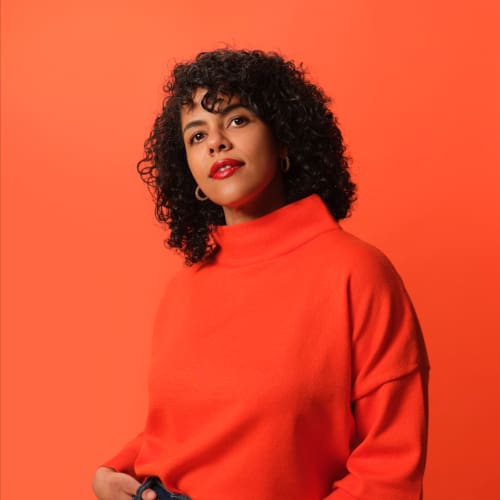
“Finding your community and finding your people is very important, and also understanding where you get that validation, and that you are not alone. A few years ago, there was this global study called We Can’t All Be Lying [launched by the collective It Takes a Village, exploring the experiences of Black women across the creative industries], and it was truly helpful to many of us. In that sense, finding your people can mean a community of writers, animators, whether you do it independently or not. Every choice is valid, and while I personally chose to do things independently, not everybody should be expected to do that. It’s all about finding the way back to yourself while navigating this industry.”
Johnson-Sinclair acknowledges that the process can be difficult and emotionally exhausting.
“When you work in a space where people don’t get it, it can take a toll, and it’s not easy to go back the next day, try to make space for yourself without having to compromise on your identity.”
Morgan similarly emphasizes the value of building relationships and making connections throughout the industry.
“Sadly, the pandemic has killed a lot of the moments when we get to know people by osmosis, and I think a lot of how to get inside this world is just relationship building. Meeting people, making connections, and expanding your network. To me, it’s all about making sure you’re seen, knowing how the game is played, and having access to the right places.”
Access to these networks can be more difficult depending on a person’s cultural, social, and ethnic background, as several studies discussed during the panel illustrated. Ashton also highlighted the importance of mentorship.
“Finding a mentor is also a good way to get help. Someone you can speak to on a regular basis, who understands your issues, and gives you advice.”
Where To Go From Here?
Solidarity is increasingly important at a time when borders around the world are becoming harder to cross. Responding to an audience question, Johnson-Sinclair emphasized the power of associations and grassroots movements.
“What is arguably the most important part of the puzzle is that sometimes, these companies and organizations just need to admit that this work isn’t for them. The best way to start looking might be to partner with people who have actually been doing this forever, rather than try doing it yourself.”
The message was clear: Meaningful change requires more than good intentions. It requires investing in the communities and organizations already doing the work.
Pictured at top: Ryan Gaur, Rico Johnson-Sinclair, Amy Ashton, and Michael Morgan