.png)
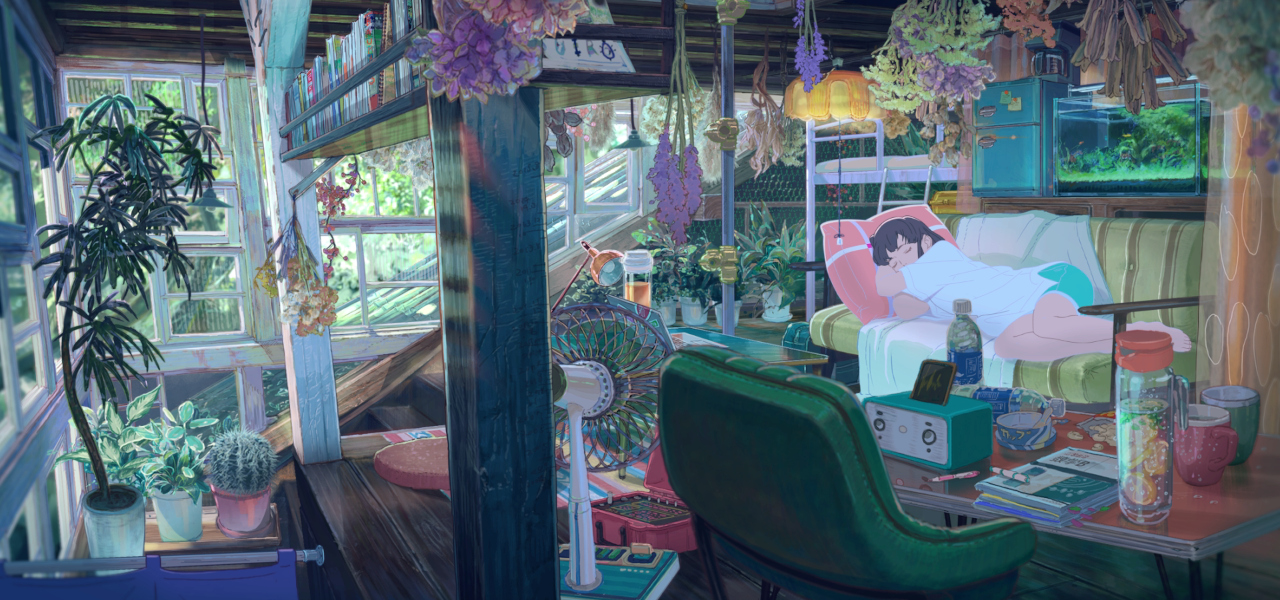
How Yoshitoshi Shinomiya’s Watercolor Background Influenced ‘A New Dawn’
Stay informed with free updates
Sign up to get our news digest — delivered directly to your inbox twice a week.
A New Dawn is something of an anomaly. An anime feature premiered in the main competition section of this year’s Berlinale. The film, produced by Asmik Ace in Japan and Miyu Productions in France, is the directorial debut of Yoshitoshi Shinomiya, a fine artist turned animator who previously worked with Makoto Shinkai on earlier works such as The Garden of Words as a background artist and breakout hit Your Name as a sequence director. His further credits as a background artist include Pompo: The Cinéphile and Napping Princess.
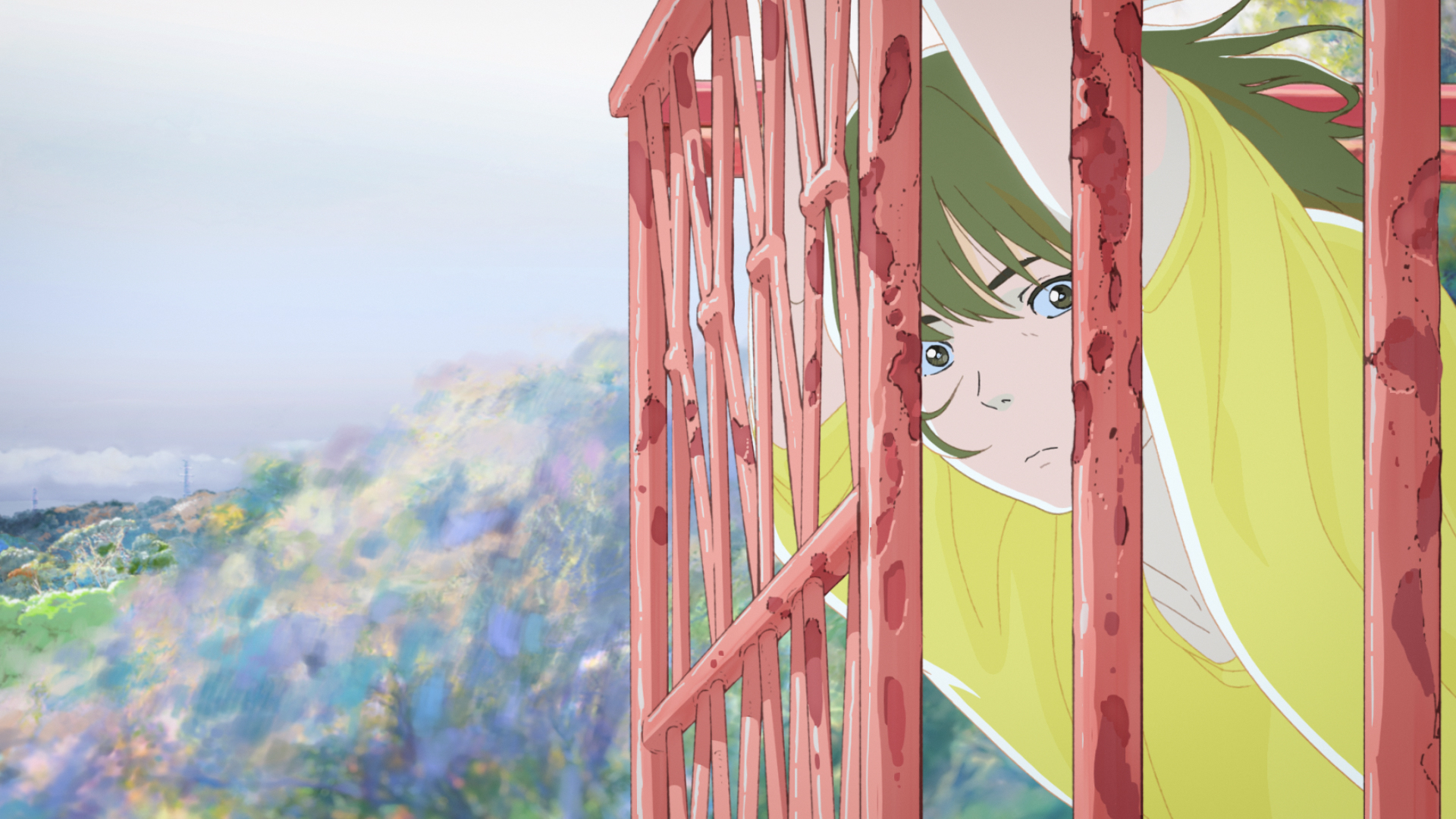
Shinomiya brings much of his experience and ethos as a painter to his filmmaking. Color is applied in a painterly, watercolor fashion, and A New Dawn’s pastel palette is far from the typical block primaries of theatrical anime. The film tells the tale of a trio of childhood friends who seek to ensure the survival of a fireworks factory, which is to be demolished in favor of gentrification.
A few weeks on from A New Dawn’s Berlin bow, the film has its domestic theatrical release in Japan. No U.S. distributor has been announced yet, but leading sales agent Charades is on the job. Ahead of the film’s theatrical debut, Shinomiya sat down with us to discuss his project’s lengthy journey to the screen.
Cartoon Brew: Could you elaborate on the career journey that led to you writing and directing A New Dawn? It’s my understanding that you did key animation for multiple Makoto Shinkai works, and now you’re here with your directorial debut – a Berlinale Competition title no less.
Yoshitoshi Shinomiya: I’m better known as a Japanese traditional painter. I did a doctorate. Until I was 27, I exclusively studied Japanese traditional painting, which is, of course, two-dimensional as well. But at around 28, I started to become interested in creating something in three dimensions or within moving images in addition. One of those possibilities was animation, but I hadn’t learned any techniques in that regard.
I had a classmate at university who was working with Makoto Shinkai. I had been interested in his work, so I simply applied to work at his company. I worked as a background artist, and I was interested in key animation as well. Because my experience was in traditional art, I thought that it would be quite a smooth transition. I continued to work on Shinkai’s films. Gradually, people began to approach me with other opportunities, such as TV commercials or poster artwork. In around 2015, I started to direct commercials. That was my first animation director credit.
As I started to direct commercials, and as Shinkai was creating Your Name, which I was asked to direct parts of, I was simultaneously mounting exhibitions of my own paintings. I was given lots of opportunities in animation at that time – I’d get three offers for TV commercial directing a month – but, in my personal identity, I am a painter, whereas this work was intrinsically commercial in nature. I felt pulled in two directions, and these two things weren’t quite synchronizing for me. I needed something that could incorporate my sensibility as a Japanese traditional painter and marry it with animation. That was the biggest motivation that led to the creation of this film.
Which parts of Your Name did you direct? There’s an interesting throughline from key visuals in that film to A New Dawn.
The scene where the protagonist is given sake to drink and, upon taking a sip, begins to dream. It’s a flashback sequence of sorts. I directed that.
How many years was A New Dawn in development for?
The seed of this project, without any backing, was in 2016. So the journey was ultimately about ten years. And of course, within that timespan, many companies came in and out of the project – you know how it goes.
Tell me about the film’s setting. Is this a fictionalized Miura, Kanagawa?
Yes. It’s actually my hometown. It’s not completely the same, but it’s heavily inspired by the real place in Kanagawa.
The film’s opening sequence is very striking. It opens with scratches of lines and bursts of color, before evolving into a walk through a tunnel, which has an upside-down sea across its ceiling. Could you tell us about the genesis of this sequence?
In this instance, the English title A New Dawn is more appropriate. I thought it would be wonderful if I could, for the audience’s sake, make a connection between the opening and closing of the film, like with sunrise and sundown. I also wanted to refer to the Japanese mythological narrative in which there’s symbolism in emerging from a cave.
The environments in this film are richly detailed, and you pan across them with an exploratory, curious gaze. I imagine that your background as a painter informs this. Could you tell me about the process of layering different elements within scenes, and how you animated them?
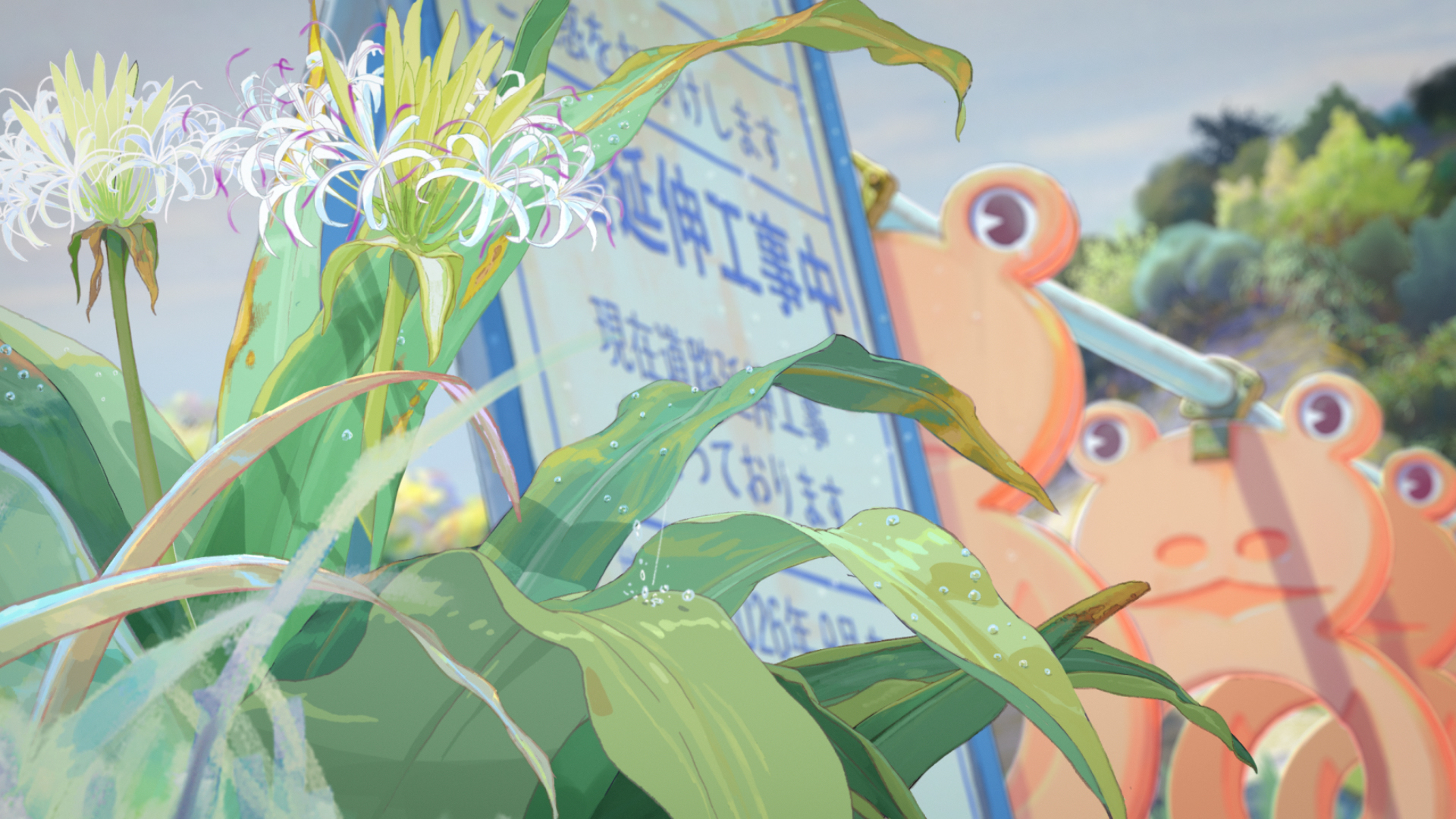
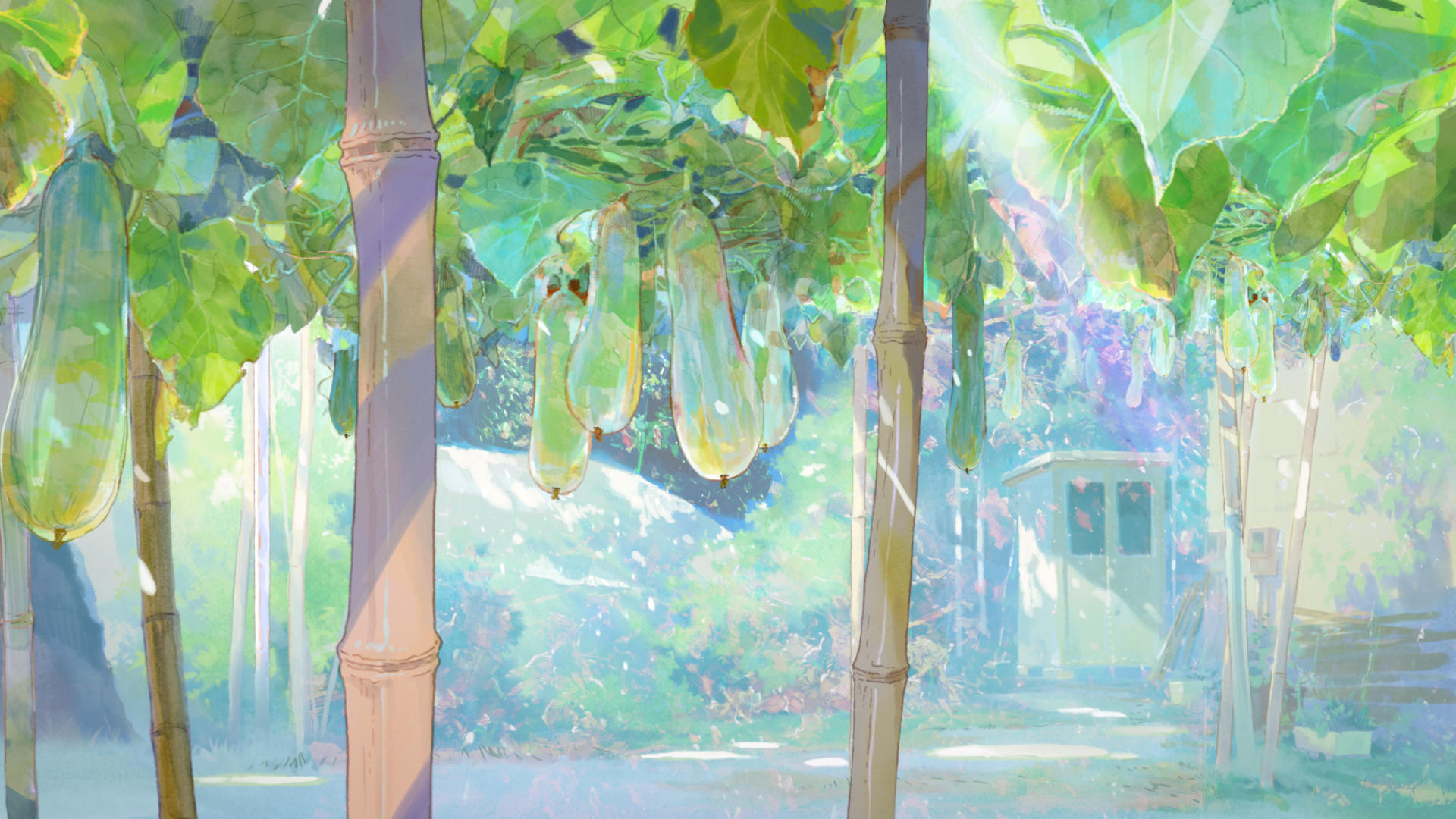
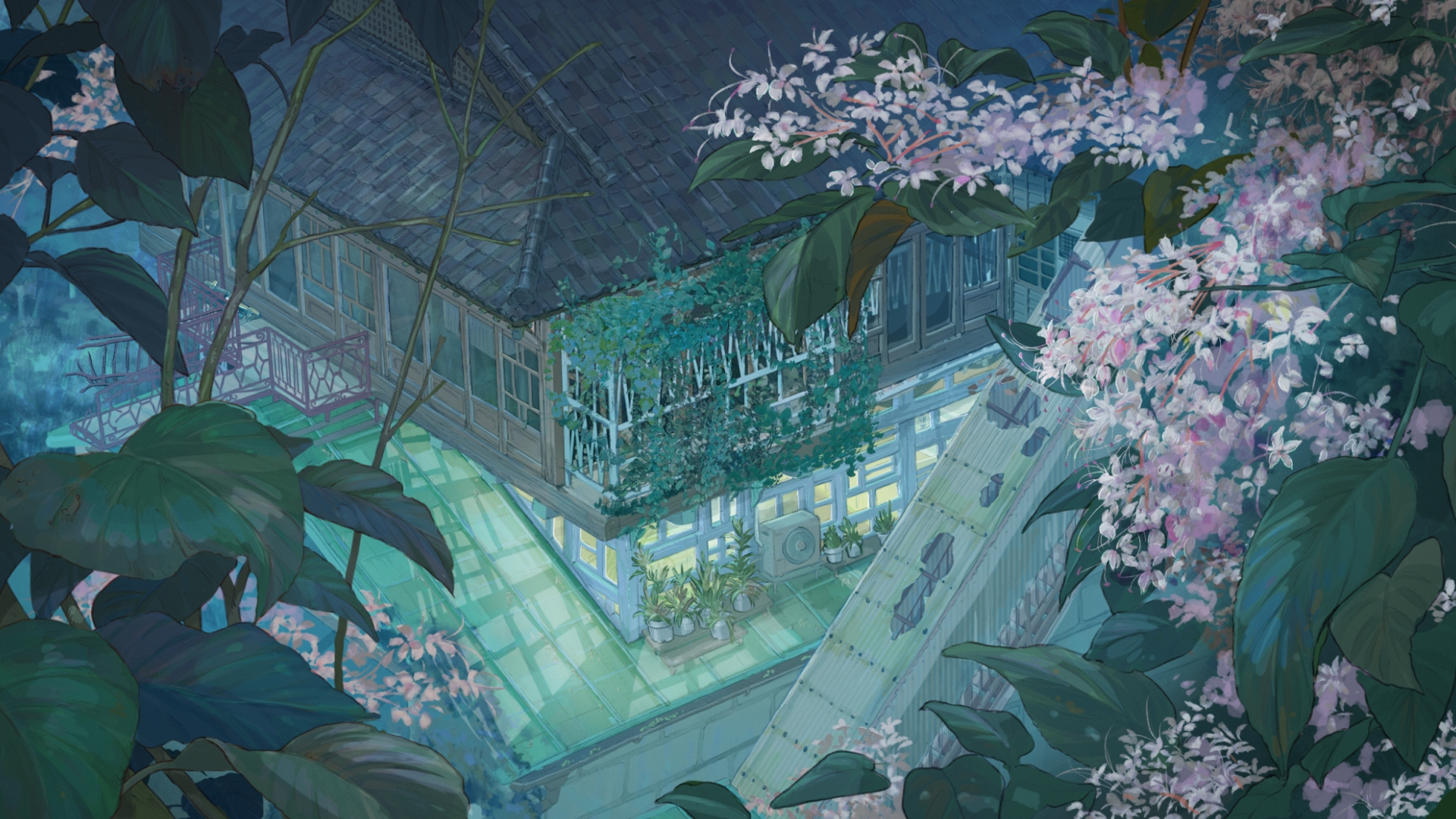
I produced watercolors, which served as the foundations for many of the scenes, particularly in all the green flora. That’s the analog touch – to not produce everything purely digitally. As you well know, a lot of nature in modern animation is portrayed using CG, but it was important to me that it was hand-drawn. It gives it a richer texture – the breeze causing the plants to move, for example.
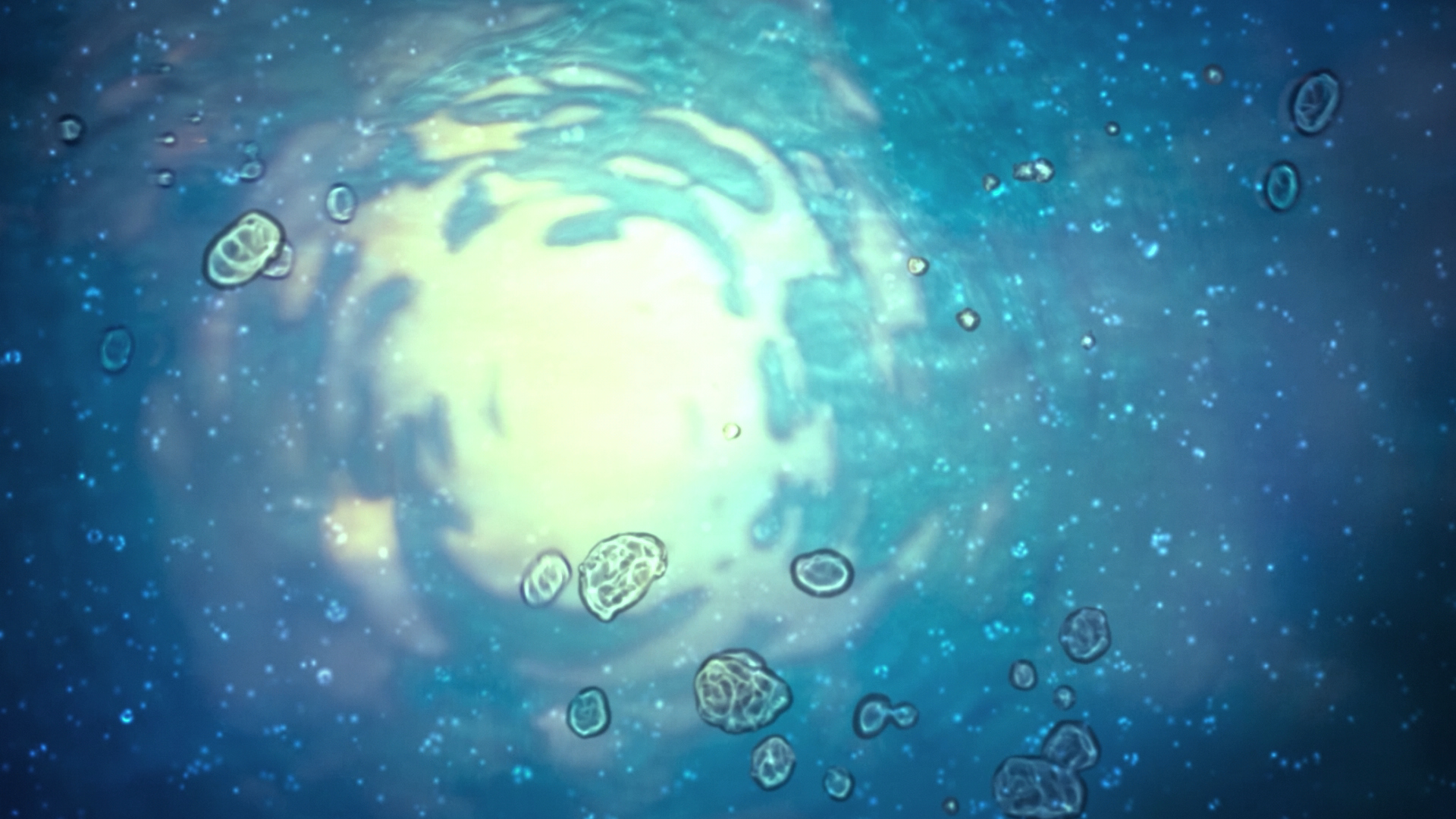
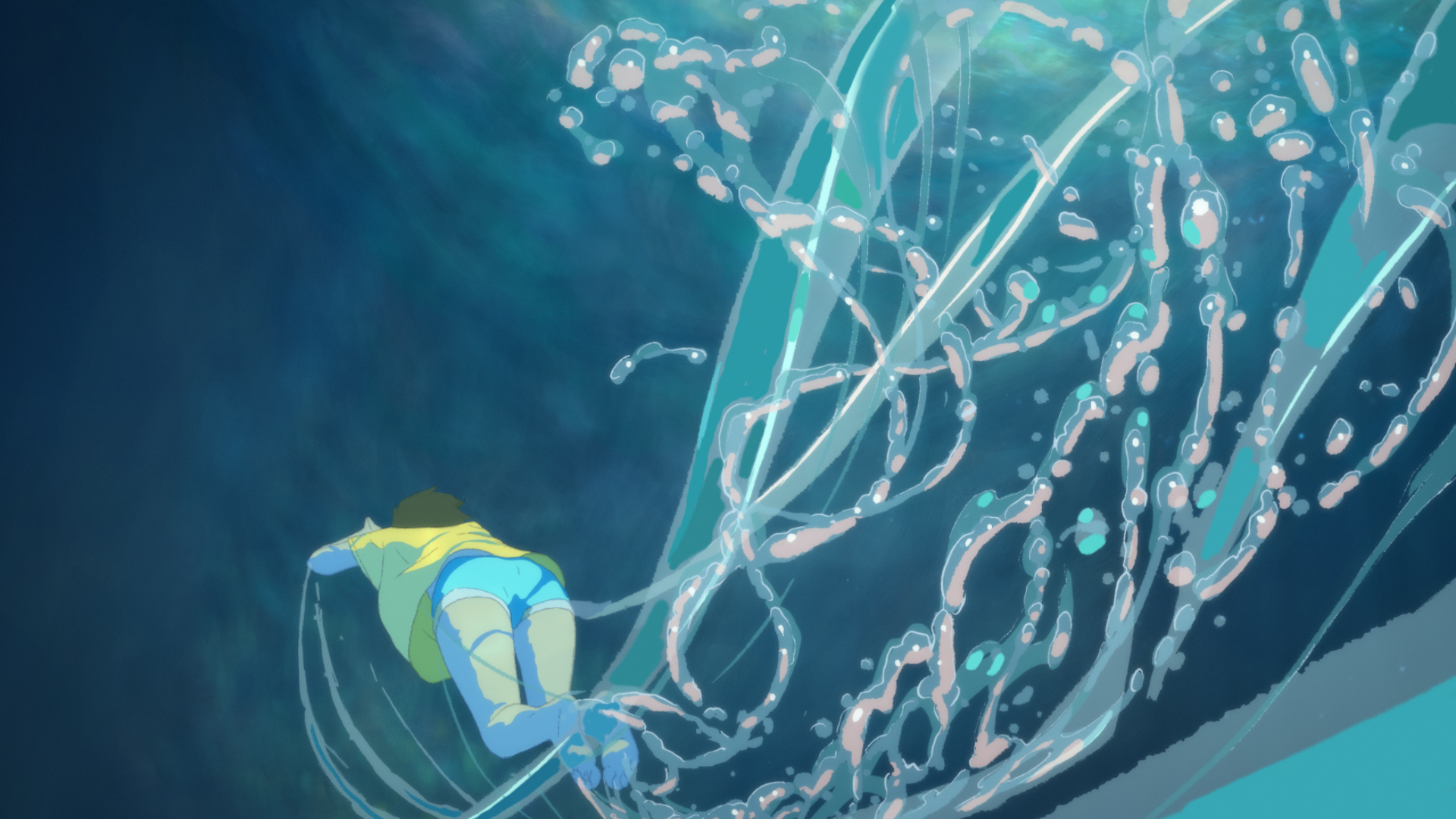
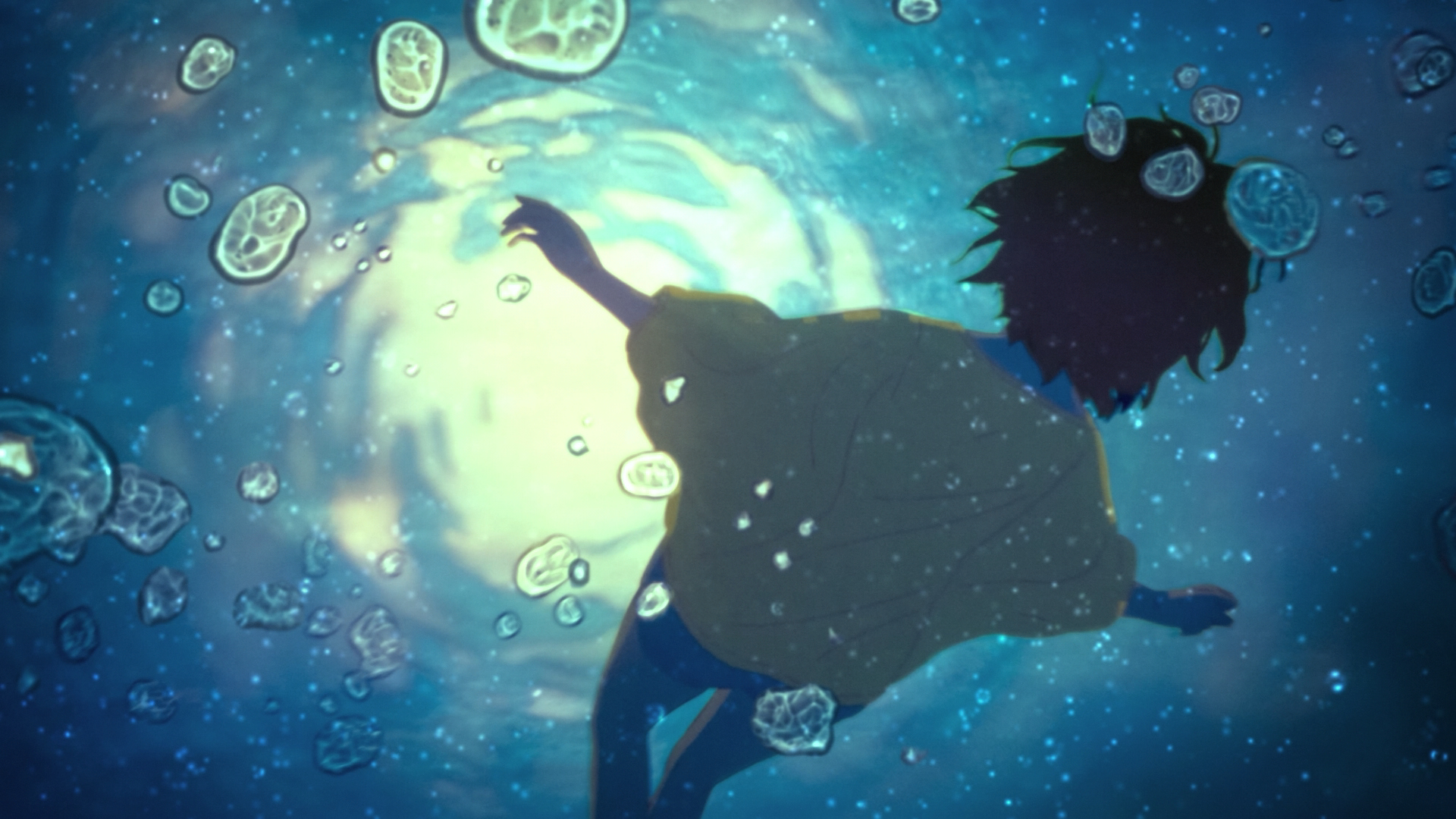
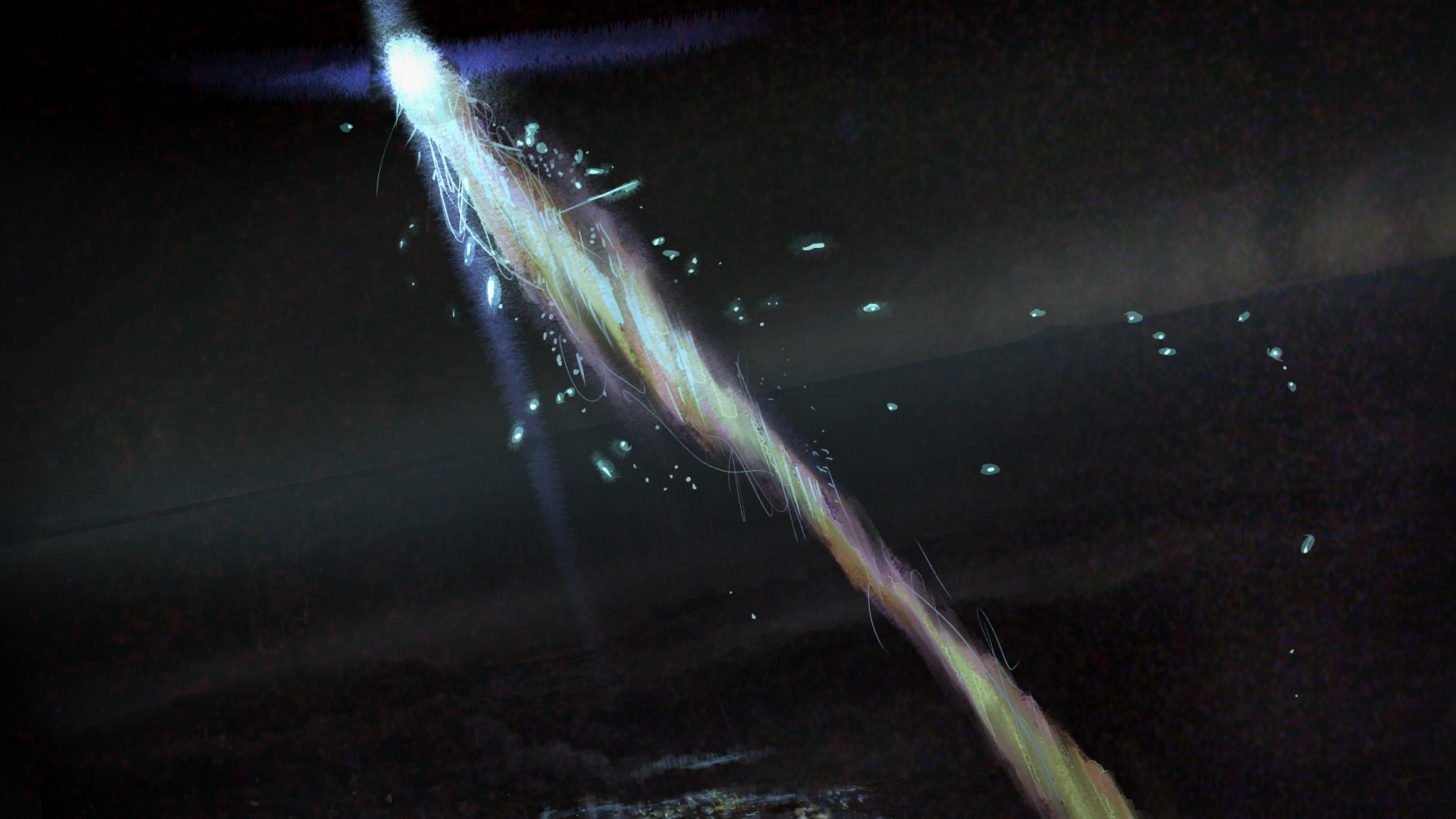
This film is about a craftsman, and so I wanted it to have that artisanal, analog aspect. When you look at the underwater, space, or fireworks scenes in this film, which could more easily be achieved digitally and probably would be in other works, they’re achieved in an intentionally analog way. I used a multiplane camera – there are scenes where we shot each frame that way. That way, we could layer the cells. There’s something nostalgic to seeing that in motion, I feel. I aimed to create something akin to Disney’s Fantasia films, especially in the fireworks and underwater scenes. Of course, when you have a 76-minute feature, it’s impossible to do everything that way, so we only did so for select sequences.
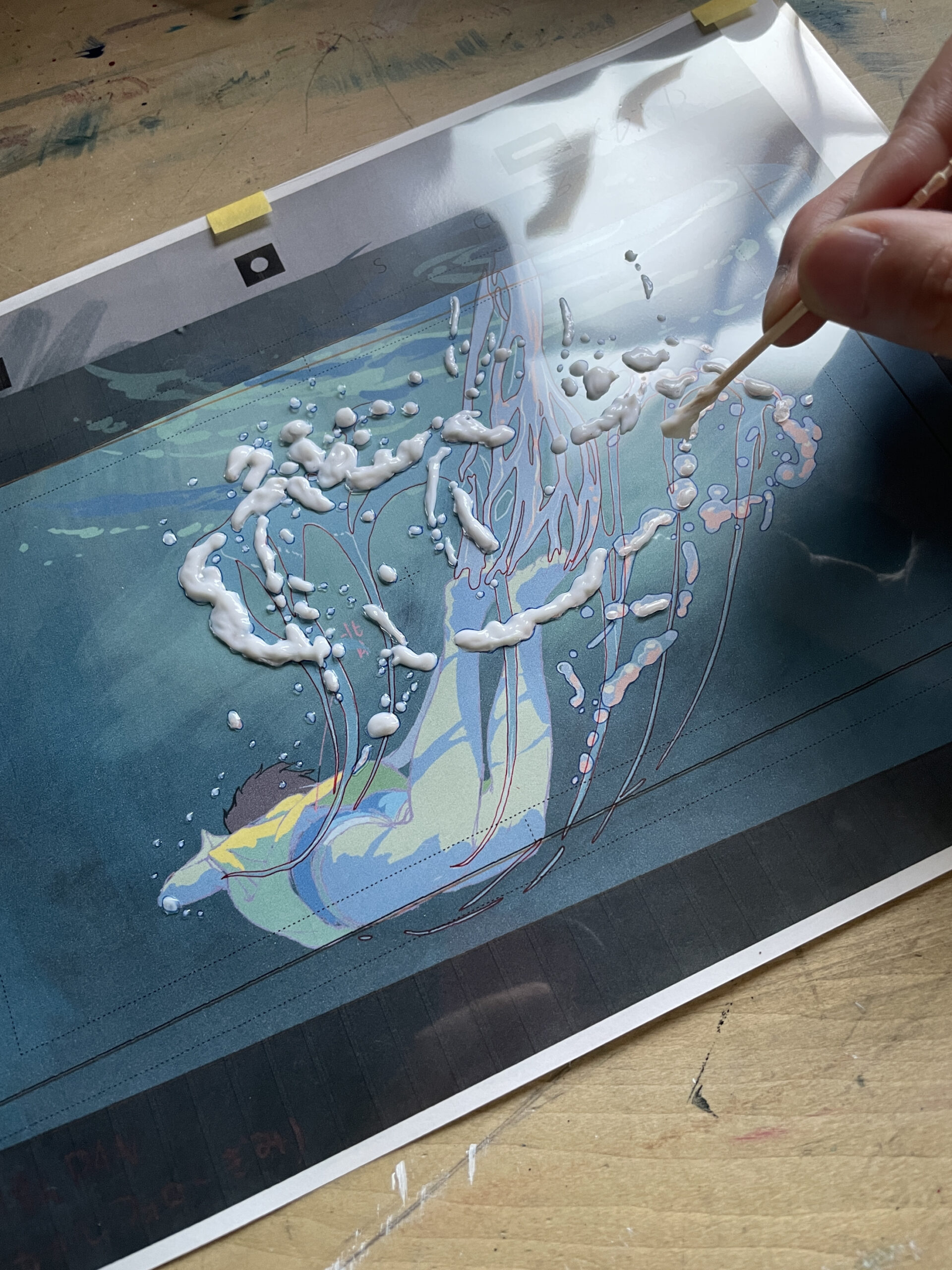
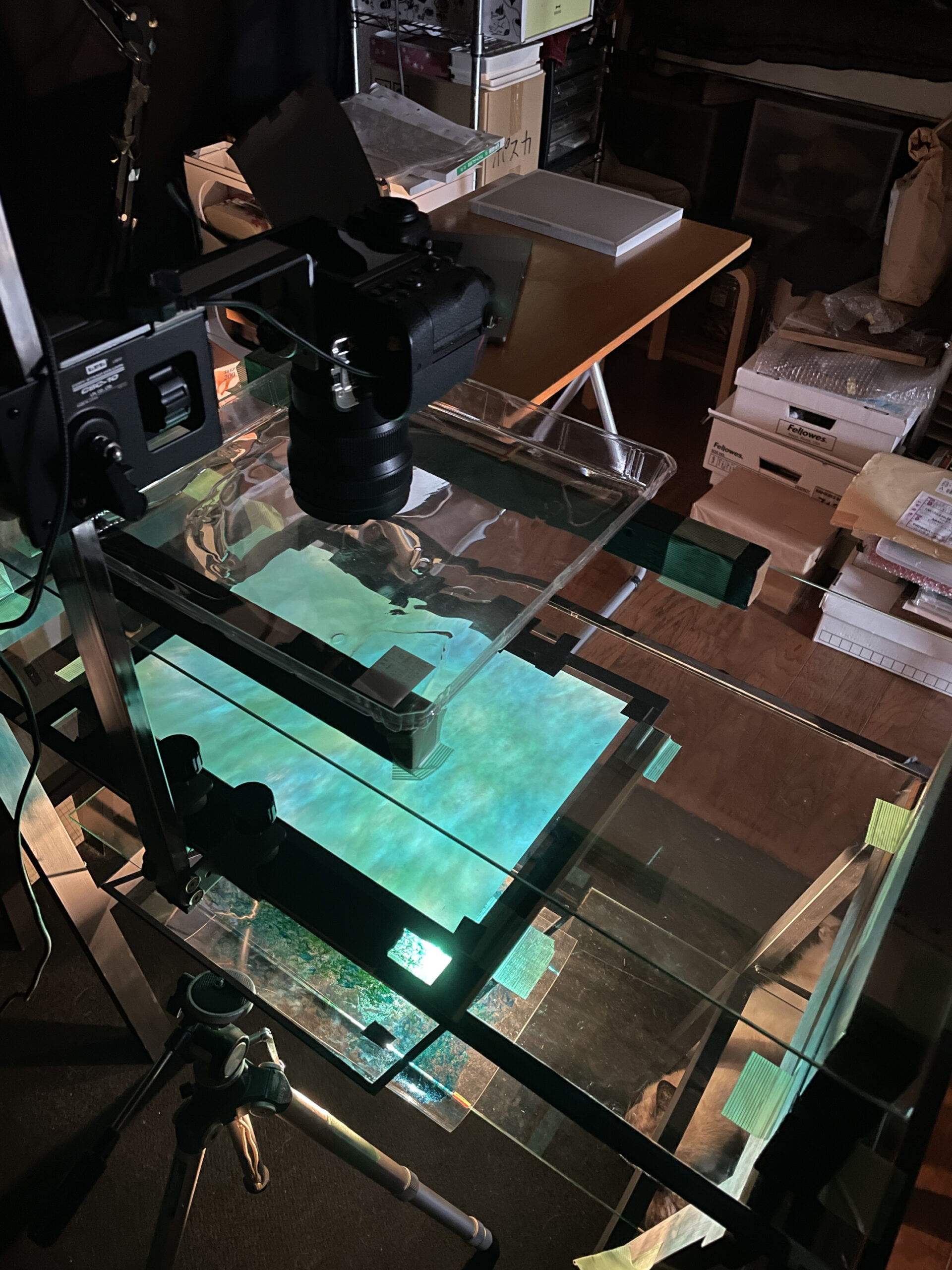
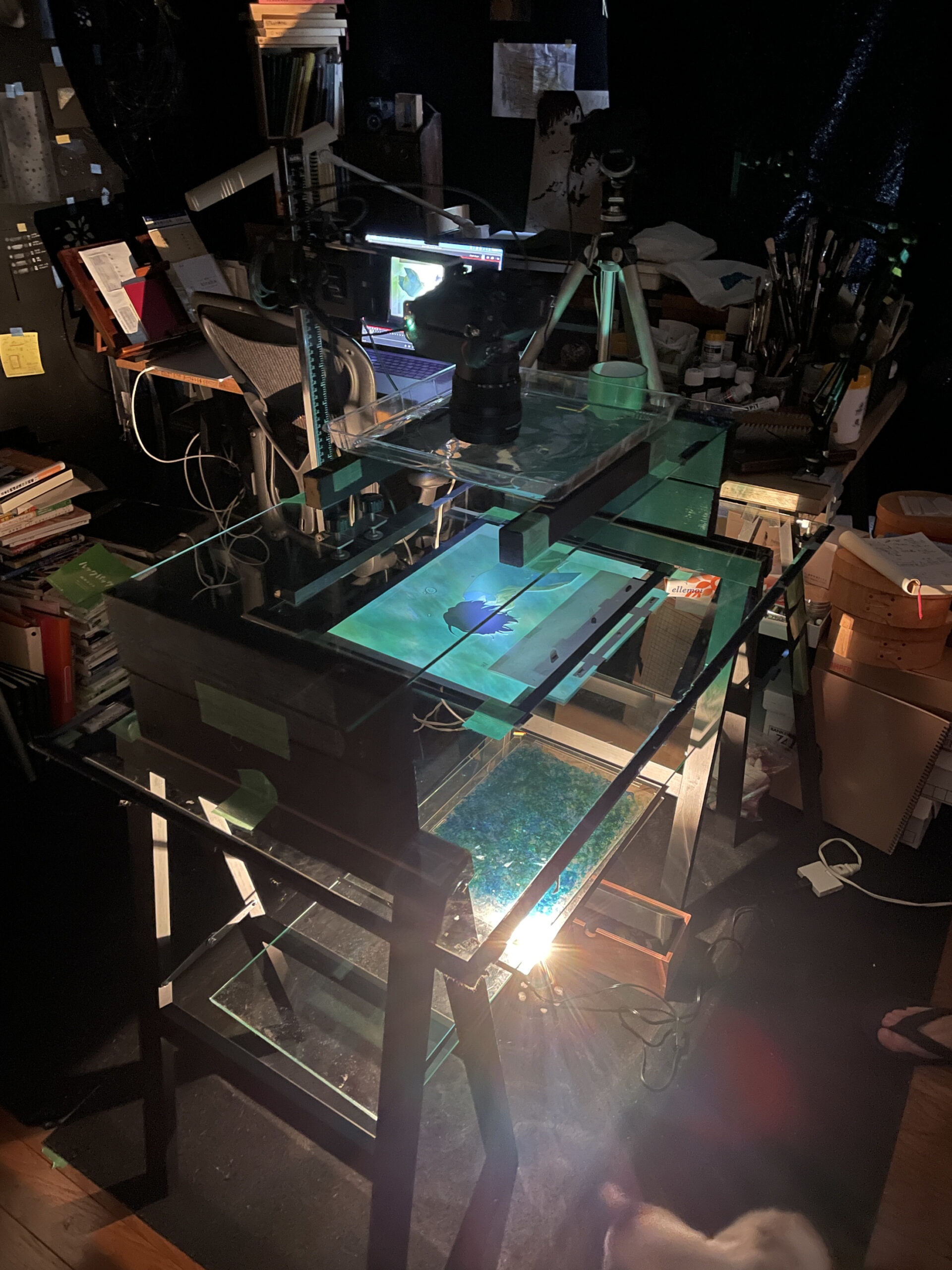
That watercolor aesthetic is very striking, and color is core to the characters and environments in this film.
Usually in animation, the roles of animation direction, color, and art design are separate. Often I feel that to be misaligned. Because if your work is solely as an art director, you’re not going to be quite sure what the colors are. If you’re the colorist, you won’t be quite sure what the animation is going to do in terms of movement. My work is slightly eccentric and psychedelic, and I knew that, for it to work, I would have to do all of these things myself. I’m the color designer, the art director, and the animation director.
How did you construct the pivotal and explosive firework sequence at the end of the film?
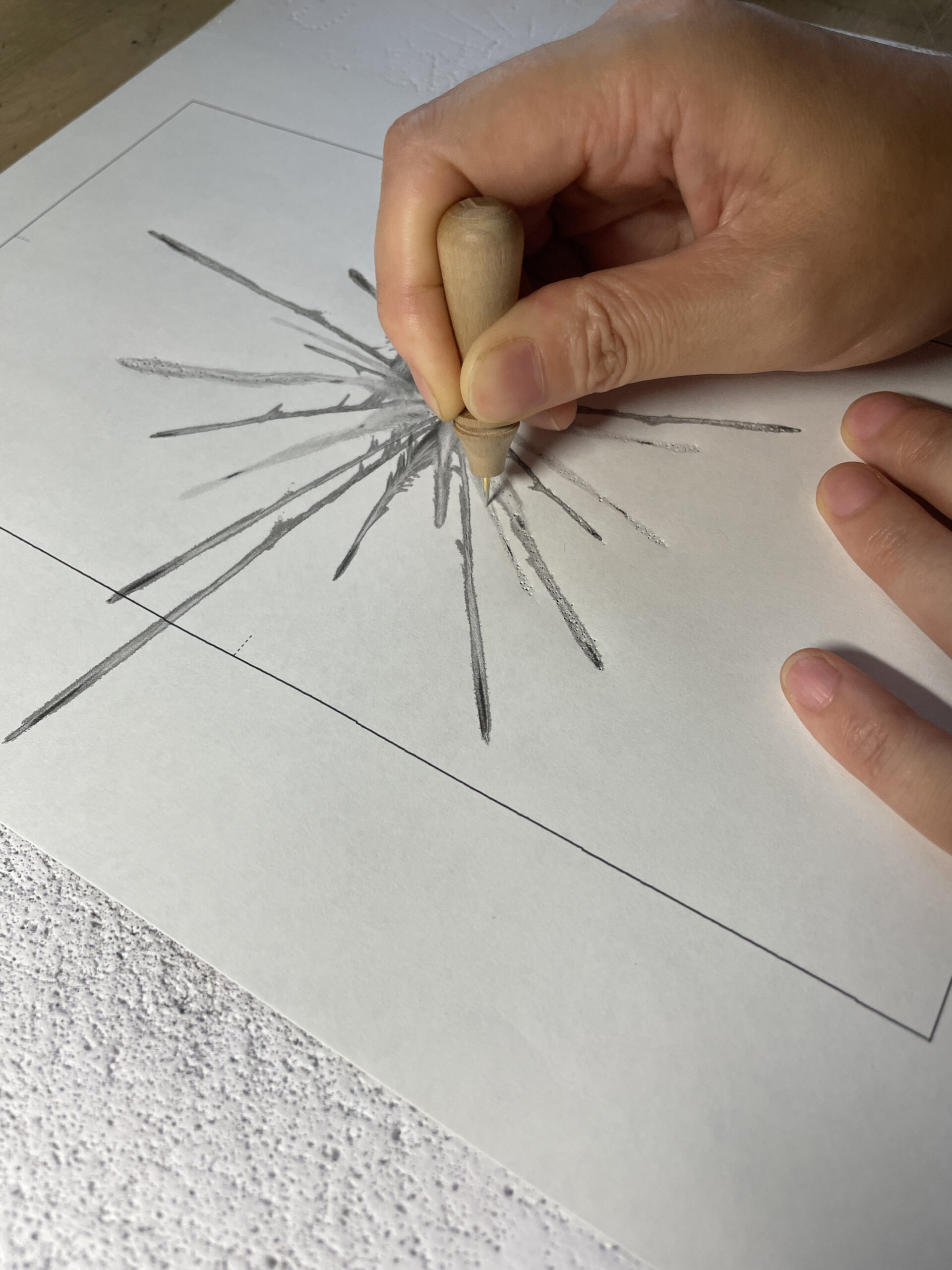
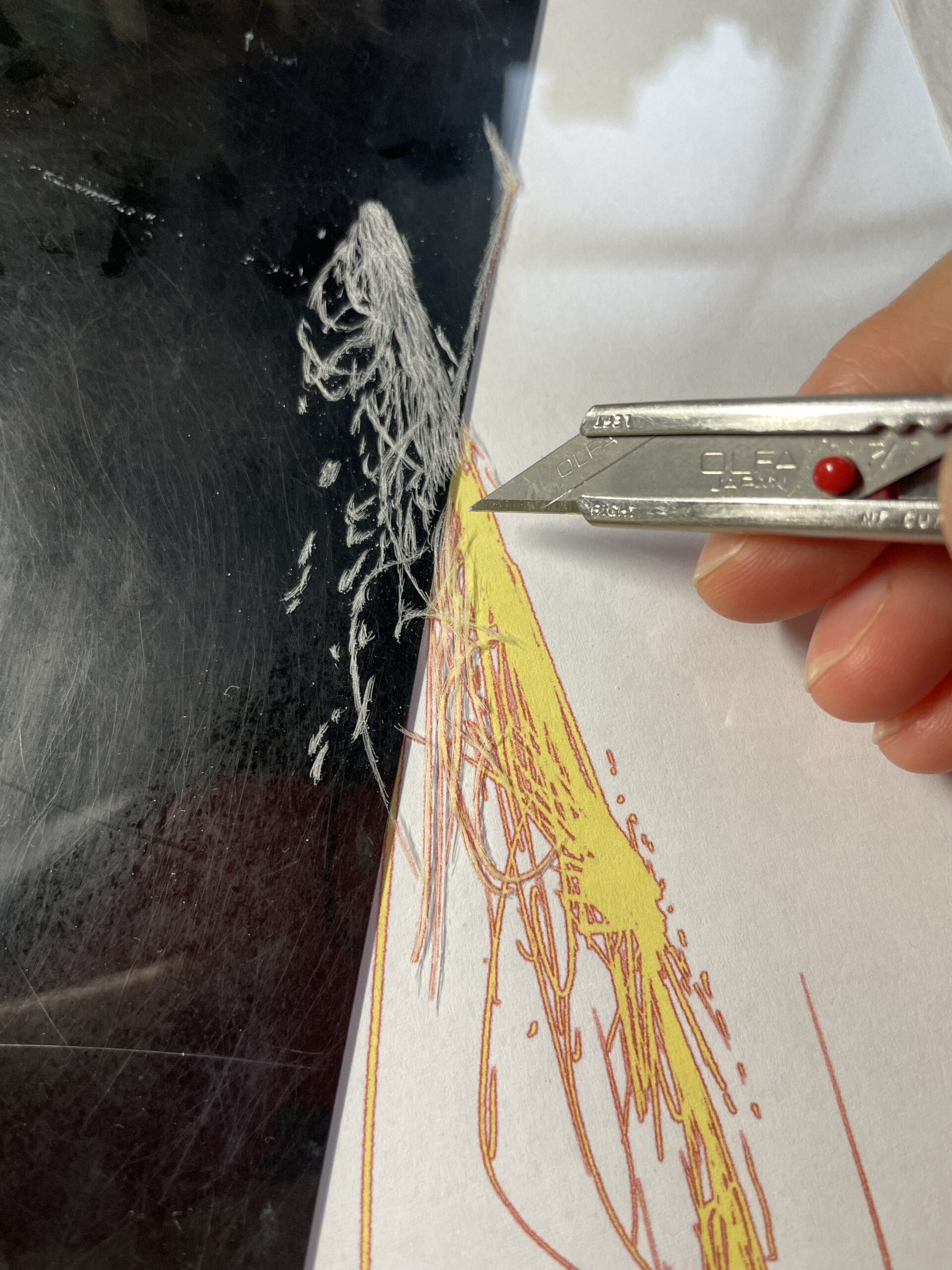
There’s so much I could share. There’s no CGI used; it’s all hand-drawn. I held a workshop. Thirty artists came in, and one of the things that I asked of them was to use needles to prick holes in a piece of black paper. With a light source behind it, that became the firework. Another exercise that I had them do was to use only red paint to draw the firework on white pieces of paper. There was quite a lot of it – about 400 sheets of paper. What happens when you invert that is it becomes a blue firework against a black sky background. You might say, why not simply use blue in the first place? It’s interesting – when you instead do it this way, the blue ultimately expressed has so much variation, it’s quite amazing. It’s painted by people, but the color that we end up with when we invert it is something that doesn’t feel manmade. We utilized light in many different analog ways to create many of the effects. I could go on.
What would you like your audiences to take away from this film?
We’re in a world that is undergoing climate change. Issues of environment and energy are prevalent in Japan, and solar panels are one of the things that have come into address that. With immigration, conflict, and war everywhere, I feel like the traditional landscape as we know it is changing. In a way, we are finding ourselves in new environments. For me, what is important is that landscape – the identity that land holds for us, and how we can preserve that. I think in that way, this film is universal.
I would like the audience, especially the younger generation, to find their own answers to these questions as artists themselves. I do so in the film, metaphorically using fireworks. The firework is my art, and I am an artist. Through artistic expression, people will be able to retain that identity of the landscape that they live in, and be more confident and proud of that identity as they continue to live there. That was the proposal that I wanted to make.
What would you like the animation industry to take away from the change and difference that you’ve enacted in this film?
Digital technologies and AI are evolving every day. I’m somebody who’s only ever worked from an analog standpoint. I don’t know how these other things are going to evolve as we move forward. I feel like the more that AI develops, the more precious anything tactile – something made and crafted by our own hands – becomes. I wanted to shed light on that. I hope it serves as an inspiration to others.
Chimney Town: Frozen in Time premiered at the 76th Berlin International Film Festival. With thanks to Yuki Fujiwara for the translation.