.png)
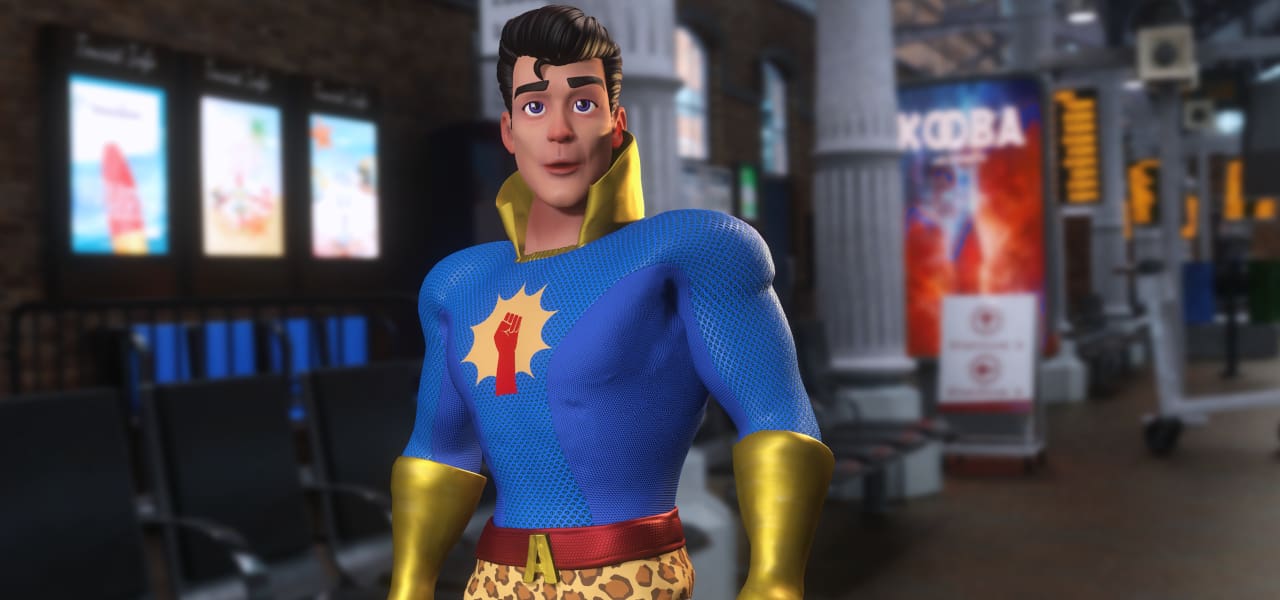
‘Atlas: The Animated Movie’ A Bold Indie Feature As Unlikely As Its Long-Forgotten Hero (EXCLUSIVE)
Stay informed with free updates
Sign up to get our news digest — delivered directly to your inbox twice a week.
Four years ago, filmmaker and YouTuber Austin McConnell set out to make a low-budget animated feature based on an obscure public-domain superhero who only ever appeared in a single, largely forgotten comic. At the time, McConnell had only limited, self-taught experience with CG animation and thought the project might take two years.
Instead, Atlas: The Animated Movie became a four-year crash course in character animation, motion capture, hair and clothing simulation, facial tracking, and nearly every other part of an animation production pipeline. In the end, McConnell animated most of the 90-minute film himself, working six or seven hours a day from his basement and recruiting help for specific tasks when needed.
Now that the film is finally ready for audiences, McConnell has shared an exclusive promo with Cartoon Brew, seen below.
“It was basically like trying to figure out how to do Avatar in this basement that I’m standing in,” McConnell told Cartoon Brew during a video call from the very space that he made his film.
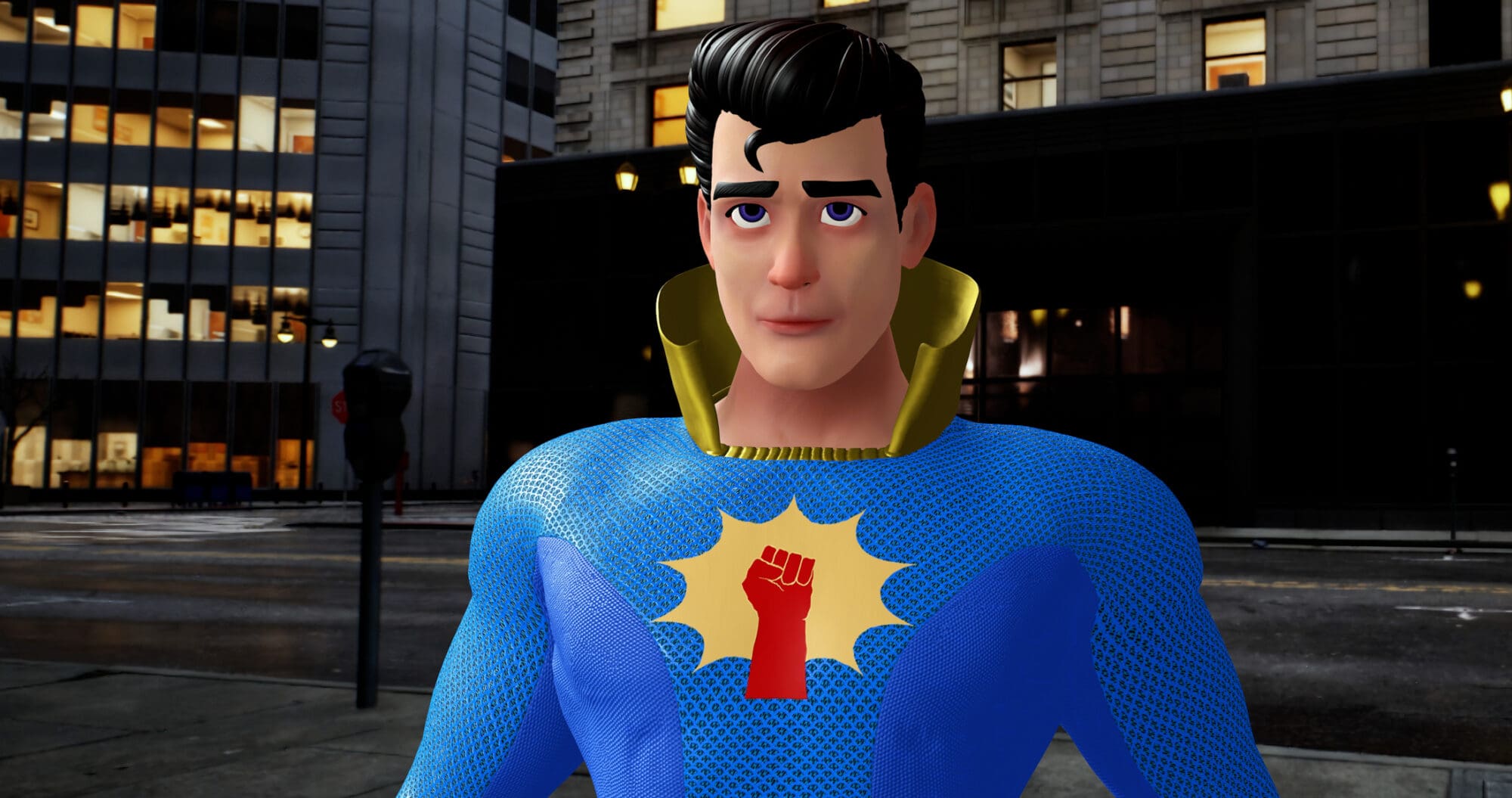
The project was launched in earnest in 2022 with a Kickstarter campaign that raised $51,809 from 1,108 backers. McConnell pitched it as “a bargain-bin cinematic adventure” based on Atlas: Man of Might, a 1964 comic about an unremarkable office worker named Jim Randall who acquires extraordinary strength and agility after an encounter with the Greek god Atlas. Along with an absolutely mind-blowing costume.
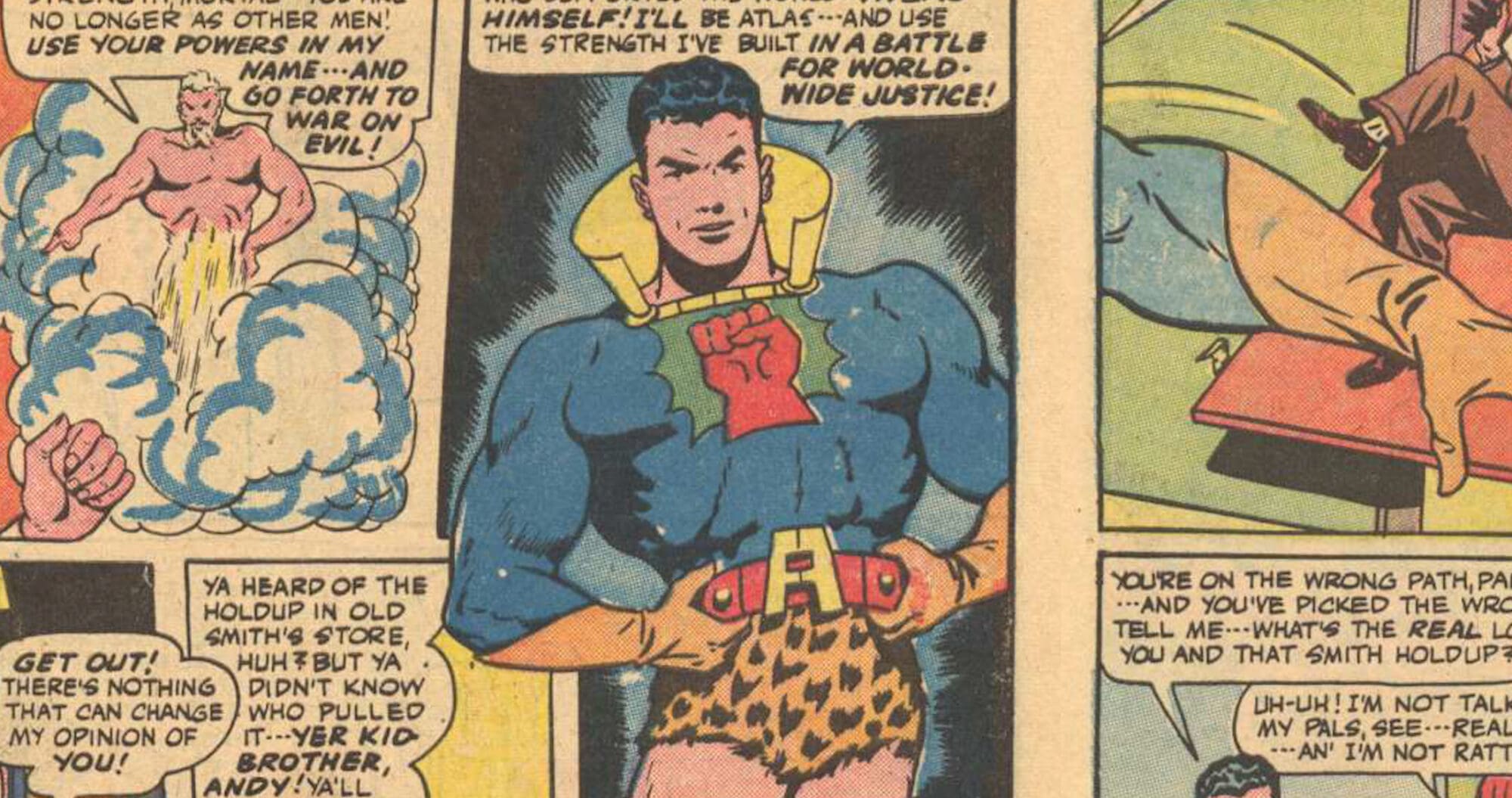
Jim/Atlas appeared just once. His original story was so short that McConnell remembers it as being just a few pages. I.W. Publications, a company known for reprinting comics acquired from defunct publishers, published it, and it slipped into obscurity almost before it hit newspaper stands. For McConnell, that obscurity was the character’s main appeal.
“This was essentially a Golden Age comic book character that never got past the first issue,” he said. “In fact, they made the first issue and it just sort of never went to print. Then it eventually found its way into the back catalog of this super-low-stakes, low-budget I.W. comic. It was kind of just shoved out the door as they were filing bankruptcy.”
McConnell discovered the Atlas character while developing what he initially called the Bargain Bin Cinematic Universe, since renamed the Superzeroes Universe. The idea was to build an interconnected series around public-domain superheroes too strange or unsuccessful to have been absorbed into modern franchise culture.
“It was basically born out of my frustrations, beginning around 2020 or 2021, with there being so many superhero universes,” he explained. “I just felt unsatisfied with that. I thought, let me try and do something like this on a much smaller scale, pennies on the dollar, technically fractions of pennies on the dollar, and make something that’s a little more homegrown and alternative.”
The original plan was to produce a series of extremely low-budget live-action films. Covid made live-action impossible, and the explosions and action sequences required to tell the full Atlas story made animation seem like a more practical option. Practical being a relative term.
A Basement Studio
McConnell had previously incorporated some CG work into videos for his YouTube channel, but those experiments were designed around a rapid upload schedule. A feature demanded that he teach himself an entirely different skill set for a completely new scale.
“I had to learn the ins and outs of 3D animation, clothing simulation, hair simulation, motion tracking,” he said. “I bought a mocap suit and had to learn how to set all that up. I had to do real-time facial tracking.”
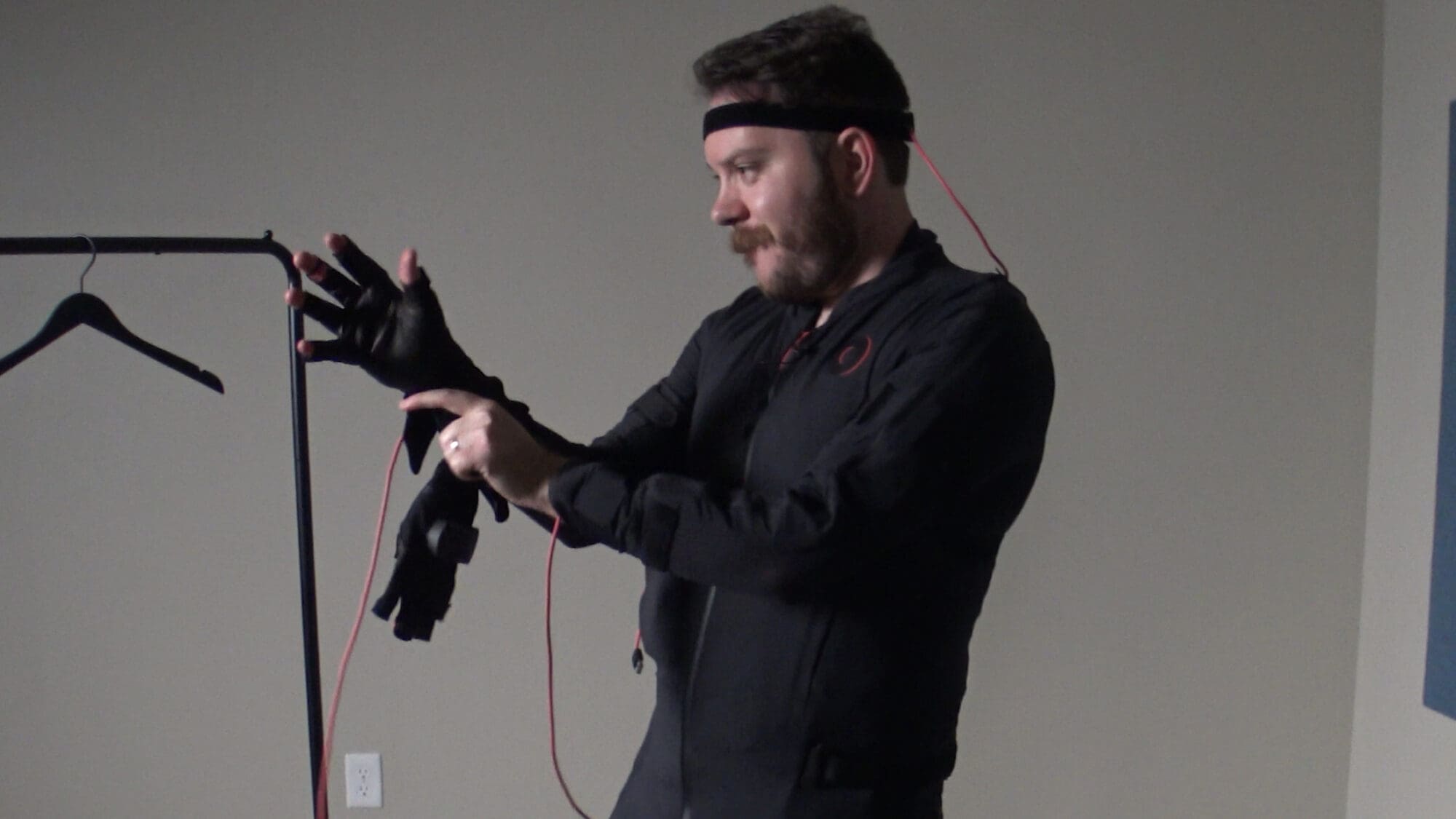
Most of the film was animated in Reallusion’s iClone, with McConnell also using After Effects, Photoshop, DaVinci Resolve, Audacity, and other inexpensive or readily available programs. Much of the Kickstarter budget went not toward animation labor but toward voice actors, motion-capture equipment, and the basic technical infrastructure McConnell needed to construct a miniature animation studio at home.
“This is all from the ground up,” he said. “This is just what we did with our original Kickstarter money, and it took four years to get here.”
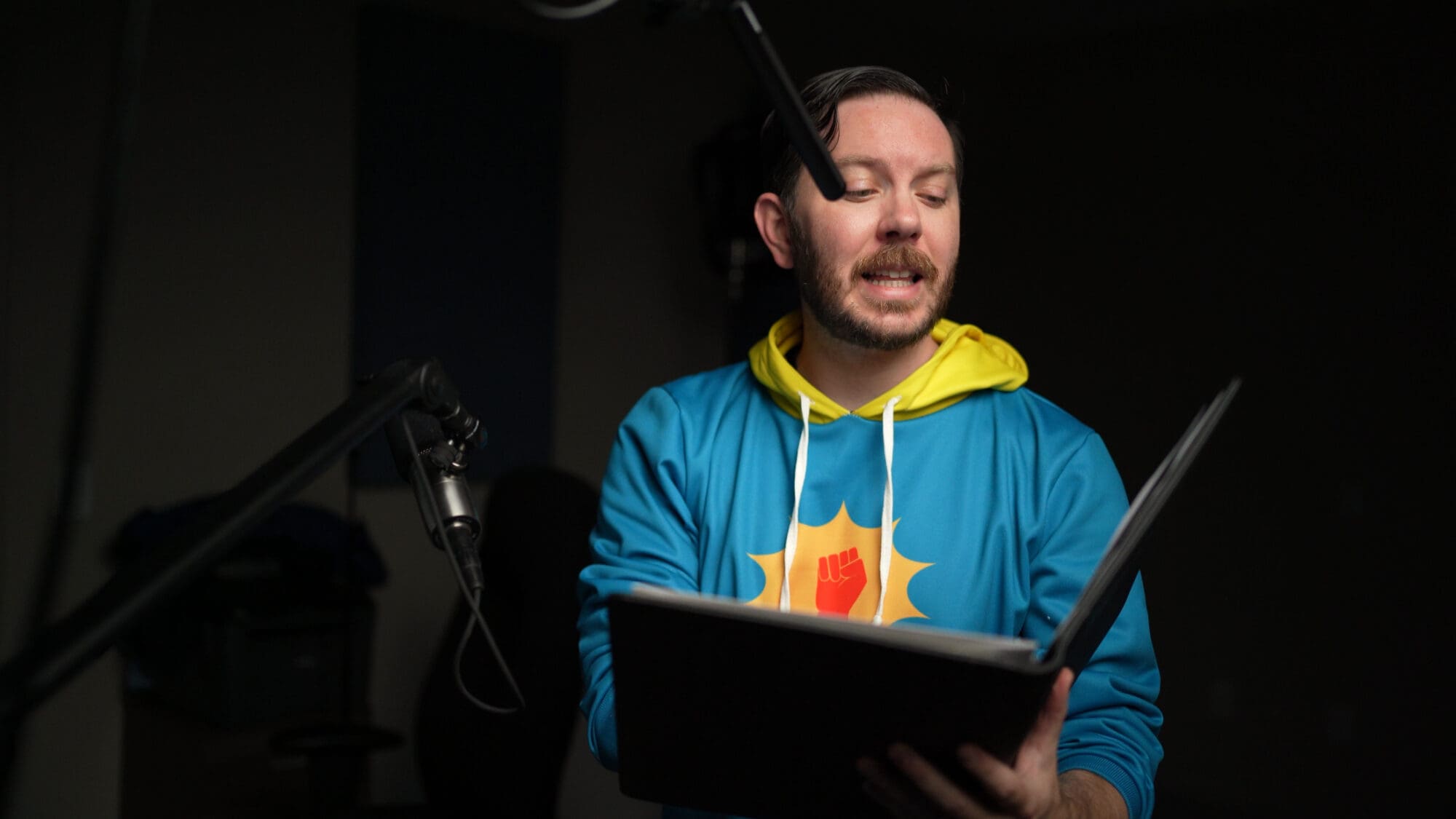
Knowing that his animation would have limitations, McConnell concentrated on areas where he already had experience, particularly editing, pacing, audio, and working with performers.
“It was really important for me, knowing my limitations in terms of animation skills, that the other parts supplemented that,” he said. “Mine is kind of the inverse of the traditional indie animation problem. I bring a better sensibility in terms of editing, audio production quality, and pacing, and the animation is sort of tacked on afterward.”
Embracing The Rough Edges
That did not stop McConnell from repeatedly falling into the familiar trap for almost any new animator of revising old shots every time his abilities improved.
“You do a scene and spend forever on it, then you move on to the next scene and spend forever on that,” he said. “Then you play both scenes back and think, ‘I could have done the previous scene better.’ So you go back and reanimate it. Then you play it back and think, ‘The scene after that could have been done better.’ You get into this constant refinement that so many people fall into.”
Eventually, McConnell realized the film would never be completed if he continued trying to bring every shot up to the level of the last one he had animated.
“It got to the point where I was like, ‘This is not going to get done unless I go back to the original spirit I had in making this,’” he recalled. “We’re not trying to make something totally perfect. We’re not trying to compete with the Pixars and DreamWorks of the world. We’re making something low-budget and low-stakes that tells a smaller story, but with heart.”
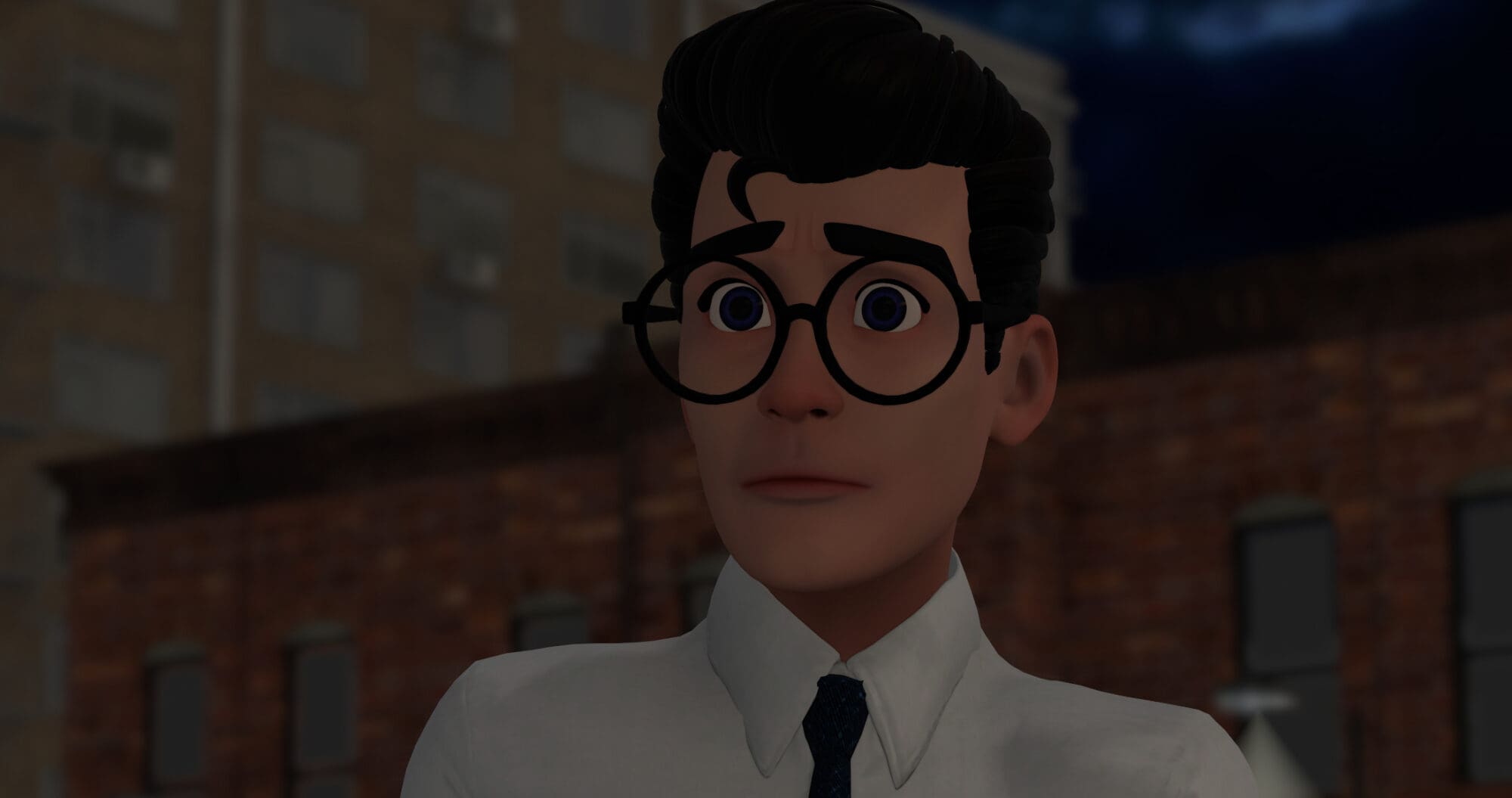
According to him, the production mantra became: “Just do it scuffed.”
That could mean finding an editorial solution instead of animating a complicated action. If a character needed to drink from a cup, for example, McConnell wouldn’t spend days perfecting the arm, hand, mouth, and liquid interaction.
“Just do a shot of him grabbing the cup, then cut to an over-the-shoulder shot of the other character,” he explained. “He drinks off camera, then cut back as he sets the cup down.”
In some cases, the rougher animation proved more effective than the polished alternative. McConnell cited one shot in which a character lands after jumping from a great height. He animated one version in roughly six hours, then spent a week and a half creating a more technically refined take of the same motion.
“I played them back-to-back, and the thing I made in one afternoon was so much better,” he said with a laugh. “The goofiness, choppiness, and roughness of it worked narratively better than trying to do it perfectly. If it had worked better to spend a week and a half, I would have gone with that. You just have to vibe these things out.”
The deliberately unpolished approach also suits the material. Atlas is not meant to look like a billion-dollar Marvel or DC hero, or land in a carefully art-directed power pose.
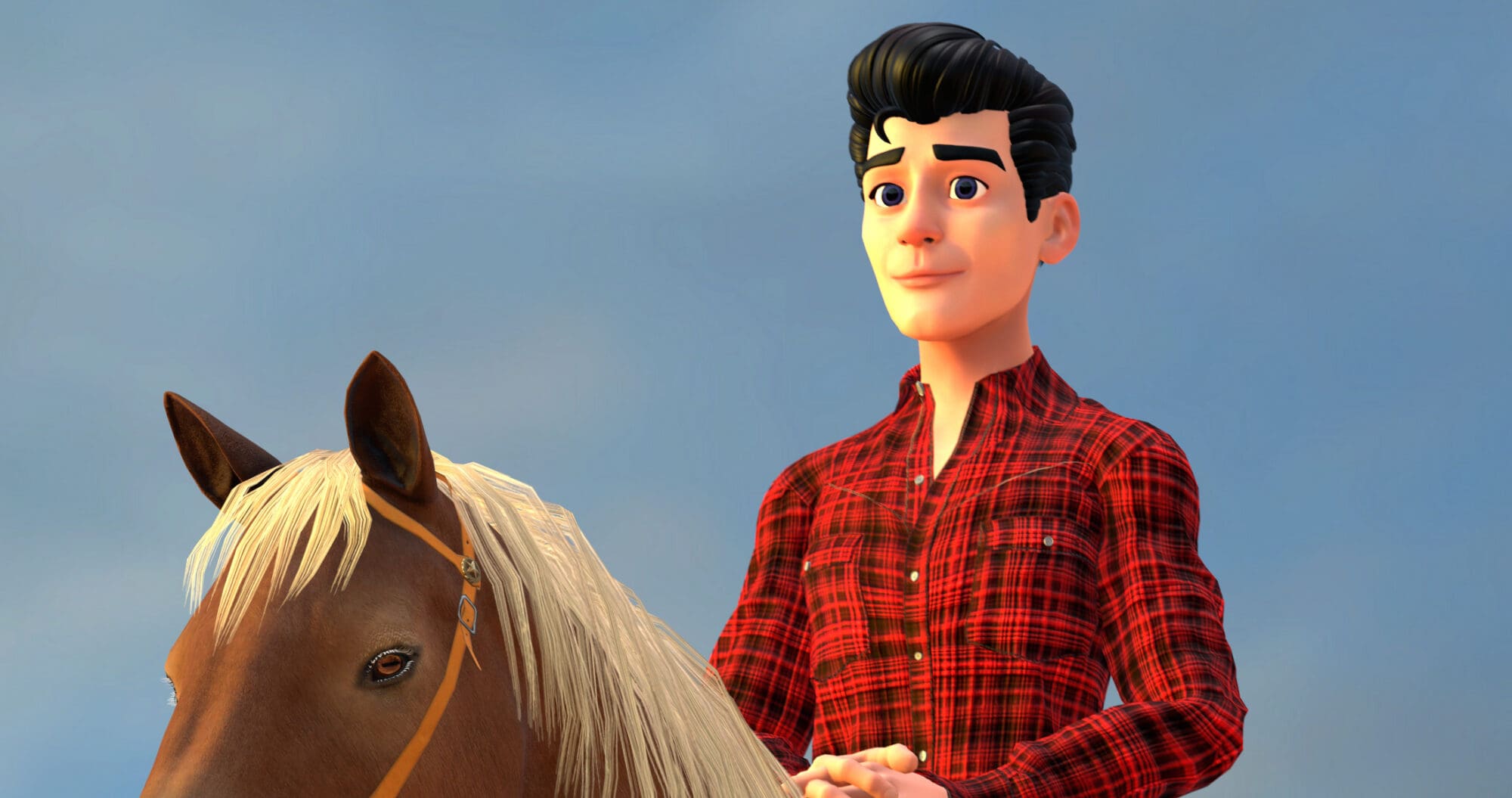
“He’s not the big, glossy superhero,” McConnell said. “He’s just a dude who gets these powers. His landing is rather scuffed, goofy, and rough, but that’s true to the spirit of the character.”
McConnell sees the film’s visibly handmade quality as particularly meaningful at a moment when the world is having AI-generated imagery shoved in its face from seemingly every angle.
“I’m well aware that this movie could have been done in a fraction of the time had we gone the AI route,” he said. “It would ‘technically,’ and I say that with air quotes, probably look ‘better.’ But that’s just not what I wanted to make. I wanted this to have a homegrown feel, so it was really important to me that humans make it.”
He added, “When you watch this movie, it definitely feels like a person made it. No one is going to think this is AI-generated because there are scenes where it’s like, ‘Yeah, this was one dude making this on his home computer.’ That’s the spirit in which it was made, and we try to play that to our advantage.”
An Unexpected Break
Although McConnell handled most of the animation, he didn’t make the film entirely on his own. A CG artist known online as Kalex3D helped redesign the hero’s costume, model characters and other elements, and later animate portions of the film. Voice actors and other collaborators helped give the production a scale McConnell could not have achieved by himself.
Kalex3D’s role unexpectedly expanded dramatically after McConnell suffered a stroke in 2024. McConnell was, for a time, paralyzed on the right side of his body and had to relearn how to walk and use his hand. With the project’s primary animator suddenly unable to use his dominant hand, production ground to a halt.
“If I can’t work, then nobody is animating it,” he said. “I reached out to Kalex because I knew he’d done some animation work before. I didn’t really have the budget for it, but after I had the stroke, it became a necessity. I had to get somebody working on this.”
McConnell used his own money to hire Kalex for several months while he underwent rehabilitation and relearned to use a mouse and keyboard. Once he could return to his desk, McConnell did as much work as he could with his non-dominant hand, adjusted the scenes, environments, and facial animation to make the new material fit with the rest of the film, before eventually going back to touch up his left-handed efforts.
“He gave me a floor,” McConnell explained of Kalex’s irreplaceable contribution. “He gave me project files with characters performing the scenes in an environment, and then, being the control freak that I can be, I went back and tweaked things. But I would not have been able to get it done without his help.”
The unusually long production gave McConnell some useful distance from his own work. He began by animating the middle of the film, reasoning that his earliest and roughest work would be less conspicuous there if he could win over audiences in the opening act. He then animated the ending before returning to the beginning once his skills had improved, so that the start of the film would be the best-animated section.
“My thought was that the best stuff would be at the beginning to grab everyone’s attention,” he said. “The ending would be pretty good because a more experienced animator would have worked on it. The middle was going to suck a little bit, but hopefully I’d have roped you in enough that you’d be more forgiving.”
By the time McConnell put it all together into a first full cut, years had passed since he had seen some of those initial scenes. That made it easier to remove sequences that had taken weeks to complete but no longer served the story. Had that work been fresher, he thinks it would have been more tempting to leave poorer sequences in the final cut.
New Life For A Forgotten Superhero
Atlas closely follows its minuscule source text at first, somewhat updating its locations, dialogue, and technology for the present day while retaining the costume and some of the comic’s mid-century superhero aesthetic. The feature’s latter portion expands minor characters, locations, and stray story details into a broader mythology that required more artistic license.
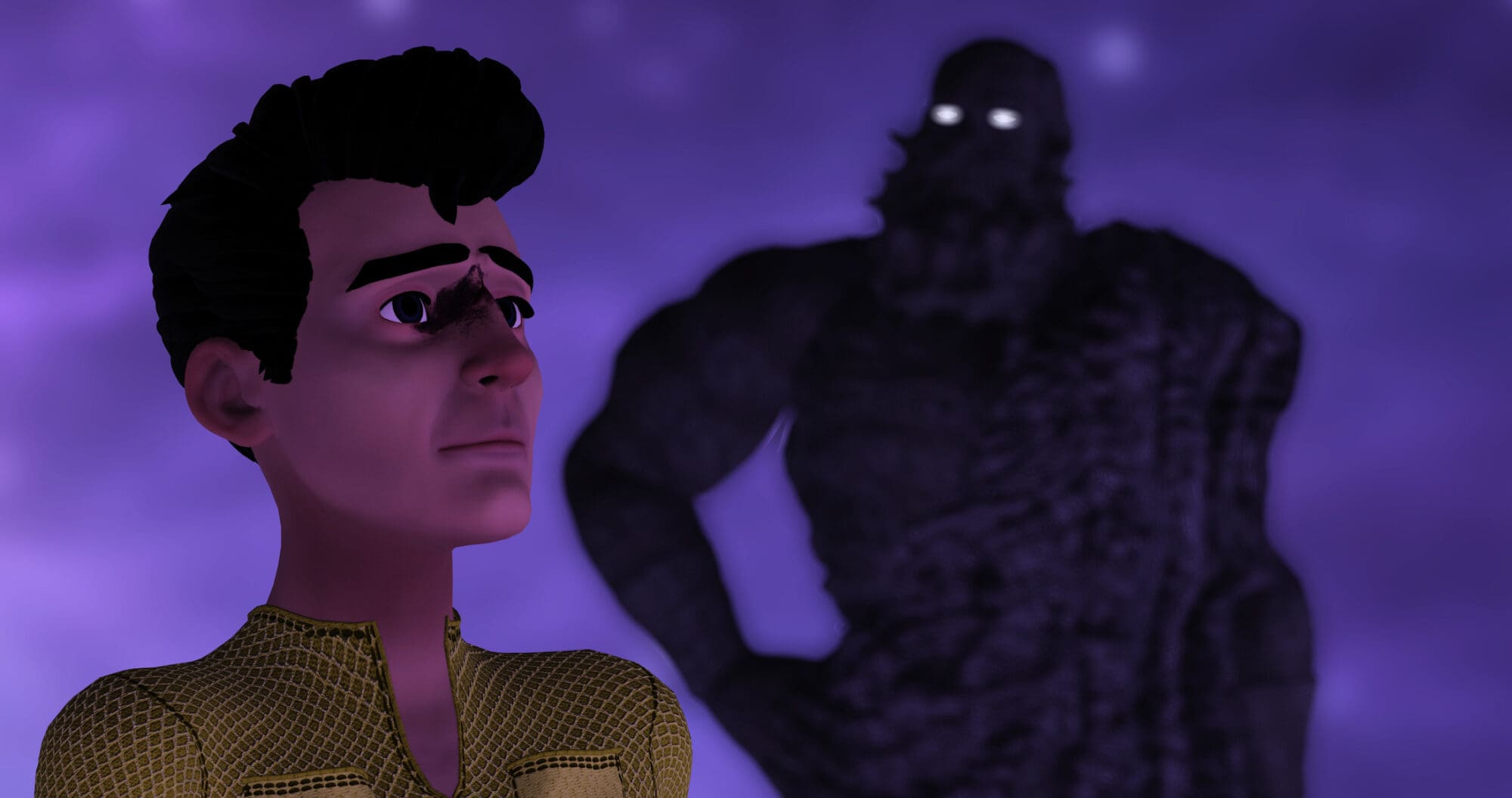
“I didn’t want to just take the costume and tell my own story,” McConnell said. “The interesting thing about this experiment was asking, ‘Can we take this antiquated story, and if it were tried today, how would you do it? Does this story have a place in our modern way of telling superhero stories?’”
The public-domain source provided enough of a foundation for McConnell to begin building without dictating what the completed feature had to become.
“If you tell me a story, I can improve that story,” he said, admitting that starting from scratch has always been tough for him, but that with very little fuel, he can spark a creative fire strong enough to cook up a 90-minute story. “I can say, ‘Don’t have the character do that. Have the character do this.’ These comics gave me a launching pad. They gave me some pieces on a board, or action figures to play with, and I could reconfigure them.”
The approach let McConnell keep much of the original Atlas story, while stretching his own creative muscle, too.
“We’ve taken some of the minor characters and created a bit of lore and mythology,” he said. “We’ve created a small town where part of the story takes place and a big city where another part takes place. Taking characters who are mentioned once in the original comic and creating a new story around who they are and how they fit into this world was a fun exercise.”
Whether audiences will embrace the result remains an open question, but interest in the project has never waned over the last few years, even when delays set things back by months at a time. McConnell has already developed more stories in the same interconnected, public domain-inspired universe, including another animated film expected later this year, but says the project can expand or end depending on the response.
“This is scalable,” he said. “If people want to see more from these characters and these stories, I’m happy to make more. If nobody is really that interested, I’m happy to move on to something else.”
For now, simply completing Atlas is its own victory.
“It’s been four years of ups and downs to get the thing finally out the door,” McConnell said. “It will either be disastrously wonderful or wonderfully disastrous. We’ll see how it goes. But it’s done.”
Atlas: The Animated Movie is available now on McConnell’s website as a $20 early-access purchase. The film will be released free on McConnell’s YouTube channel on September 8, followed by a special screening at Springfield, Missouri’s Moxie Cinema on September 12.