.png)
DreamWorks Pulls Back The Curtain On Its Filipino-Inspired Fantasy ‘Forgotten Island’ In Annecy Preview
Stay informed with free updates
Sign up to get our news digest — delivered directly to your inbox twice a week.
DreamWorks Animation brought its highly anticipated upcoming original, Forgotten Island, to Annecy today, with directors Joel Crawford and Januel Mercado pulling back the curtain on the studio’s colorful fantasy adventure inspired by Filipino culture, mythology, and 1990s nostalgia.
The presentation came just a few weeks after DreamWorks released the film’s first teaser trailer and was accompanied by a second, more far more detailed preview, embedded below:
After seeing how deep the story of Forgotten Island plans to go, it’s clear that the well-received first trailer offered little more than vibes when it came to introducing the title. That initial narrative and character restraint were, according to Crawford, intentional.
“We were curious about the teaser trailer. What do you lead with?” Crawford told Cartoon Brew ahead of today’s Annecy presentation. “We were so grateful that the trailer really showcases the most important thing, which is the emotional stakes of this friendship.”
If the teaser established the film’s heart, the Annecy preview provided a clearer picture of its brain and body, offering an impressive first look at the kind of original worldbuilding that has become increasingly rare in big-budget animation, side characters, fantastic beasts, and a villain that the film’s crew promises will challenge Puss and Boots: The Last Wish‘s Death for best villain in studio history.
For Crawford and Mercado, who also partnered on The Croods: A New Age and Puss in Boots: The Last Wish, Forgotten Island represents an opportunity to build a story from the ground up rather than reinterpreting an existing franchise. Throughout the presentation, the filmmakers emphasized the personal nature of the project, which draws inspiration from their own friendship, Filipino family experiences, and cultural traditions.
“It’s a love letter to Filipino culture and our families and to friendship in general,” Mercado told us.
The film’s official extended synopsis reads:
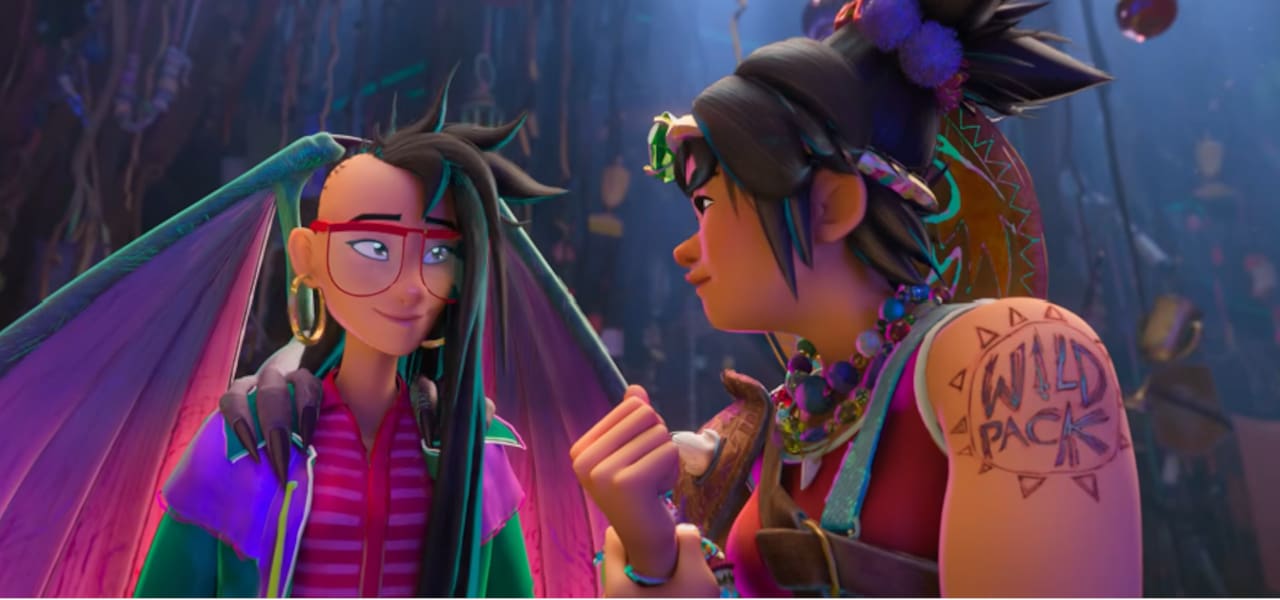
While celebrating their last night together, Jo and Raissa stumble upon a mysterious portal that transports them to the fantastical island of Nakali, packed with magical and mythological creatures they grew up hearing stories about from their Filipino families.
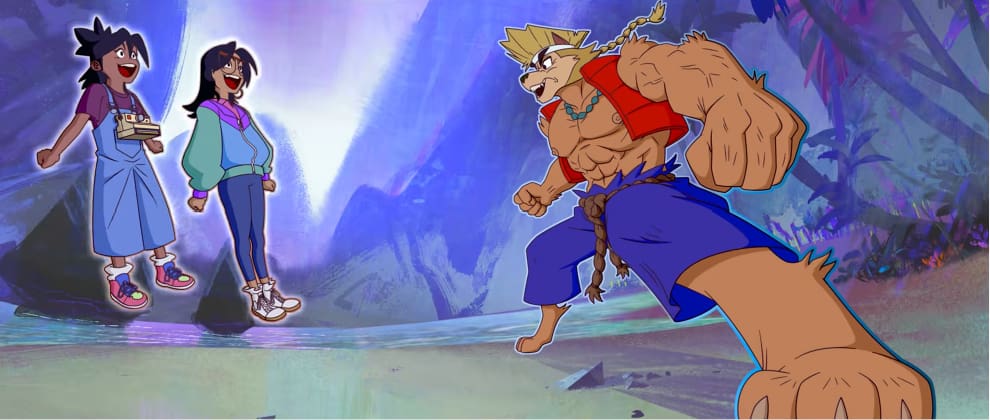
Some of these figures will become friends, some foes. Joined by well-meaning-but-hapless weredog Raww and a small-but-mighty pack of pals, Jo and Raissa must face The Dreaded Manananggal, the most feared creature on the island. When they discover that the memories of their entire friendship are the price for returning home, Jo and Raissa will race to find a way to leave the island before they forget each other forever.
Set in the 1990s, the film uses the period for more than nostalgia. Crawford explained that the era was chosen because it reflects a time when friendships felt more fragile, and separation carried real consequences.
“There was no FaceTime,” Crawford said. “Growing apart and moving away felt final.”
That emotional framework is woven into a story built around memory itself. The filmmakers revealed that the film’s central conflict revolves around a pair of friendship bracelets imbued with powerful memories. As one character explains, objects gain power through the memories attached to them, a concept that appears to extend across the mythology of the island and its supernatural inhabitants.
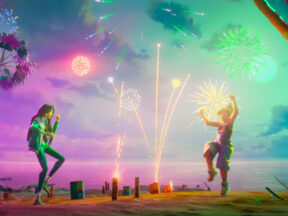
The presentation also offered a closer look at the film’s distinctive and wildly diverse aesthetics, which blend contemporary CG animation with influences from anime, Filipino art, and 1990s graphic design, as well as some very un-DreamWorks-like 2D sequences.
Mercado also cited street art, neon color palettes, and the geometric shapes that defined the decade’s visual culture, triangles and squigglies, while Crawford described the film as a fusion of Filipino aesthetics and the playful chaos of the era.
Several of the film’s major mythological characters were introduced in greater detail, including the hair-raisingly cool Manananggal, voiced by Broadway and animation singing voice legend Lea Salonga (Jasmine in Aladdin and Mulan in Mulan), although this time she’ll do the talking, too.
The Annecy audience also got an early look at several ambitious stylistic departures from the film’s core visual approach. Because memories are recounted differently by different characters, certain flashback sequences shift into distinct anime-inspired styles, ranging from Dragon Ball Z and 1990s Street Fighter influences to magical-girl aesthetics reminiscent of Sailor Moon.
Head of character animation Sean Sexton oversaw the film’s character animation, while anime specialist Ludovic Bouancheau, who previously served as head of character animation on Puss in Boots: The Last Wish, led the execution of nearly every anime-inspired sequence produced at DreamWorks. That includes comedic reaction shots such as Raissa’s response to her hair, Jo’s reaction to her “crown,” and the exaggerated head-pop moments throughout the film.
“Our head of character animation, Sean Sexton, told us there was no way he was going to attempt anime without Ludo,” Crawford told us. “Ludo is an encyclopedia of anime knowledge.”
Because DreamWorks doesn’t have a full 2D pipeline, a few extended flashback sequences featuring Raww, Mermahn, and Bungi were animated by Snipple Animation in the Philippines, with Sexton and Bouancheau overseeing the process. Some of the studio’s work made its way into the above trailer.
Throughout the Annecy presentation, the filmmakers stressed that Filipino culture is not merely an influence on the project but the foundation on which the story, characters, mythology, and setting are built. The result feels less like a fantasy adventure borrowing from Filipino traditions and more like a Filipino story told through the lens of a large-scale DreamWorks fantasy.