.png)
From ‘Wall-E’ To ‘Iron Boy, Louis Clichy On The Unorthodox Journey To His First Solo Feature
Stay informed with free updates
Sign up to get our news digest — delivered directly to your inbox twice a week.
French filmmaker Louis Clichy’s résumé is largely defined by major studio successes on both sides of the Atlantic. He animated at Pixar on Wall-E and Up, then returned to France to co-direct Asterix: The Land of the Gods and Asterix: The Secret of the Magic Potion. His latest film, however, could hardly be further removed from those __.
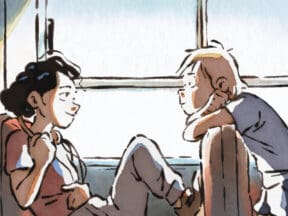
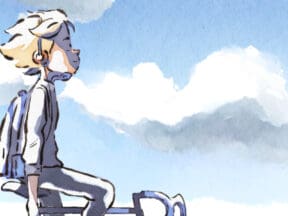
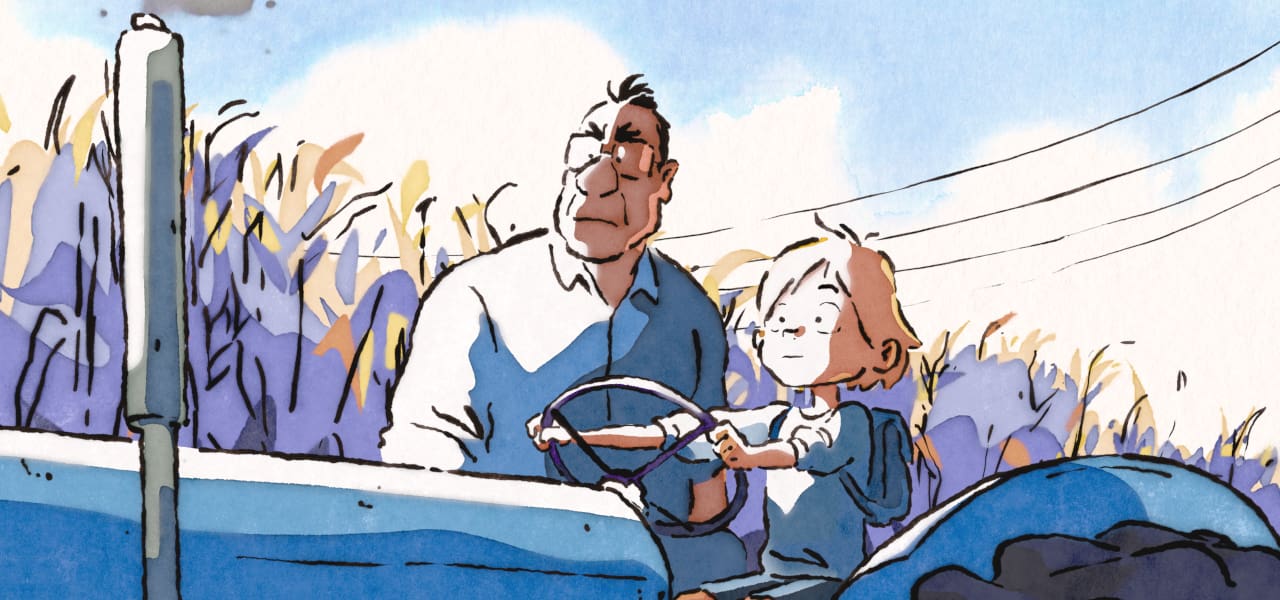
After winning a special jury prize at its Cannes’ Un Certain Regard world premiere, the film now hits Annecy’s main competition as an intimate coming-of-age drama inspired by Clichy’s own childhood in France’s Beauce region. Drawn with loose ink lines and watercolor washes, the film follows 11-year-old Christophe, a shy farm boy whose unexplained physical collapses lead doctors to prescribe a rigid iron back brace (The film’s original French title is Le Corset). As Christophe struggles to adapt to his changing body, he discovers music, friendship, and a life beyond the expectations of his stoic farming family.
Not-So Origin Story
While Iron Boy draws on autobiographical details, Clichy says its narrative is less about recreating his own past than capturing the emotional truth of growing up.
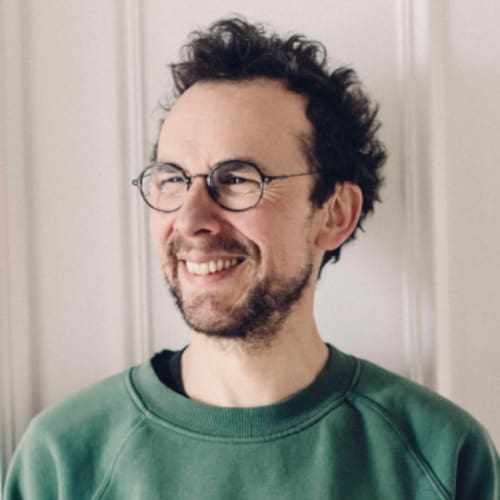
“There is certainly something of me in him,” Clichy told Cartoon Brew during this year’s Annecy Festival. “But he is above all a blend of people I have known, family members and, without fully realizing it, many films.”
That mix of personal memory and invention is evident throughout the film. Christophe’s family lives in a world where affection is rarely spoken aloud, and emotions surface only through awkward gestures or prolonged, understood silences. It is a portrait that feels deeply specific to rural France while remaining instantly recognizable far beyond it.
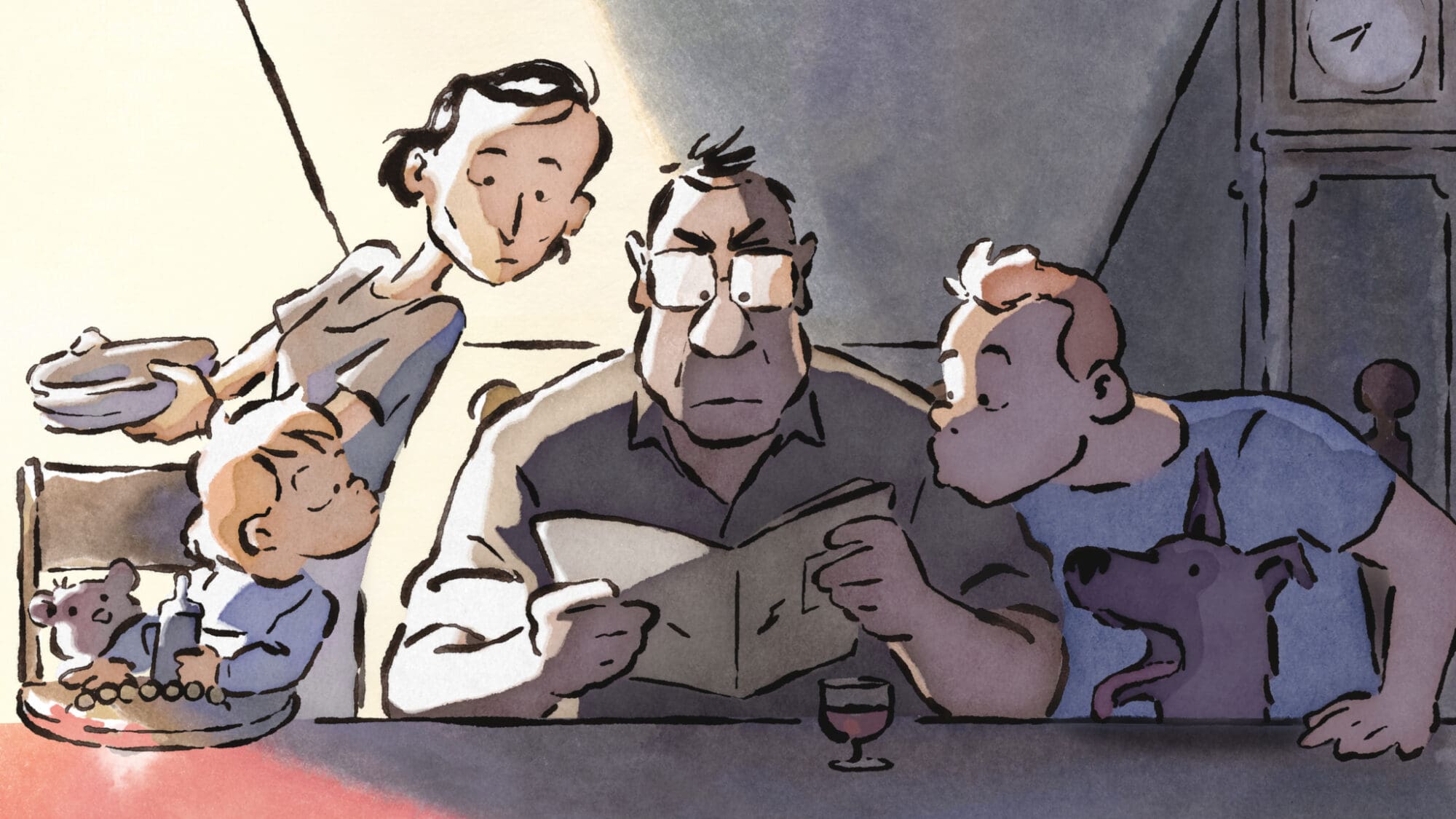
“I was always wondering what the reactions to an international audience on this movie would be,” Clichy said. “But when you talk about a personal story, an intimate story, it works universally. Handicap is talking to everybody. Agriculture, the way it is right now, with all the capitalist issues and productivity issues, unfortunately, is universal.”
After its high-profile and well-received debut, he was encouraged to hear that audiences outside France connected with the film without needing firsthand knowledge of Beauce, farming, or scoliosis.
“Even if you don’t know anything about France or agriculture or the organ or handicap or scoliosis, you get the picture. You have a chance to feel.”
A Landscape Left Behind
The Beauce region occupies a unique place in French agriculture. Located southwest of Paris, it is one of the country’s most productive farming areas, dominated by vast grain fields, enormous skies, and long horizons broken by power lines rather than forests. It is also rarely portrayed on screen.
“I wanted to talk about it,” Clichy explained. “It is a territory rarely represented in cinema or literature, probably because it doesn’t match the image of an ideal countryside. It is a highly productive region, with a flat landscape, heavily exploited. Those constraints were precisely what interested me.”
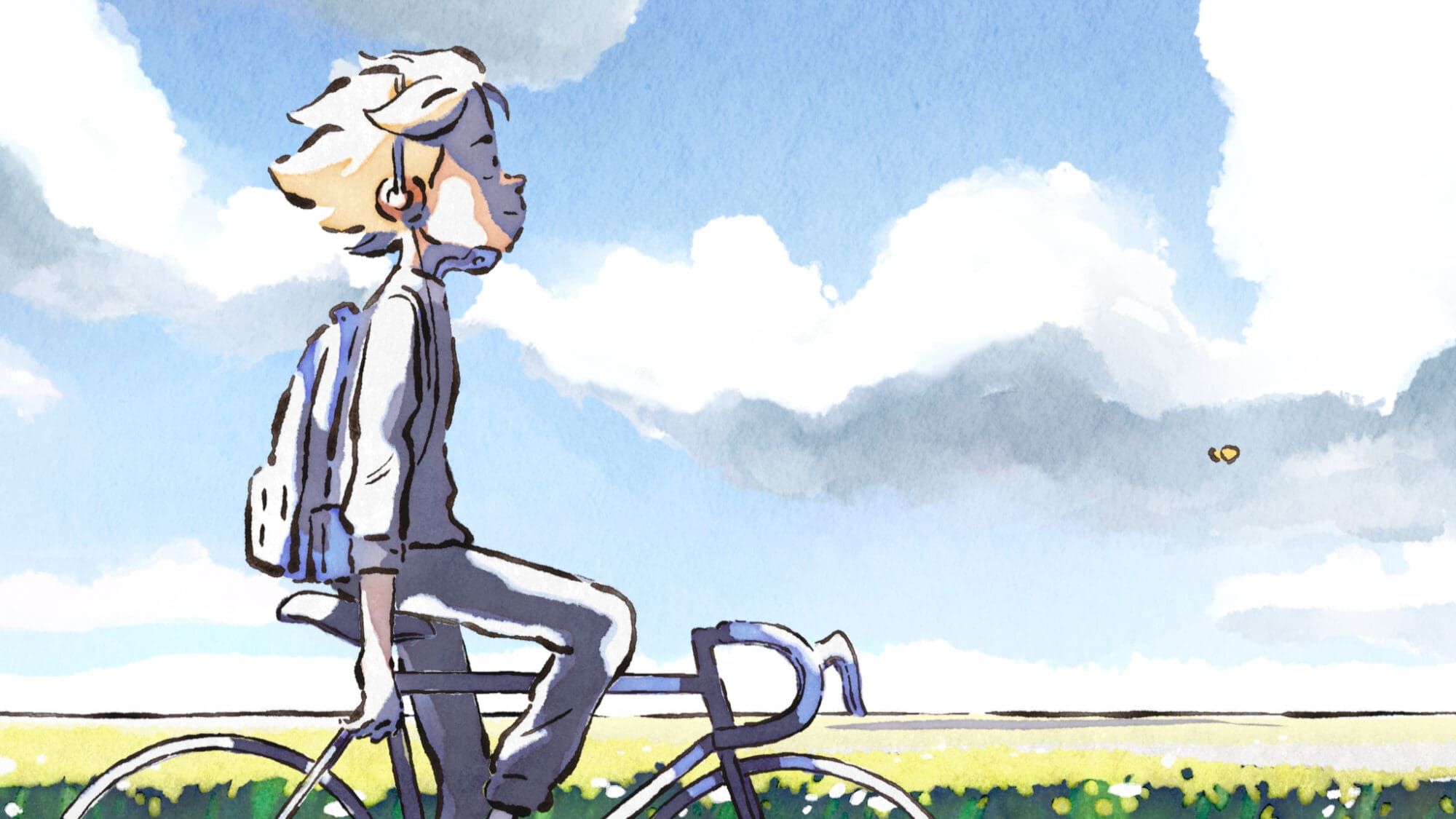
The director lived there until he was ten years old before his parents divorced and he moved to the city. Returning decades later allowed him to examine both the landscape and the profound economic changes that reshaped rural France during the second half of the twentieth century.
“This is an area of France which is never shown on picture,” he said. “When you talk about countryside in France, you’re always going to talk about Bourgogne, beautiful areas where you grow wine instead of wheat.”
The flatness of Beauce became an unexpected visual advantage.
“I needed this horizontal area to talk about bending and rotating and twisting when Christophe falls and when he has this imagined superpower.”
The Look
After spending much of his career inside CG productions, Clichy surprised many viewers by returning to the rough brush-and-ink aesthetic he had explored in his student films at Gobelins. The choice was both artistic and practical.
The film’s look originated from an assignment during his final year at school, when he needed to complete two minutes of animation in just two weeks. “I said, ‘How can I go that fast? How can I find shortcuts?'”
The answer was a thick Chinese ink brush that prevented him from becoming lost in details. “I have a very thick brush which forces me to go straight.”
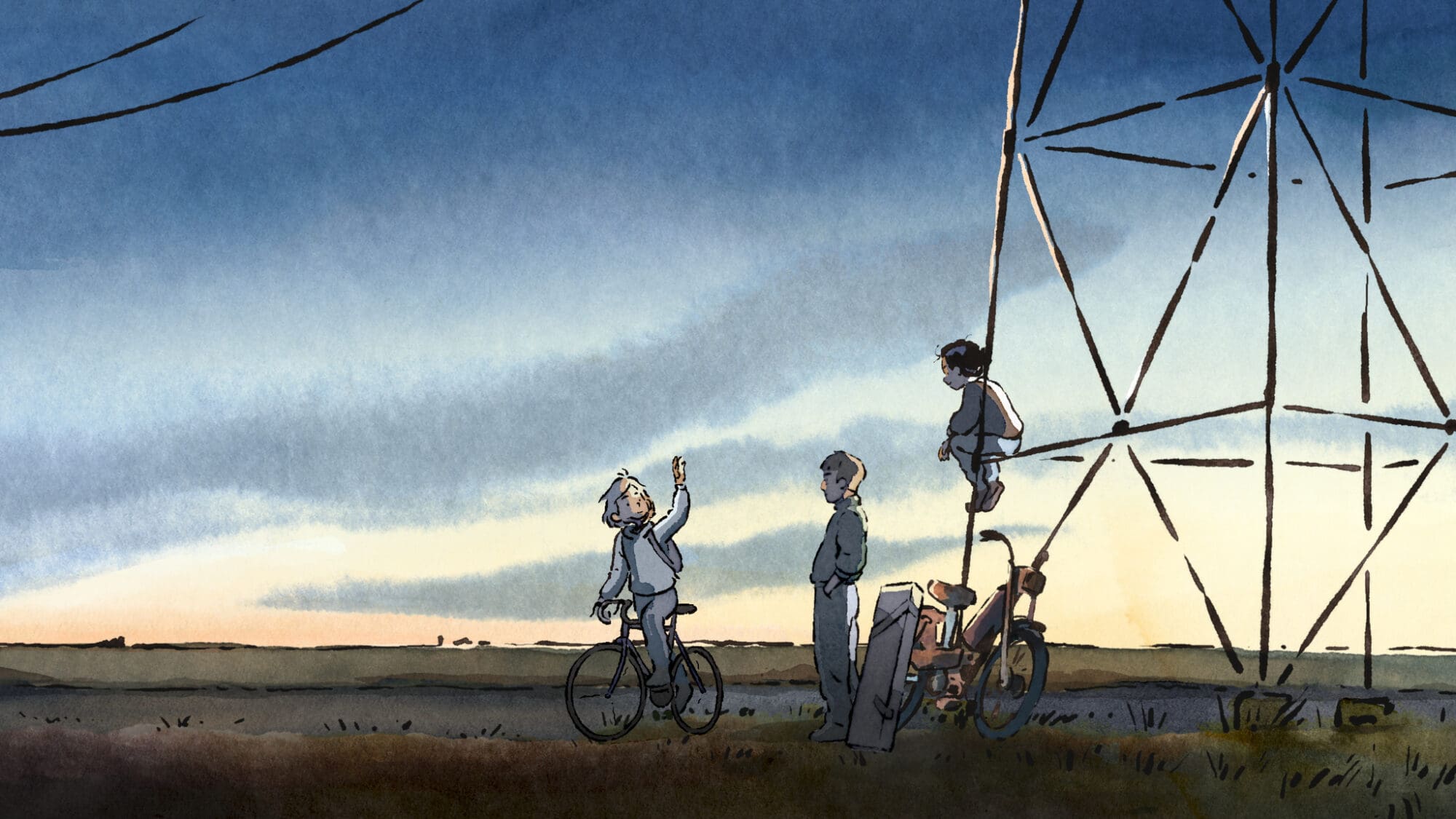
That philosophy carried over into Iron Boy. Rather than polishing every surface, Clichy embraced incompleteness. Large areas of watercolor paper remain untouched, allowing negative space to become as expressive as the painted image itself.
“I wanted to make sure I was free to do whatever I wanted,” he said. “We had a pretty low budget. It was five million euros. With that budget and with that technique, I could go fast, but be super precise in the acting without spending time on all the fingers, all the hairs, and all the details.”
It was a considerable departure from the productions that made his reputation, but not when it came to the film’s narrative foundations.
“At Pixar, story comes before everything else,” he said. “I have tried to stay true to that lesson. It is the story that must drive every choice, including visual ones.”
Humanity Through Animation
While Iron Boy‘s visual style immediately distinguishes it from contemporary European features, Clichy believes the animation itself is what allows the film to move so fluidly between realism and exaggeration.
Throughout the film, Christophe slumps, stumbles, and twists in ways that would feel overly theatrical in live action. Animated, those movements become an extension of the boy’s emotional state rather than simply his physical condition.
“I think sometimes Japanese animation is doing some cartoony stuff with very analytic and precise gestures,” Clichy said, citing directors such as Mamoru Hosoda as an important influence. “There is this good balance that only animation can bring because you can’t do that with actors. Of course, it would be totally burlesque.”
That careful balance extends to the performances. Christophe’s expressions are often understated, avoiding the exaggerated smiles and broad reactions common in commercial animation.
“Alexandre Astier [his Asterix director] taught me a great deal about managing voices and working with actors,” Clichy said. “He also made me aware of the habitual reflexes animators can fall into, for example, the compulsion to add smiles constantly. If you are dealing with childhood and joyful things, the grin becomes obligatory. It can quickly turn saccharine. In Iron Boy, I tried to avoid that.”
Instead, emotional breakthroughs arrive quietly, making them feel earned.
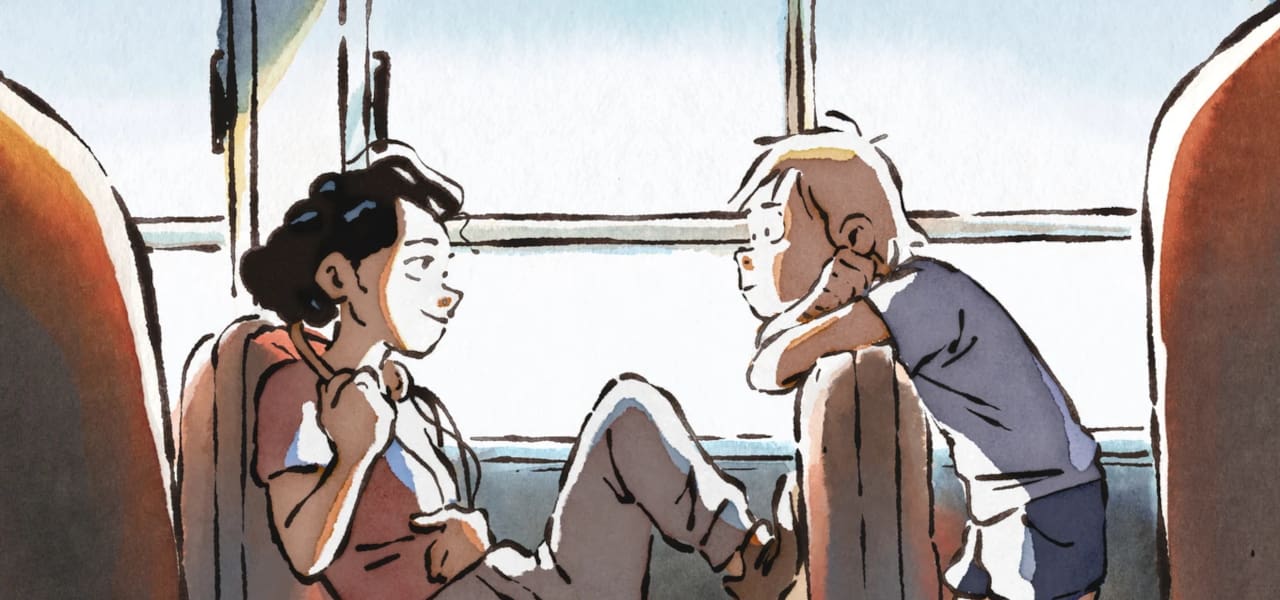
“We lean more towards observation and less towards projection,” he said. “So that when a smile does arrive, it actually means something.”
The same philosophy informed the film’s sound design. Rather than relying on an orchestral score to guide the audience’s emotions, Clichy built most scenes around diegetic sound, including some breathtaking organ performances.
“Film music, when it is used to validate or reinforce an emotion, tends to irritate me,” he explained. “I wanted to do without a score.”
Instead, wind, engines, footsteps, and church organs become part of the storytelling. Even Gabriel Fauré’s Requiem enters the film only because it is first performed within the story itself before gradually expanding beyond the scene.
Unintentionally Personal
Although Iron Boy began as an attempt to tell a fictional story inspired by childhood memories, Clichy found himself making something far more intimate than he had anticipated.
“I think my son growing up made me start thinking about my own childhood,” he said. “This movie became very intimate without noticing it.”
That intimacy reached an unexpected and touching point during production, when temporary voice recordings made with his own son slowly evolved into the final performance.
“I was doing some very small tests on animation and asked him, ‘Can you do this sentence?’ I was recording it on the iPhone.”
As other members of the production heard the recordings, they assumed the voice belonged to a professional child actor.
“They said, ‘Who is this boy you found?’ I was very ashamed to say, ‘Well, it’s my son.'”
Clichy initially intended to replace him with another actor after auditions.
“Up to the end we said, ‘We’re going to do some casting,’ because I wasn’t sure it was a good idea. But everybody was happy with his voice, my son was very happy, and we said, ‘Let’s do the official recording with you.'”
The father-son relationship at the center of the film also evolved as Clichy himself became a parent.
“I guess it makes sense,” he reflected. “I think my son growing up made me start to think about my own childhood.”
That dual perspective gives Iron Boy much of its emotional complexity. Christophe’s father is stern, emotionally reserved, and frequently frustrating, but never reduced to a villain. He is a man struggling to adapt to an agricultural world that is changing faster than he can understand, while trying, often unsuccessfully, to raise a son he loves but cannot fully communicate with.
It is a level of empathy that likely would have been difficult for Clichy to reach earlier in his career.
Feature From Scratch
Iron Boy also represents a relatively unique way of making animated features in Europe. When the original production arrangement fell apart, the filmmakers effectively had to build a new animation studio from scratch to complete the film.
“We had to do an emergency studio,” Clichy explained. “In 2D animation it’s not that complicated to create a studio.”
Most of the animation was completed in Paris at the bespoke Eddy Cinéma, with additional work in Angoulême and Belgian partners contributing to the production. Keeping the artists physically close together was an intentional decision. “I wanted to have the team nearby,” Clichy said.
For the director, the production itself reflected the independence he had been seeking after years working on projects initiated by others.
“When I look back at my career, I was always following commands,” he said. “Pixar came to me. Asterix came to me. At one point I said, ‘I need to be the first. I don’t have to wait for proposals anymore.'”
Under those circumstances, Iron Boy was born.
The result is a film that feels unlike most contemporary feature animation. It avoids nostalgia while drawing deeply from memory. It embraces expressive cartooning without sacrificing emotional realism. Most importantly, it trusts audiences to meet it on its own terms. It’s genuinely not trying to be anything more than the cinematic vessel through which this charming story is told.
Like Christophe himself, Iron Boy asks for a little patience. Beneath its deceptively loose brushstrokes is one of the year’s most deeply felt animated films, and the work of a filmmaker who, after decades bringing other people’s stories to life, has finally found a way to tell his own.
All images courtesy of Eddy Cinema, Beside Productions, Regular Production, France 3 Cinema, Auvergne Rhône-Alpes Cinema, RTBF