.png)
Colored Pencils, Magic Markers, And Watercolors: Finding The Look Of Cartoon Saloon’s ‘Julián’ (EXCLUSIVE BTS)
Stay informed with free updates
Sign up to get our news digest — delivered directly to your inbox twice a week.
A summer in New York brings profound change for a young boy in Julián, the feature directorial debut of Cartoon Saloon’s Louise Bagnall. Adapted from Jessica Love’s 2018 picture book Julián Is a Mermaid, Bagnall’s film expands on the characterization of both Julián and his grandmother. The project has been in development for around four or five years, by Bagnall’s estimate, and she says she had been working on it “sort of seriously” by the end of 2020.
Julián is dropped off at his abuela’s home in New York City, where he spends the summer. The relationship between him and his grandmother centers on an exploration of gender expression. Julián loves mermaids and wants to dress up as one. His abuela doesn’t quite understand why at first, but that understanding grows as they explore the idea together and create a costume for the Coney Island Mermaid Parade.
Bagnall intended Julián to be open to what audiences bring to it. She relished the chance to talk about something she felt wasn’t often shown in the media and hoped the film would mean different things to different people.
“I think what’s interesting about it is that it actually reflects back on the audience and asks them to kind of re-examine their own ideas, especially adults,” Bagnall said. “That was something that we definitely wanted to keep in the film.”
Now, on the eve of its premiere at Annecy, we caught up with the filmmaker to discuss the making of the film.
Cartoon Brew: Sometimes, when you see someone moving from directing shorts and working on other people’s features to directing their own feature, it can seem like a sequential progression. But you were working on this in tandem with a lot of your Cartoon Saloon projects.
Louise Bagnall: You kind of have to have a few irons in the fire. I finished my short film Late Afternoon, and after that, I was working on Wolfwalkers as a storyboard artist, and then on My Father’s Dragon as assistant director. It was during that time that I had the opportunity to look at maybe pitching a feature, and that’s when Julián Is a Mermaid came across my desk. I thought it was wonderful.
You can’t really just hang around and wait for something to come along. There are always other things to do in the meantime. Then, when Julián Is a Mermaid became a bit more real as a prospect, I was able to step away from my other roles in the studio and concentrate on that film.
I read that Jessica Love was influenced by a friend’s transition in their 50s, as well as the film Paris Is Burning and RuPaul’s Drag Race. What other influences would you add to that list when making the film?
Jessica was lovely to work with on the film. She was able to look at what we were doing and give us feedback, and she talked a lot about where the idea came from from her point of view. The book is set in Brooklyn, so we’re also pulling in her lived experience and the experiences of others.
We had people like Juliany, who wrote the screenplay. Juliany’s experiences and the world they grew up in were very important. They’re from Brooklyn and have Dominican heritage, so we’re bringing those experiences into the film. My co-director, Guillaume Laurent, is Afro-Caribbean and comes from Guadeloupe.
All of these things add up and bring different influences into the film, allowing the story to expand. We had to take the relatively short story of the book and build it into a larger narrative, which meant including more elements of community.
In a previous interview with Cartoon Brew, you mentioned that you were using the look of the book as a jumping-off point. How did you evolve that look, and what other textures were you incorporating?
First off, the book is absolutely beautiful: gorgeous, colorful pages and really lively linework as well.
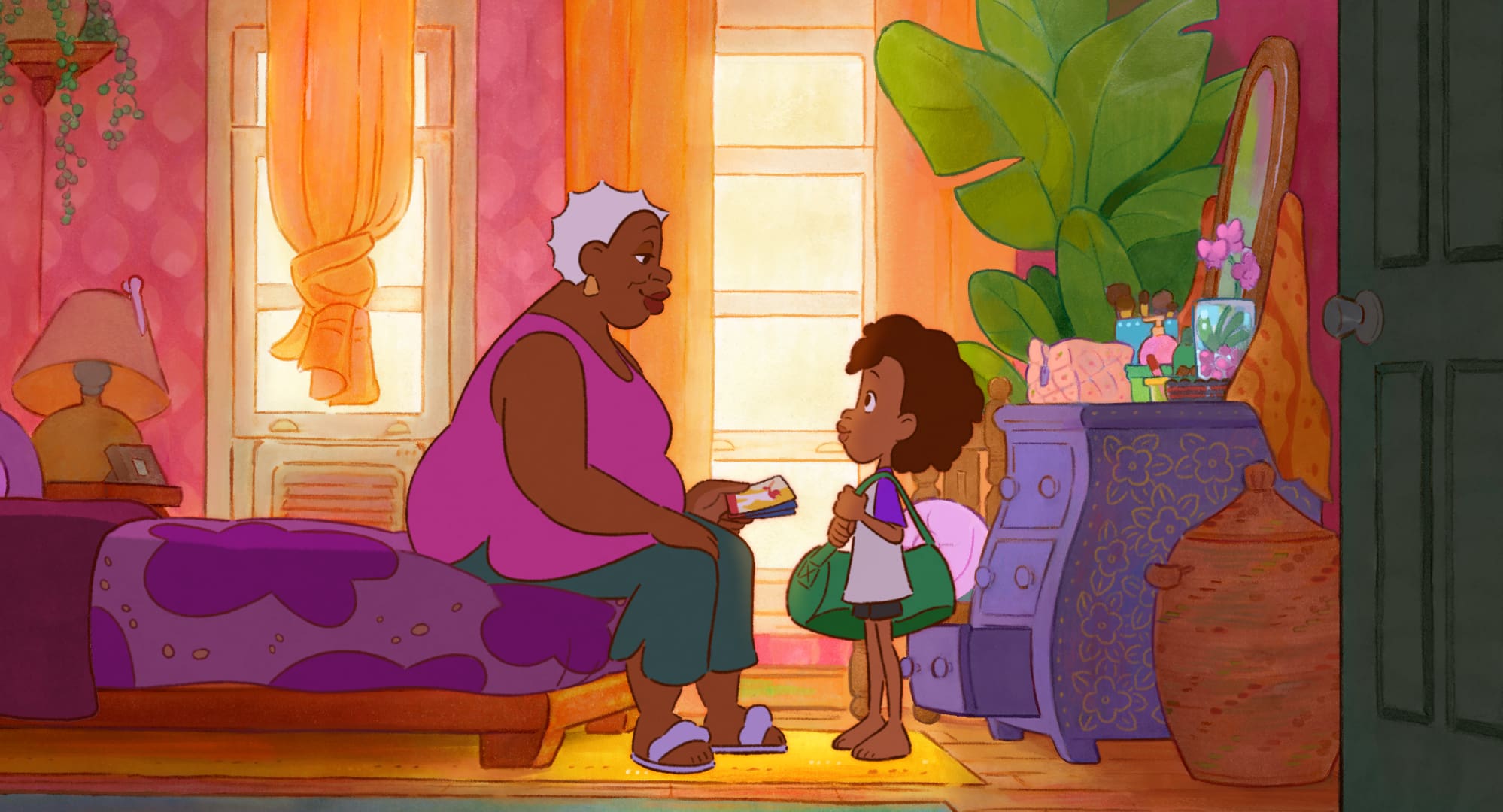
I suppose the most straightforward approach would have been to take exactly the same tools and apply them to the art direction of the film. But when we explored that further, we weren’t getting quite the look that we wanted on screen. Maybe we were looking for something that felt a little more cinematic, which can be difficult when you’re working with watercolors and gouache because it constantly reminds the audience that they’re looking at a painting. That can be beautiful, but it can also pull them out of the cinematic experience.
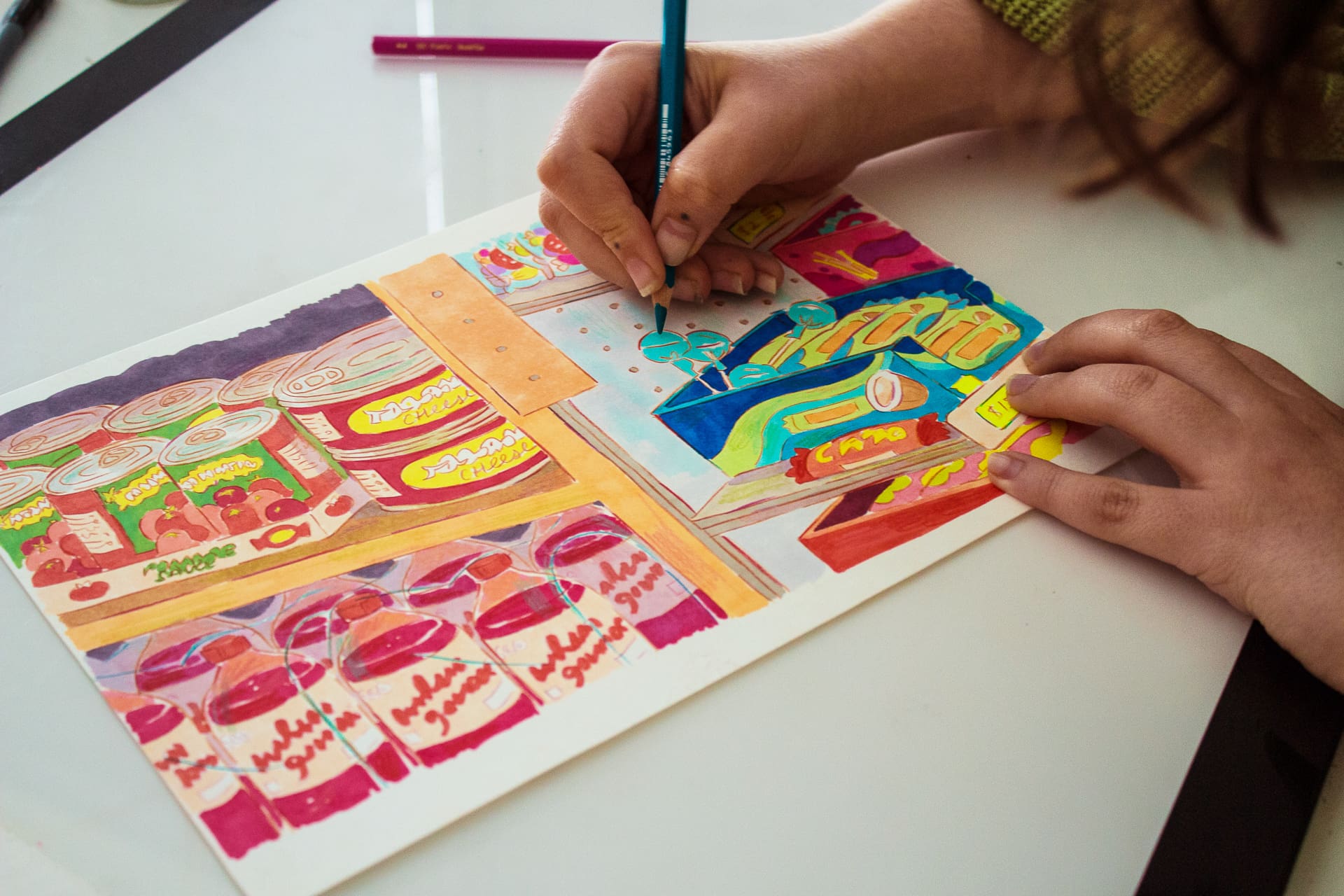
So we stepped a little away from the gouache and watercolor, but we kept the linework, which I felt was very important to the look of the film.
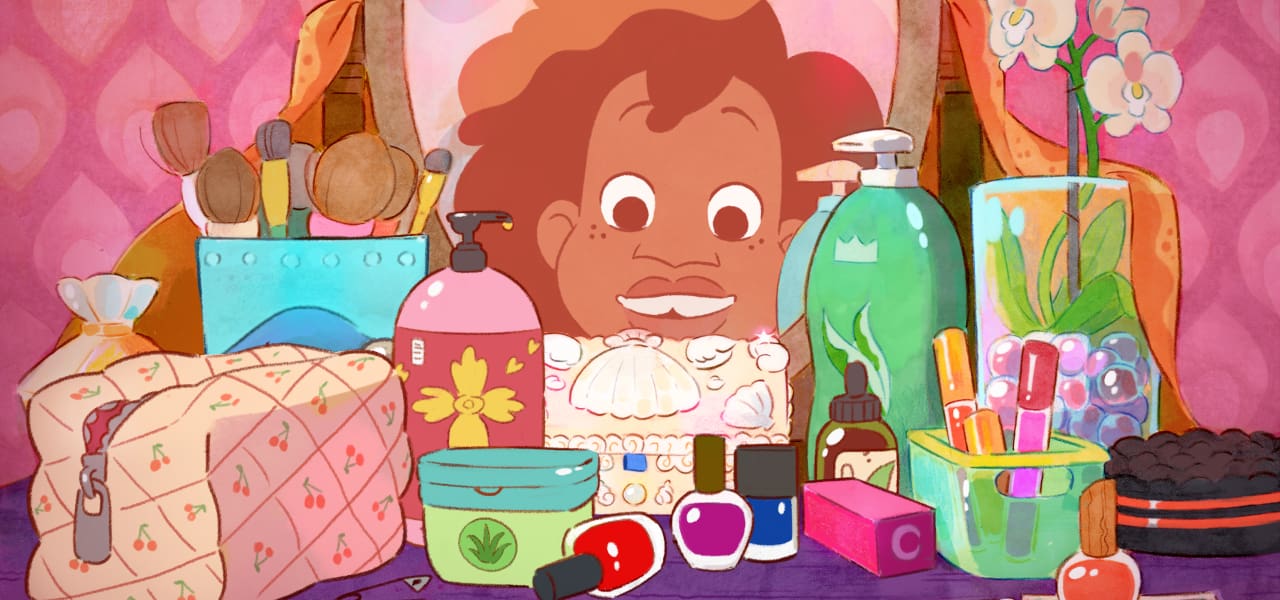
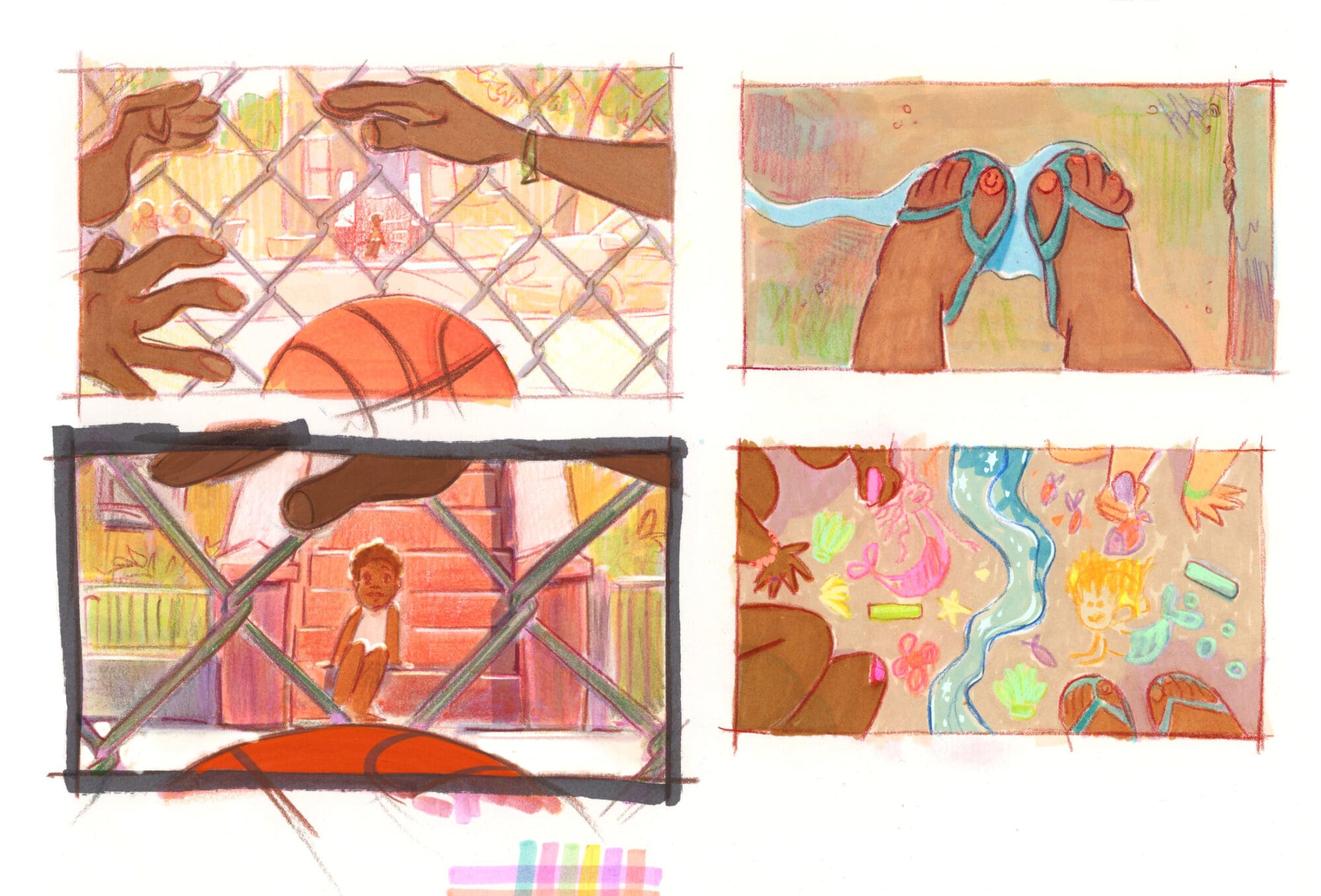
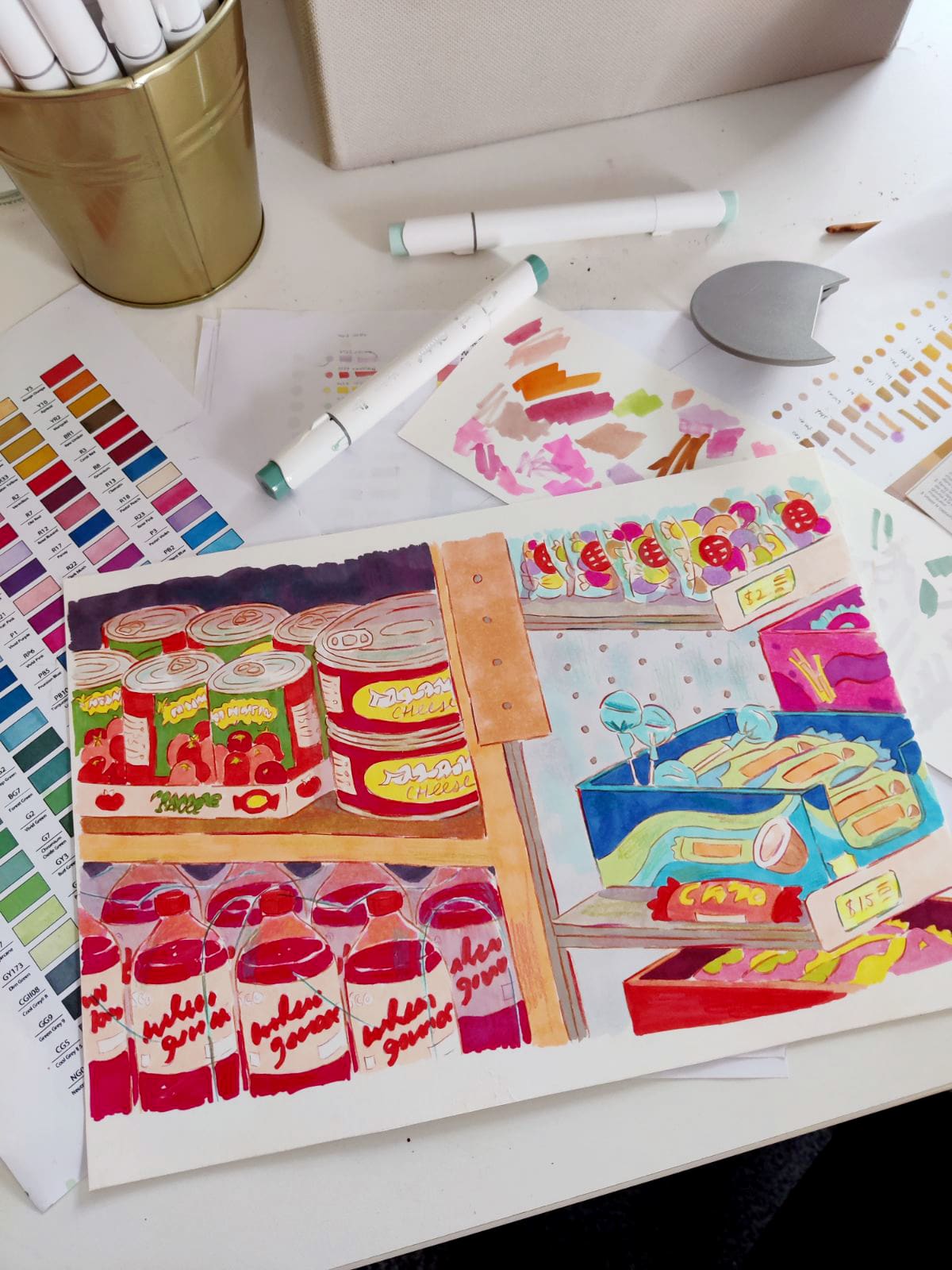
We decided to use coloring pencils and markers for the rendering of the backgrounds. One reason was that those are the kinds of creative supplies Julián has in his pencil case. They’re his go-to tools, and it felt like a nice way to reflect his point of view of the world.
We still took a lot of inspiration from the look of the book, but it was about letting it evolve into something that would work really well on screen.
When I think of New York in the summer, I think of Do the Right Thing and red-hot, sweltering heat, so it was interesting to see the film introduce cooler tones as well.
Emilie, our art director on Julián, is an absolutely amazing artist herself. It was a great collaboration working with her. She really shaped the film’s color space and helped tell the story through the palettes we used.
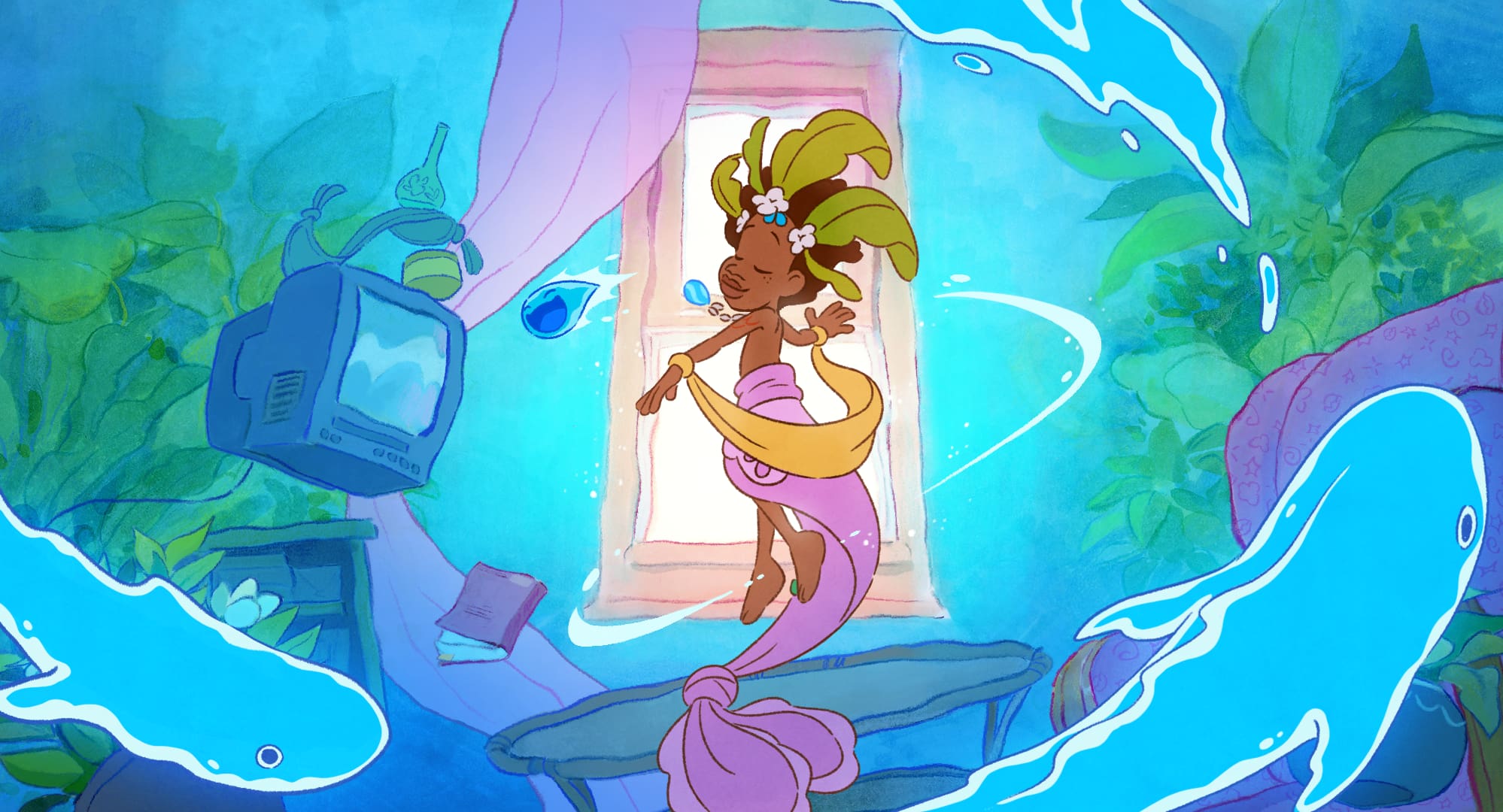
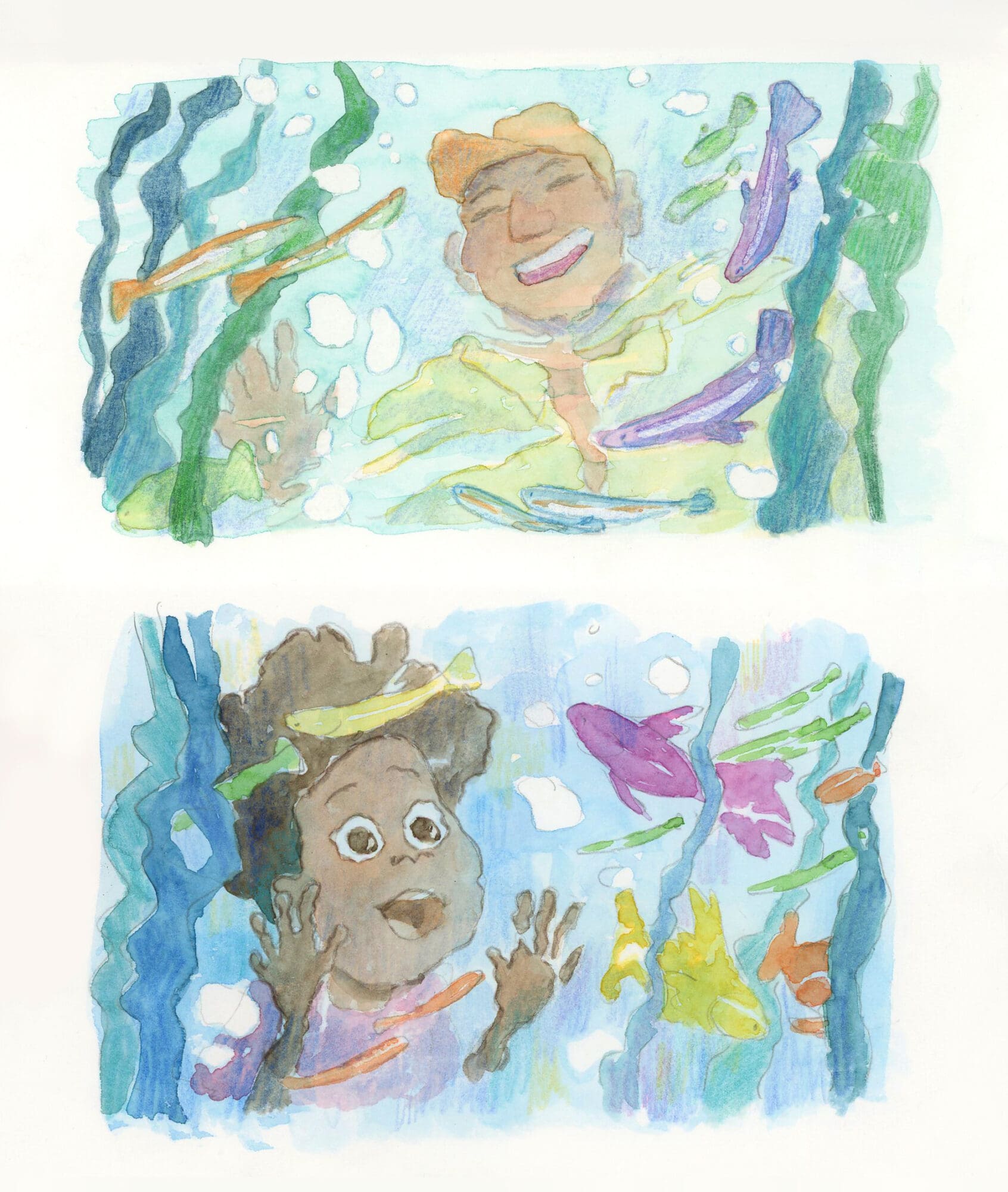
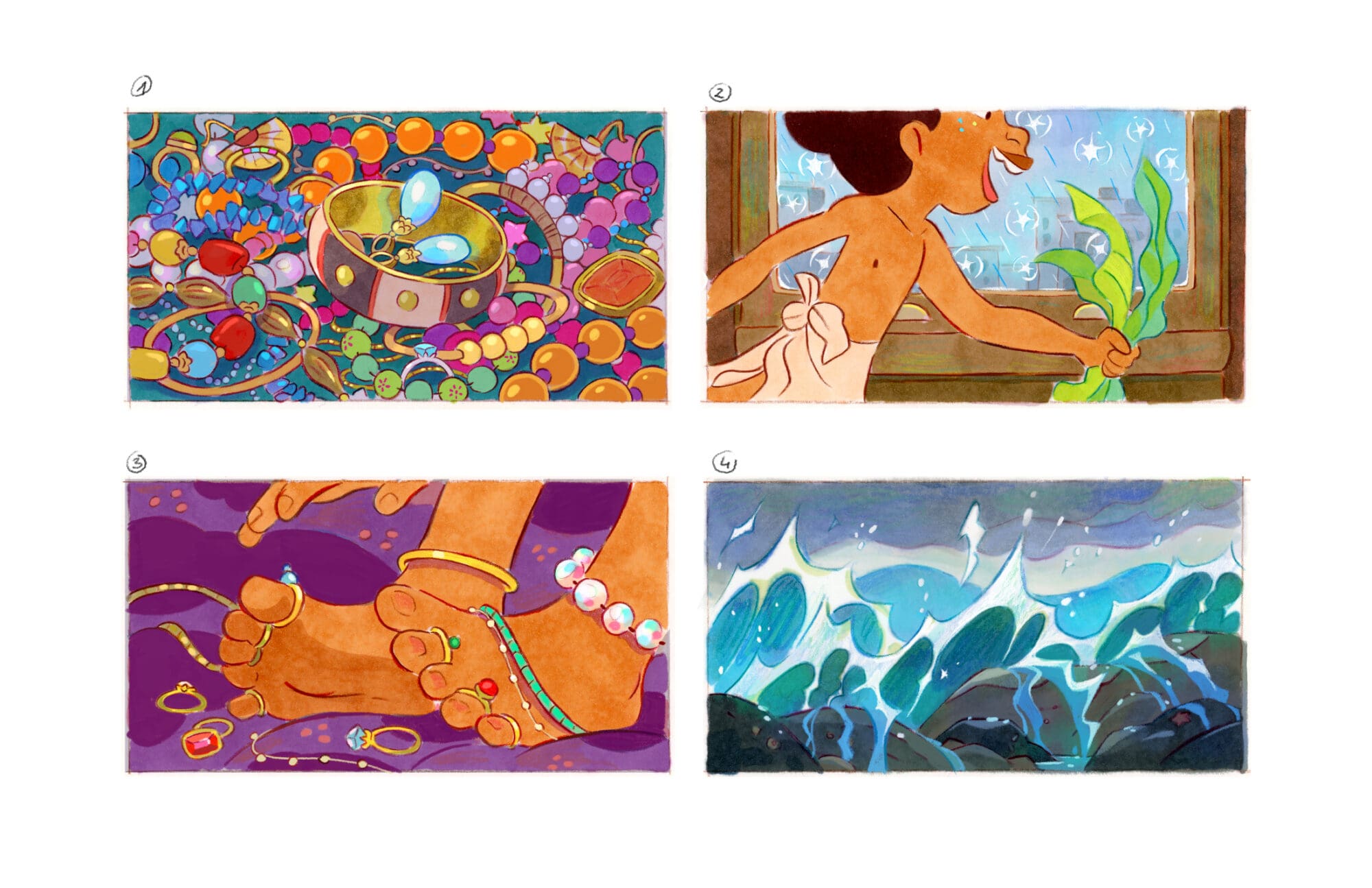
We wanted the world to feel like it was reflecting Julián’s energy back to him. Because you see magic in the film, the colors help create the feeling that all of this is possible within the world we’re looking at.
Because the entire film takes place during the summer, it opened the door to some really interesting lighting choices. We decided to go for a very sun-bleached look, where the sunlight almost blows out the pavements and turns them into bright reflective triangles and rectangles rather than gray pieces of concrete.
We definitely looked at Do the Right Thing as well. We took some inspiration from it because there are some really fun color palettes and cinematography choices in that film.
I think what you see in Julián is that we’re aiming for more earthy tones in certain parts of the film. Then, inside Abuela’s apartment, you get a lot more jewel tones: emerald greens, purples, and hot pinks. For the more magical moments, we use deep blues and darker turquoises that represent a dive into something beneath the surface.
How did you go about depicting the Coney Island Mermaid Parade in the film? It’s quite a busy sequence.
The parade is fantastic in real life, but we really decided to go for it in the film. The challenge was figuring out how to create this big finale with masses of people, floats, and all of this movement.
There was a lot of work in the art direction to figure out how we could make it feel as full-on as possible with the time and resources we had as an independent film.
We also wanted to make sure we captured its sense of community. We had to fill the parade with people, so a lot of crew members ended up appearing as cameos. It was really about making it feel as rich, exciting, and full as Julián himself wants it to be.
A lot of it came down to finding clever visual solutions that would allow the parade to feel lush and vibrant within our limitations.
Could you give me an example of one of those solutions?
Normally, when you think of a parade, you’re thinking about crowd shots. As you can imagine, those are pretty demanding for an animation team. The parade itself is so eclectic that we didn’t want everyone wearing the same costume and repeating endlessly. We weren’t looking for copy-and-paste solutions.
What we did instead was decide what each shot was going to be and design people specifically for those shots. We didn’t create a huge library of characters with model turnarounds and then drop them into scenes afterward.
Another clever solution, which Emilie came up with, was using colored, patterned fabrics to help fill space. We had banners, flags, and beautiful flowing fabrics that felt very much in sync with the rest of the film and the book. They helped occupy space that would otherwise have needed to be filled with additional characters.
On the technical side, we use TVPaint for a lot of our animation, but we also incorporated some rigged animation in Moho. We used Moho for some of the background characters in the parade. We’d design and draw them, then bring them into Moho, where they could be replicated and animated in simple ways. Maybe they would move their heads or sway slightly from side to side. It was a mixture of hand-drawn animation and rigged animation that helped keep everything lively and moving.
When adding the film’s fantastical elements, was exploring the connection between these identities what drove the decision to include them?
Personally, I love having magical elements in these kinds of films. There’s a wonderful freedom to it. When you’re talking about child characters, there’s an imagination there that you can tap into.
It also helps characters cope with things, so for me, the magic in the film is part of Julián’s growing understanding of himself.
We have Luna, who is essentially a manifestation of Julián himself, and then we have Yemaya. This goddess figure is a connection not only to Julián’s gender expression but also to his Dominican heritage and something bigger and deeper within himself.
All of these elements came together in Yemaya and the realm she inhabits. It’s a space where Julián can ask questions about himself and feel that he has the freedom to do so.
I loved the idea of having this divine femininity at the heart of his journey, at least for that summer, allowing it to exist outside the social norms he has been raised within.