
Director Daniel Zvereff On ‘Moonfish,’ One Of Our Favorites From A Crowded Year For Feature Animation
Stay informed with free updates
Sign up to get our news digest — delivered directly to your inbox twice a week.
Daniel Zvereff wrote his debut animated feature, Moonfish, around the practical assumption that he might have to make it entirely on his own.
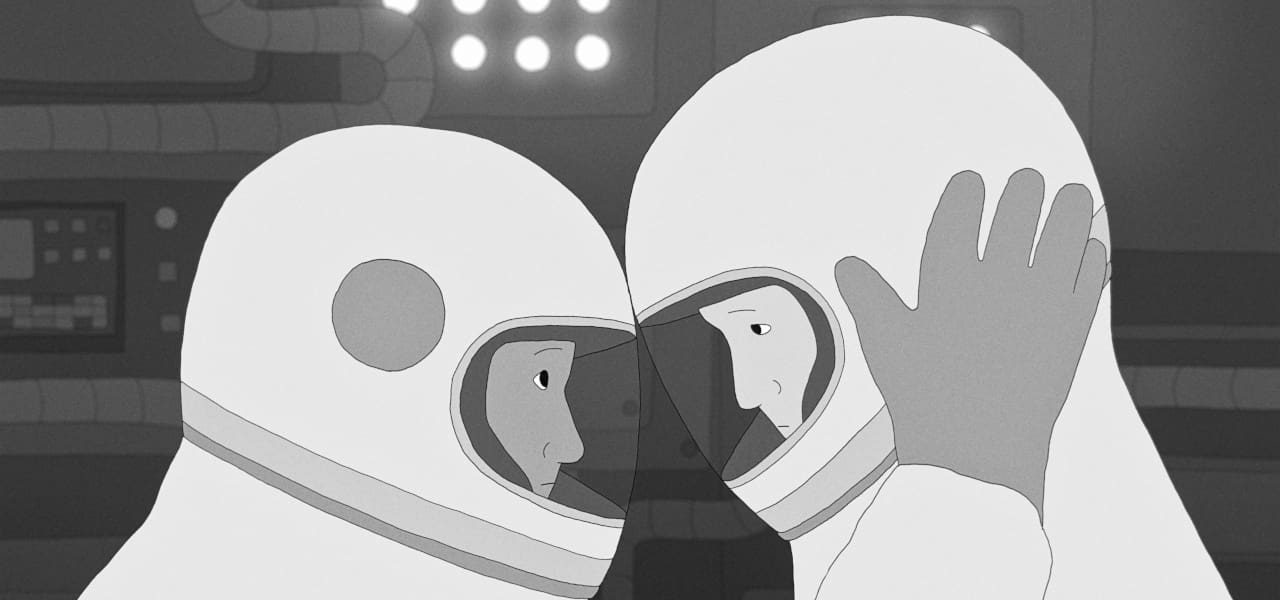
The resulting 89-minute sci-fi drama, which premiered at the 2026 Venice Film Festival, follows Cassius, a grieving astronaut mining a distant asteroid who must meet a corporate quota before he can return home. An accident threatens his chances of fulfilling that contract, and his prolonged isolation begins to blur the boundary between the living and the non-living.
Morgan Spector voices Cassius, with Lucy Liu playing Vesper/Fish. Presented in a 4:3 aspect ratio, the film uses restrained yet meticulous animation and largely locked compositions to explore grief, exploitation, and displacement. Zvereff, a Brooklyn-based animator, writer, and director whose shorts include Life Is a Particle, Time Is a Wave, and Drago, developed the feature with producers Rebecca Wyzan, James Belfer, and Mireia Vilanova, with production by Present Company, Cartuna, and Lucky Accident Productions.
Biennale College Cinema’s support helped turn that deliberately contained script into a feature, but the production still required Zvereff and animators Devin Grover and Hoss Wheeler to deliver roughly ten minutes of finished animation a month over a nine-month schedule.
In an exceptionally strong year for feature animation, Moonfish has stayed with us as much as the more publicized releases. Its restrained images, powerful voice performances, immaculate sound design and score, and unhurried rhythms give its portrait of grief and isolation room to settle, building an emotional weight that belies the production’s modest scale. That intimacy should make Zvereff’s debut a welcome addition to the year’s awards conversation.
In the following conversation with Cartoon Brew, Zvereff discusses designing that pipeline, choosing where movement mattered most, directing his first vocal performances, and the personal cost of getting the film finished.
Cartoon Brew: How much of Moonfish’s visual style was established before the grant, and which developed in response to the micro budget and nine-month deadline?
Daniel Zvereff: I started writing Moonfish with restraint in mind. After making Life Is a Particle, Time Is a Wave (SXSW 2022) and Drago (Sundance 2024), I knew I wanted to write and direct a feature. The problem is that animation is still somewhat ignored, or less flashy, to the film industry. Getting any traction or support from the people who normally help artists get a first feature across the line, like managers, agents, financiers…is near-impossible. I think there’s a struggle because animation is unfairly categorized outside the realm of indie film… almost like it’s a genre existing outside the cinema ecosystem entirely.
In recent years, that’s finally starting to shift. Younger audiences are craving animated films that aren’t just four-quadrant family tentpoles, especially in Europe. That appetite exists in the US too, but the industry on this side of the ocean is definitely less willing to take creative risks.
When I was strategizing how to actually pull off a feature, I assumed I wouldn’t have any outside help. Getting a first feature made is usually a chicken-or-egg dilemma, but with animation, there’s no chicken and no egg. So I sat down to write a script with one rule front of mind: every single scene had to be something I was confident I could execute completely on my own. If you’ve seen my previous shorts, no one would mistake me for a traditional animator; my strengths lie more in visual storytelling and direction. I kept every scene within what I felt was possible, but I still pushed the ambition a bit, hoping I’d somehow pull it off when it came time to actually draw it.
I shared drafts of the script over several months with my friend and producer Rebecca Wyzan (Present Company), as well as producers James Belfer and Mireia Vilanova (Cartuna), going back and forth on creative development. Eventually, they all officially boarded the project. At that point, there was a glimmer of hope that we might find real funding, but my baseline mindset never changed: I’m making this no matter what.
When we were awarded the Biennale College Cinema grant, we were actually positioned perfectly to hit the ground running. Because I had designed the entire film around a zero-dollar reality.
Were there any sacrifices that needed to be made, for better or worse?
Of course. When you’re working within severe limitations, sacrifice is the name of the game. But the real trick is figuring out how to make those constraints work for you, or how to turn a limitation into an asset.
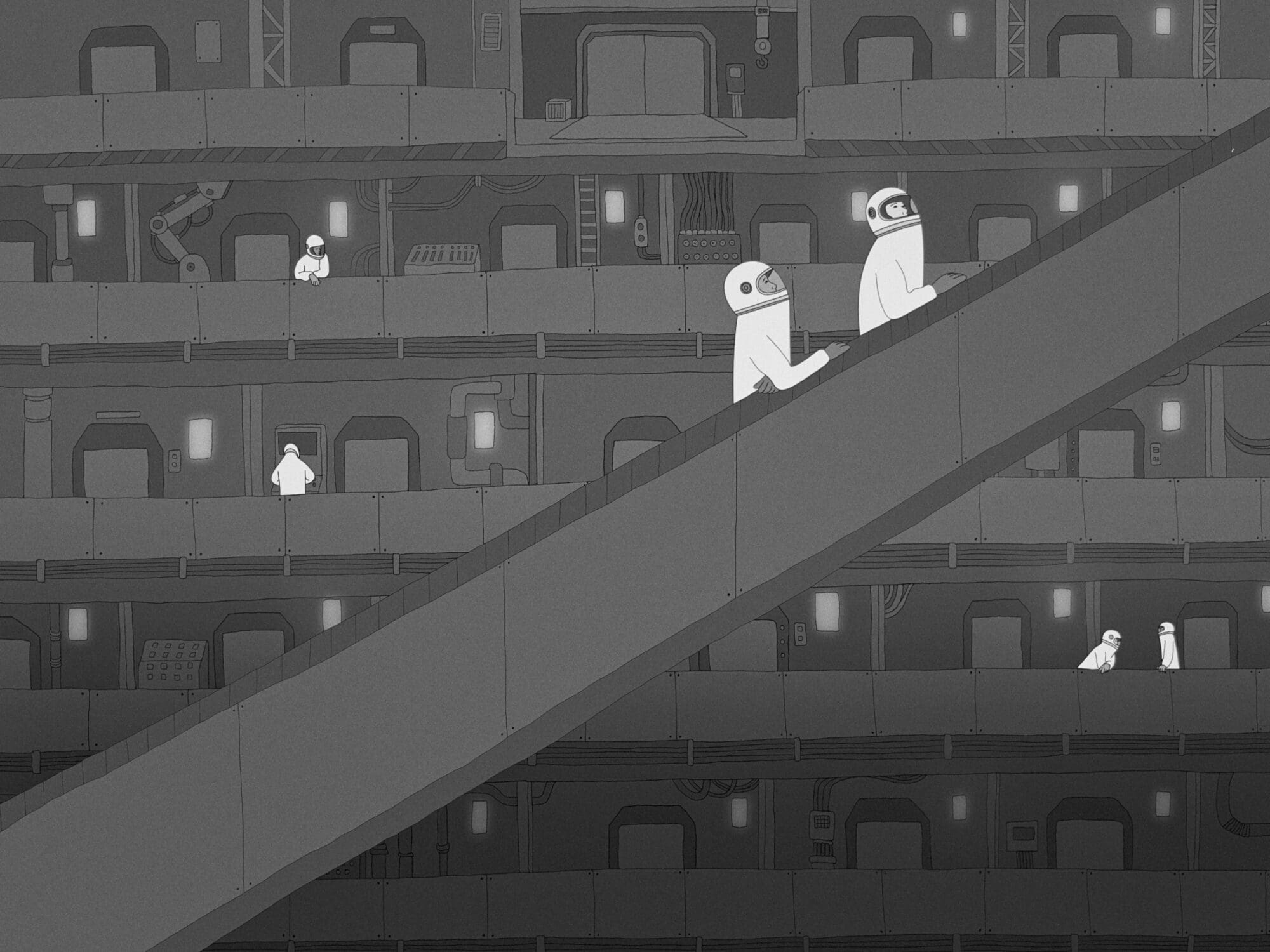
Visually, that was my focus from day one: how do I create something striking and cinematic on screen that still completely absorbs you into the world, while staying strictly within the boundaries in front of me? I spent months ideating around that, inventing a production pipeline tailored specifically to a micro-team and a micro-budget. There was definitely a healthy amount of “creativity” involved just to make the workflow possible.
Can you expand on that self-imposed restraint that all of this needed to be able to be done by one person? What did that mean in practice during writing, development, and into production?
The pipeline had to be simple enough that anyone could pick it up, learn it immediately, and render fast. We did the math early on: we needed to produce a bare minimum of ten minutes of finished animation every single month to hit the deadline.
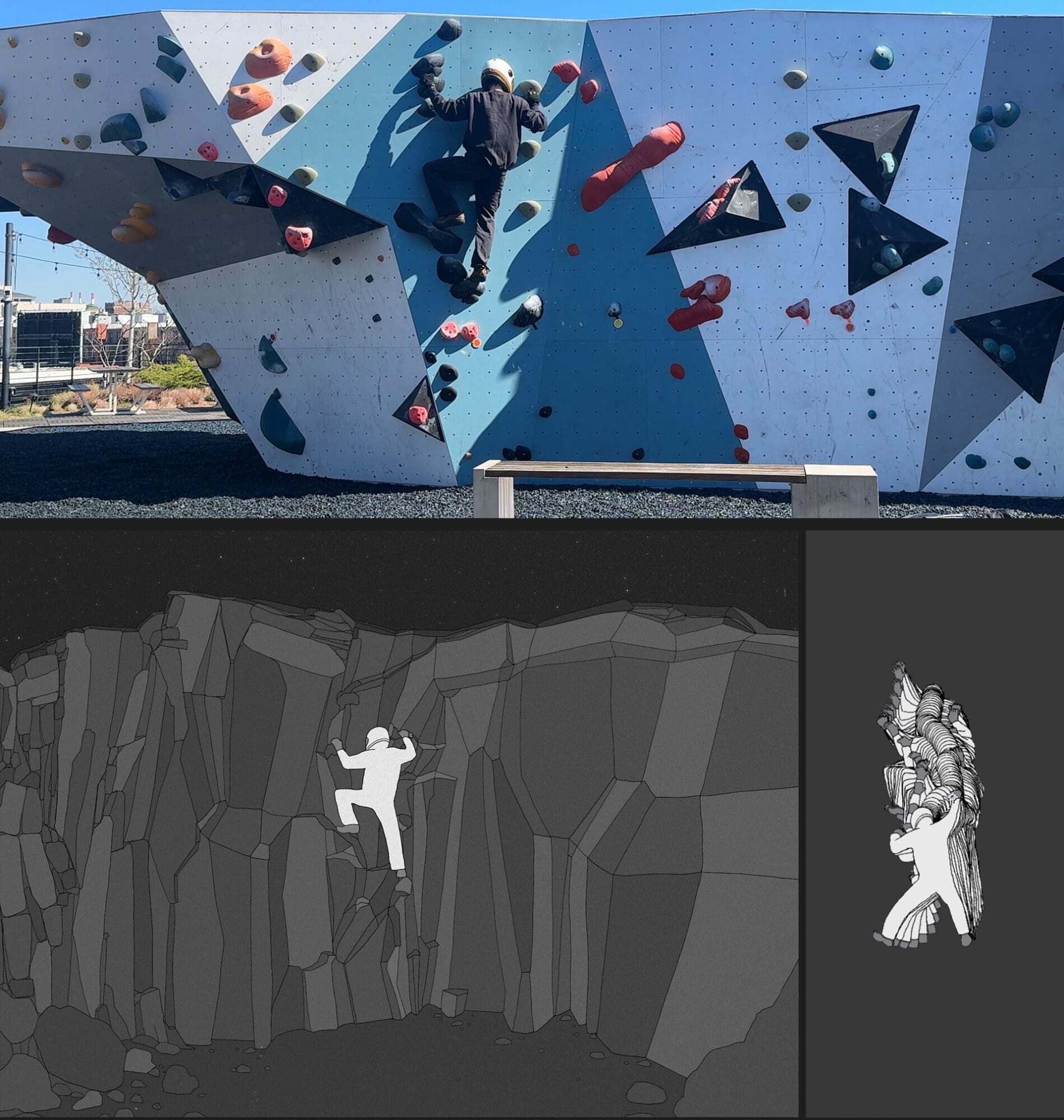
When the budget came in, we hit the ground running. For the first two months, the funds only allowed for me and one other animator: Devin Grover. Devin is an immense talent when it comes to character animation. Recognizing that strength, I had him prioritize character performance and dialogue moments, while I tackled the wider, pulled-back cel movement and background layouts.
By month three, we brought on Hoss Wheeler. Hoss is equally skilled with character work, but he also has a real knack for cel effects and prefers working in TVPaint. That allowed him to balance character animation with hand-drawn VFX like smoke and fire.
Once both of them were locked in, my sole responsibility shifted entirely to editing the film and drawing every single background environment. The daily rhythm was relentless: I’d wake up each morning, shoot video references of myself acting out the characters’ actions, send those clips over to Devin and Hoss, and then build out the background perspectives to scale while they dialed in the performance.
With a mostly locked camera and restrained animation, small changes in a drawing or its timing can carry a lot of weight. How did you decide when a scene needed movement and when to hold an image? Is there a sequence that best illustrates that approach?
It was tough because, given our timeline and budget, I had to edit mostly in total silence, basically zero temp sound and zero score. In our workflow, once the sound design is laid in, you can’t make major picture edits without triggering a massive overhaul on the audio side, which, budget-wise, was not possible. We had to protect ourselves from that, which meant I had to judge the rhythm purely on gut feeling and conceptual intent.
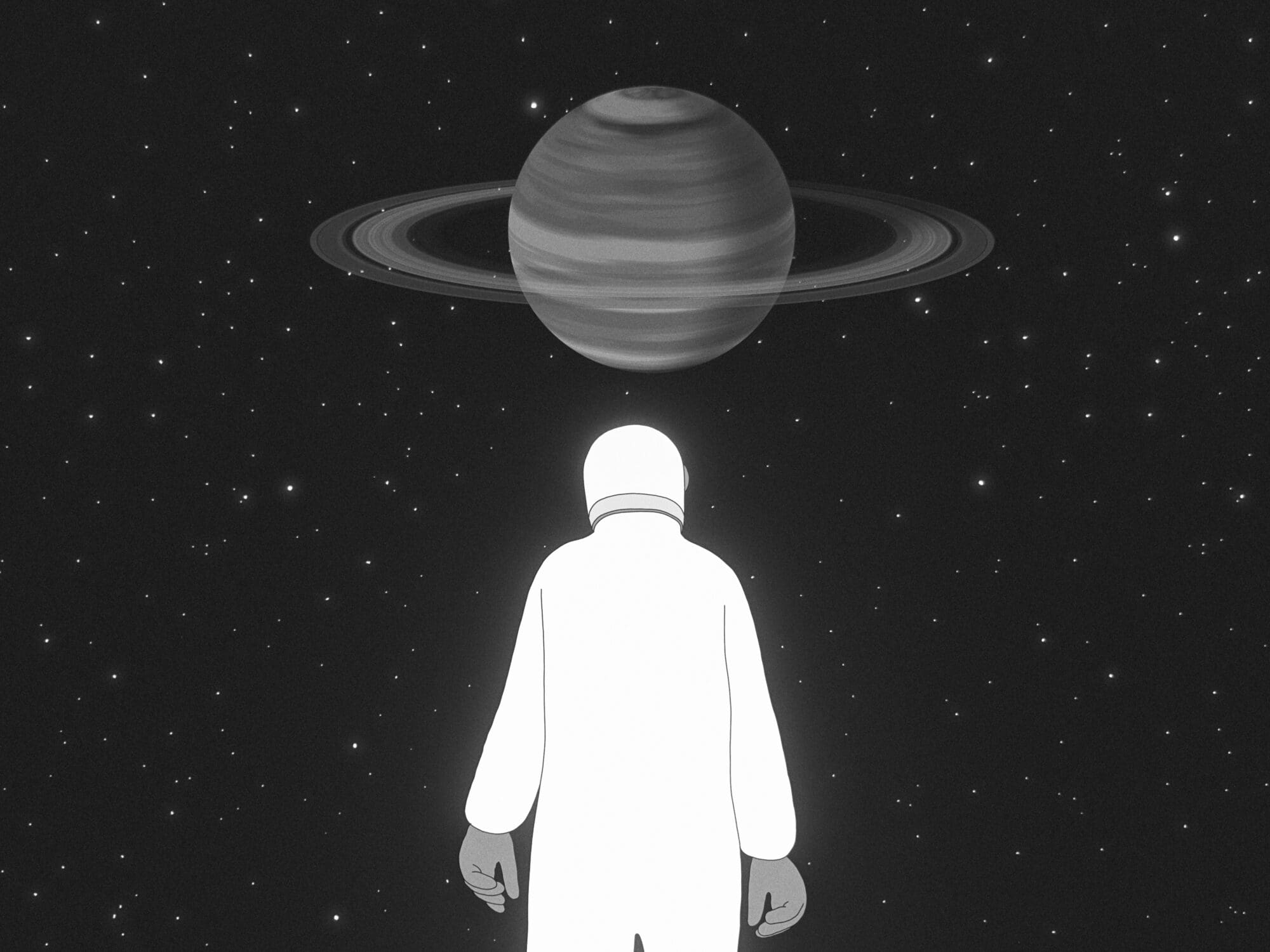
A solid example is the sequence where Cassius builds a model of the solar system out of rocks while looking out at Saturn from the ridge. It’s an essential beat for the film. It’s the moment a seed is planted that he might actually be capable of something, where his confidence quietly starts to take root.
When we cut to Saturn, he rises from out of frame below into a full standing posture, framed against the planet, and then we hold. I easily could have cut straight to a static shot of him already standing in front of Saturn and saved on production time. But it was crucial to watch him stand. He had to rise.
I knew asking the animator for that standing motion meant spending an extra hour or two on drawings, but the emotional value of that specific movement was worth the cost. Every single day was an exercise in that calculation: finding where movement truly mattered versus where a hold carried the weight, all while watching the clock tick…
This was your first film with dialogue, and you’ve described the voices as carrying emotions that the minimalist facial animation couldn’t. How did Morgan Spector’s and Lucy Liu’s performances shape the animation, and what did you learn about balancing vocal and visual performance?
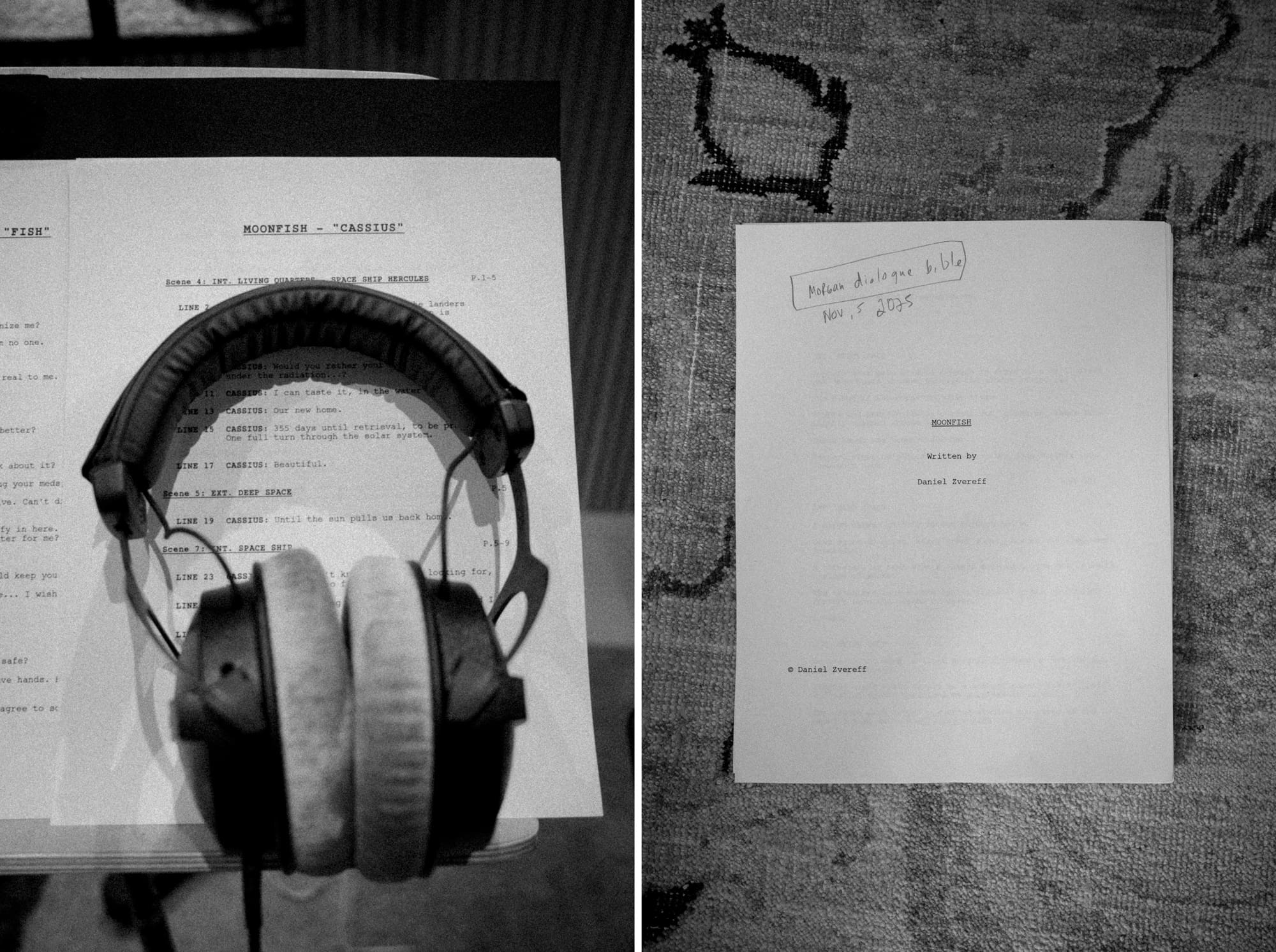
Morgan and Lucy are both stellar actors who brought an incredible depth of experience to the table. I had never directed actors before, but working with them unlocked a completely new kind of joy in the process. I loved the collaboration. I think it would be hard for me to write another story with no dialogue now… I just enjoy that part of the process so much.
Every time we got into the booth, they were so thoughtful and locked in on the underlying intent of each scene, constantly exploring what subtle layers they could bring to the characters. In voice acting, there’s a unique nuance to performance; the actor has to pull this off with just the sound of their voice. There’s no camera on their physical self. The voice carries the true emotional weight.
When you’re telling a story that touches on grief, class struggle, and displacement through animation, you have to handle that tone with a delicate touch.
Animation is often conditioned around broad, exaggerated physical expressiveness where characters are constantly animated to be loud and kinetic, even during intimate or tragic moments. But the script I wrote demanded the exact opposite: stillness and restraint. If audiences are only accustomed to hyper-expressive character movement, leaning into that quietness can feel jarring at first. I recognize that challenge, but I think it’s a necessary, healthy push for the medium.
How sustainable was this production process for the three of you in terms of pay, hours, and workload? What would you carry into another feature, and what would need to change?
That’s a tough question. From a technical standpoint, the pipeline I built is actually very clean, repeatable, and sustainable. If we had to run that exact structural engine again, we know how to do it efficiently.
For me personally, though, it was grueling. I was the one who couldn’t afford to take breaks; I had no real evenings, no weekends…just to hit my expectations of the film’s visual fidelity. You can sustain that sprint maybe ONCE when you’re willing your first feature into existence. I’m happy I did it.
I’m currently developing my next feature, The Blue Meridian, which is a mystery thriller based in the Pacific Northwest, where I grew up. For that film, the goal is to build an even richer, more immersive world. I’m excited to hopefully work with even more artists who are vastly more talented than I am… I think to me that’s the true joy in all of this: the collaboration.