.png)
‘We Wanted A More Indie Pipeline’: How Patience And New Tech Made Duncan Jones’s Rogue Trooper Possible
Stay informed with free updates
Sign up to get our news digest — delivered directly to your inbox twice a week.
At the Annecy Festival this week, while much of France was watching the national team play a World Cup match, hundreds of animation fans packed into Bonlieu Scène Nationale for one of the festival’s most anticipated screenings, Duncan Jones’ Rogue Trooper.
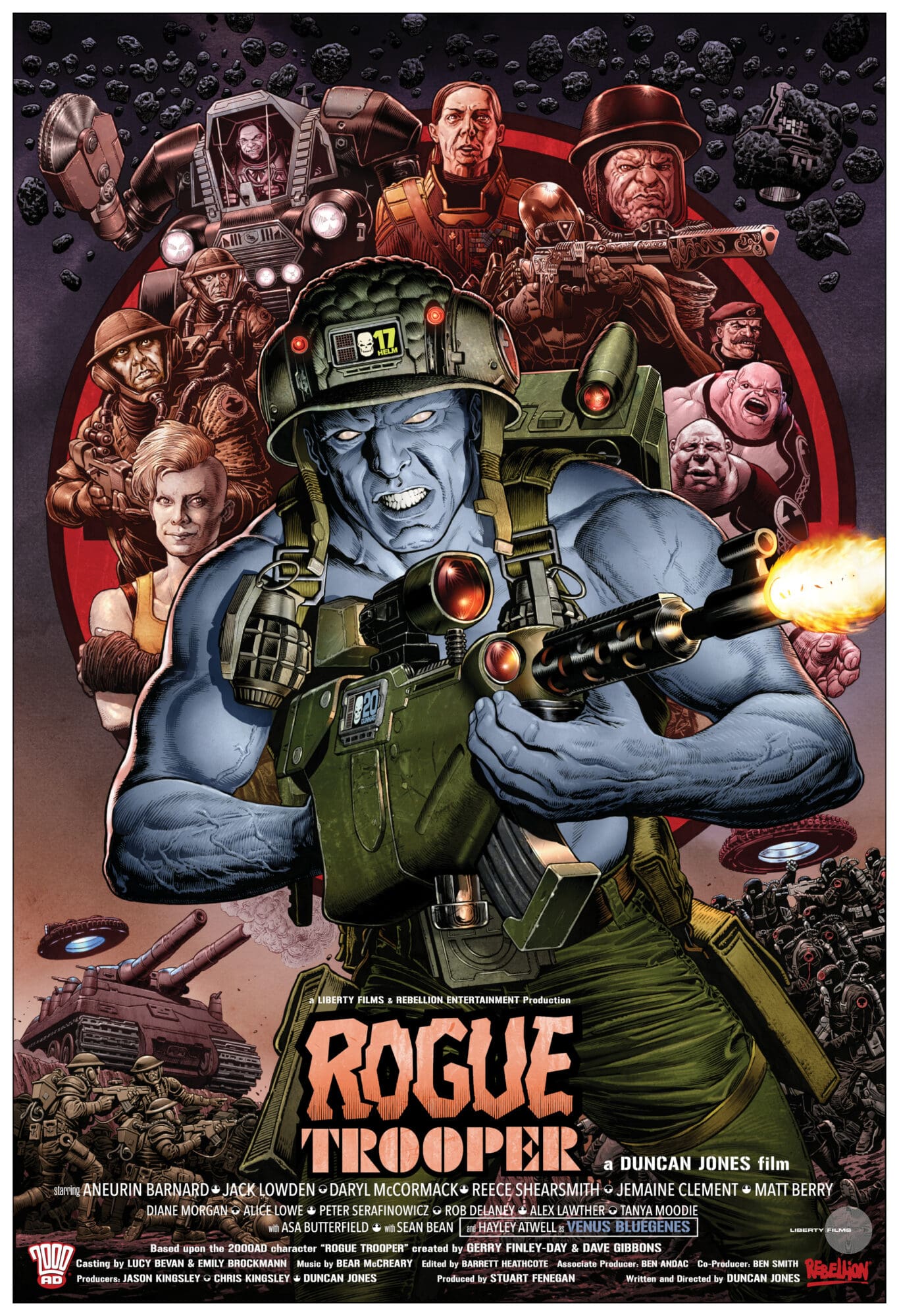
The audience responded warmly to a film that delivers exactly what longtime fans of 2000 AD would hope for: a fast, funny, visually distinctive sci-fi war adventure that treats Gerry Finley-Day and Dave Gibbons’ classic comic with obvious affection. Early reviews are already out, and they’re almost unanimously high on the indie feature that feels like something much larger.
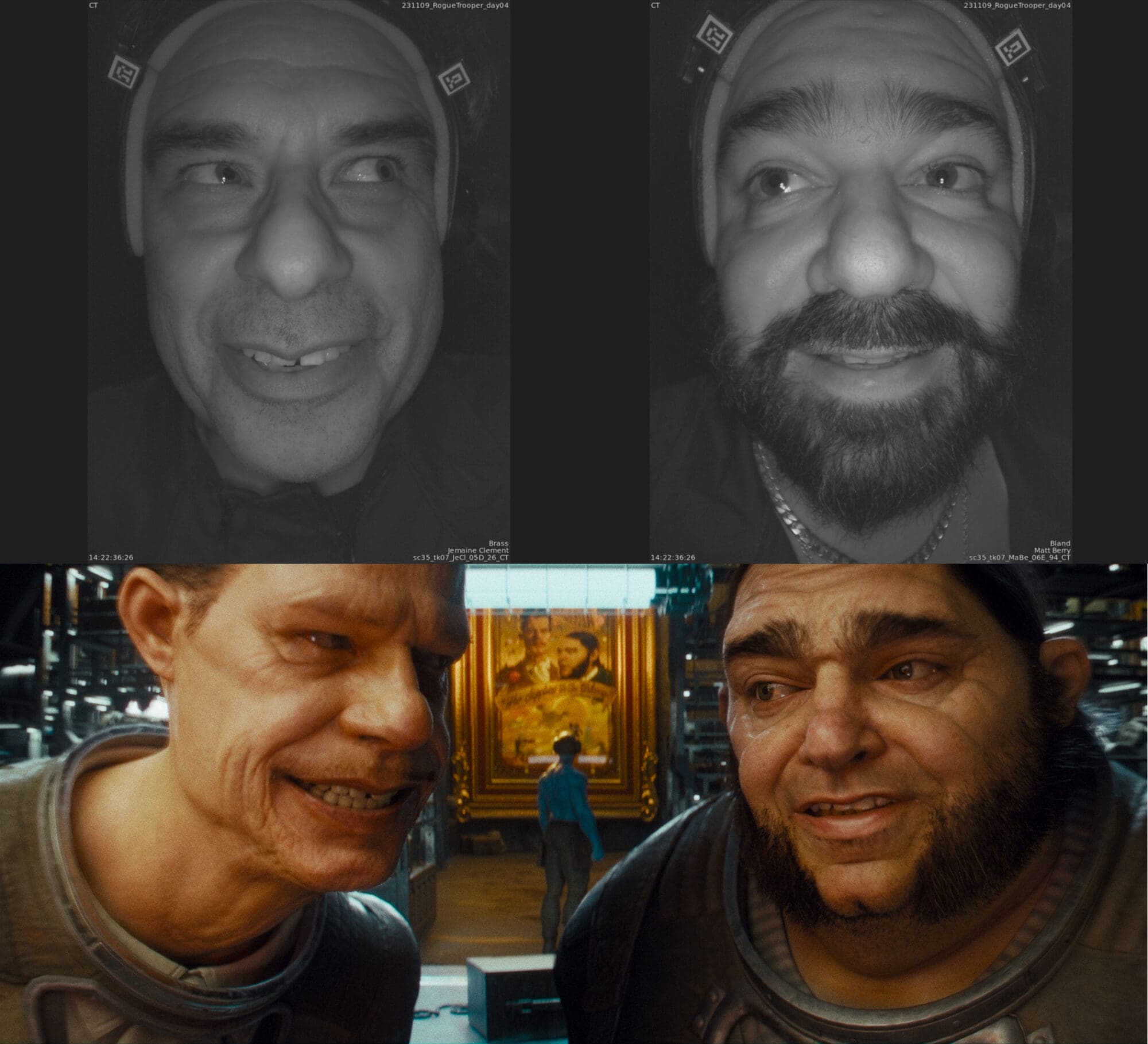
Behind that entertaining surface is another story. Rogue Trooper represents Jones’ first animated feature after years of trying to find the right project and the right technology. Built around motion-capture filming and an Unreal Engine 5-heavy pipeline developed with longtime producing partner Stuart Fenegan, the film also serves as an experiment to determine whether ambitious CG features can be made outside the traditional studio system without sacrificing creative flexibility. It’s also a hell of an endorsement for video game engines as a tool for high-end feature filmmaking.
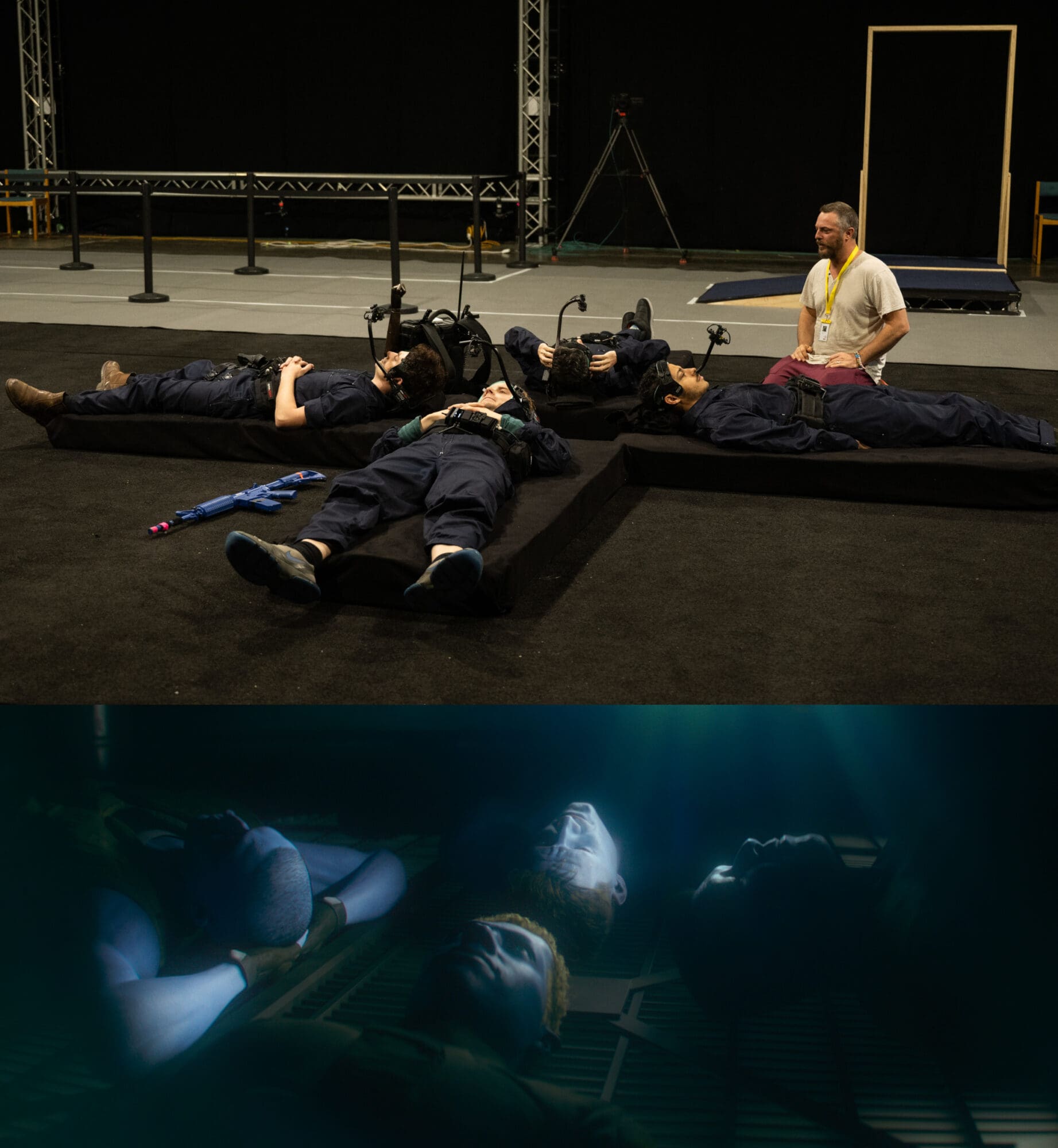
Speaking with Cartoon Brew ahead of the film’s Annecy premiere, Jones and Fenegan discussed the years-long journey to the screen, building an independent animation pipeline, and the responsibility of adapting one of Britain’s most beloved science fiction comics.
An Overdue First
Jones says animation has lingered in the back of his mind for much of his directing career.
“We’ve been putting our finger in the water a few times at trying to do animated projects,” he said. “Even before I started working with Stuart, I had done some very early motion capture tests to do a project as an animated movie.”
One of those experiments came while developing Mute. Before the film became a live-action Netflix production, Jones explored animating portions of it, but the technology simply wasn’t ready.
“It’s always been something that’s tucked away in the back of my mind,” he explained. “There was going to be an opportunity as the technology got to a point where we could do it on a budget.”
That tipping point arrived only recently, as production technology improved and the cost of creating convincing digital performances dropped, Jones felt audiences were finally ready to embrace a fully CG film that did not require the kind of budget associated with Avatar.
“I think we just about got there,” he said. “I’m excited to see what people think of it because it really is, it takes a big old swing.”
Fenegan said both he and Jones have made careers out of embracing unfamiliar territory.
“Duncan and I are really good at just jumping into a new challenge and being comfortable with that learning curve while we’re doing it,” he said. “That naivety is a really powerful weapon, and it served us well on Moon. And we’ve carried that all the way through our careers.”
Scaling Down
The idea behind Rogue Trooper grew directly out of Jones and Fenegan’s experience making Warcraft.
Watching enormous amounts of previs get discarded before visual effects work even began convinced them there had to be a more efficient approach.
“On Warcraft, we saw how much money was spent on previs, and you’re just throwing it away when we get into ILM and start working on the visual effects,” Fenegan said. “So, for many years, we’ve been talking about, is there a way to use the new tools and Unreal Engine and a kind of more indie pipeline to bring the price point down on a full CG animated movie?”
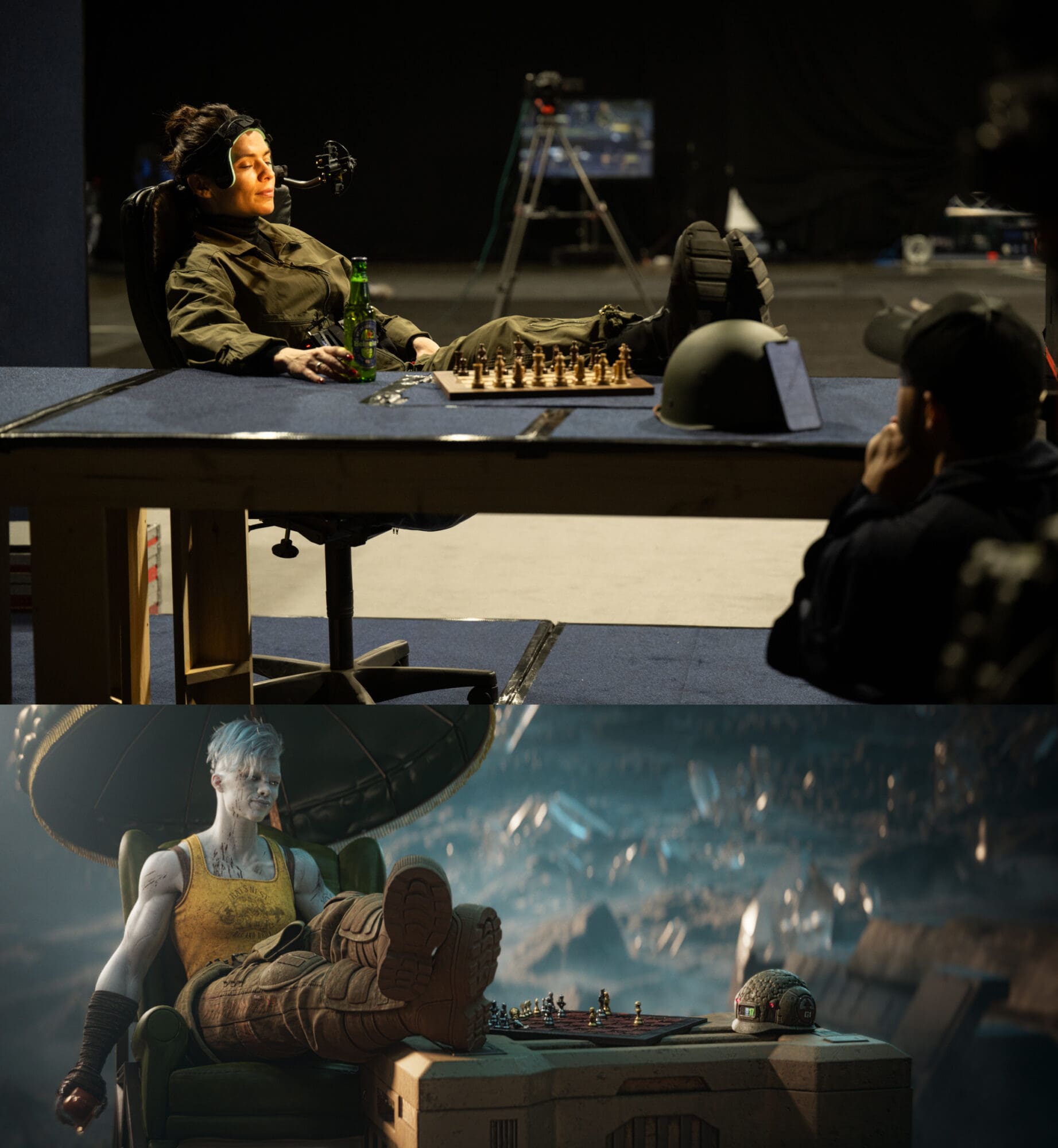
Jones has always preferred careful planning over excessive coverage, and that philosophy translated naturally into animation.
“I’ve always been pretty frugal as far as my shooting ratio goes and how we plan things out so that as much of what we actually put any effort into ends up on the screen,” he said.
Even with that discipline, the production retained one of animation’s biggest advantages. Late changes were still possible.
Flexibility
Fenegan recalled Jones shooting quick-reference videos on his iPhone during the final stages of post-production, sometimes using crew members as temporary performers. Those clips would be sent directly to the animation team, which could still create entirely new shots months after principal animation had begun.
“The pipeline that Stuart and the team came up with really did allow us to be flexible in that way,” Jones said. “Even though we kind of knew what we wanted, there was absolutely, right up until very late in the process, the opportunity to make those tweaks and add little bits if we needed them. If there was a gag we couldn’t resist, we would find a way to get it in there.”
For an independent production, that flexibility could prove just as valuable as any technical innovation.
Handled With Care
Adapting Rogue Trooper presented a different challenge.
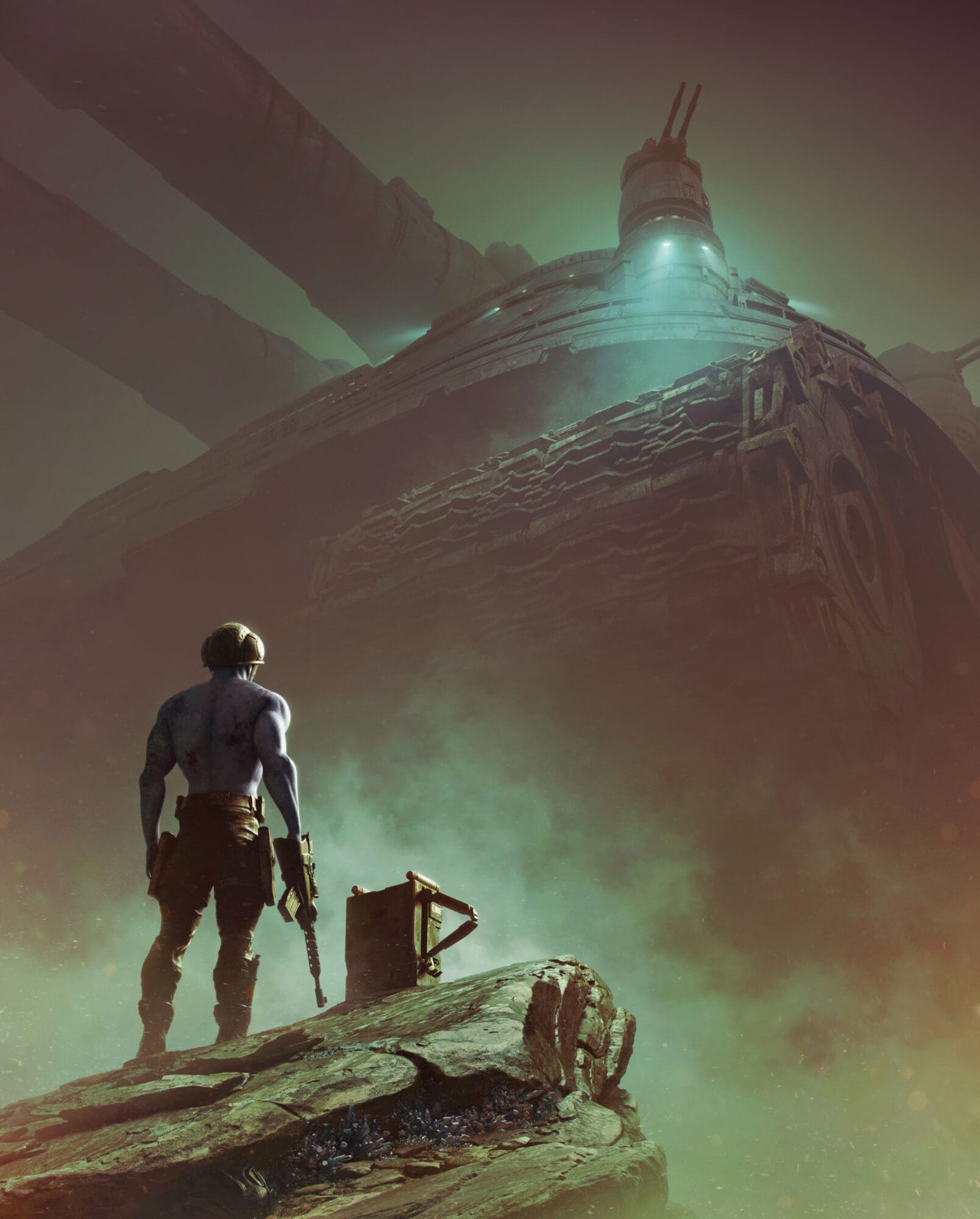
Unlike superheroes with decades of tightly controlled visual continuity, Rogue has been interpreted by numerous artists throughout the comic’s history. Rather than recreating a single definitive version, Jones saw that variety as an opportunity.
“The different interpretations of that character were vastly different over the years,” he said. “It really was about finding the things that most resonated with me as a fan of that material and sort of seeing, okay, what can we take from those great visual interpretations that would work in a three-dimensional space when you see it moving, when you see the characters trying to emote?”
One of the biggest questions involved Rogue’s eyes.
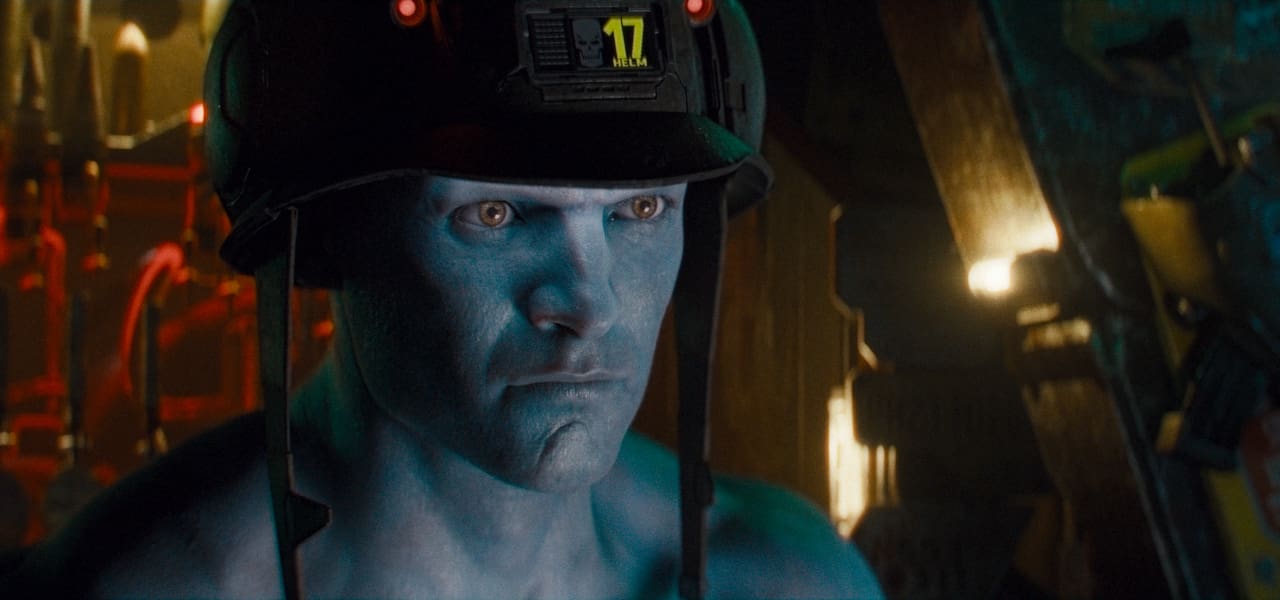
In many of the comics, the character’s eyes are rendered as solid white, an iconic visual shorthand, but one that becomes problematic when an audience needs to connect emotionally with a digital character over the course of a feature.
Jones found the solution in the comics themselves. Gibbons had previously introduced a transparent membrane that occasionally revealed Rogue’s human eyes beneath. The filmmakers adapted that idea for the movie.
“It was really important for us,” Jones said. “It’s hard to have your hero with no kind of humanity to use to emote and to be empathetic with.”
Collaboration
Throughout development, the filmmakers remained in close contact with 2000 AD, regularly discussing creative decisions with Rebellion as well as the comic’s creators.
Whenever Jones wanted to reinterpret part of the mythology, a conversation was only a phone call away.
“We worked so closely with 2000 AD itself,” he said. “We did this together, so that we were able to lean very much on their comic book artists for concepting things out and for trying things out. And also just having their blessing for interpreting the comic as we went along.”
Character designer Doriana Sacchetti became instrumental in translating those ideas into animation.
Working from comic references selected by Jones alongside photographs of the cast, she developed characters that retained recognizable elements of the performers while embracing the exaggerated aesthetic associated with 2000 AD.
Fenegan described the goal as capturing the publication’s distinctive visual language, including elongated facial proportions, wider eyes, and more stylized silhouettes.
Flip the Script
The filmmakers also made an unusual artistic decision. Rather than exaggerating the genetically engineered soldiers, the film made the blue-skinned GIs its most conventionally human characters. The civilians became caricatures.
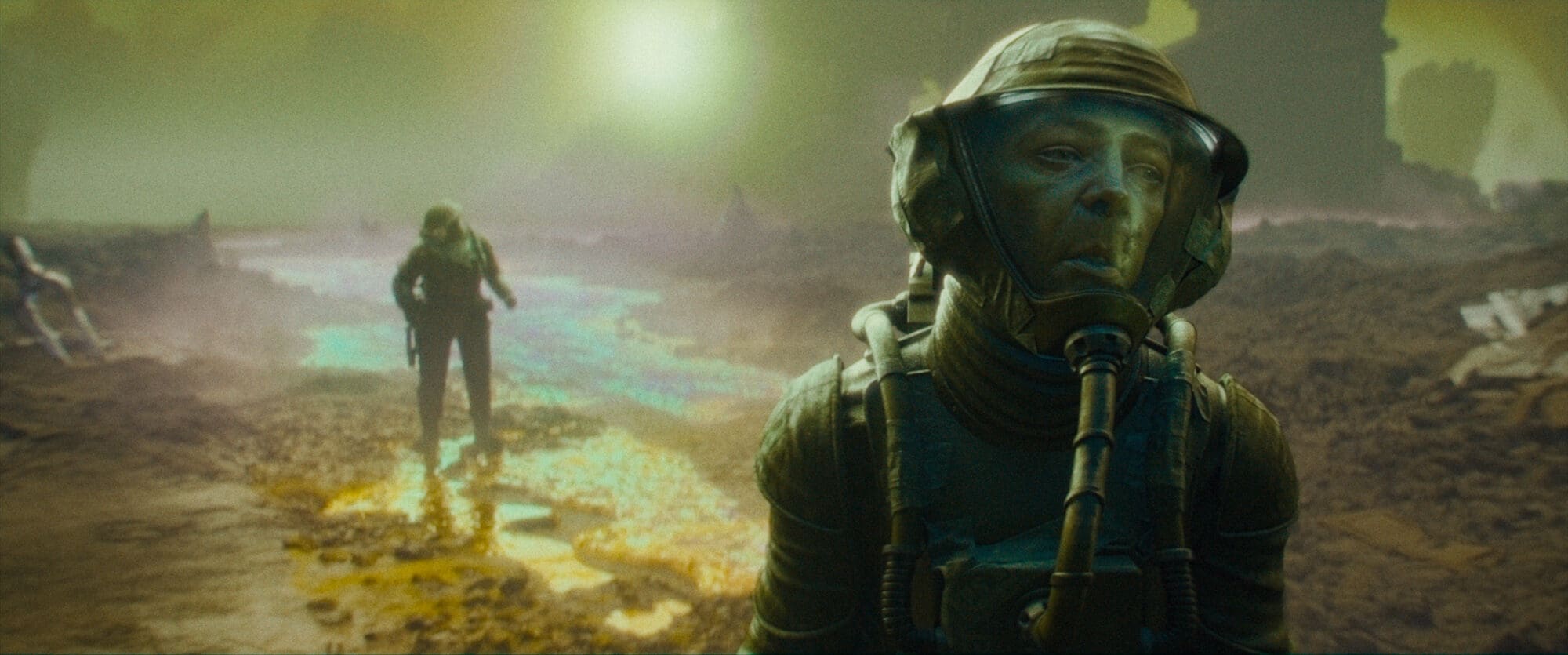
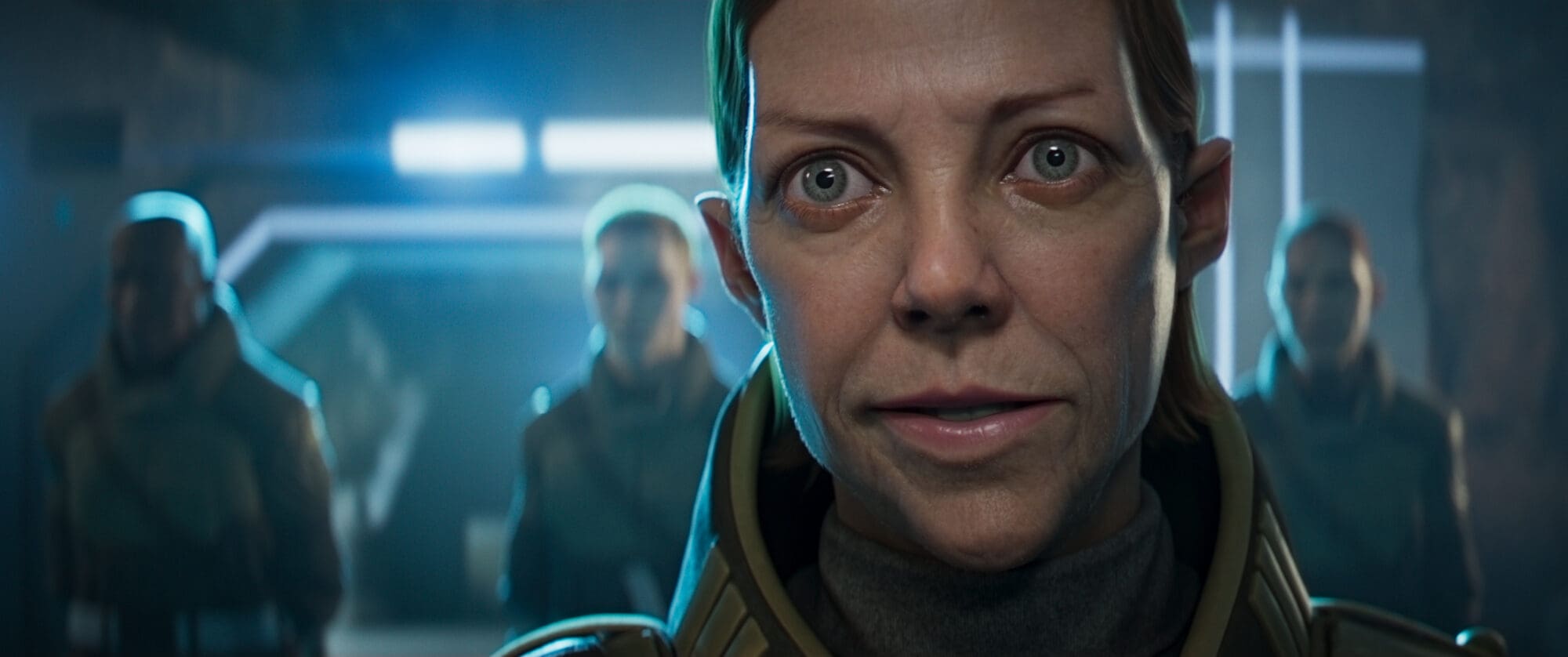
“We made a choice early on that the GIs, who are slightly more than human characters, these blue soldiers, would be the more human-looking characters,” Jones said. “And then we took a lot of human characters and pushed them more into, I guess you’d call it grotesques or slightly more distorted characters.”
The approach helped lean into the uncanny valley in a way that fits well alongside the film’s themes, while giving the world an aesthetic distinct from the increasingly photorealistic direction many CG features pursue.
That’s the Joke
While Rogue Trooper is rooted in science-fiction warfare, the film is often very funny, balancing large-scale action with a dry, unmistakably British sense of humor, though it can be hard to follow as an American at times.
“I’ve always tried to find excuses to allow my slightly off-kilter sense of humor to permeate things,” Jones said. “But it’s never really been that appropriate. It kind of comes out, but it bubbles out unintentionally.”
This time, he finally had the perfect material. Jones grew up reading 2000 AD, whose sharp political satire became one of the comic’s defining characteristics. That influence sits comfortably alongside another lifelong obsession.
“I loved the 2000 AD comic book, which always had a very acerbic kind of sense of humor to it, very political and funny, and it wore its values on its sleeve,” Jones said. “And then, Monty Python, all the other things that I grew up with, they all come out in Rogue Trooper, and I think in a very natural and organic way.”
Maintaining that tone also meant preserving the political edge of the original comic.
“I have to give all credit to 2000 AD and the fact that for, gosh, over 50 years they’ve been making satire,” Jones said. “That’s what they do. They make science fiction satire of the world as they see it.”
Rather than modernizing the story wholesale, the filmmakers focused on preserving its honesty while making subtle references to today’s political landscape.
“We really wanted to keep a certain honesty to what they had done, but at the same time, there were some easy places where we could reference what was going on today,” Jones said. “And again, always trying to keep it funny because it’s an action war movie, but it’s also a comedy.”
The Most Important Audience
Before premiering at Annecy, Jones had one screening he considered more important than any festival audience. He wanted Finley-Day and Gibbons to see it first.
“If you’re going to take someone else’s ideas, you want to look after them,” Jones said. “You want to treat them with respect and try to give them something that they’ll feel like was a respectful and loving tribute to that thing.”
According to Fenegan, both creators were deeply moved seeing characters they had created decades earlier come to life on screen.
“Just a couple of weeks ago, we showed the finished movie to Gerry and Dave, and they were both extremely moved by seeing this character that they created so many years ago moving and alive on the big screen,” Fenegan said. “That was a nice way to end that creative process before we embark on the premiere at Annecy.”
For Jones, that reaction represented the first major hurdle cleared.
Annecy provided the next test, and based on Monday night’s reception, Rogue Trooper cleared that one, too. The crowd laughed in the right places, leaned into the action, and rewarded the film with the kind of enthusiasm that filmmakers dream of when heading to the French festival with the world’s best animation audience.