
Scratch DJ Kid Koala Learned To Speak In Frames For His Animated Feature Debut ‘Space Cadet’
Stay informed with free updates
Sign up to get our news digest — delivered directly to your inbox twice a week.
Eric San found a guiding principle for his first animated feature while standing in front of a classroom. Before becoming the popular DJ, composer, and visual artist known as Kid Koala, San trained to be an elementary school teacher, making it all the way to a student teaching assignment. During that time, while watching a mentor quiet a room by lowering her voice, he learned something he would eventually bring to Space Cadet: Give the audience time and space to lean in and find focus.
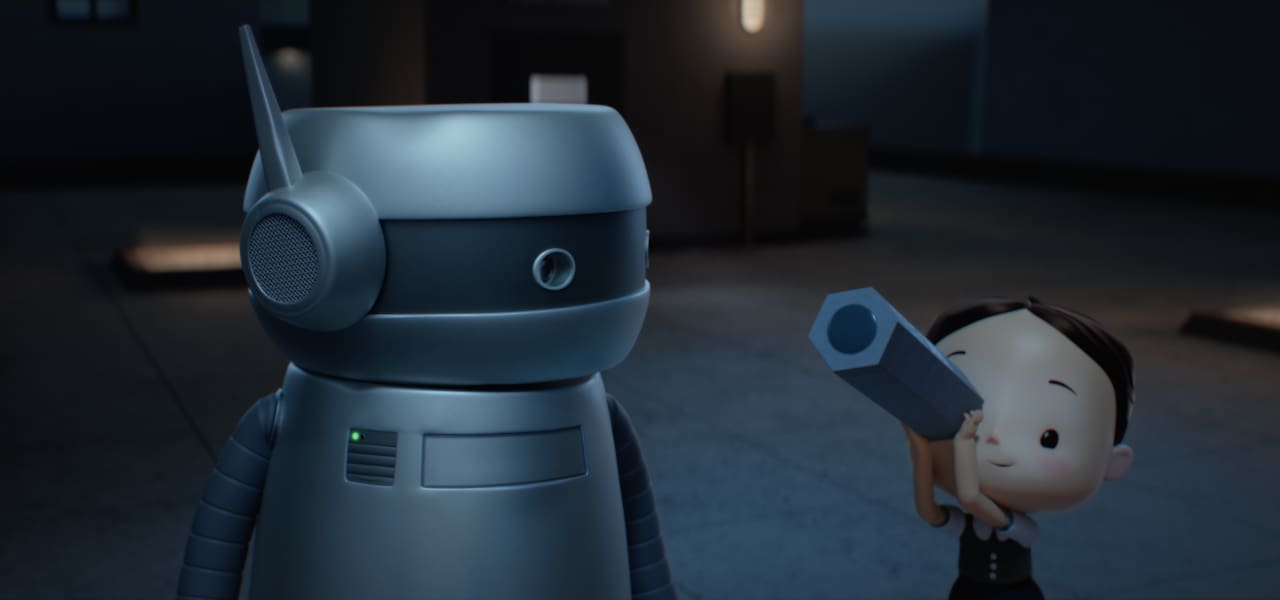
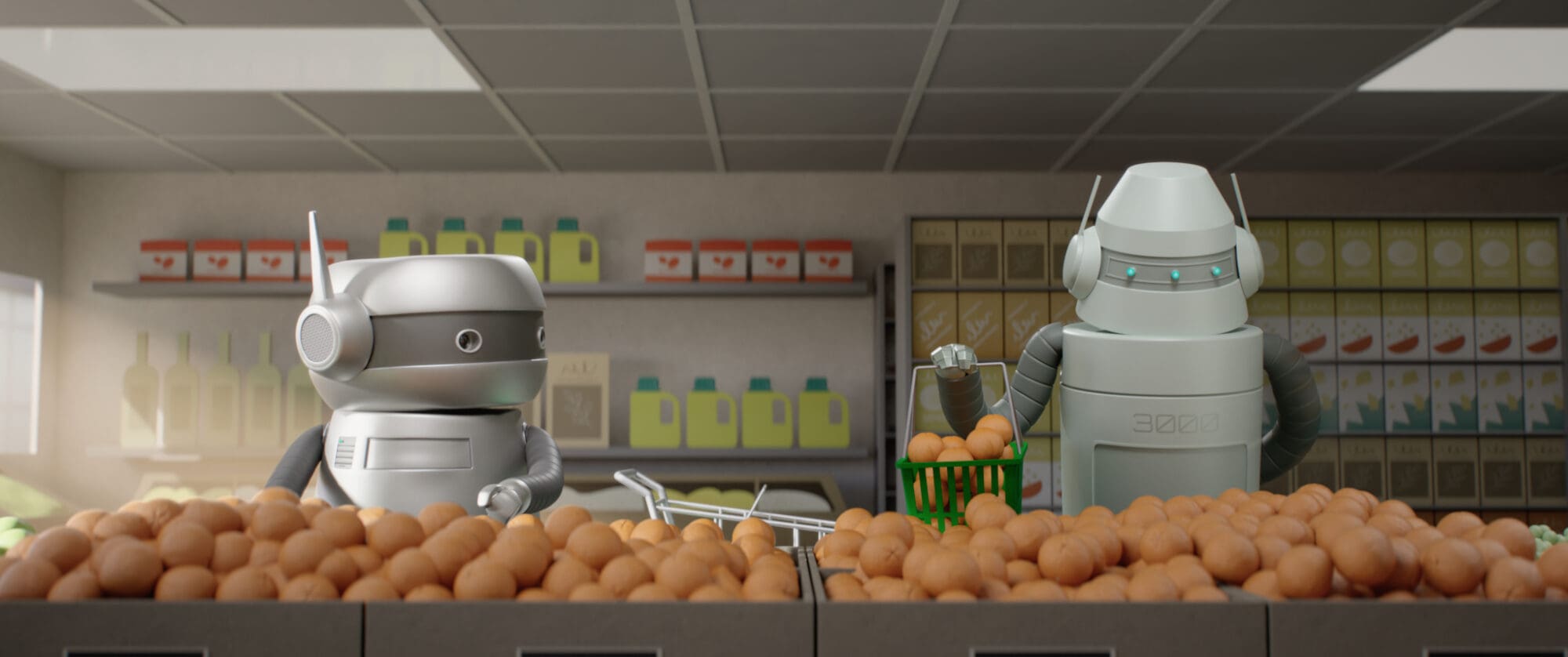
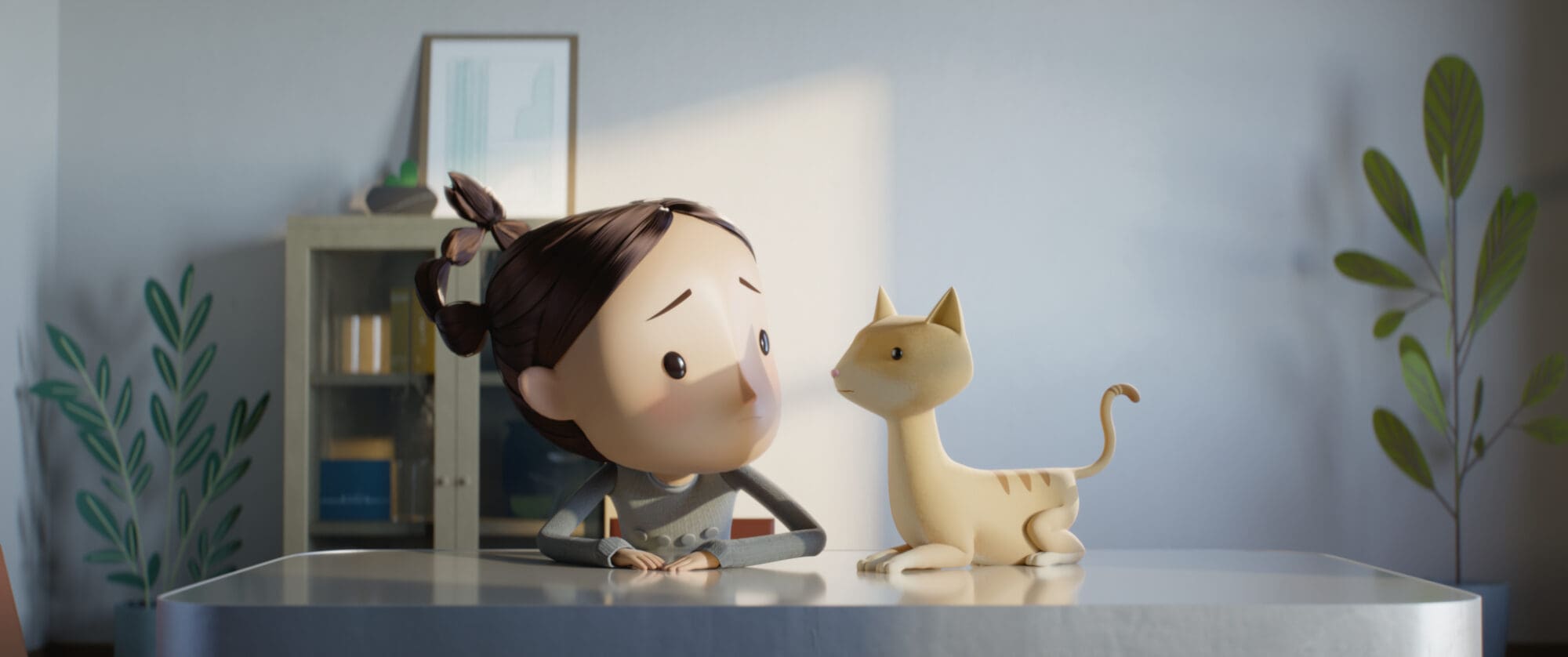
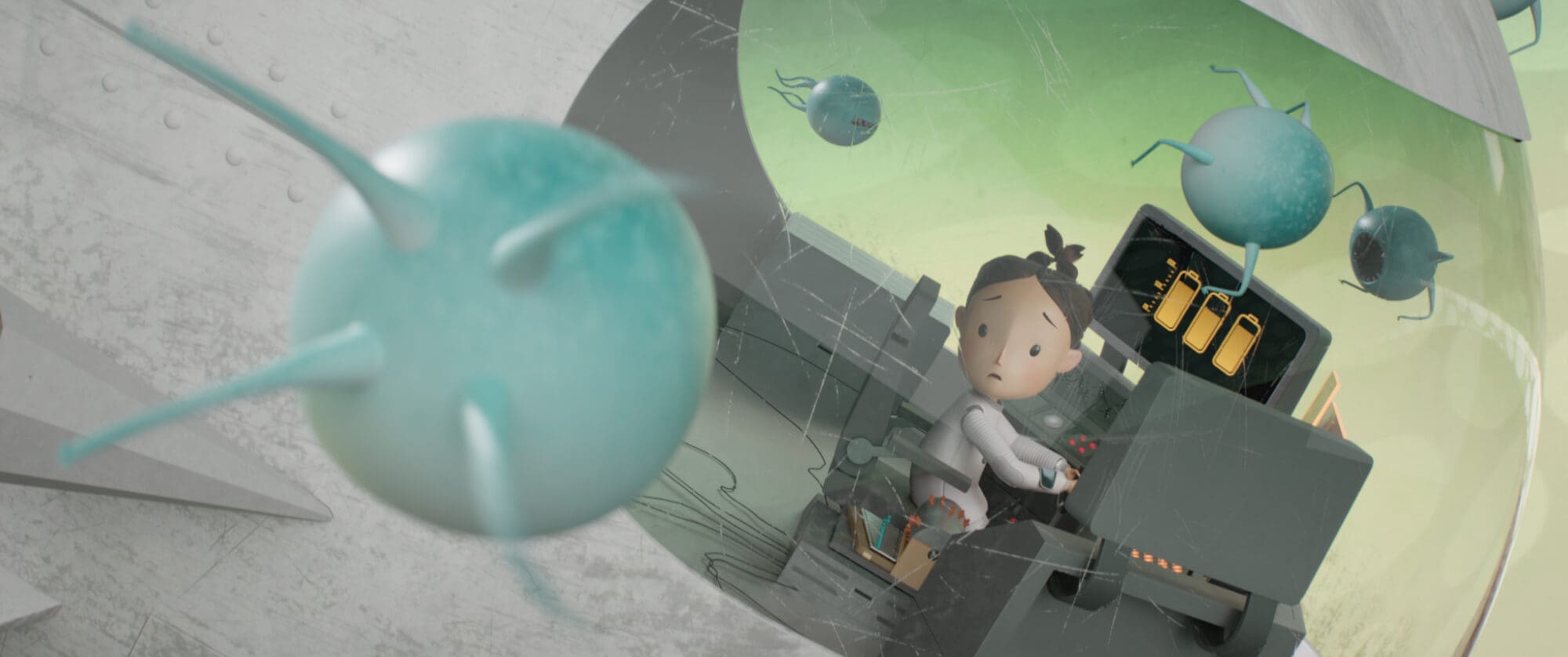
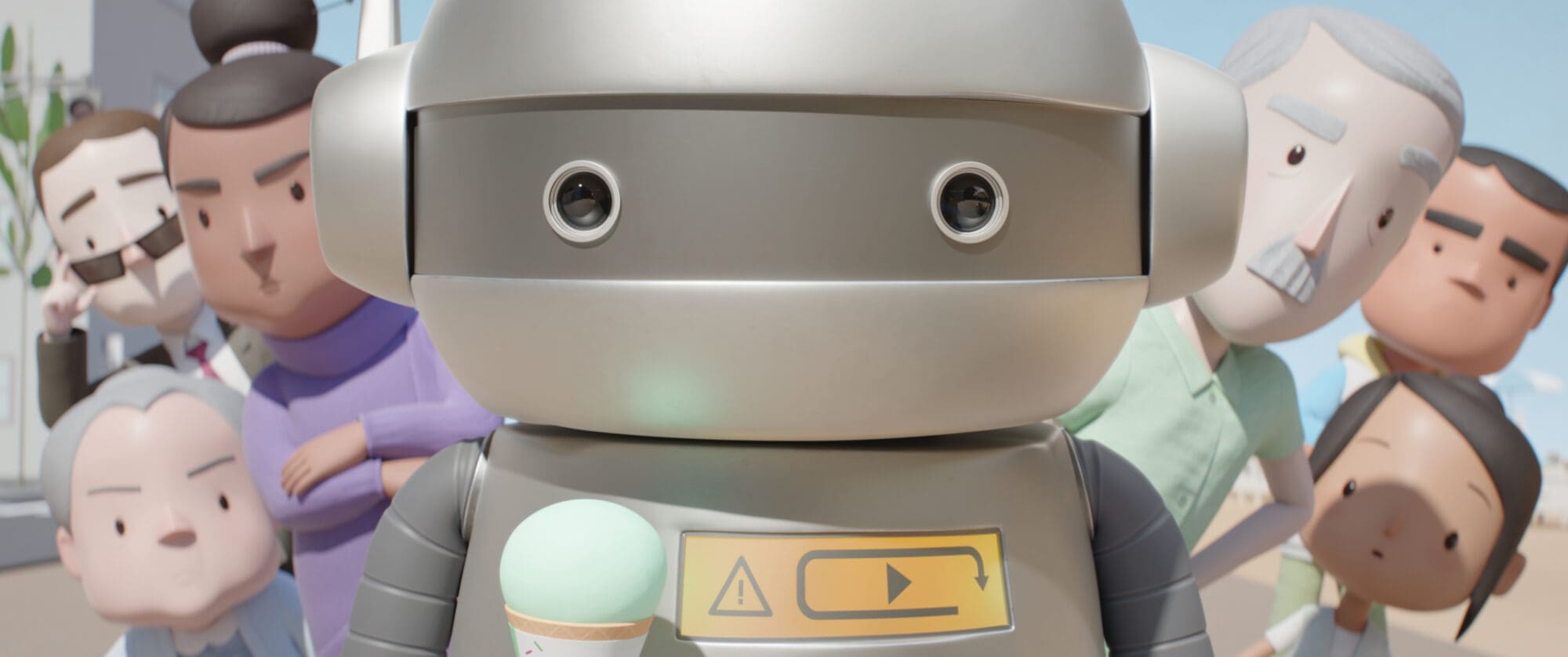
Opening in select U.S. theaters November 13 via indie distributor Viva Kids, the dialogue-free Canadian feature follows Celeste, a young astronaut embarking on her first solo mission, and Robot, the guardian who raised her. Their time apart sends both into unfamiliar and uncomfortable territory, with only their shared memories connecting them across the vast distance.
Adapted from San’s 2011 graphic novel, the film uses tactile CG animation and an original score, with vocal contributions from artists including Karen O, Emilíana Torrini, and Martha Wainwright, to draw its audience into a cozy kind of viewing experience that is sometimes hard to find in an era of high-energy reels and shorts meant to deliver the quickest dopamine hit possible to impressionable viewers.
Produced by Ginette Petit at Outsiders Films, with a screenplay by Mylène Chollet, whom San speaks glowingly of, Space Cadet evolved from live DJing performances that combined music from the book’s companion soundtrack with short animated loops. Production designer Lillian Chan and art director Corinne Merrell helped translate San’s drawings into a three-dimensional world without losing the original’s handmade sensibility.
Since its world premiere in Berlin’s Generation section in 2025, the film has screened at Annecy and Toronto, some of the world’s highest-profile showcases.
Ahead of the film’s domestic release, Cartoon Brew spoke with San about becoming an animation director, finding a shared language with his crew, and giving a robot a human touch through music and movement. We talked for quite a while, so this interview has been edited and condensed for length and clarity.
Cartoon Brew: When did you realize your graphic novel could become a feature?
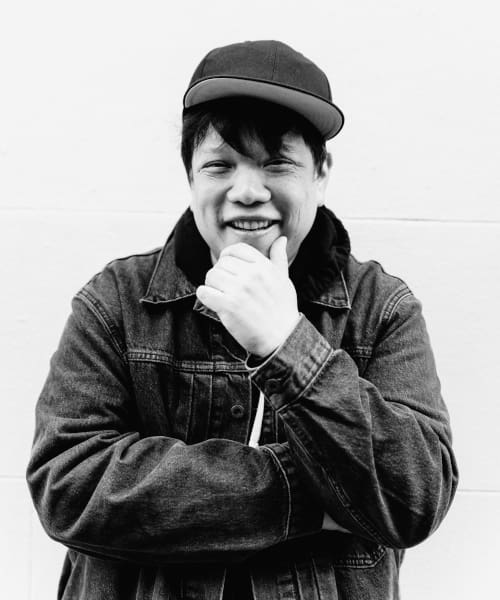
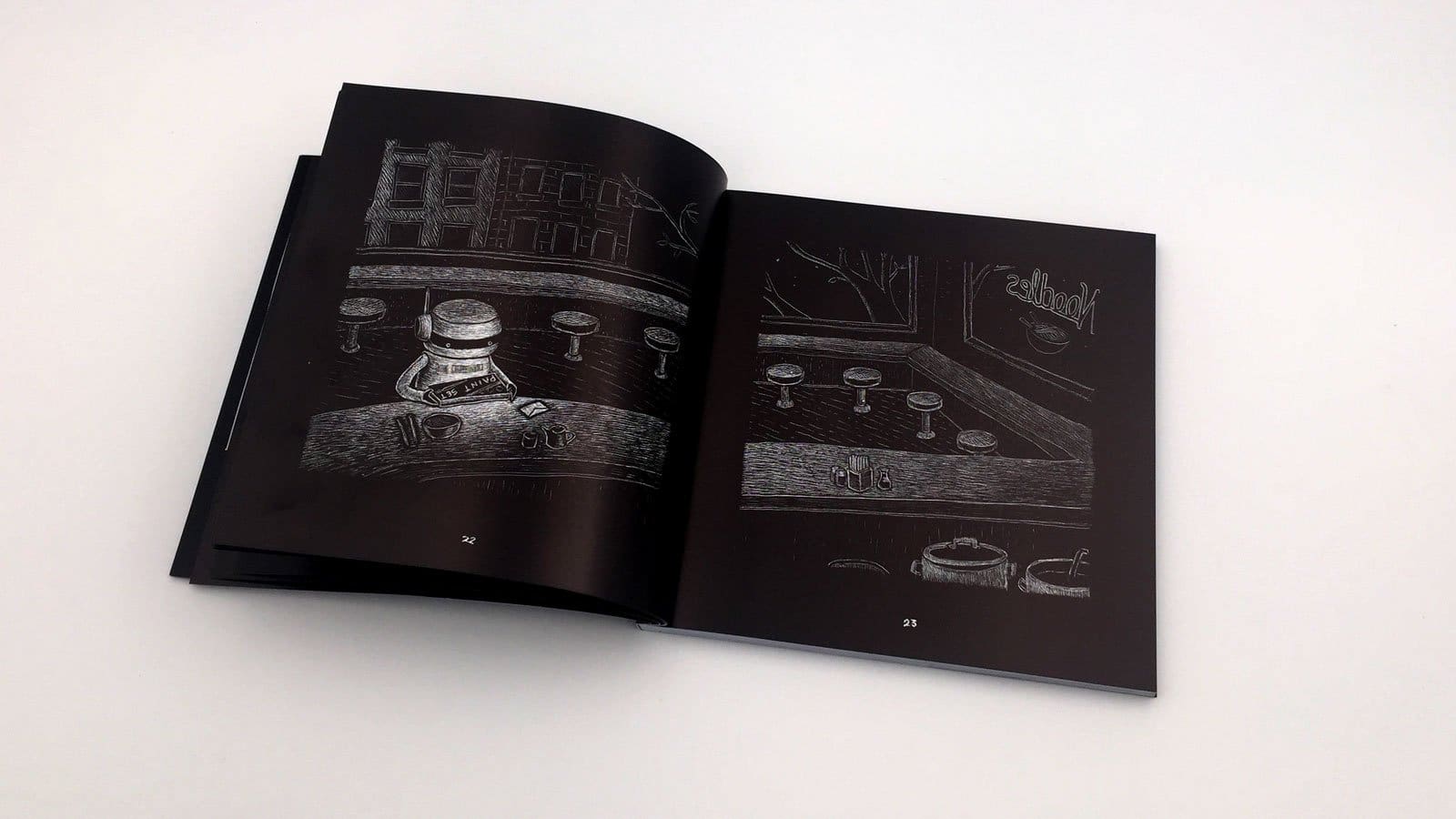
Kid Koala: After the graphic novel was published, I did a handful of shows that were live presentations of some of the themes. I would be up there with my piano and turntables. The original graphic novel had a companion CD with some of the pages scored, so in a way it was a template screenplay for a film that wasn’t made.
My plan was just to have the graphic novel, the soundtrack, and the tour, then move on with my life. But Ginette Petit came to one of the shows. Prior to that, she hadn’t been aware of my work or the book.
Lillian Chan, our head of story and production designer, had done a few cycle animations that ran on screens while I played. That was the first time we saw the characters move to the music. I think when Ginette saw and heard what was happening, the light bulb went off. Two weeks later, we got a call from Outsiders Films about optioning it. That was in 2011.
You weren’t originally expecting to direct. How much involvement did you think you would have?
I’m in the music industry, so I didn’t know anything about film budgets or the size of teams. I’d done animated videos with friends and video games that included animation, but I didn’t really know what went into a feature.
When I signed the option, I thought, “Maybe they’ll call me in a few years and ask me to write a couple of musical numbers.” I didn’t even think I was going to direct. I thought it would probably turn into some other thing with a lot of fast talking and fart jokes.
But Ginette was really moved by the graphic novel and the live show. She originally asked whether we could do it in the scratchboard style I’d illustrated the book with. We did some tests, but it was boiling a lot and became fatiguing to animate and watch. We needed a different method to keep the story intact.
She was also the one who said it should be dialogue-free, like the book. I didn’t expect that at all. She really spearheaded keeping that tone intact, then brought on Mylène, who expanded the universe to fill a feature.
How did music inform the screenplay and eventually the score?
One of Mylène’s ideas was to pick a song and put it on loop while writing each chapter. Usually it was a classic American songbook song, like “Moon River” or “They Can’t Take That Away from Me,” these nostalgic tunes already imbued with feeling.
She picked songs to be the heart of each chapter. It wasn’t going to be a music video for that song; it was guiding her writing.
When it came time to score the film, I got to do my own retro-future versions of these songs and invite some of my favorite vocalists to contribute interpretations. The rest of the music was either templated from the original soundtrack that came with the graphic novel or expanded with different instrumentation and orchestrations, whatever served the scene.
The music was definitely my wheelhouse. Directing animation was the new part, and that was a steep learning curve. Once I figured out the language and terminology, it became pretty fluid. They put together a team already interested in making this kind of nuanced film.
What did learning that language involve? Were you initially giving direction in musical terms?
They were all very patient because they realized I didn’t speak animation in the same way. Maybe three weeks into the process, I realized, “Oh, I need to speak in frames.”
At first I was saying, “When he’s walking, I want his shoulder to hit on the snare drums,” or “on the one,” just music talk. They would say, “You want to hold for a comic beat? Sixteen frames?” At first I’d say, “I guess. Let’s see it.” They’d show me, and I started learning.
With scratch DJing, I’m already dealing with tiny slices of sound, a hi-hat from here, all that attention to really short details. I had to transfer that to the visual world. Once that language was clearer in my mind, it was a lot of fun.
Production began during the pandemic. How did you work with the animation team?
All my live touring was canceled because venues weren’t open, so timing-wise it worked okay. During quarantine, we would do notes over Zoom, or I’d do draw-overs on my tablet and sync music to explain the pacing of scenes.
Maybe twice a month, we would go to the studio. Everyone worked from their own computer stations at home, linked to the main server. When we were starting a new group of scenes, I’d go in and help act out moments, answer questions, and get everybody on the vibe.
My job was also to bring snacks. Montreal’s a food town, and I know a lot of chefs from being a DJ.
They put together an amazing squad. The people they approached were interested in something a little more nuanced, a little less squash and stretch, more emotional and tender. I think there were only 16 animators who did the whole film.
The CG has a tactile quality. How did you arrive at that look?
I have to give it up to our design leads. Lillian Chan and I met at the National Film Board. I’d done music for her short film many years ago, and we’ve been friends since. She’s been a mentor and my spiritual guide in animation. When I signed the option, bringing Lillian onto the team was part of my contract.
She’s a hand-drawn animator by trade. Anytime we get together and draw, it could be my character and she’ll do it better. She can draw my robot cuter and better than I can. I deferred to Lillian for the character designs.
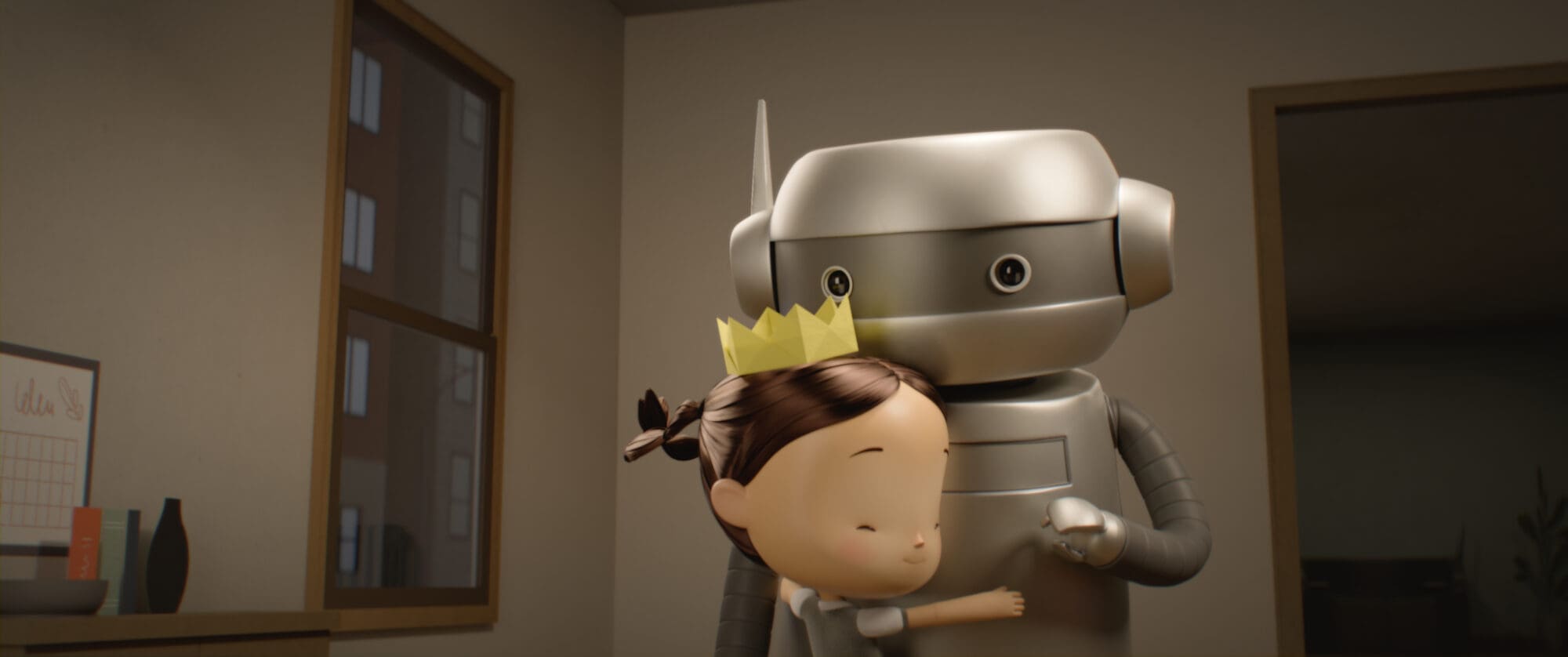
For the sets, we enlisted Corinne Merrell, who did the paper sets for The Little Prince and works on my live productions, including The Storyville Mosquito. Those miniature sets use wood and paint, very tactile materials. Her job was to maintain that paper, handmade look in CG.
Both had a clear idea of how to make space in the frame. We wanted this tender, timeless story to work on the big screen without filling it with information. Leave enough room, musically and visually, for people to bring their own hearts and memories.
Did that idea of leaving space also shape how much music you used?
If it ended up in the score or on the screen, it was a choice. Leaving that space was important because I felt it was more resonant.
I studied to be an elementary school teacher before signing my first record contract. Once, the day after Halloween, I had a first-grade class bouncing off the walls. I was trying to raise my voice and turn the lights on and off. My mentor teacher said, “I’ll show you how to do it.” She went to the story mat and spoke quietly. The class settled down. They were telling the louder kids, “Be quiet, I can’t hear her.”
By being quieter, she made them lean in. I took that to heart with this movie. We’re a small crew, but these elements can have power and resonance.
I’m a scratch DJ. I like to be maximal and add too many notes. Even with the music, I was trying to find the restraint so it worked best with the visuals. But I always want something a little off-kilter. You might hear an upright bass in the score, but if you listen closely, every note was scratched on a turntable.
You also used turntables to give Robot something beyond mechanical sound effects. How did that work?
I have two tracks of just turntables under his movements. Some of it is barely audible. The sound design team would have the cogs and regular robot sounds, then I’d put in a tone I was bending by hand on a turntable to match his head moving.
It gave him a humanity or quirkiness that wasn’t purely mechanical. The first time I heard the sound design, he was coming off as very robotic, even though he was cute. I thought, “What can we add?”
It was a stealth little spice layer. Even with headphones, you might not register it the first time, but if we took it out, you would notice. During exaggerated comedic parts, I might bend it wildly, but often it was just part of his voice. Since there were no words, how he moved was going to make it happen.
What did making the film teach you that you could take back to your other work?
As a DJ, you have your finger on the pulse of a room. With this film, it wasn’t done in one take. Animators take a two-second shot, you see it two weeks later, and this mosaic comes together over time.
What I loved was that somebody would spend a week on one scene and imbue it with humanity, feeling, nuance, and their own story that wasn’t in the direction notes.
There’s a scene where Celeste is waiting in a hospital for news from the doctor. The direction was that she was anxious. The animation team added this tiny thing: Her hand is on her knee, and her knee is jumping a bit. It was so subtle I didn’t clock it the first time. Those little things bring you into the moment.
This was originally a story I wrote, inspired by the passing of my grandmother and the arrival of my first daughter. By the time the film was finished, I could feel everybody’s energy, family, and memories in it. Every microscopic choice, from lighting to texture to sound, was made with such care. The crew did such a beautiful job.
