.png)
‘Spacetime Chronicles’: A Cat Named Freud, A Man In Limbo, And A Stop-Motion World Made Of Paper
Stay informed with free updates
Sign up to get our news digest — delivered directly to your inbox twice a week.
Italian director Stefano Bertelli’s Spacetime Chronicles is a handcrafted stop-motion feature that turns inward, using paper animation to map the unstable terrain of memory and identity.
Produced independently over several months and built entirely from physical materials, the film is the result of Bertelli’s long evolution from music video director to feature storyteller, extending the visual language he has refined for over a decade.
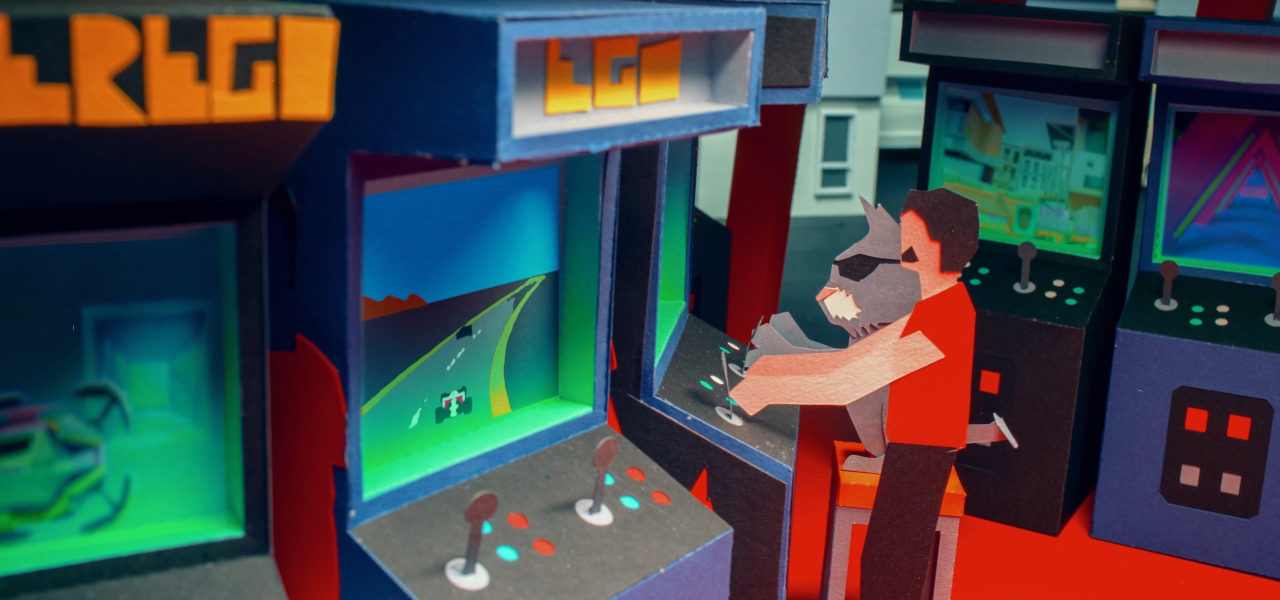
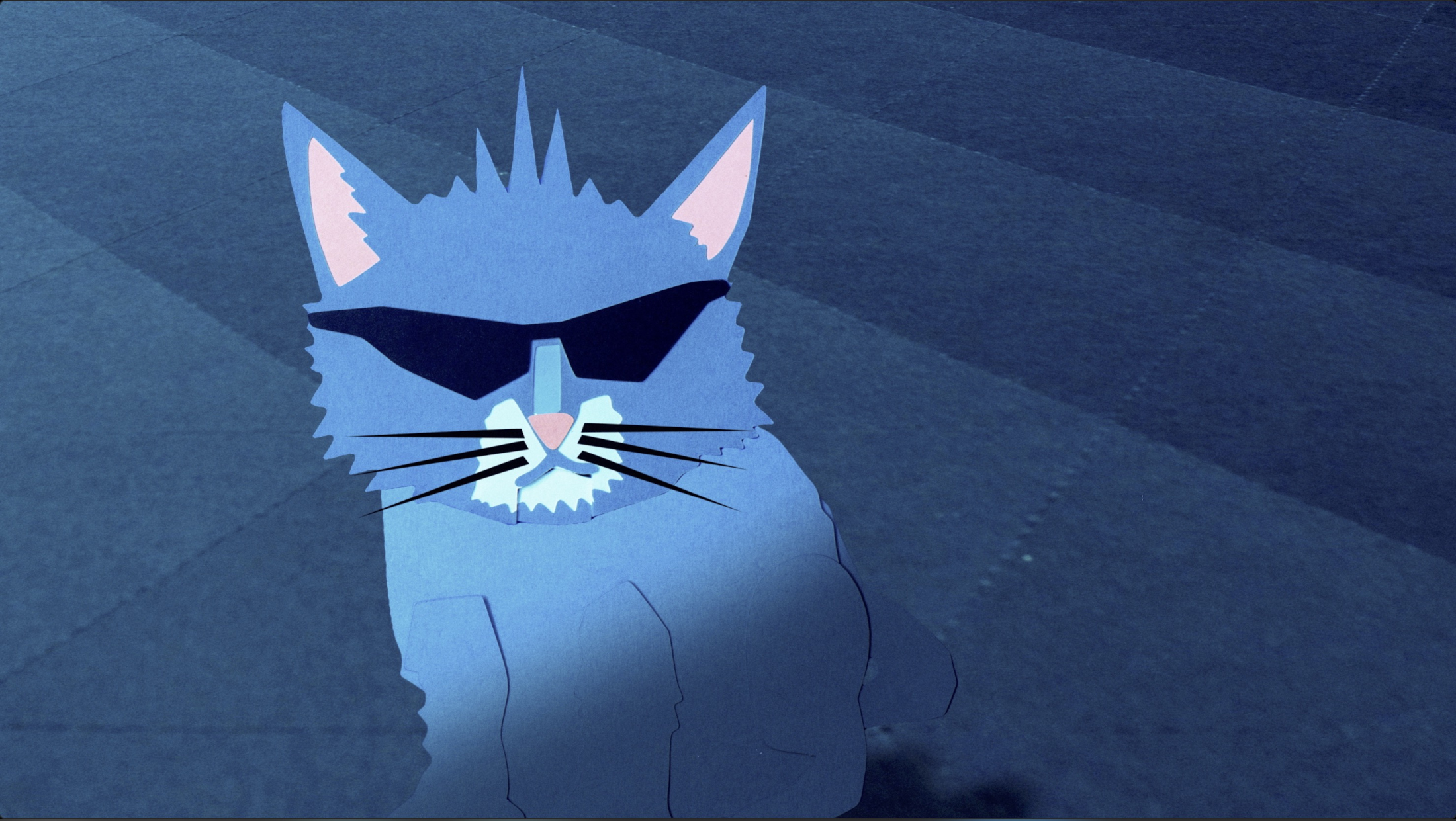
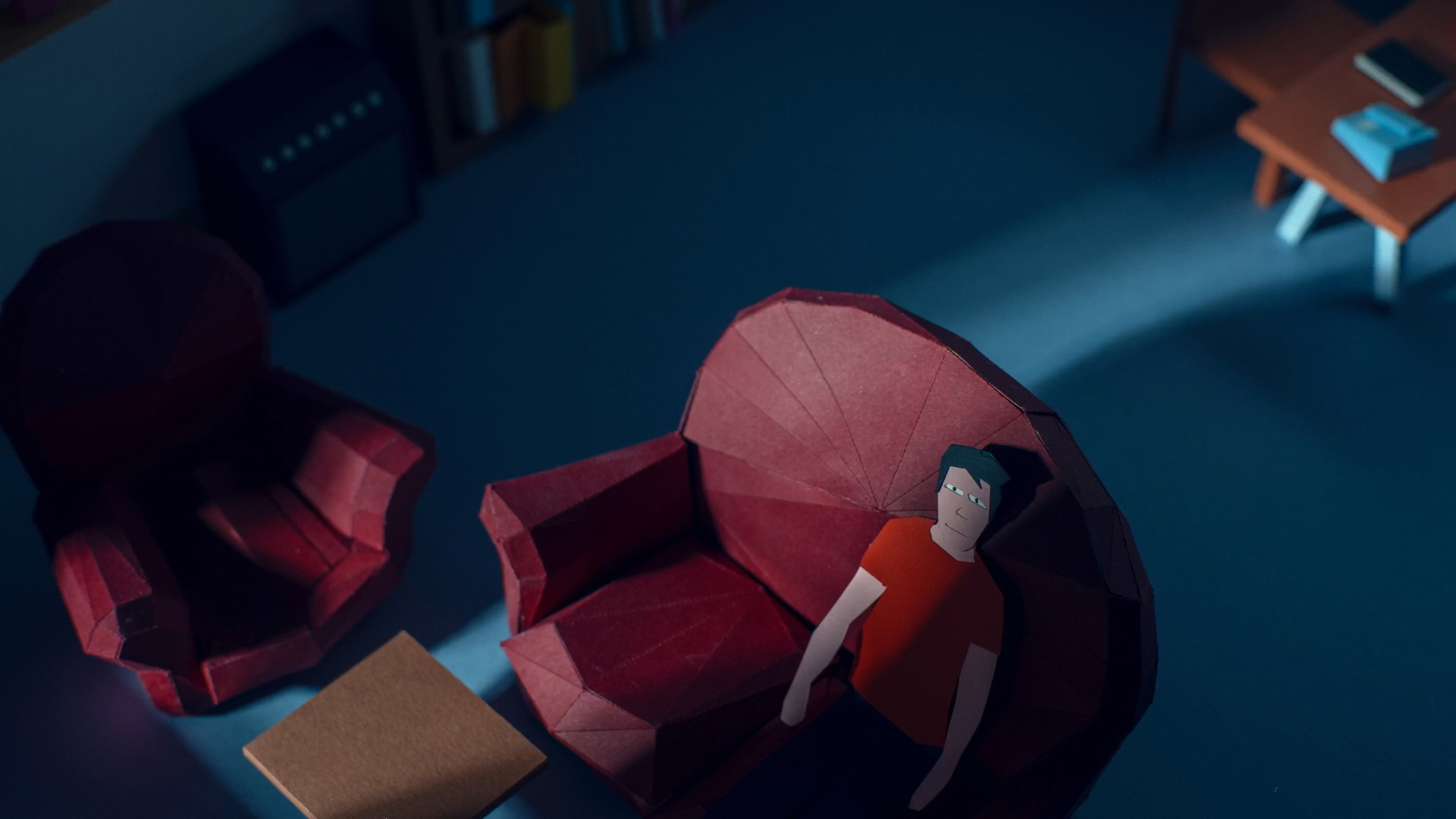
Premiering in official competition at Anima Brussels and selected for festivals including BAFICI, and Morbido, the film follows Fred, a man drifting through a liminal space between waking life and dreams. His journey unfolds as a series of fragmented episodes, from school corridors and missed encounters to abstract landscapes, all loosely connected by the presence of the aptly named Freud, a cat who functions as both guide and embodiment of his unconscious.
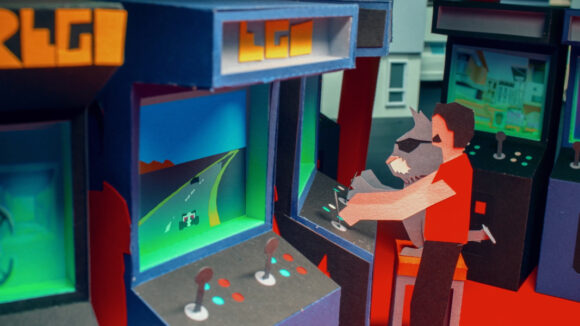
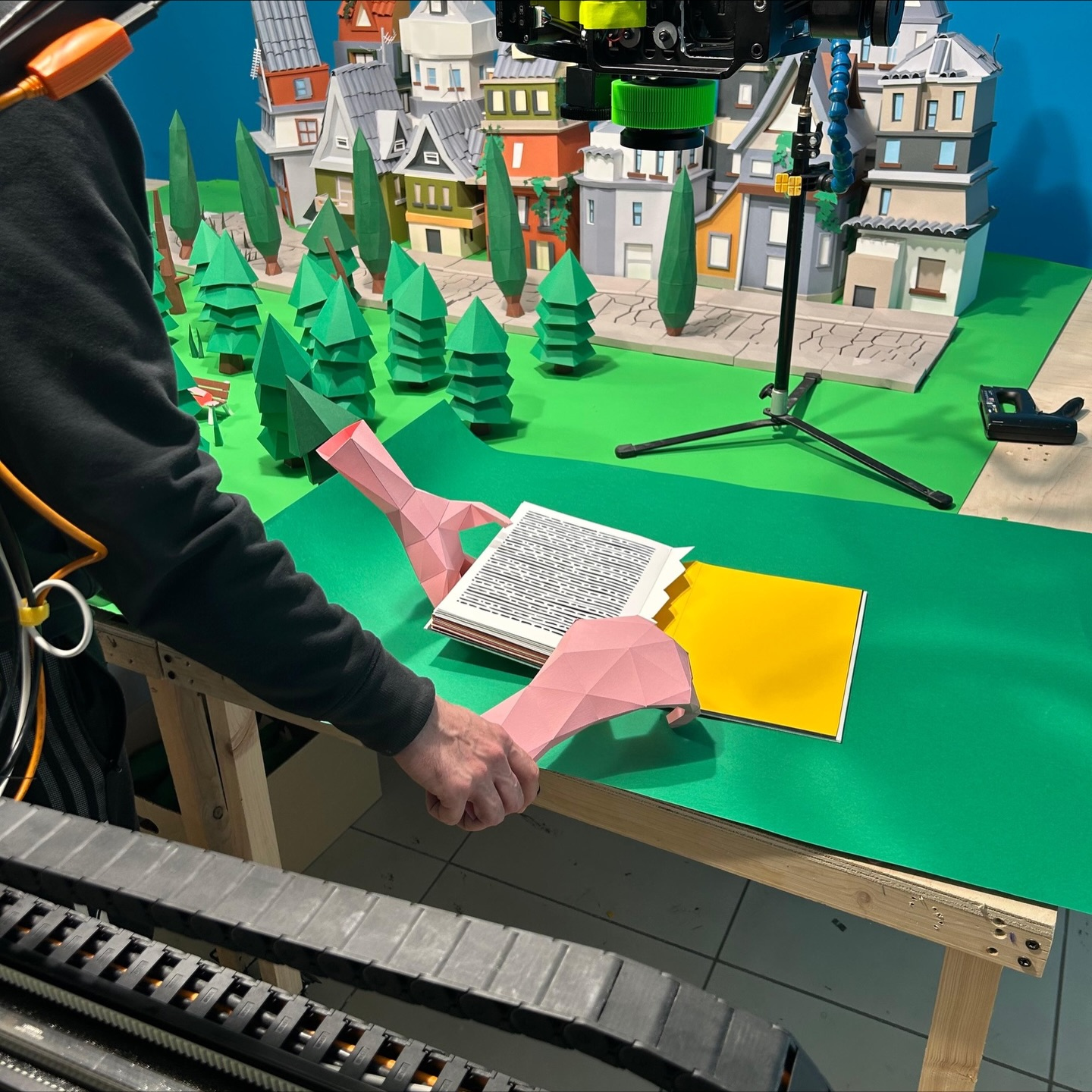
Visually, Spacetime Chronicles leans into the inherent fragility of its paper-based medium. Every character and environment is constructed from the substance and animated frame by frame, with imperfections deliberately preserved that only add to the aesthetic. The result is a tactile, stripped-down experience that mirrors the film’s thematic concerns: instability, uncertainty, and the sense that identity is something mutable rather than constant.
Speaking with Cartoon Brew, Bertelli discusses the film’s unusual development process, the role of psychology in shaping its central character dynamic, and how a decade of working in paper stop-motion informed his first fully realized feature.
Cartoon Brew: How did the film evolve from an episodic idea into a feature, and how did that affect pacing?
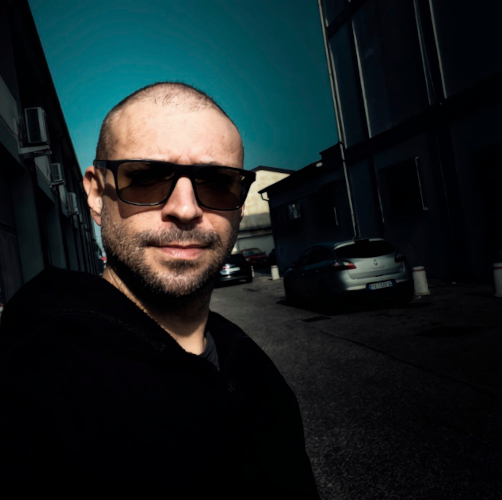
Stefano Bertelli: The film initially started as a short of about 24 minutes. I wasn’t fully convinced by its structure, so I broke it down into short episodes intended for YouTube, but that approach didn’t work either. The episodic structure didn’t come from a creative choice, but from a creative block. Also, the film is not designed for fast consumption; it doesn’t follow the immediate rhythm of online content. Today, even a few seconds can feel long, and I realized that format wasn’t right for this project. After taking about a month off, I came back to it with more clarity and found the right direction to expand and unify it into a single narrative. The film needed time to build a continuous emotional experience.
Why did you externalize the protagonist’s inner psychology through the cat?
The cat comes from a personal interest. It’s an animal I perceive as autonomous, reassuring, and surprisingly intelligent. I’m interested in observing its behavior and anticipating its next move. It may seem like a simple reading, but there’s a consistency: it evaluates, reflects, and always acts in the right direction for itself. This quality led me to use it as a guide, a lucid presence during the protagonist’s moments of disorientation. It never manipulates. It guides. The reference to psychology is more practical than theoretical: it comes from years of directing music videos, where working with actors often means engaging with psychological dynamics to achieve something authentic.
Why was paper the right medium for this story?
The choice of paper is directly linked to the concept of fragility. Everything is unstable, delicate, and temporary, and this is reflected in the film’s themes: memory, identity, and impermanence. Without it, the film would lose its simplicity. Paper reduces everything to its essential form and is consistent with the film’s core idea: living in the present, made of uncertainty, fragility, and simple routines. Precisely because of this fragility, the film suggests living in the present, without postponing. It’s an idea that also returns in the film’s music: the sky above, the world below, fragile and infinite, like a world made of paper.
What led you to make this feature now, and how did your past work shape it?
It’s actually my second feature, after Acid Space, which I consider more of an experiment. Spacetime Chronicles is the first one I feel is truly complete, both visually and in terms of writing, which this time is entirely mine. After ten years, the main shift has been there: in narrative awareness as well as in visual evolution. It comes at the right moment, after years of developing technique and language together with Riccardo Orlandi. He handles set construction and the mechanical side of the animation, while I focus on the cinematic side, although in practice, we collaborate across all aspects.
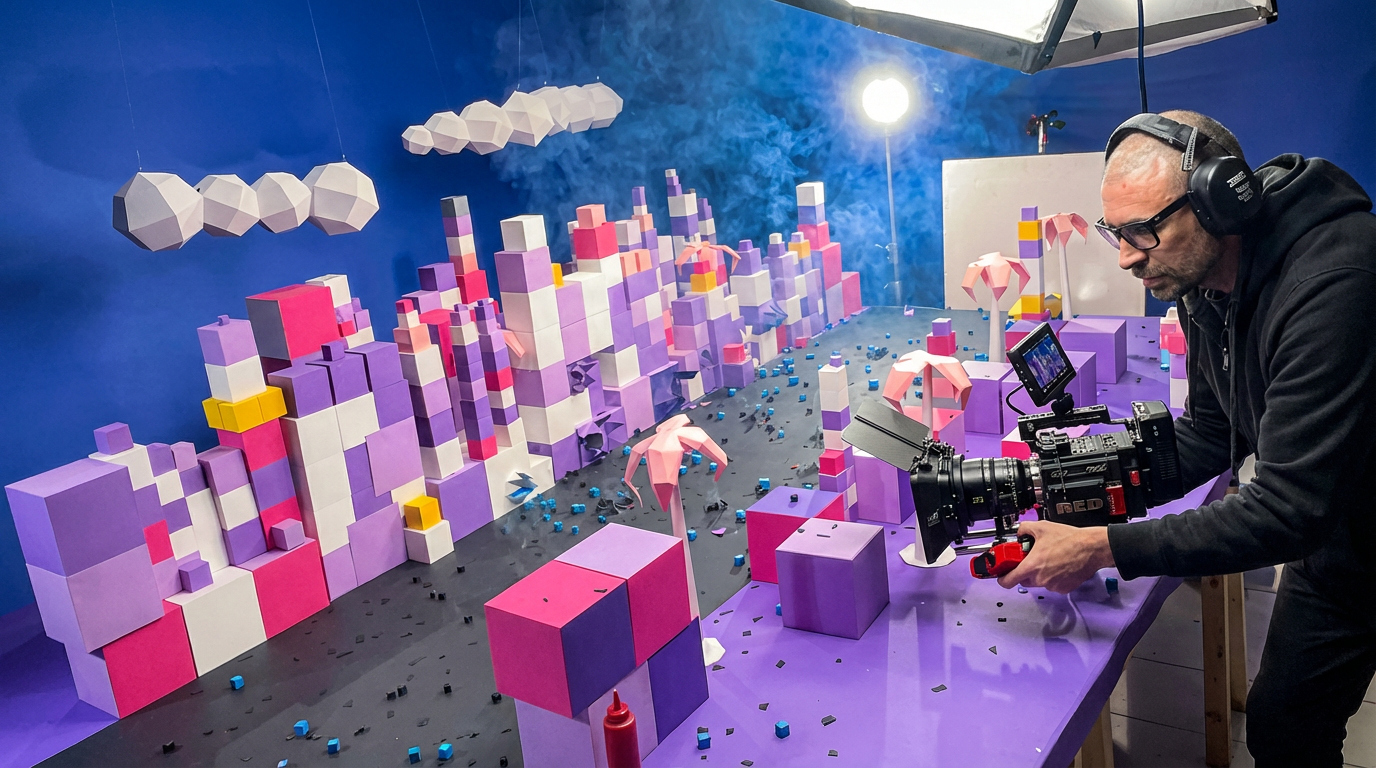
After ten years in live action, moving into animation opened new possibilities, which we then developed in music videos. In this film, I integrated stop motion with super slow motion to give more weight and dramatic intensity to the scenes. The main difference from my previous work is the writing of dialogue: in music videos, storytelling is mostly visual, whereas here I had to build a more complete narrative dimension.
Is the film’s blend of reality and fantasy meant to reflect a specific psychological state?
The continuous shift between reality and fantasy does not represent a specific psychological state, but a common condition. It’s that suspension that occurs when you get stuck thinking instead of acting. The film suggests that the value lies not in the final result, but in the journey. Confronting your emotions and accepting failure is part of the process. There is no reward without going through discomfort and uncertainty. In short: carpe diem.
How long did production take, and are you planning another feature?
We’ve been working with paper for about ten years, so the process has become more efficient over time, also through trial and error. Despite this, the production was still quite long, partly due to interruptions from commissioned work: overall, about five to six months. The most critical moment was the writing block, which completely halted the process and forced me to rethink the structure of the film.
I’m thinking about a new feature, and I have some ideas, but for now, I want to focus on the distribution of this film, which is still in the middle of its festival run. The goal is to maximize its visibility, including online, once this phase is completed.