
‘It Wasn’t Good’: ‘Toy Story 5’ Director McKenna Harris On The Two-Week Shutdown That Helped Turned An ‘Okay’ Movie Into A ‘Great One’
Stay informed with free updates
Sign up to get our news digest — delivered directly to your inbox twice a week.
Halfway through making Toy Story 5, co-directors Andrew Stanton and McKenna Harris stopped production for two weeks. They had a cast of central characters they liked. They had a technology-versus-toys premise they thought was interesting. And they’d plotted out an emotional journey for Jessie that felt compelling.
What they didn’t have, Harris explained during a keynote talk at Italy’s View Conference last week, was a compelling enough reason for audiences to root for the Yodeling Cowgirl.
“We worked on making that movie, and we had one problem. It wasn’t good,” Harris explained through gritted teeth. “I didn’t like it.”
They quickly clarified: “It wasn’t bad bad. But not being bad bad isn’t good enough for Pixar. The reels we had were just not good enough for a fifth Toy Story installment, and the pressure for this film to deliver was so high.”
A solution was there to be found, but it would require a two-week production shutdown and a significant shift in what Jessie was fighting for to make viewers care.
A Familiar Problem For The Toys
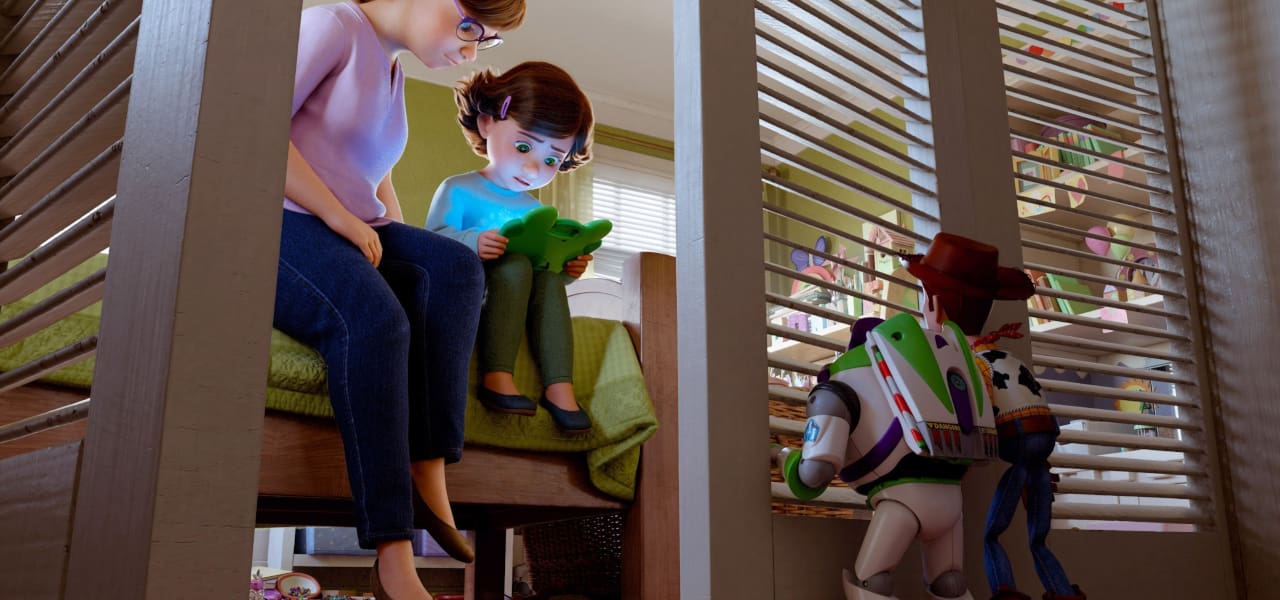
In the earlier version of the film, Jessie and the toys were teaming up to take back Bonnie’s attention from the Lilypad device that was taking over all of the time that the girl used to share with them. But that conflict didn’t give audiences enough reason to care, and the franchise’s groundbreaking first installment had already done almost the exact same thing.
“Toys vying for playtime felt a little bit Toy Story 1, been there, done that,” Harris said. “The stakes of losing playtime felt too soft.”
Rather than hope a solution would fall into their hands later in production, Harris and Stanton stopped the whole machine for two weeks to address it.
“We stopped production for two weeks, and we focused on the film’s core issue at the time,” Harris said. “Our act one was not working.”
One Week To Diagnose, One Week To Rewrite
“Sometimes the habit was to see issues like this and just hope that somewhere along the line you, like, come up with a genius idea that fixes everything,” Harris said. “And then it makes, like, a great story to tell at the wrap party of the movie. But that’s, like, a horrible production plan.”
“You should not wait for a Hail Mary idea,” they advised in a more serious tone than the rest of the very playful presentation.
The two-week pause gave them a defined window: one week to identify the problem, then another to write “as freaking fast as we could.”
Although the ending wasn’t working, they traced the underlying issue back to the beginning. “Fixing an ending isn’t always about fixing an ending,” Harris said. “It’s about the proper lead-up to that ending.”
They also had practical limits. Production was halfway through, and they needed a solution that could use what the team had already developed.
“We couldn’t rewrite the movie from scratch,” Harris said. “Not that me or Andrew would have done that because we were tired as hell.”
Their breakthrough came from focusing more closely on Bonnie. The earlier films had established her shyness. That got Harris thinking: what if that shyness made it difficult for her to make friends? And what if helping her overcome that loneliness became Jessie’s purpose?
“Rather than have Jessie fight for playtime, we had her fight to make Bonnie a friend,” Harris said. “This was the rocket fuel.”
The change also gave them a way to elevate Blaze, a popular character among the crew whose ranch and animals Harris had helped develop. Previously a supporting character in Jessie’s adventure, Blaze became essential to the film’s central goal.
“There was a palpable change in the reactions from our audience at work screenings,” Harris recalled. “Our coworkers said they felt a huge improvement in the film, and they could feel themselves actually rooting for Jessie the whole movie, and caring for not just her, but also Bonnie’s story.”
Asking For Help
For Harris, the pause illustrated a broader lesson about directing, or leading any collaborative activity. Recognizing a problem, the director insisted, is only useful if you act on it.
“I think one of the most important qualities a director can possess is the ability to quickly clock when you don’t have the answers to something and then just as quickly communicate that you need help to solve it right now.”
Animation’s lengthy production process can make postponing those decisions tempting, they said. Stanton encouraged his co-director to avoid becoming a bottleneck, the person everyone else was waiting on.
By temporarily shutting down production, the directors gave their script a clearer purpose for Jessie and the crew a stronger foundation for the work ahead.
“Looking back, this was the moment that turned an okay movie into a good one,” Harris said. “Bringing it to life with our team of incredible artists would be what turned it from a good movie into a great one.”
The finished film won over audiences in a way its early reels couldn’t. Toy Story 5 earned $1.148 billion worldwide and an A CinemaScore, with Rotten Tomatoes scores of 92% from critics and 94% from verified moviegoers.