.png)
12,000 Hand-Painted Tiles Come To Life In Marcy Page’s ‘Virgin Fandango’ (EXCLUSIVE)
Stay informed with free updates
Sign up to get our news digest — delivered directly to your inbox twice a week.
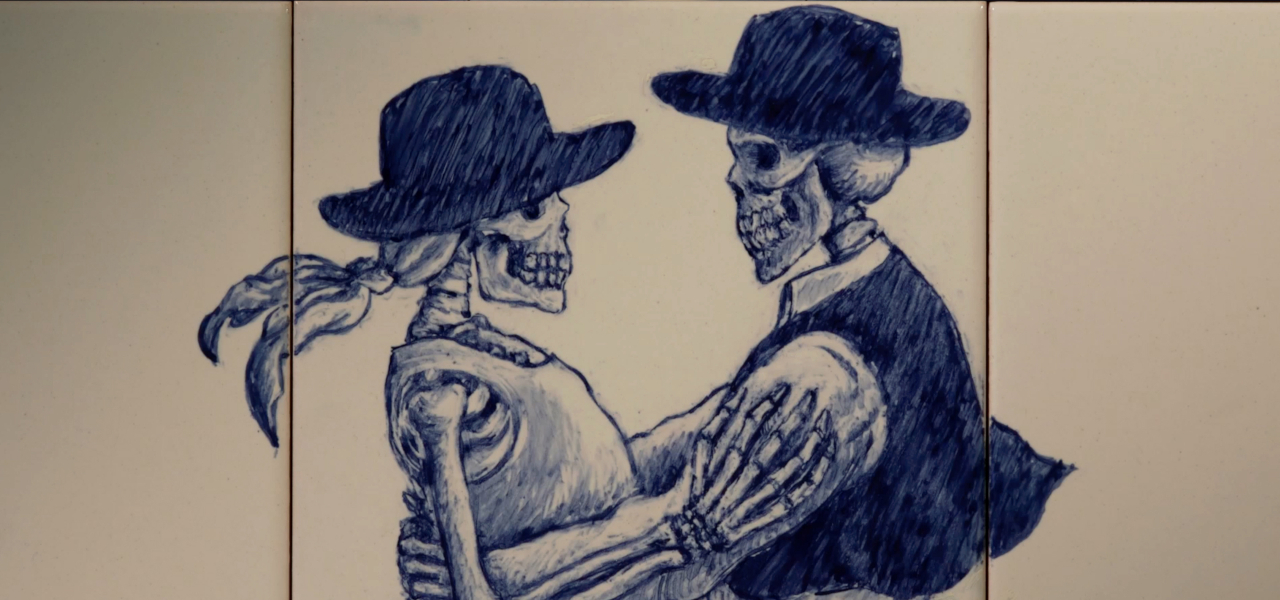
If you’ve ever been to Portugal, you’re surely familiar with azulejo, the distinctive painted blue ceramic tilework found in Portuguese and Spanish murals, ranging from a few tiles to vast decorative murals.
But what if these fixed images could be animated? Blending her newfound love for Portugal with her lifelong passion for animation, American-Canadian producer, animator, and director Marcy Page crafted Virgin Fandango, a mind-bending 11-minute short film set to world premiere at Annecy next month. We’re thrilled to debut the short’s English-language trailer below:
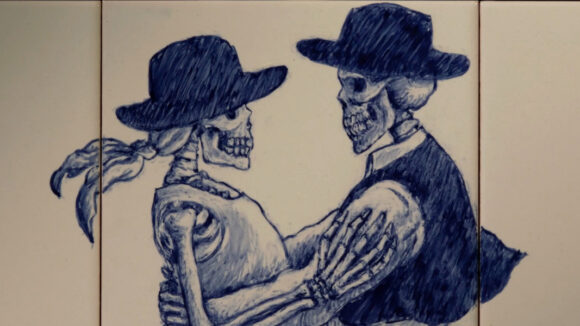
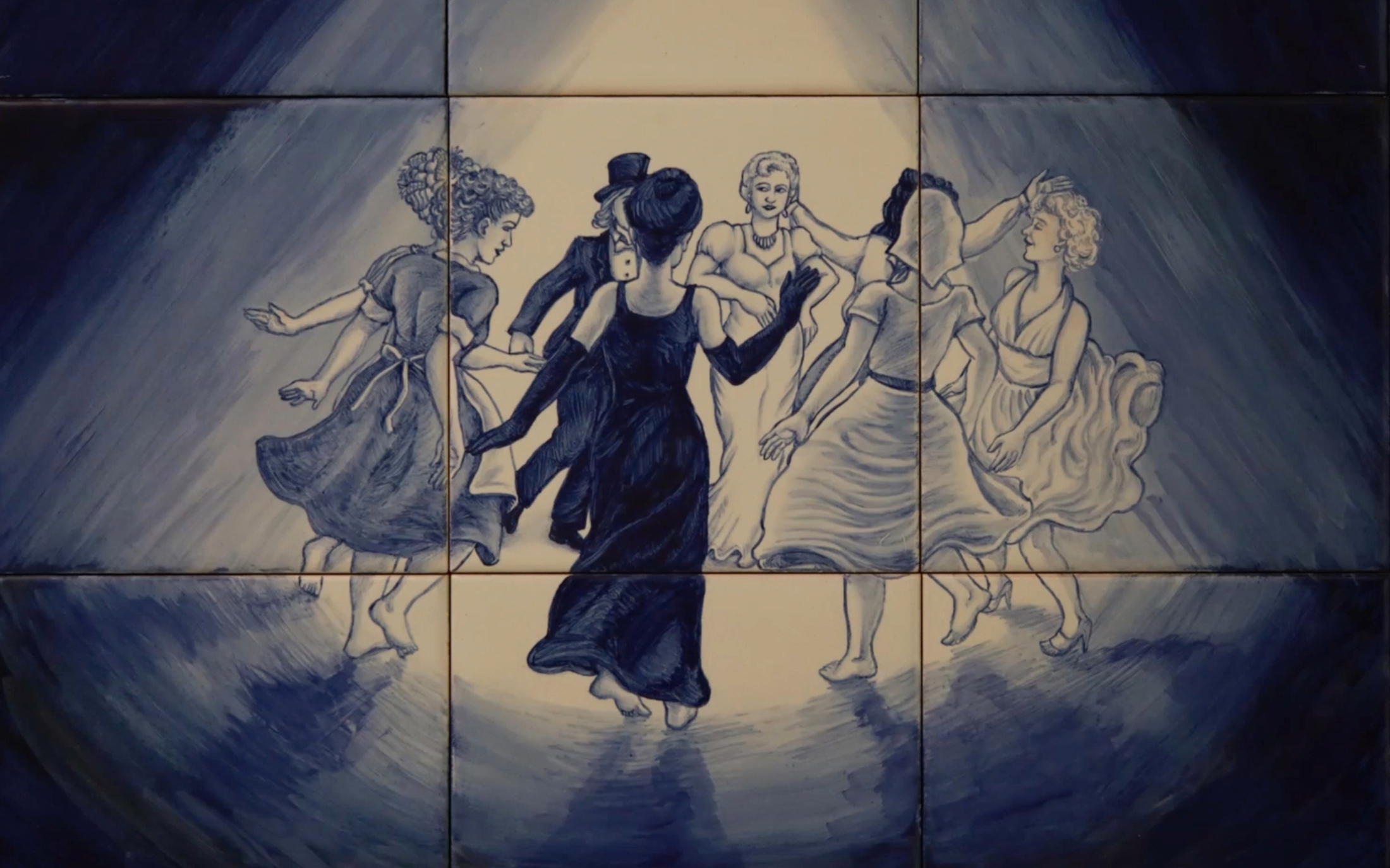
Co-produced by Ciclopes Filmes (Portugal) and Blue Dada Productions (Canada) and distributed by Agência – Portuguese Short Film Agency, Virgin Fandango stands out for its distinctive visual approach. More than 12,000 tiles were produced, painted, and later animated using stop-motion techniques in a process that explores the visual and narrative potential of this traditional art form with a twist: a reimagining of Mary, mother of Jesus, as a dancing, rebellious, empowering female figure.
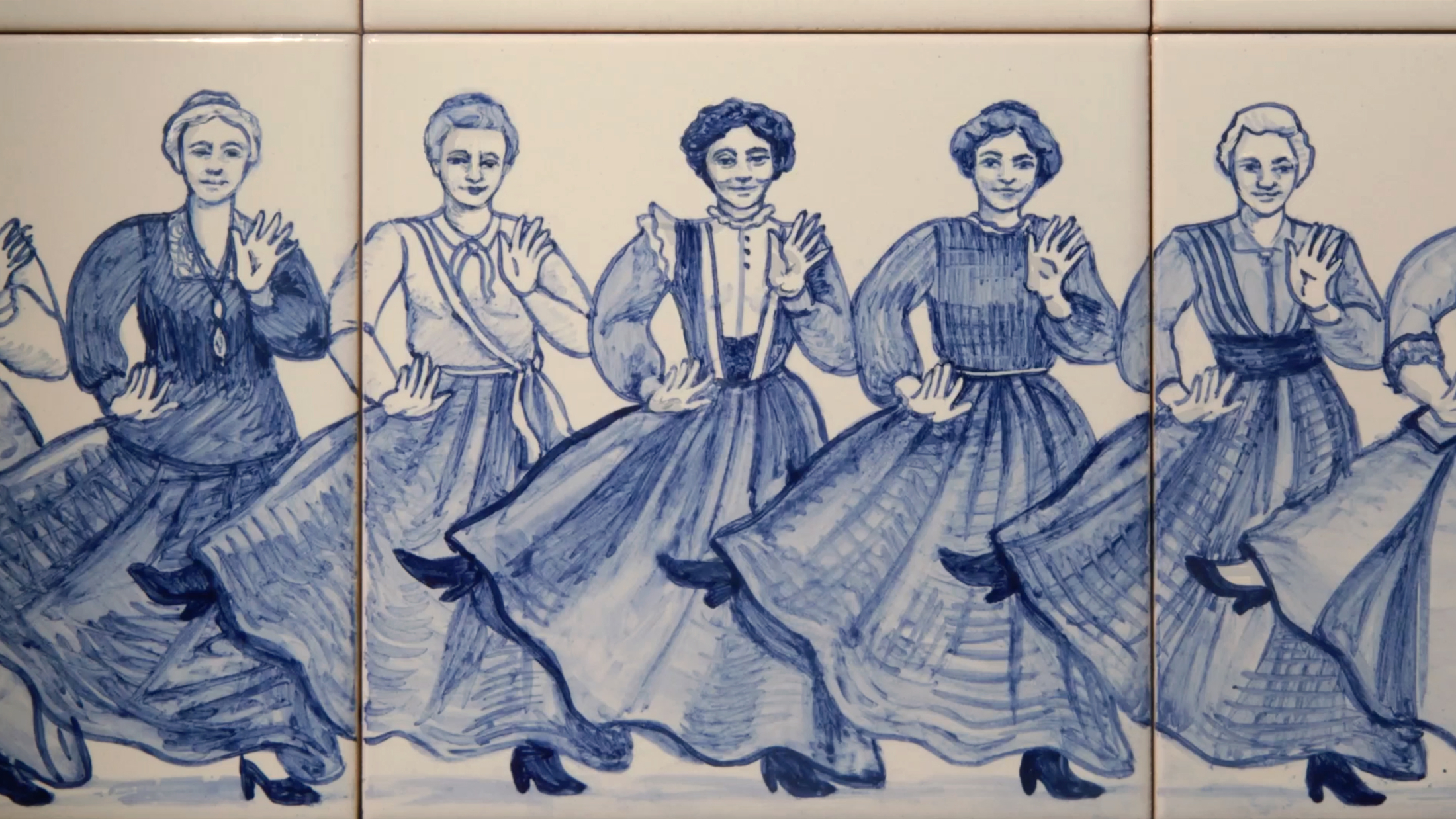
Blending dance, music, and a mosaic of visual references, including nods to around 170 historical women and female animation artists, Virgin Fandango is a unique film, a powerful musical, and an exquisite work of art.
Ahead of its Annecy premiere, we’re thrilled to exclusively debut the trailer for the short, offering a glimpse at Page’s one-of-a-kind film, featuring music by legendary composer Normand Roger. Earlier this month, Cartoon Brew sat down with the duo for a half-hour, in-depth conversation about the making of a project that was at once a director’s dream and a producer’s nightmare. Fortunately, Page has been both throughout her celebrated career at the NFB, though it still took a Portuguese village to bring this project to life.
Cartoon Brew: What was the original impulse behind Virgin Fandango?
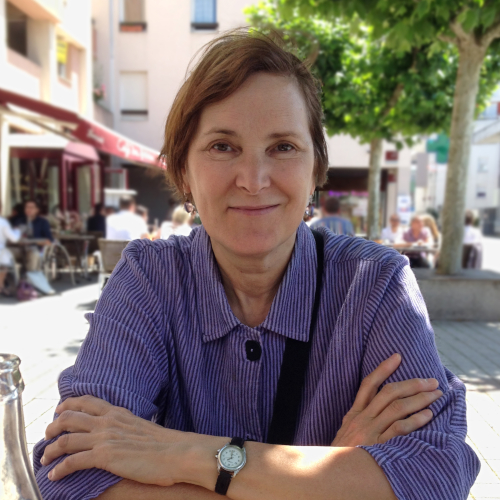
Marcy Page: There were several things. First, the film is obviously inspired by our time spent in Portugal, where we shared a house with Abi Feijó and Regina Pessoa, two key figures in Portuguese animation. During our stay, we were surrounded by these beautiful azulejos, and I wanted to do something with them, to see how an animated painted-tile film could work.
At the same time, these murals are mostly used to deify saints, kings, and men, so I thought: what if I could use them to celebrate women throughout history, who are often less recognized? In Portugal, the cult of Mary is still very strong. May is the month when she’s most revered, and that’s usually when we visited Portugal, so we would often see candlelit processions crossing the valley, and they were quite touching. I hadn’t given much thought to Mary as a historical figure, but because she’s often portrayed in a very acquiescent, mute way, I thought she deserved a reinterpretation.
In a sense, you’re turning Mary from a historical figure into a political figure.
Page: The story we know about her, being forced to become a refugee, fleeing to Egypt with a newborn child, and then raising a son who grew up to become this rebel prophet, all sounded to me like the story of a woman who would actually have a lot to say about politics.
Coming from the United States and being an immigrant in Canada, I started working on this film during Trump’s first presidency. Seeing the repeated attacks on women’s rights was heartbreaking, and I felt a real urgency to address that topic.
We can’t take anything for granted, and the lifelong fight for women’s rights was another major inspiration. In that sense, Virgin Fandango celebrates through song and dance the vast history of women who stood up for themselves, blending historical, artistic, and political figures alike.
Can you take us through the first tests of your technique? Was it something you had seen other artists use before you decided to try it?
Page: When I did my first tile tests back in 2018, I don’t think I had seen the technique used before. Later, I discovered a small commercial film that used something similar, but to be honest, I thought it was wasted on an industrial product.
I started with small tests to explore the possibilities of animating tiles. It’s about developing a language, because not only do you have animation on the surface, but you can also move these objects physically through space, bring them off the walls, place them in other environments, and even animate them on a three-dimensional level. They can be broken apart and put back together. It’s very playful, but also a crazy undertaking. We used more than 12,000 tiles to create the film.
You mentioned that the film is, in fact, a musical. How did the two of you work together on that aspect? Was it the idea from the start?
Normand Roger: Pretty much. Marcy started with some lyrics, and by the time I joined the project, she had about three-quarters of the main song written. I took the lyrics and composed the music around them. Marcy sang it herself so we would have a rough, workable version, and it was also obvious to us that, for the purposes of the film, it had to be sung by a woman.
Originally, we thought we’d hire a professional singer to record the track, but as Marcy kept adding sections, which she also sang herself so she could continue editing and timing the film, it eventually made more sense for the author to sing the story. It feels very natural and adds genuine value to the film.
It also would have locked the film into a version that might have prevented the changes and evolution you wanted throughout production. Which leads me to another question: how did the producer side of your brain deal with the director side during this long-haul project?
Page: I’d say the producer was very frustrated with the director, because I think I made every director’s mistake that would have driven me absolutely crazy as a producer! (laughs) Fortunately, Abi acted as a producer. It was a co-production between Canada and Portugal, and Normand was also a producer on the film, so they challenged me in all the right ways. Abi is especially good at working with animators, and because I had never done stop-motion before, coming from a 2D background, he pushed me into the deep end with his experience working with children, and that helped a lot too.
We were lucky to work independently because the development and evolution added so much to the film. What started as a five-minute short evolved into an 11-minute story, which I had a lot of fun directing. But yes, from a producer’s point of view, I’m one of my own worst offenders.
Going back to the craft, what were the biggest production challenges you had to overcome during the process?
Page: The first challenge was figuring out how to transfer my animation drawings onto the tiles. Fortunately, Regina, who is a great problem solver, animator, and collector of gadgets, had this mini projector that I ended up using to project my drawings from a computer onto the tile. It was brilliant, much better than transfer paper or any other technique.
From there, I took my pencil animation and projected it frame by frame onto the tiles, which also allowed me to bring in help from other artists. That was one of the first major breakthroughs on the film.
Painting on tiles wasn’t easy either. It’s an additive process, but because you can also scratch away the paint, it’s subtractive as well. From what we observed, every artist had their own approach, so it was a major learning curve for us. We ended up with a relatively small team, but that worked out well in the end because everyone could focus on their individual strengths.
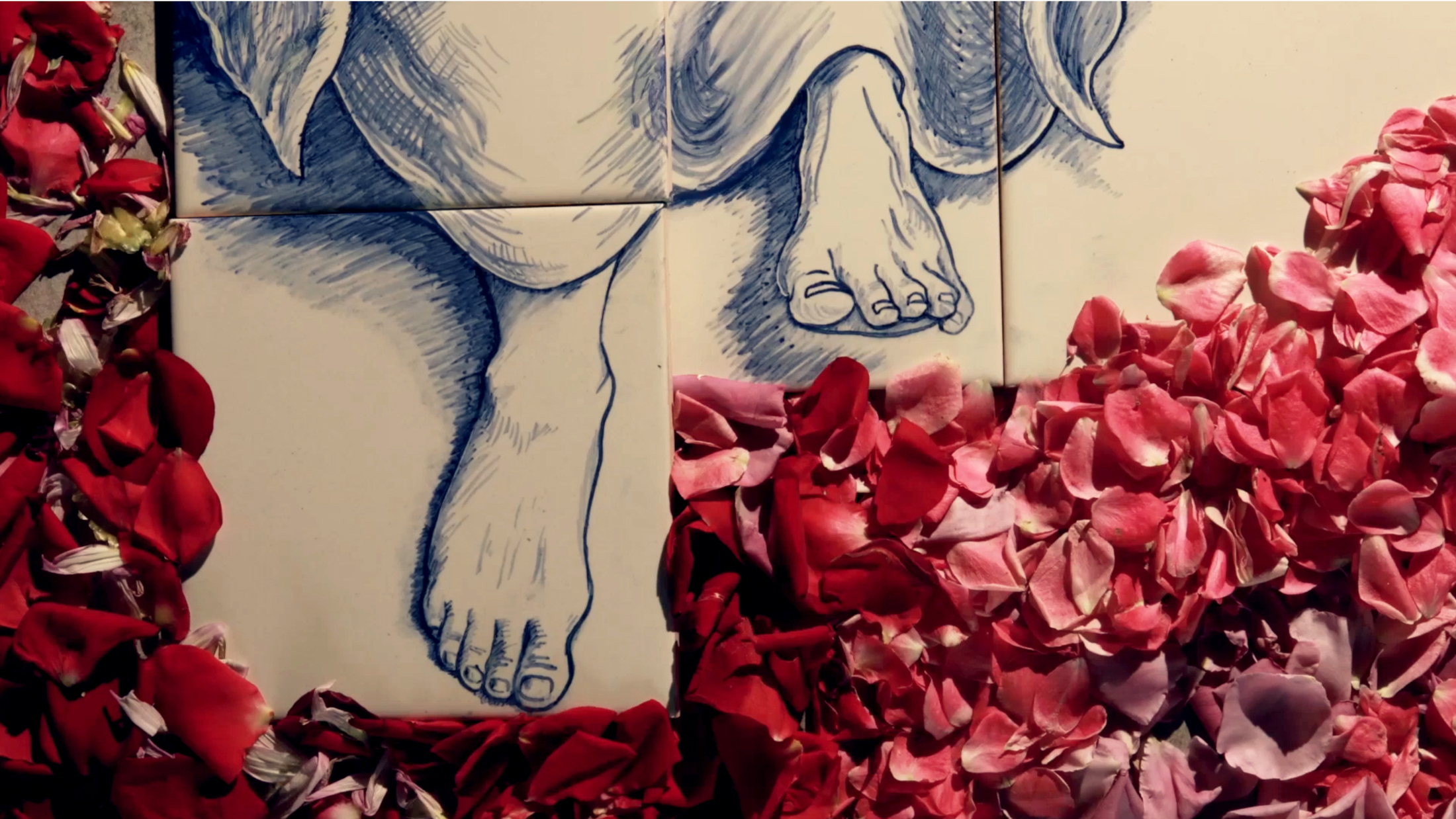
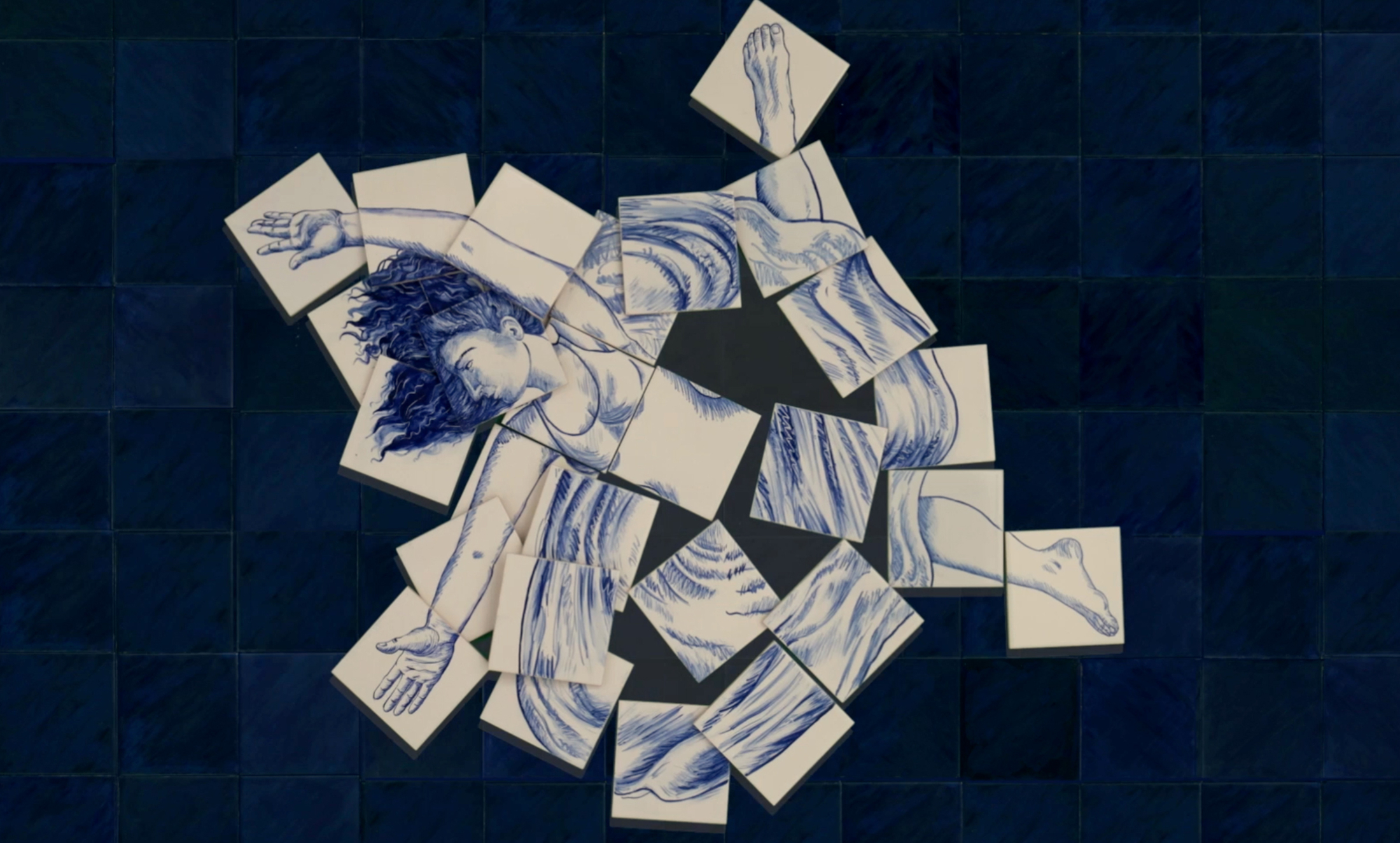
Roger: Another challenge I like to talk about is the tile registration process during shooting. In traditional animation, you have sprockets where you place the drawing or cel, and it’s very straightforward.
With tiles, things became much more complicated, especially because some scenes involved multiple tiles. For each size of “set,” we had to build frames so that when one tile came out, another would fit perfectly in place. In fact, there was essentially a different setup for every scene.
Sometimes, pans required a table with two separate levels, but in other cases we had to attach the camera to the ceiling, place a green screen on the floor, and shoot from the ground because we needed the distance to widen the frame. It was extremely varied, and also involved things like petals and dirt. Very low-tech, very physical.
How does this film connect with you today?
Page: For me, this film meant reconnecting with the part of animation I love most. I love animating, I love drawing, and this project brought me back to that. To the magic of creating something and then seeing it move on screen. There’s nothing else like it.
Also, when you’re drawing, you feel a connection to your subject. Drawing all these women from history was a profound experience. It even became collaborative, because I asked animator friends of mine, mostly women but some men as well, to give me their own image of Mary.
Animation is such a transcendent art form because it brings together dance, drawing, song, and music. I remember when I first discovered it in my life, I thought: ” This is it.”