.png)
Sander Joon Revisits The Long, Winding Road That Took ‘Sierra’ To The Oscar Shortlist In Viborg Masterclass
Stay informed with free updates
Sign up to get our news digest — delivered directly to your inbox twice a week.
VIBORG, DENMARK — Estonian filmmaker Sander Joon titled his Viborg Animation Festival masterclass “From Idea to the Oscar Shortlist,” but started the talk with a clarification.
“It’s kind of clickbait,” he admitted to an audience much larger than he was expecting. “I think you won’t know how to get to the Oscars after this talk. But you can see one way of getting there.”
The way was his own, and Joon spent the next 90 minutes retracing the steps of his education and career, including a few previous stops in Viborg, sharing years’ worth of abandoned drawings, animation tests, and radically evolved animatics, as well as very honest reflections on the silver lining that can come with rejection.
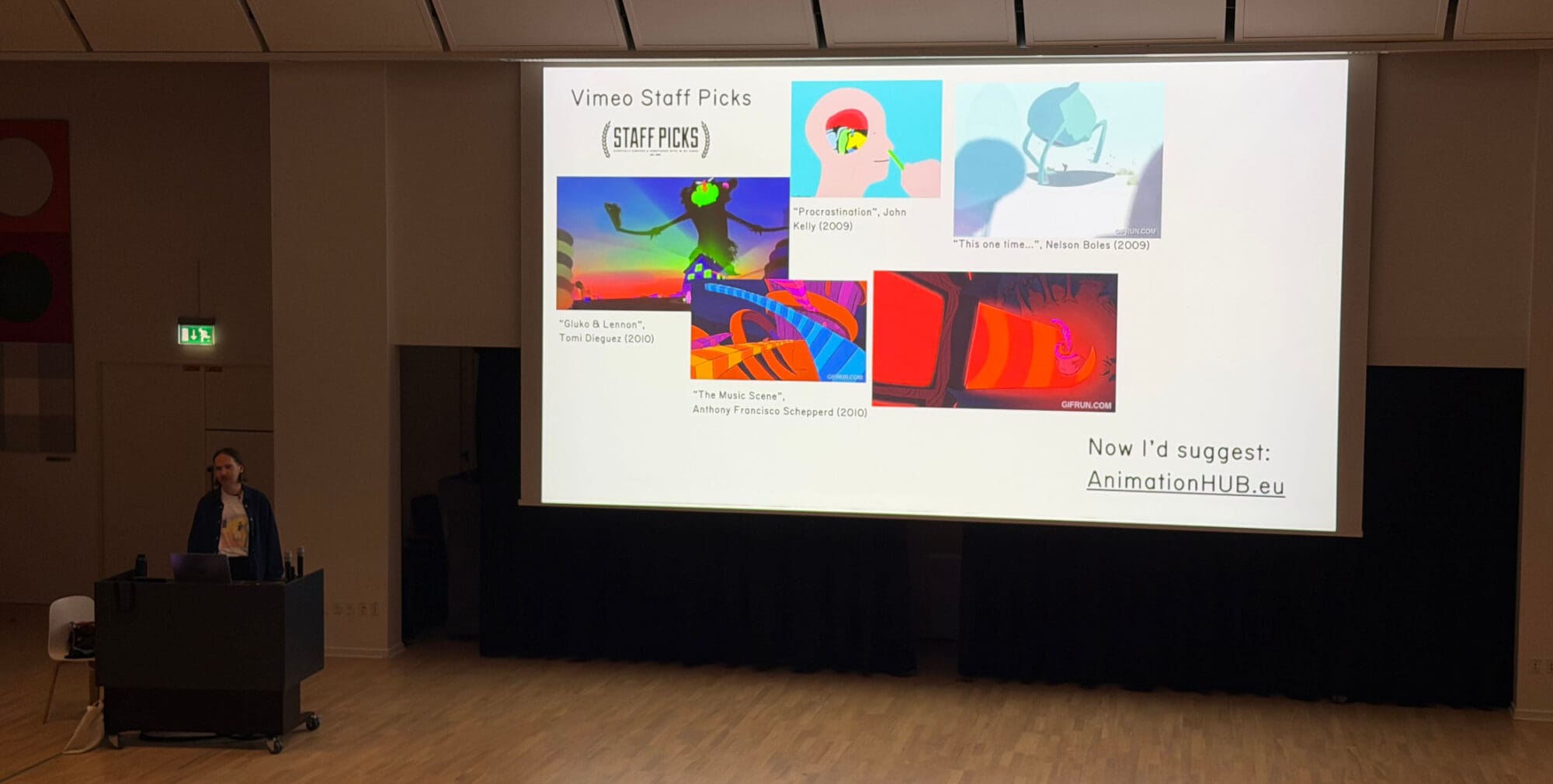
Finding Reasons To Keep Animating
Joon traced his fascination with animation back to the flipbooks, stop motion clips, and laborious GIFs he made as a child. On a slow computer, he drew frames in Microsoft Paint, saved them to a floppy disk, and took them to a neighbor’s house, where the neighbor had software that could assemble them into a brief clip.
“I never showed them to anyone else,” he said. “I just wanted to watch my own animations move. To this day, I mostly do animation because I want to see the stuff move and invent ways to create movements that create a sort of emotion that only animation can create.”
That instinct continued to shape his work in the years to come. In his recent work, Joon shifted between 2D, CG, and stop-motion techniques, often forcing software to produce results it wasn’t designed for.
He shared some mind-melting clips of CG strata-cut animation that he made in Blender.
“Basically, I mimic the same technique inside the digital software,” he explained, making it far easier than it looked on the screen. “I make little tools for myself: I can make frames, and it makes this loaf. When you cut through it, you get this animation. Blender was not made to do this kind of animation, but that’s what keeps me going, finding a way to use the program to mimic the real-life technique of claymation.”
Origin Story
His first student film, Velodrool, was the first time he used hand-drawn animation on paper to tell a story. It’s a technique he loves, but hasn’t revisited because of the tremendous labor required.
“The quality of the line is something you can’t really mimic with digital drawing tools. I even tried using TVPaint, but I couldn’t manage to get the line I was looking for,” he recalled longingly.
On Sounds Good, he realized the incredible power that sound has to bind together images and storylines that might otherwise seem nonsensical. It also let him take shortcuts in the animation process, since actions could happen offscreen and be communicated entirely through sound.
“I came up with these bizarre storylines that made no sense, and I didn’t know how to edit them together,” he recalled. “The moment where sound works as glue, it just makes sense because of the sound.”
‘I Was Really Lost’
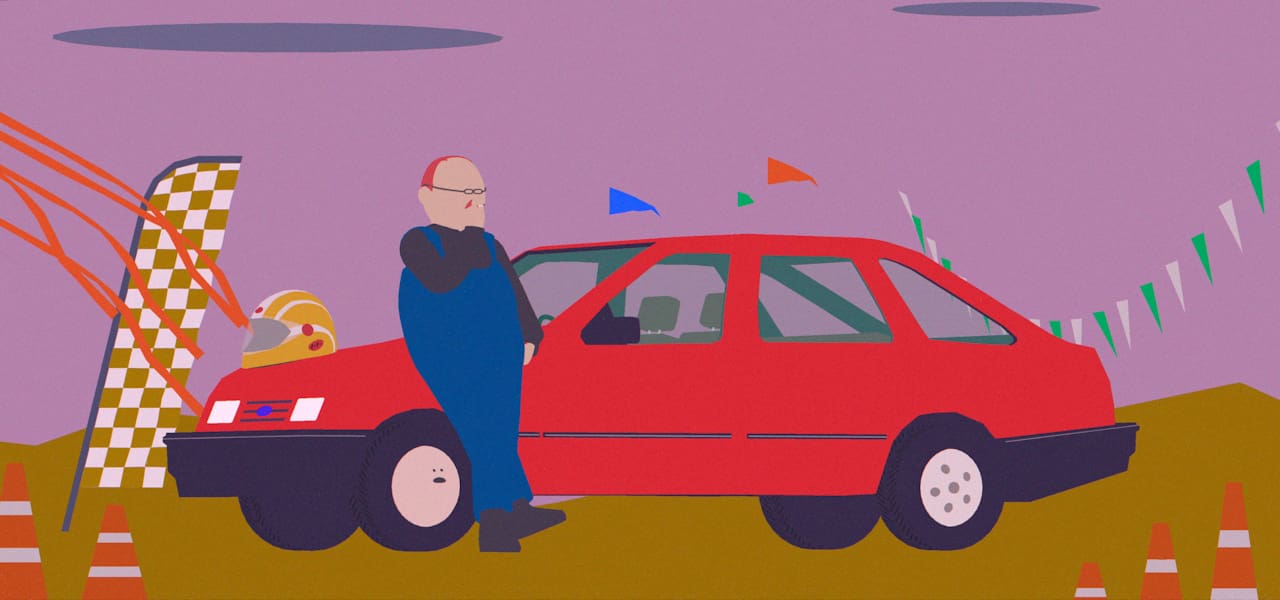
Joon devoted most of the masterclass to Sierra, his first professionally funded film and the short that eventually reached the Academy’s shortlist.
“The process was very long and confusing,” he said. “It turned out nicely, but I’m still confused about how I managed to do it. It happens with almost all the films: In the beginning, it’s not making sense at all. But through discussions and trying different things, you start to see possibilities.”
One key influence on Sierra’s development was a short stop-motion video Joon’s father made in 1980 over a single weekend in the family’s kitchen and bathroom. For his dad, it was just a fun one-off novelty, the first and last time he would animate anything. A clip from his dad’s short even made it into Sierra.
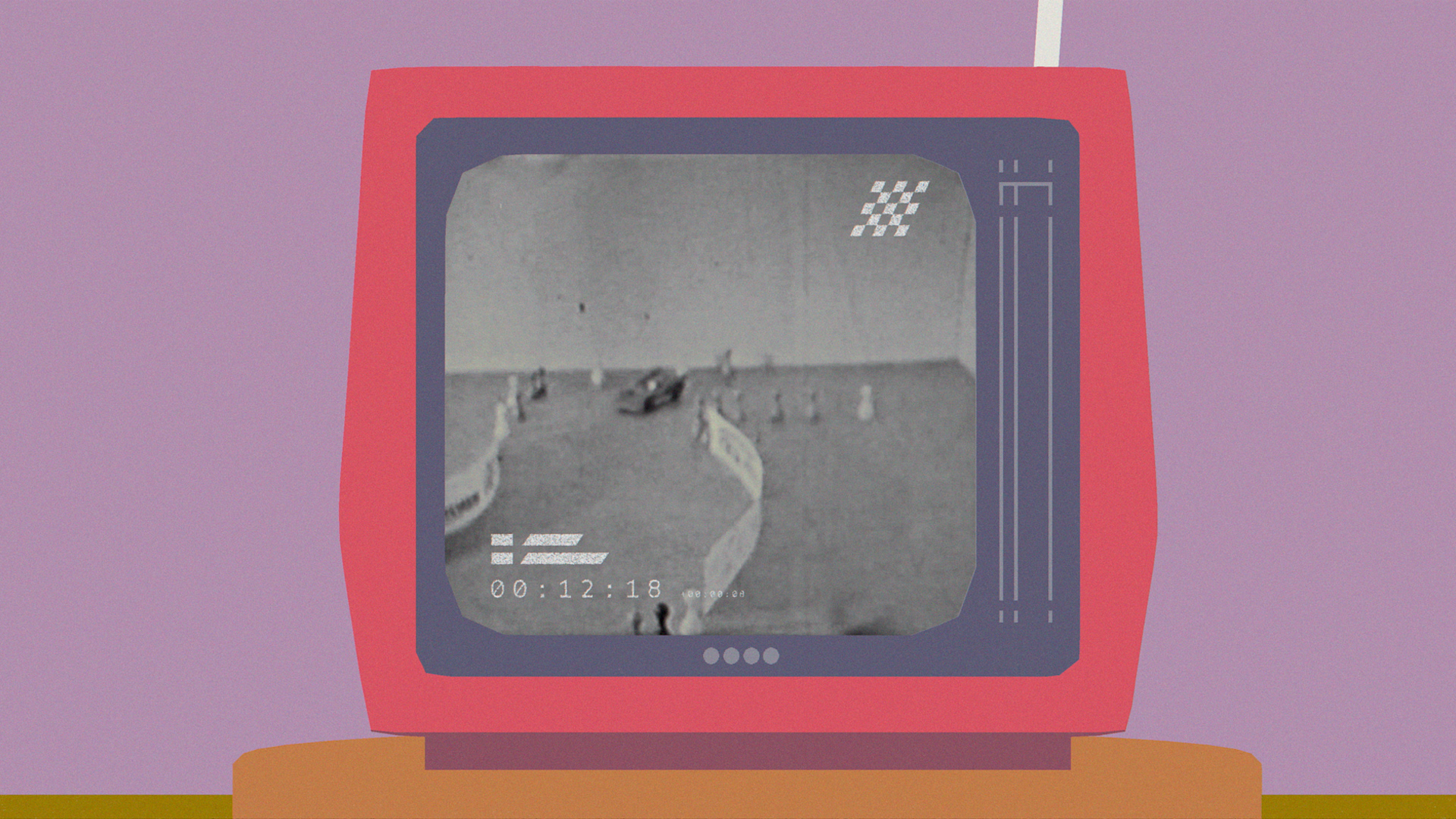
“My father never did animation before or after,” Joon said. “I put a lot of pressure on myself that, at some point, I wanted to use this animation and make something out of it. I didn’t know what it was, but I needed to use it.”
His earliest version of Sierra was little more than a collection of absurd rally-inspired images and short clips.
“I was really lost,” said Joon. “It was just some bizarre, random world.”
The project was accepted for development, but the people who sign the checks pointed out that it had no protagonist and little meaning behind its string of silly gags.
“As an artist, it’s very difficult to hear these kinds of things,” he said. “But the feedback made sense.”
A Deeper Meaning
The film began to find its emotional core when Joon drew on his own childhood and his relationship with his father in a more substantial way than simply using a black-and-white short made with toy cars as inspiration.
“I grew up in a village where everyone knew how to drive a car,” he explained. “For me, it was very confusing because I didn’t know how to do it, and there was no moment when my dad actually taught me. I had this anxiety that I should know it just because I’m a guy.”
“I wasn’t connecting to his world of motors. I was behind my computer doing these silly animations. That started to become the theme of the film: the expectations from your parents.”
Even though the short was starting to take form as a real story, Joon’s second submission was rejected for being too loose and difficult to follow. At the time, that second rejection came with a sense of relief.
“I was sort of happy to get this denied message,” he acknowledged.
Turning A Boy Into A Tire
Everything started to fall together almost by accident, when Joon drew the boy from his project inside one of the car’s wheels. That sketch became the film’s main turning point, in which a child becomes a tire to help his rally-obsessed father.
Conversations with his producer and a script-consultant friend helped Joon abandon confusing parallel storylines and place the father and son directly in the race, so everything on screen happens in the same universe. Many favorite ideas had to be sacrificed to make the change, because they didn’t serve that in-world relationship.
“There are things that you have to choose,” he said. “You only put in the things that help the film.”
Adapting a stripped-down visual style was also partly practical. During development, Joon played with several aesthetics, some very detailed and almost painterly. When the production was finally green-lit, it received less money than requested, so Joon removed shadows and reduced the designs to basic shapes. In the end, it also made the film stand out and allowed for some standout illusions of speed and movement.
“It made the process much more fun,” he said. “It was only the shape that we needed to consider, not the actual geometry of things.”
Finally, Joon screened the full short, eliciting gasps, laughs, and eventually an enthusiastic round of applause.