.png)
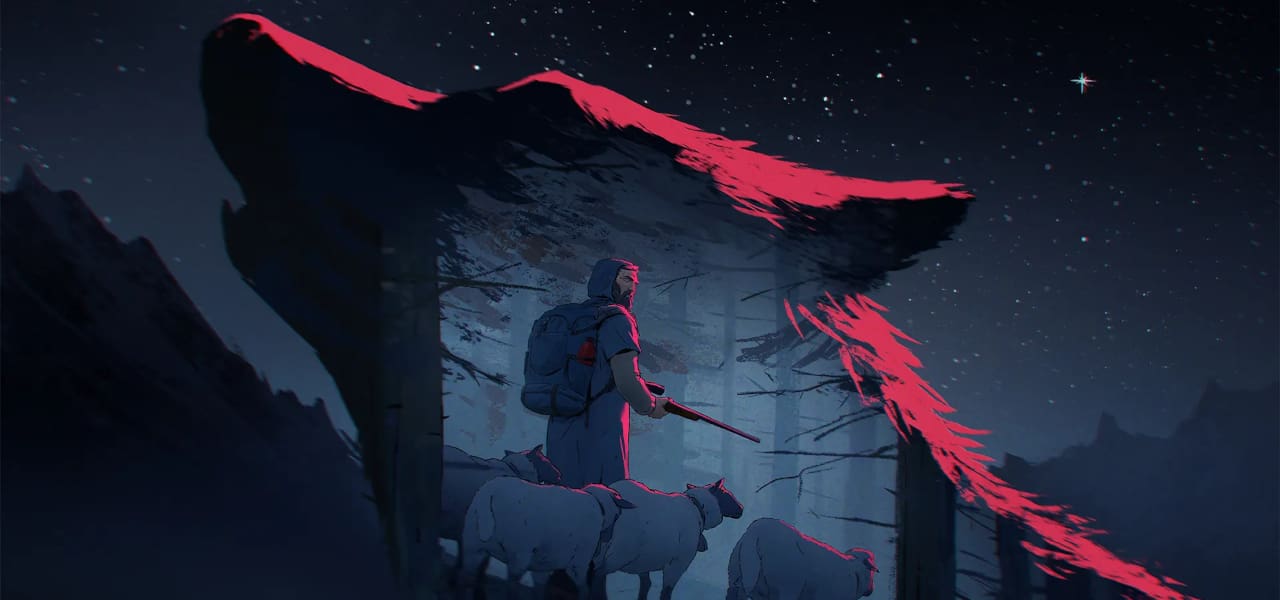
After A Crunchyroll Pickup, Annecy’s Most-Hyped WIP Became ‘The Wolf,’ Here’s What We Learned
Stay informed with free updates
Sign up to get our news digest — delivered directly to your inbox twice a week.
This week, in the packed Salle Pierre Lamy, where teams take turns unveiling the future of high-profile animated projects, Xilam’s team took a thrilled audience behind the making of their upcoming film, The Wolf, among the most talked-about work-in-progress titles at this year’s Annecy after being picked up by Goodfellas and Crunchyroll for international distribution in what constitutes a trailblazing partnership for Xilam Films.
On stage, directors Benjamin Massoubre (Little Nicholas: Happy as Can Be) and Fursy Teyssier (art director on I Lost My Body, The Sunrise File), head decorator Mélodie Charrier-Rangle (Lucy Lost), and head of production Pauline Fleury (Arcane, In Waves) shared an in-depth look at every stage of development, from storyboarding and colorboarding to animation and beyond, much to the audience’s delight.
A co-production between Xilam and Luxembourg’s Bidibul Productions, with work split between continental France (Xilam Paris and Angoulême), La Réunion (Gao Shan), and Luxembourg (La Fabrique d’Images), The Wolf is a 2D/3D hybrid adaptation of the eponymous graphic novel by bestselling Snowpiercer author Jean-Marc Rochette, set in the shadows of the French Alps. And, as anyone who attempts to climb these great mountains knows, Xilam’s team prepared thoroughly for the perilous yet fascinating journey that has been, and continues to be, this production.
Adapting Rochette, Scouting, And Understanding Your Character
“Before diving into the project, we wanted to make sure we adapted it correctly,” said Massoubre, after a short introduction focusing on The Wolf‘s storyline and Rochette’s extensive career. A multidisciplinary artist, illustrator, and painter, Rochette was an intimidating figure for the duo before they discovered he was actually very approachable and benevolent.
“He helped us through the whole project and supported us a lot,” recalled Massoubre. “In fact, scouting in the Massif des Écrins was an incredible experience for Fursy and me, as we went several times to experience each season in these beautiful wild landscapes. We gathered photos, video footage, and even attempted to connect with our character by enduring the changing weather and harsh living conditions of our protagonist.”
It was a true expedition, during which the duo got caught in a raging snowstorm but also met many shepherds and learned about their lives and their difficult relationship with the wolf itself.
“There is something deeply contemplative about this work, and it was eye-opening for us to discover this way of life. Thanks to our many conversations, we understood how deep the fear of an attack is. It’s very revealing that when their flock gets attacked, they refer to it as, ‘I’ve been attacked.’ It’s quite powerful.”
For the duo, this invisible threat running through the everyday lives of these shepherds, roaming the mountains with wolves hidden in the shadows of the trees, created incredible narrative tension.
“Yet the adaptation process was no easy feat,” recalled Massoubre. “If cinema is the art of ellipsis, then graphic novels are a medium of super ellipsis. In order to retain the tension and establish a clearer pace, we chose to focus on a shorter period of time, concentrating on a few days instead of 18 months.”
Setting Up An Efficient, Organic, Deeply Prepared Workflow
After moving from novel to script with the help of Sabine Dabadie, a team of eight storyboard artists immersed themselves in the project, drawing inspiration from both the original material and the directors’ scouting trips.
“It was a delightful time,” added Massoubre. “We could discuss staging and the script with them. They were very invested, and we created a very complex storyboard, one that could truly power our project forward in the later stages of production.”
Fleury, who has accompanied the project from the start, was instrumental in establishing a precise, organic pre-production workflow that helped the various teams collaborate seamlessly and create a brand-new 2D/3D pipeline for Xilam Films.
“But in the beginning, it was important for us not to limit ourselves. If you set limits too quickly, it can prevent the integration of new ideas and new technologies. For me, those first months were all about understanding our artistic and technical paths and crafting the tools we would need moving forward.”
By planning ahead, Fleury explained, the team was able to make decisions more quickly and use dedicated tools that helped elevate the project.
“Pauline combined everything in a very organic way,” added Tessier. “And we are incredibly grateful to all our team members. Every one of them has helped us create our dream film, and they’re still doing it today.”
Setting The Course For A Free Artistic Interpretation Of Rochette’s Mountains
According to Tessier, one of the team’s biggest inspirations was the freedom found in Rochette’s drawings.
“His pages are very nervous, and he has a vivid way of capturing the raw, mineral gigantism of these mountains. Our question then was: How can we enrich these drawings and make them as powerful on the big screen?”
By adding subtle yet powerful lighting, the team crafted photorealistic landscapes heavily influenced by painters such as J.M.W. Turner, Victor Hugo’s ink drawings, and the photography of Vincent Munier (Whisper of the Woods), along with Alexandre Deschaumes’ fog photography.
“We also dug into Rochette’s own Alps Bestiary, using his designs as references for our fauna. It helped us greatly.”
In terms of color, Charrier-Rangle’s contributions were key to bringing these striking visuals to life.
“With Benjamin and Fursy’s photos, and other references such as Jane Campion’s The Power of the Dog, I set out to craft colors that would align with our narrative arcs. It was a true pleasure to work from such a detailed storyboard, where the artists had already incorporated depth of field, fog, light angles, and many other details that helped me build tension through color and emphasize what mattered.”
A Unique Hybrid Pipeline
Using both Blender and a small iPad program called Feather, Xilam’s team built a vast asset library containing dozens of mountain shapes, trees, rocks, animals, and sets. Thanks to a lengthy and detailed pre-production phase, these assets empowered the team to work in an agile, flexible, and richly detailed production environment.
“From Jean-Marc’s drawings, we crafted highly detailed 3D models, and we created our own 2D line add-on for Blender, not unlike the Grease Pencil tool, so that our lines would move in sync with our assets and characters,” explained Tessier. “It was very important for us to be able to feel the natural elements on their skin, hair, and clothes.”
Working with Feather and Blender also helped the team maintain shot continuity, with large 3D environments in which each element could be replaced or adjusted, and characters could be manipulated without disrupting the flow of the action.
“From a production standpoint, it also made a lot of sense. We managed to create rich, complex worlds, with settings already finalized during the layout stage, all thanks to our planning,” added Fleury. “Yes, we delayed the beginning of our layout phase by a few months, but these assets allowed us to be more efficient in the end.”
The process was also used by the animation team led by Jérémy Fromentin (3D) and Achille Biais (2D), who spent five months creating animal animations, walk cycles, and run cycles that could be reused whenever needed.
“I clearly think we managed to use the best of both techniques, both artistically and financially,” concluded Fleury. “2D shading allowed us to maintain graphic control, while 3D assets provided adaptable and efficient environments. We used each technique to its greatest advantage, all thanks to the preparation we put in.”
“In the end, everything was easy,” joked Massoubre while answering one of the many questions from the audience after the thorough and captivating presentation. “In truth, we faced many challenges, but as Fursy pointed out earlier, we overcame them with the help of our team and our partners.”
Distributed in France by ARP, The Wolf has been picked up by Goodfellas for international sales and ARP for theatrical distribution in France. Additionally, Crunchyroll has pre-bought worldwide SVOD rights, excluding China and Japan, for the film, which remains in production.