Andy Serkis Is Giving More Credit to the Animators Now
Actor Andy Serkis may have changed his tune somewhat from earlier this spring when he insisted that animators do nothing but add ‘digital makeup’ on top of his acting.
.png)
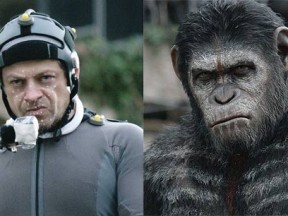
Actor Andy Serkis may have changed his tune somewhat from earlier this spring when he insisted that animators do nothing but add ‘digital makeup’ on top of his acting.
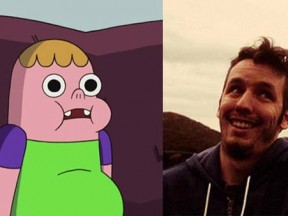
The Internet animation community is talking about one thing today: a series of tweets last night by “Adventure Time” storyboard revision artist Emily Partridge in which she identified artist Skyler Page, the creator of the Cartoon Network series “Clarence,” as sexually assaulting her.

Yesterday, we celebrated the momentous decision to replace the practical effect-dinosaurs in “Jurassic Park” with CGI animation. Today, we look at the other side of the issue: the effect that CGI has had on traditional puppet-makers, animatronic artists, and stop motion animators whose work has increasingly been relegated to the sidelines.
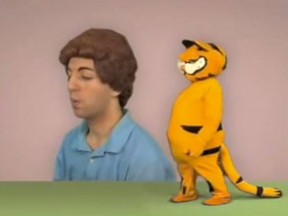
Poor Garfield. In his heyday, he was amongst the most beloved characters on the funny pages, his plush likenesses fastened to car windows and his sarcastic barbs adorning office walls around the globe. Then, somewhere along the line, he underwent a pop-cultural re-evaluation. Jim Davis’ strip is now something of a pariah: just look at how “The Simpsons” paired it with “Love Is” as the kind of strip that Milhouse reads. What a comedown for a character once hip enough to be quoted in “Two Tribes” by Frankie Goes to Hollywood. But yet, the orange cat has been saved from cultural oblivion by a peculiar trend: the remixed “Garfield” strip.
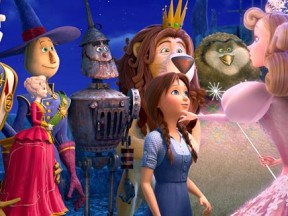
Last weekend, “The Legends of Oz: Dorothy’s Return” recorded the worst opening ever for an animated film in more than 2,500 theaters. The film’s exec producer, Greg Centineo, a former Florida coffee shop owner who raised over $100 million from investors to produce this film and its followups, thinks he knows what went wrong.
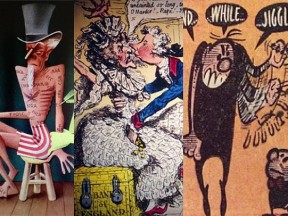
For the past few days on Cartoon Brew’s Instagram account, we’ve been running a series called 25 Cartoonists You Should Know. The entire series is below, and yes, the list could easily be twice as long and still incomplete.
Cartoon Brew officially launched on March 15, 2004. A decade is a long time to be doing anything, but it feels like an especially long time to be blogging daily. As we head into the site’s 10th anniversary year, here are some reflections on where we’ve been and where we’re headed.
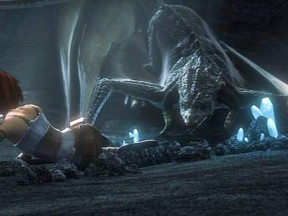
Sony Pictures has demanded the removal of the CGI short film Sintel from YouTube due to a claim of copyright infringement. One small problem: they don’t actually own anything in the film.
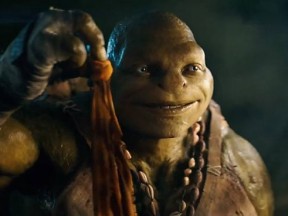
With the entire Internet already yakking about the new “Teenage Mutant Ninja Turtles” trailer, it hardly seemed necessary to bring it up here. But for the sake of posterity, here is the trailer for the Jonathan Liebesman-directed film, which will debut on August 8th:
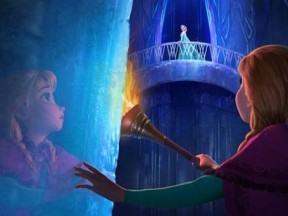
“Frozen” is beautiful to see, fun to sing along with and is a modern day marketing marvel, but the script has structural and performance issues that are worth examining because they impact directly on acting.

In a world of dumb animation execs, Stu Snyder made a sincere effort to be the dumbest. He was the genius who led a campaign to remove cartoons from Cartoon Network. Now, he’s leaving Cartoon Network.
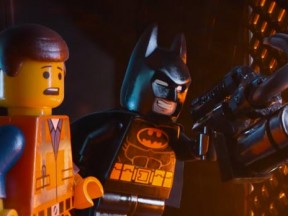
Attempting to predict box office results is a fool’s errand, but it’s safe to say at this point that The Lego Movie, which opens this …
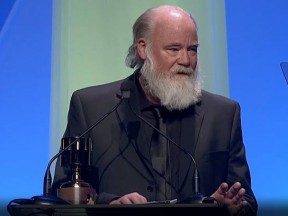
A simple tip to artists from a stop motion master.
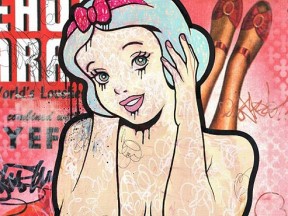
A recent blog post on the Guardian brings up a common misconception: that sexualizing Disney characters is somehow daring or cutting edge.
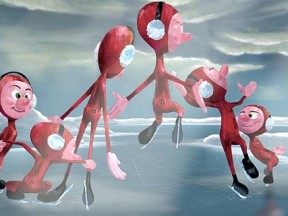
Last summer at SIGGRAPH, Pixar presented a paper offering some clues about one of the major new directions that CG feature animation is headed. The paper, “Stylizing Animation By Example,” explored how filmmakers could achieve more expressive rendering styles that disregard the perfect boundaries of computer graphics rendering and mimic traditional painting techniques.

Find out which studios, schools, and countries visited Cartoon Brew most frequently last year.
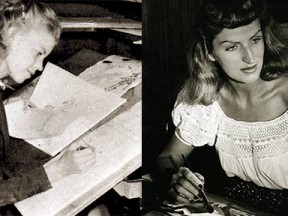
While we’ve already debunked Meryl Streep’s accusations that Walt Disney was a “gender bigot,” let us use her commetns as an opportunity to dig even deeper and find out what actions Disney actually undertook to encourage the advancement of women at his studio.
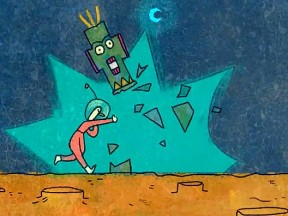
Yesterday we looked at “Boonie Bears,” a Chinese attempt to emulate Western-style computer animation. But at the risk of overgeneralizing contemporary Chinese animation on the basis of their most derivative and commercial efforts, I wanted to offer another perspective.
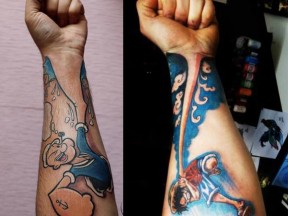
Take your pick: a tattoo of a classic Golden Age American cartoon character or a popular contemporary anime character.
In October 2011, Britain’s Channel 4 began airing a new initiative entitled Random Acts; this was designed as a space for …