.png)
‘If You Have No Limitations, That’s A Bad Thing’: Genndy Tartakovsky On The Rules Of ‘Primal’
Stay informed with free updates
Sign up to get our news digest — delivered directly to your inbox twice a week.
For four decades, Genndy Tartakovsky has been pushing boundaries in visual storytelling in animation. From his work on Dexter’s Laboratory to Samurai Jack and beyond, Tartakovsky has helped push what is possible with the medium, particularly on television. Arguably, his magnum opus is Primal, the adult animated series devoid of dialogue about a caveman and a dinosaur encountering a savage world.
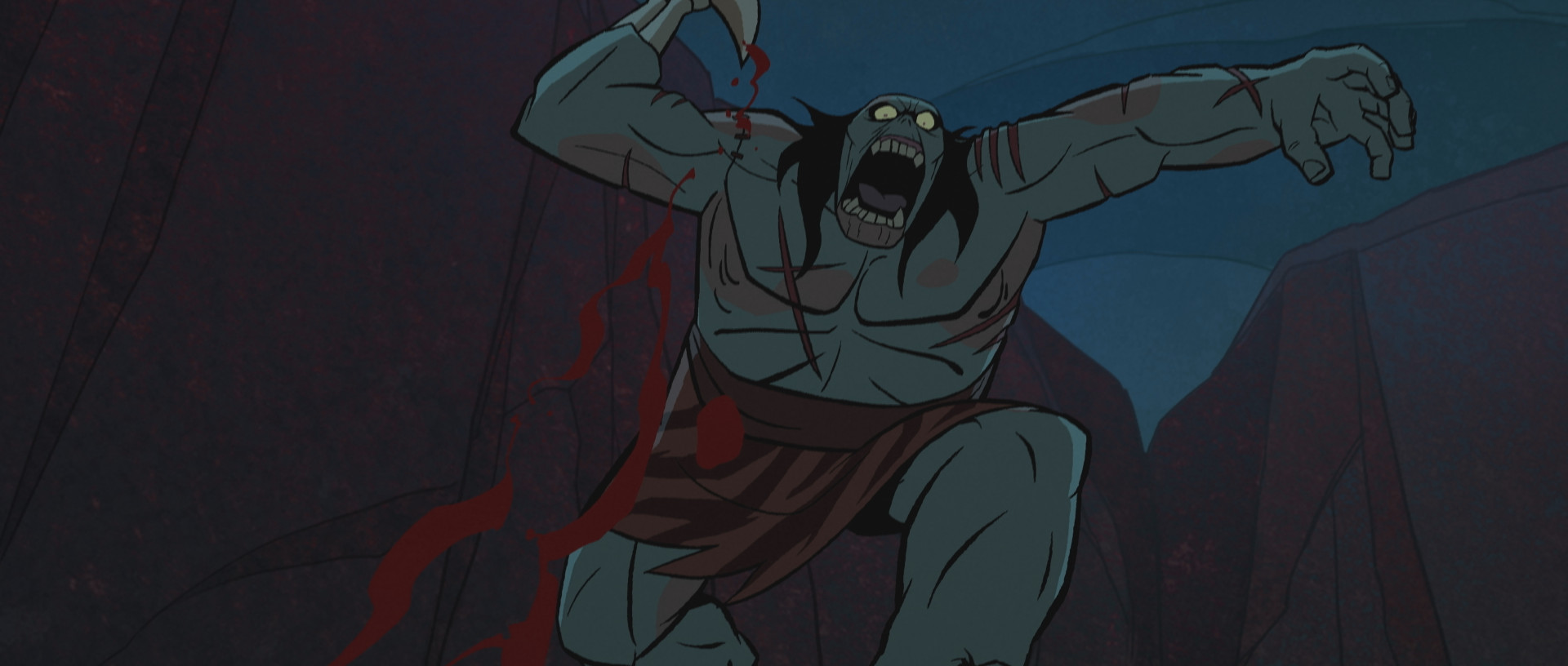
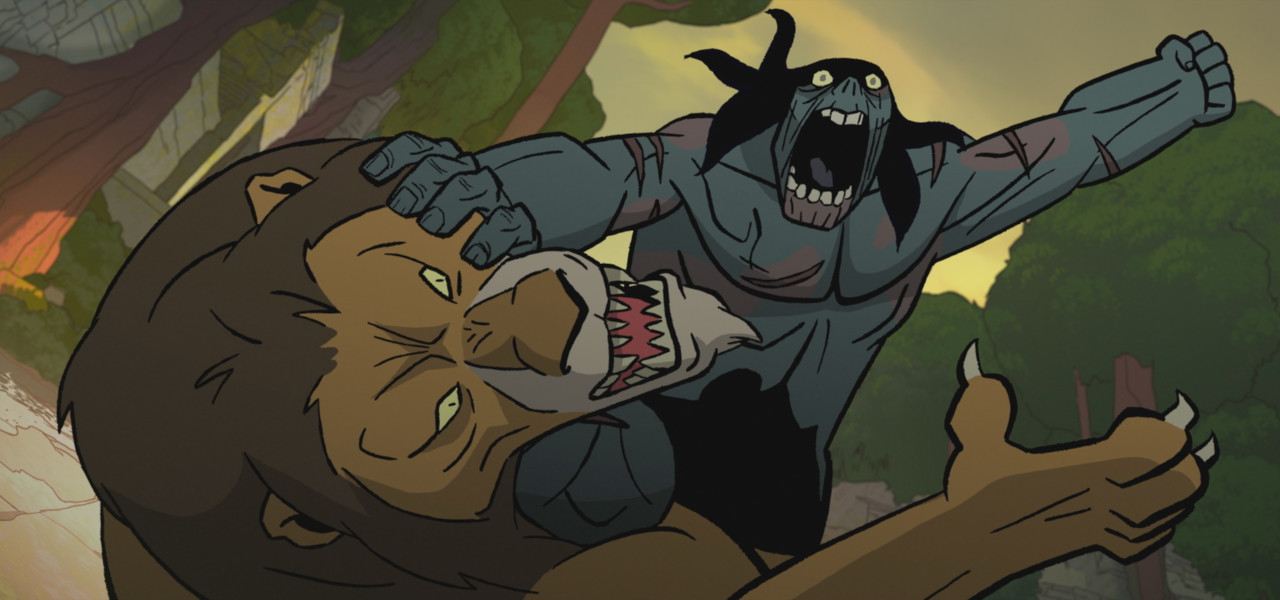
Across two seasons, Primal has delivered some of the most brutal, visually stunning, and emotionally resonant storytelling. Season 3 continues where the previous left off, with the main character, Spear (the caveman), dead — and then returning as a zombie. Although already a very pulpy show, Primal season 3 takes it to new heights, focusing on this Frankenstein’s Monster–like creature learning about the world and fighting all sorts of carnivorous fauna and even mutants. This is Primal at its most emotional yet, but it also has some of the series’ funniest moments (yes, a lot of them involve zombie Spear).
For the new season’s release, Cartoon Brew spoke with Genndy Tartakovsky about Primal‘s new installment, crafting zombie Spear, and the genre line he won’t cross with the animated series.
Cartoon Brew: You’ve said in the past that one of the ideas you had for this season was an alien girl, and the season would explore a new world through her eyes. You get to do a lot of that with zombie Spear, who experiences everything fresh. What storytelling opportunities did the decision to focus on a zombified Spear give you?
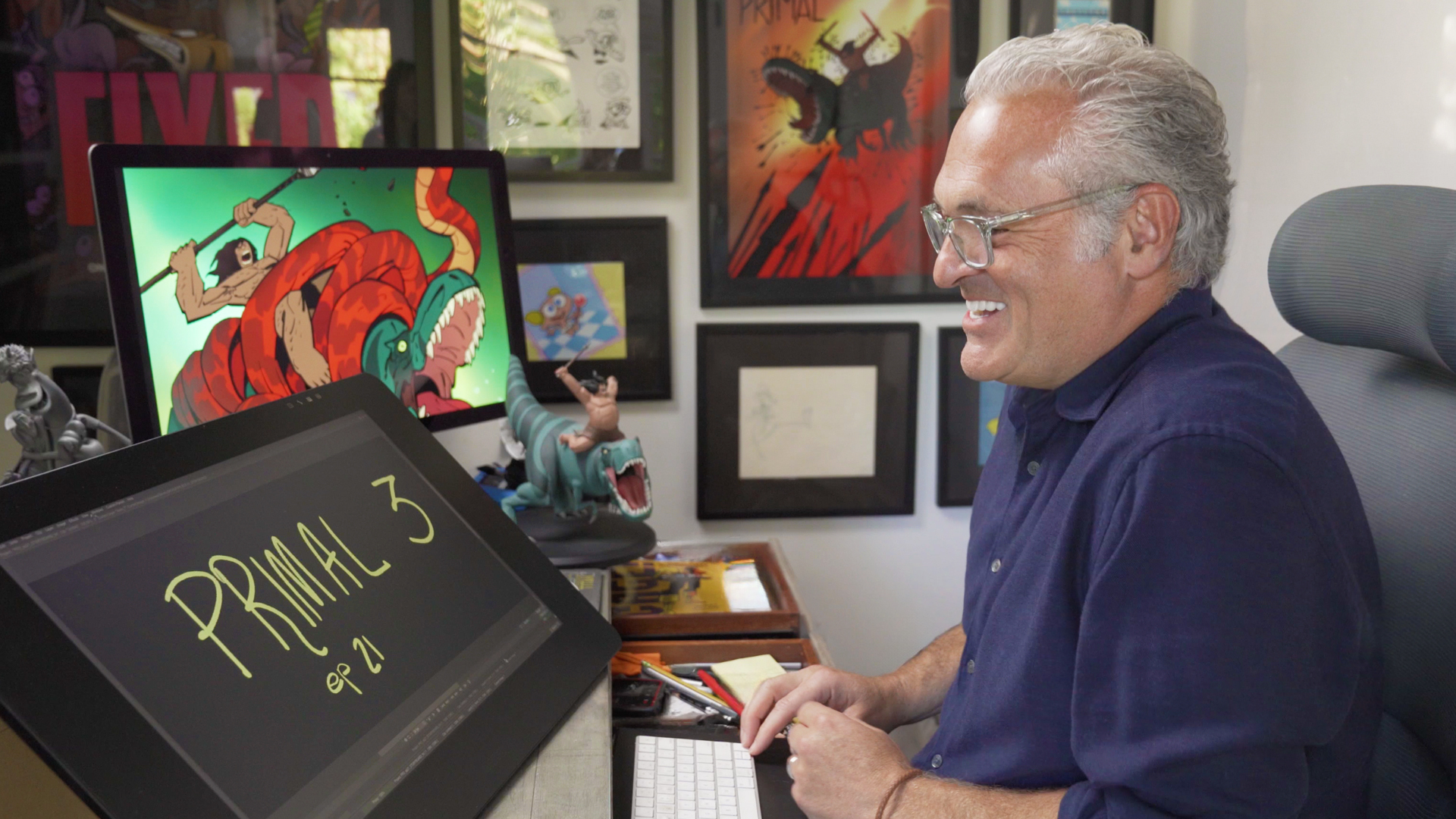
Genndy Tartakovsky: That was the interesting part about it. This is a character that we’ve known for 20 episodes, and now he’s coming out as something different. Then the hope is that you cheer for him. And this is the interesting dynamic: if you go back to the very first episode of season one, you’re like, “Who’s this caveman? I know nothing about him.” And it takes a couple of minutes until you see that he loses his family, and then we’re working hard to build the character, build your love and care for the character. So now I’m starting out with 20 episodes of history, but he’s totally different.
The hope is that you cheer for him to become who he was, if that’s even possible. Then you see the world a little bit differently for us now, because he’s not experienced in this world. He doesn’t know anything, and as things happen, he gets little flashes of memory. So it all becomes emotional, because I’m banking on the idea that you already care for him.
This season has a smaller scope compared to the previous season. The locations are closer together, and there are fewer of them. What drove that decision?
It’s because it’s about him very specifically, about Spear. In the second season, they were on this big journey to save Mira, so we enter new worlds; we see there are more civilizations. You want to open up the world, then for this, it’s just Spear trying to become Spear again. The story always drives what we’re doing, so it’s a small story in a big world.
The question becomes how to make that visually interesting and exciting and fun, but at the same time tell an emotional story, so it doesn’t need the giant armies and all those things. To do that, you need to change the mood. Also, just from having variety between each of the seasons. This one is a bit closer to the way we did the stories in season one in structure and tone.
There’s a moment in episode nine when Spear is drawing on a wall, and you see him kicking his feet all lovey-dovey. Can you talk about honing in on the emotion through the character acting this season?
That is what Primal is — that raw emotion in quiet moments. For this soft moment, you want him to feel almost like a kid drawing again, so we added that little kick that you do as a kid when you disappear into that drawing world. It’s small things like that that we’re trying to get to because we don’t have dialogue. You have to rely on some iconic gestures that, when a character does them, you know what they feel or do. If I scratch my head, you know I’m thinking about something, so that’s an iconic gesture we know all over the world. Drawing on the floor and kicking your feet has that feeling of being lost in what you’re doing and enjoying it.
That’s the way we try to think of it, and there’s not an iconic gesture for everything, but sometimes you find one for the right moment, and it helps with the storytelling.
The show has always had fantastical elements, but zombie Spear is the first time that fantasy is at the forefront like this. What was the process of establishing the rules of how this zombie creature works, what he can and can’t do, and how much of it to show or explain?
I think it’s mostly just thinking about what it is to be a zombie. He’s a little bit like a baby, so he walks funny, and his motor skills are different. Until you reach this primal point, even for him, when this worm is about to kill him. He’s just standing there. He doesn’t know this is a threat. Until something finally sparks, his instinct takes over and goes like, remember this, this is going to be bad, you better run. So I never tried to overthink the rules too much. He’s awoken by magic, the magic dies, and now he’s who he is. He’s just a husk with not a lot of thought. Then the roar — the past keeps driving him, keeps calling him, and the past keeps reawakening who he is.
Each season seems to get a little bit more modern. This season, we mostly see African mammals as threats, for example. What are the guidelines you follow when it comes to world-building and the creatures and civilizations we see in the show?
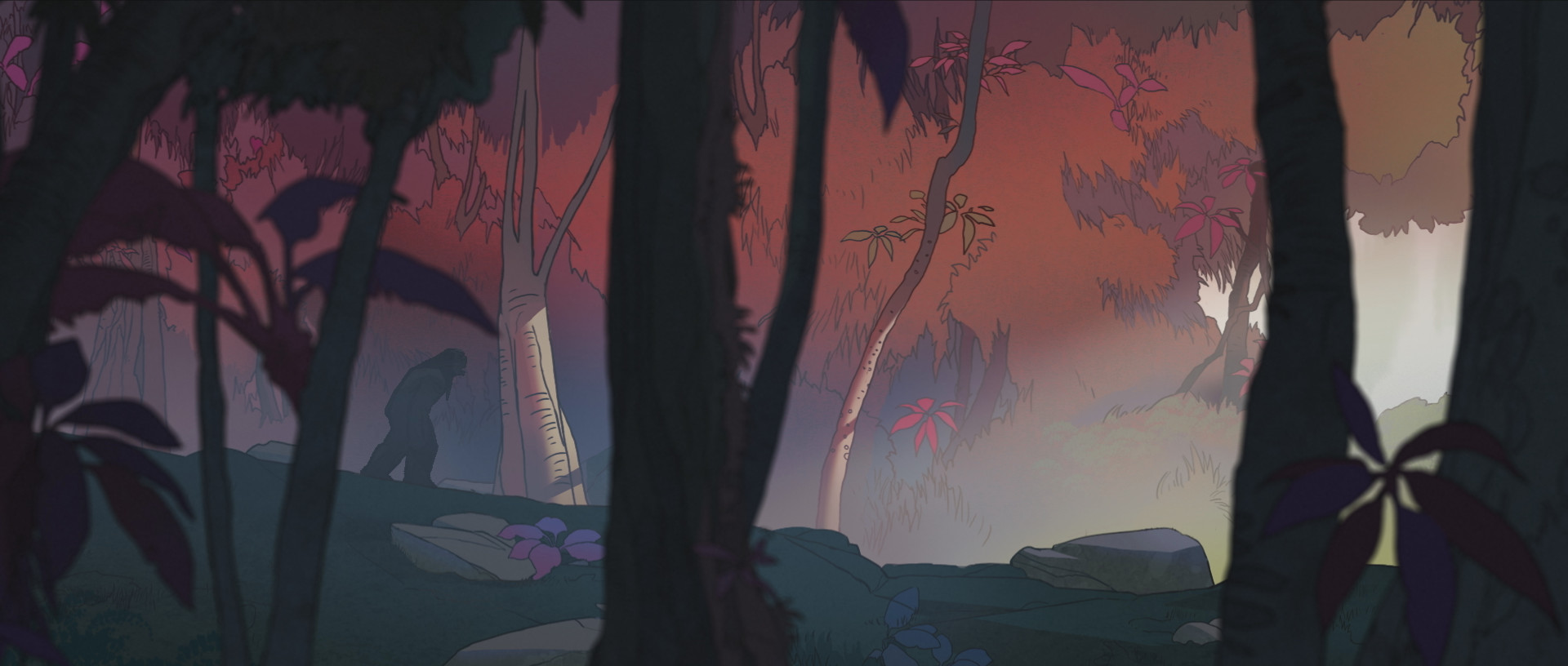
I want it to kind of make sense as far as the geography goes. So if we think that the first 10 episodes happen over here in Primal Land, where humans and dinosaurs existed, we have vampire bats and other fantasy-ish things along with mammoths and dinosaurs. Then they cross the sea into early civilization. Now they end up in a sort of Western, Northern Africa, in the mountains. That’s where Spear starts his journey. Then he falls into a waterfall that takes him to this dark, lost land where everything is possible, and we get the more fantasy things.
So by doing that, if we put one of the creatures from the pit — let’s say the big giant guy — if we put him in the jungle in Africa, it’s kind of like, “What is this? Is this like an alien?” I try to give you the ideas with some kind of responsibility, so it doesn’t feel like anything is possible and you don’t care anymore. So the magic and the fantasy, or the pulp, depend on where the geography takes the characters.
That leads me to ask: given all the pulpy ideas we’ve seen in the show, is there some line you won’t cross? Something that absolutely does not fit in this world, in your mind?
I always felt like an alien spaceship is where it’s too far. Everything that we’ve done has some connection to realistic historical accuracy. Sometimes it’s a very small connection, but sometimes there’s lore about it. Like vampire bats — that’s a real thing, so you kind of push it to be more half-man, half-bat. But an alien invasion or a crashed alien spaceship — which we’ve had those ideas — all of a sudden it feels like if we do that, then we literally can do anything. And there’s something about making the world too big. If you have no limitations, sometimes that’s a bad thing. The audience stops caring because there are no limitations. So we always try to do it within some kind of accuracy.
I’m curious, after three seasons with the team at Studio La Cachette, is there anything different in the dynamic with the animators? Or is it mostly smooth sailing and just a continuation of how it’s been the last two seasons?
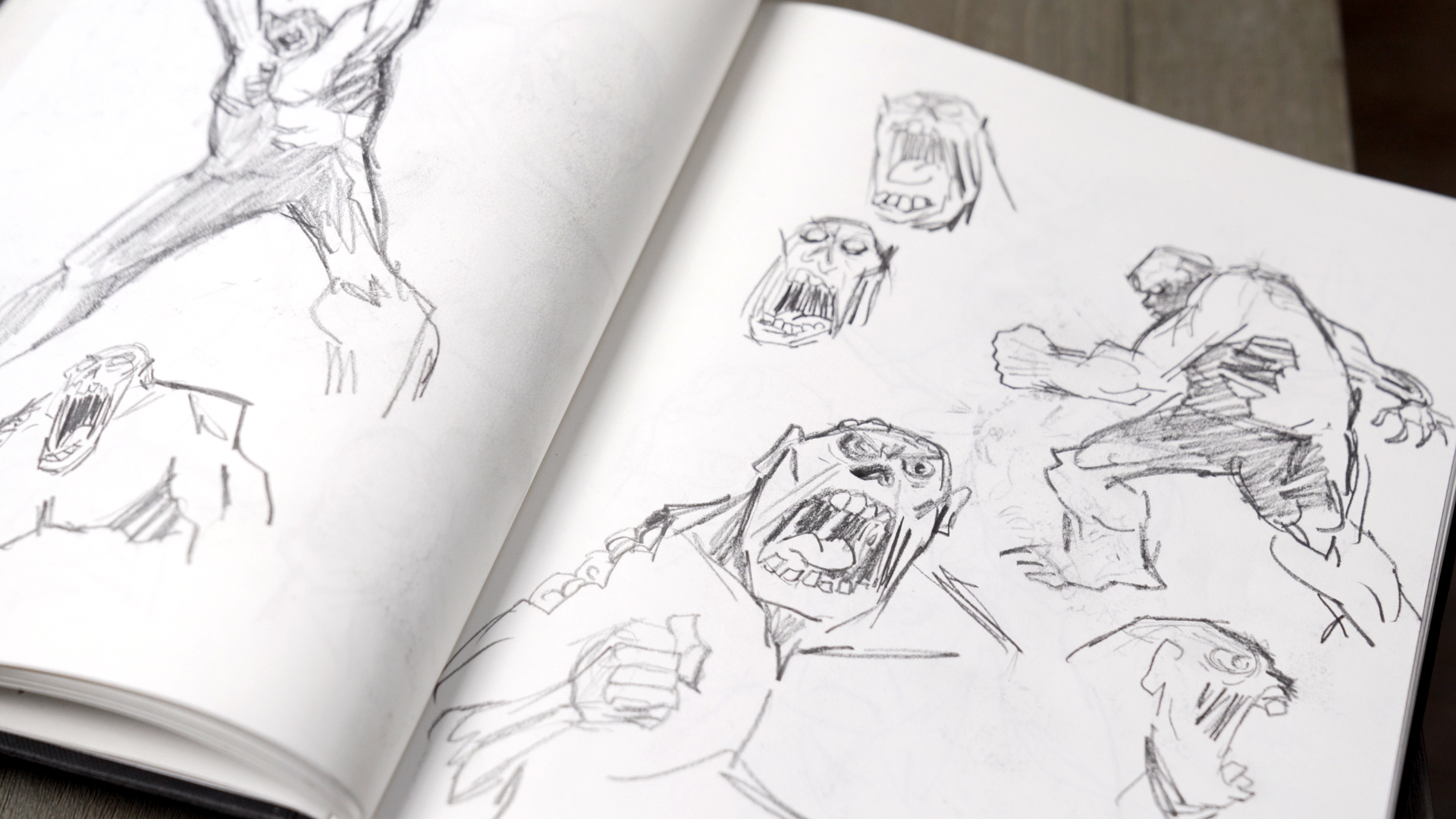
It’s pretty much a continuation. I hate to use the word “easy,” because it’s not — everybody puts in so much hard work — but certainly it’s not stressful. That might be a better way to put it: I know that every step is going to get better. There’s never a moment when I think they’ll mess up a moment that I drew. It’s always more of, I can’t wait to see what they do when they animate this. And also, it’s creating a new character in a way, with Spear standing and moving differently. His expressions are different. So I think it took us like two episodes to dial in how he’s going to look, how he looks screaming, how the muscles work, and all these things. After that, it was smooth sailing — just a lot of hard work.