.png)


White House Launches Racist Video Games To Promote Migrant Deportations
Stay informed with free updates
Sign up to get our news digest — delivered directly to your inbox twice a week.
The White House has launched an online arcade containing five derivative, crudely made video games that turn the Trump administration’s fascist playbook, including mass deportation and scapegoating immigrants for its own failures, into a bastardized form of entertainment.
Promoted on social media with the declaration “CAN’T STOP WINNING,” the arcade borrows, we’re using that term loosely here, liberally from Tetris, Snake, Flappy Bird, and other familiar games. The arcade is the latest example of this administration using animation and game design to sell a political message. Its crude pixel art and recycled mechanics use gaming nostalgia to make the administration’s ideology participatory, while offering its existing supporters the satisfaction of seeing their grievances and prejudices transformed into a game they can win.
Partisan campaigning dolled up with pixel art isn’t inherently offensive. In fact, using games and animation to reach new audiences can be a clever adaptation of the art form. But two of these games are openly racist propaganda.
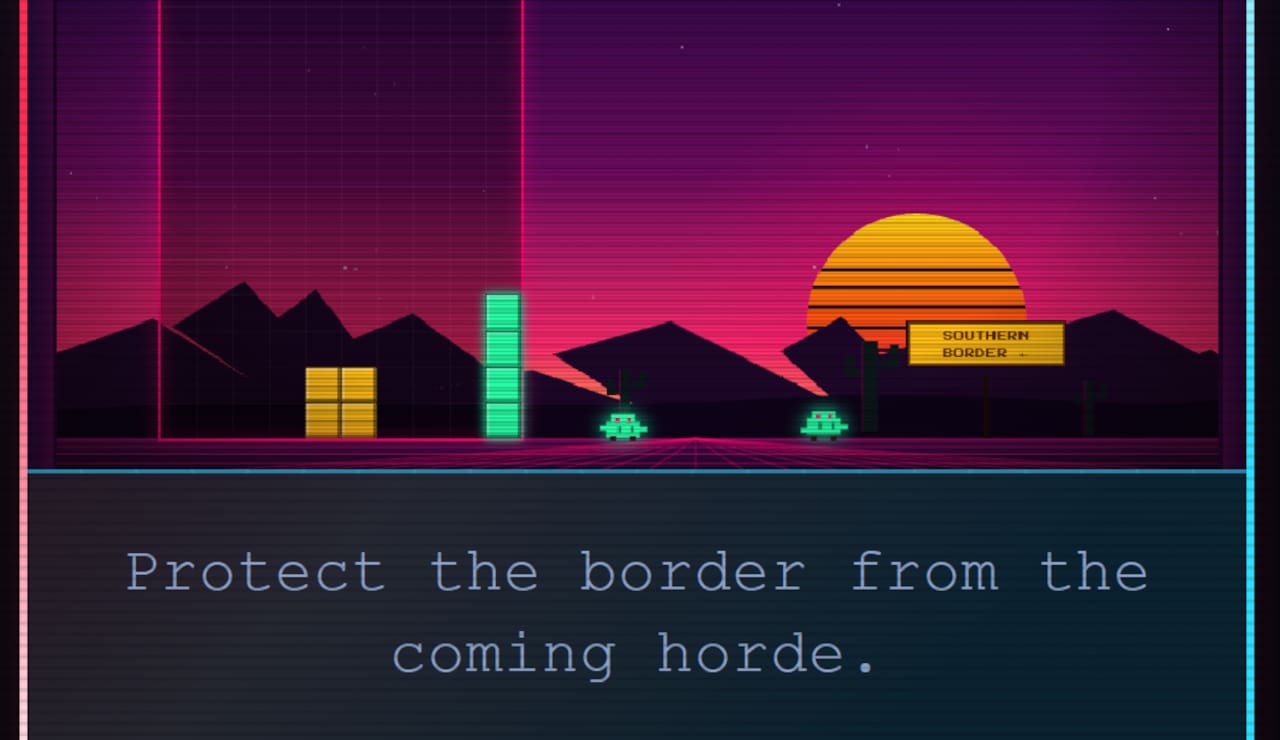
In the Tetris knockoff Build the Wall, players stack barriers while pixelated figures approach from the “Southern Border.” The White House describes the objective as protecting the border “from the coming horde,” using language that strips migrants of their humanity and recasts them as an invading swarm. It’s a favored tactic of fascists throughout history.
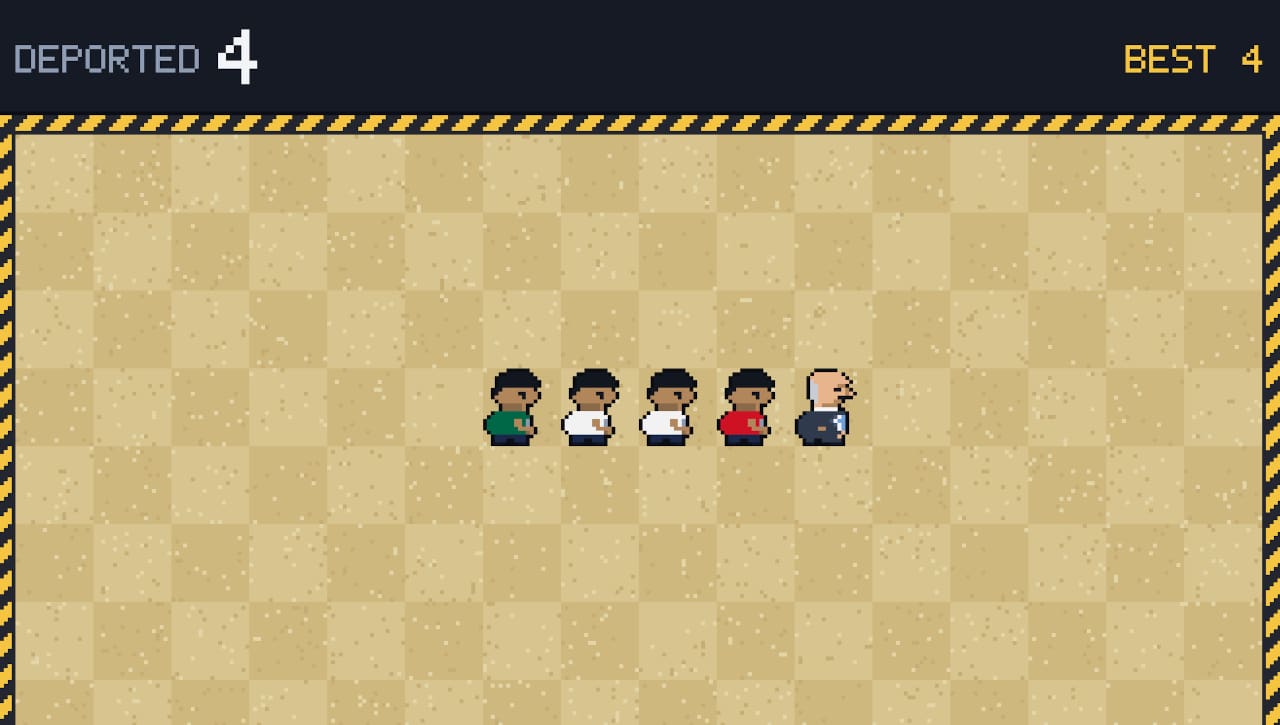
Somehow, Rio Run is even uglier. The Snake-style game has players control a pixel-art likeness of Trump’s “border czar,” Tom Homan, capturing migrants of color who form an ever-growing line of detainees behind him. At the end, the score is presented as a deportation total.
The remaining games promote Trump-backed legislation, Robert F. Kennedy Jr.’s school-food agenda, and the administration’s children’s savings accounts.
The Tetris Company, which manages and licenses the Tetris brand, responded to Build the Wall with a pointed Instagram post. “At Tetris we believe in the power of connection and bringing people together, not dividing them,” the company wrote. “To our fans everywhere: we love you, we see you, and we’re grateful to have you in our community.”
View this post on Instagram
The accompanying caption clarified that the company “was not involved in the creation of ‘Build the Wall’” and added, “We take copyright infringement very seriously.”
Hardly surprising, the White House has not credited the artists, animators, designers, or developers behind the arcade, and so far we’ve been unable to identify its creators, but we’ll keep looking.
Beyond being offensive, the deliberate use of video games also exposes a clear hypocrisy in the current administration. In 2018, he claimed that violence in video games was “really shaping young people’s thoughts.” Following the 2019 El Paso mass shooting, he again blamed “gruesome and grisly video games” for creating “a culture that celebrates violence.”
Apparently, games influence young minds only when it’s politically convenient. When they teach players to regard immigrants as less than human and deserving of detention and deportation, their persuasive power becomes a benefit.
The aesthetic may be new, but the strategy is ancient. Defining a threatening out-group, denying its members individuality, and making cruelty toward them appear necessary or enjoyable is one of fascism’s oldest tools.
An official United States government website is now hosting a game in which players round up brown people for deportation. No amount of pixel-art nostalgia or copied gameplay can make that any less ugly.