.png)

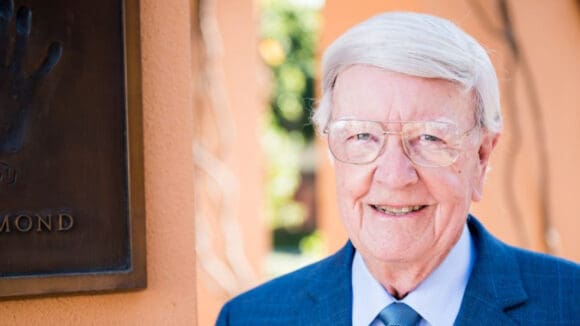
Don Iwerks, Disney Legend, Oscar-Winning Inventor, And Pioneer Of Immersive Cinema, Dies At 96
Stay informed with free updates
Sign up to get our news digest — delivered directly to your inbox twice a week.
Don Iwerks, the Oscar-winning inventor, Disney Legend, and one of the most influential engineering minds in the history of animation and themed entertainment, died on July 9, weeks before his 97th birthday.
Over a career that stretched more than six decades, Iwerks helped transform the technology behind filmmaking, projection, and immersive attractions, leaving an imprint that extends from Disney parks to IMAX-style theaters and museums around the world.
Although he never achieved the public recognition of some industry figures, Iwerks belonged to a rare class of innovators whose work fundamentally changed how audiences experience moving images of all kinds. His incredible career spanned the early analog ingenuity of Walt Disney’s original studio and the digital evolutions that made more immersive forms of entertainment possible, making him one of the last direct links to the company’s formative mid-century years.
Born Donald Warren Iwerks on July 24, 1929, he was the eldest son of Ub Iwerks, Walt Disney’s legendary collaborator, co-creator of the Mickey Mouse character, and one of animation’s greatest technical innovators. He credited his father and Walt Disney as key figures in both his work and family life.
There was a ‘can-do’ attitude I learned from Walt and my father. If you’re doing a really first-class job, you don’t need to worry about the money. It will come. Walt gave everyone a feeling that they were creating things that others had never thought of before, of being a part of history.
Growing up in Southern California, the younger Iwerks inherited his father’s fondness for working with machines and inventing solutions to complex problems. Rather than pursuing a formal engineering education, he developed his skills in practice at machine shops before joining the Walt Disney Studios’ Process Lab in the late 1940s. His industry career was briefly interrupted by military service during the Korean War, but he returned to Disney in 1952, and he found the role that would keep him innovating for the rest of his life.
An allergic reaction to photographic chemicals forced him out of the Process Lab and into the studio’s Machine Shop. It was a twist of fate that proved transformative for both Iwerks and the company. Over the next three decades, Iwerks designed cameras, optical printers, special effects systems, and projection technologies that became essential to Disney productions and attractions.
His contributions led to some of Disney’s most significant technical achievements of the postwar era.
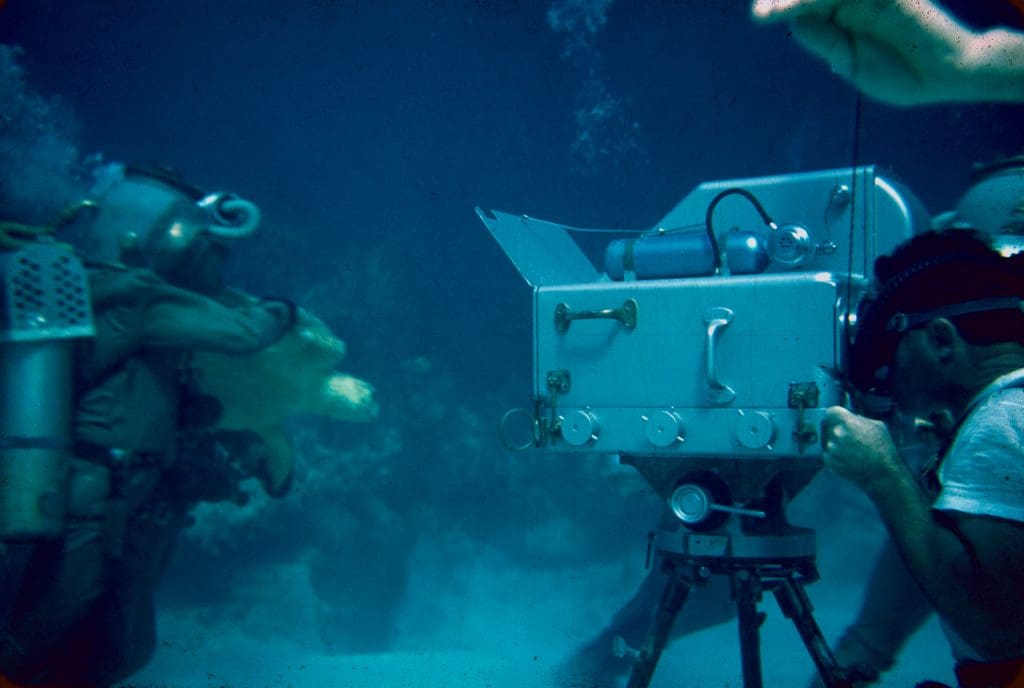
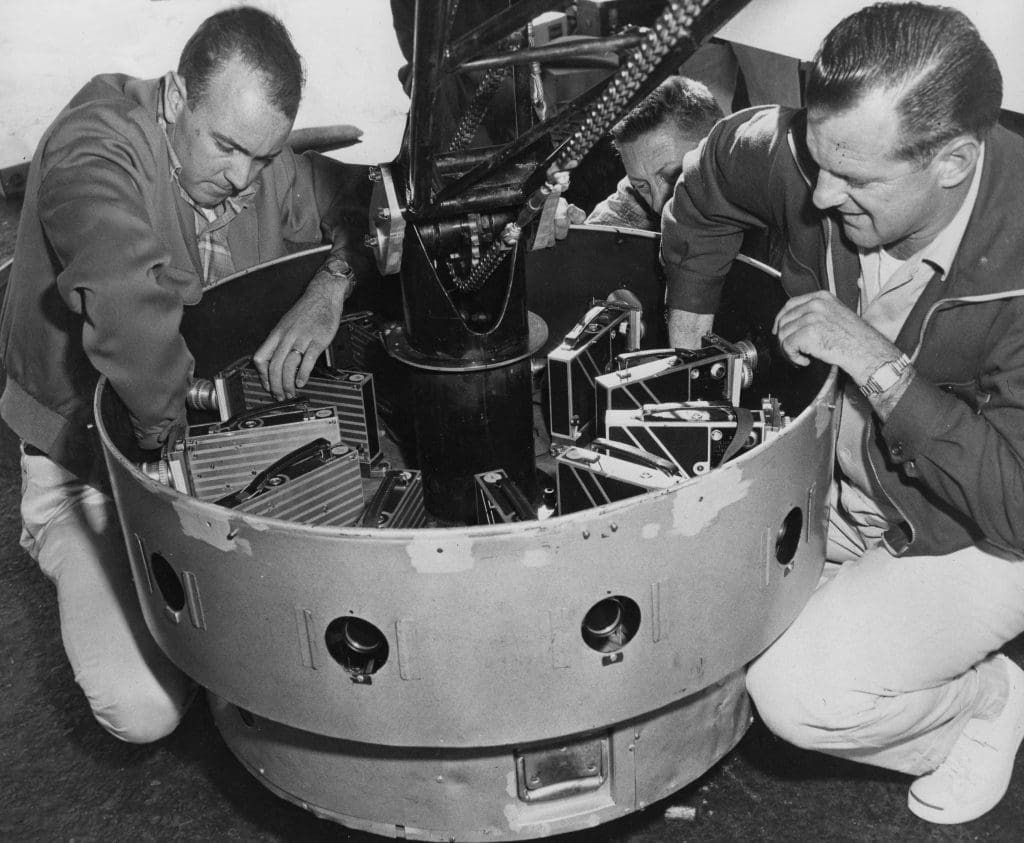
He worked on the miniature Barbershop Quartet that foreshadowed the development of Audio-Animatronics, maintained the underwater cameras used on 20,000 Leagues Under the Sea, and served as camera technician for Disney’s pioneering Circarama system before Disneyland officially opened in 1955. He later worked on America the Beautiful, Disney’s groundbreaking Circle-Vision attraction created for the 1958 Brussels World’s Fair, and worked extensively on the True-Life Adventures nature documentaries.
As manager of Disney’s Machine Shop beginning in 1965, Iwerks oversaw engineering projects that quietly reshaped both filmmaking and theme park technology. Alongside his father, he helped refine the Xerox camera process that modernized Disney animation production, contributed to improvements in the sodium traveling matte system used in films including Mary Poppins, and developed sophisticated large-format projection and automated film systems for Disneyland, Walt Disney World, EPCOT, and Tokyo Disneyland. His “endless loop” projection systems allowed attractions to run thousands of performances with virtually no operator intervention, establishing a new benchmark for reliability in themed entertainment.
In 1986, after Disney reorganized its engineering operations, Iwerks entered a remarkably productive second act by co-founding Iwerks Entertainment with former Disney executive Stan Kinsey.
The company became a leading developer of location-based entertainment technology, creating large-format camera systems, projection technologies, motion simulator attractions, and 3D experiences that appeared in museums, science centers, aquariums, and theme parks across 38 countries. At a time when immersive cinema was rapidly expanding outside the four walls of theaters, Iwerks Entertainment became one of the industry’s most important innovators.
Among his many accomplishments, Iwerks helped develop the groundbreaking 3D camera system used for Captain EO, Francis Ford Coppola’s Michael Jackson-starring attraction for Disney parks that pushed stereoscopic filmmaking to new technical heights. He also held patents for technologies including the ACES automated camera system used on Disney’s The Black Hole and, together with Disney Legend Bob Gurr, a reversible 70mm projector that further expanded possibilities for immersive exhibition.
According to Iwerks, his work at the New York’s World Fair and Epcot Center were the most meaningful phases of his career:
In my career, Epcot was most outstanding. The theaters included two nine-screen CircleVision theaters plus the French Pavilion—which was like CircleVision, except that it was a sit-down theater with five screens and a 200-degree wrap. The American Adventure was a huge rear-projection theater with set pieces in front of it. The film and scenics served as the background that helped to tell the story of America. It remains one of the most powerful experiences at Epcot.
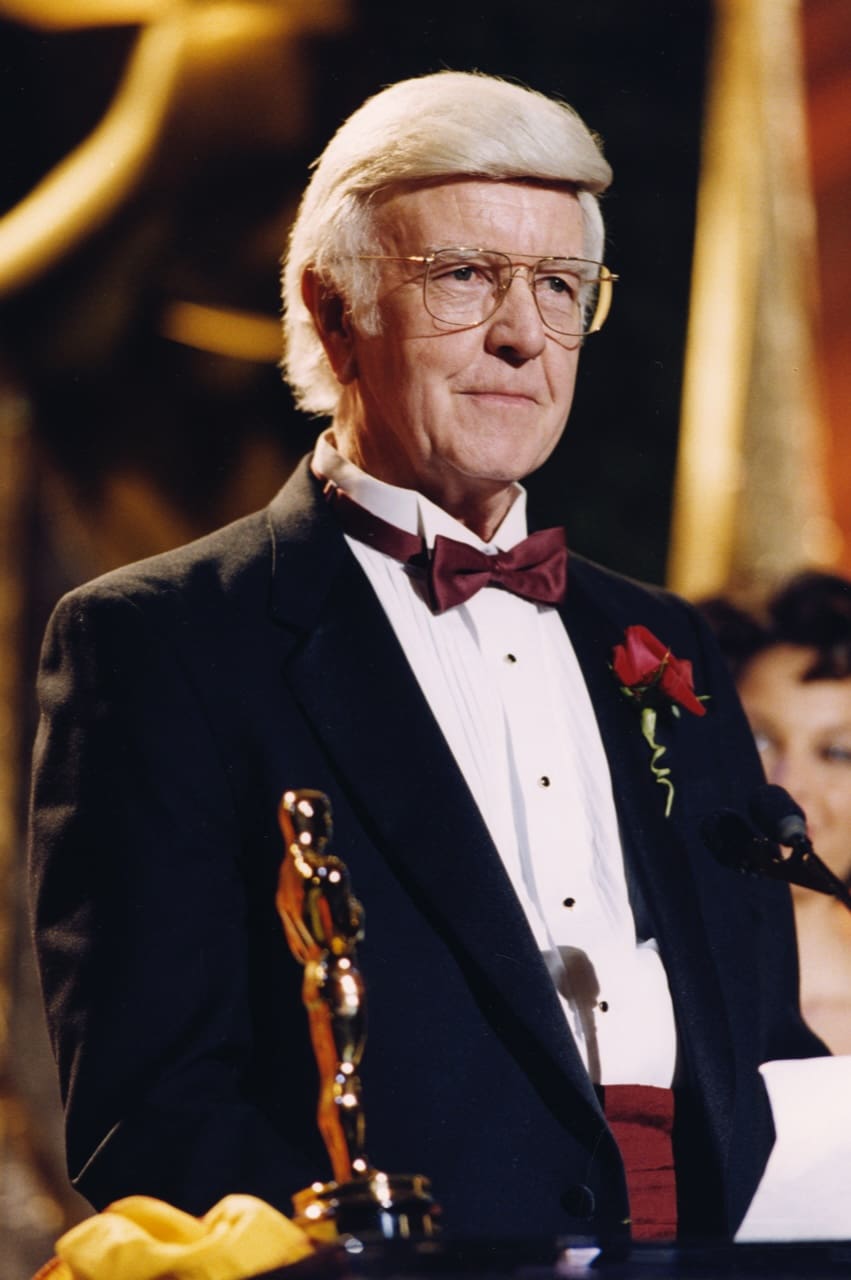
The Academy of Motion Picture Arts and Sciences eventually presented Iwerks with the Gordon E. Sawyer Award, an honorary Oscar recognizing technological contributions that have brought credit to the film industry. He also received an Academy Scientific and Technical Award, the Themed Entertainment Association’s Lifetime Achievement Award, Ernst & Young’s Entrepreneur of the Year honor, and, in 2009, was named a Disney Legend.
Perhaps fittingly for someone whose career centered on making the impossible work, Disney also immortalized both Don and Ub Iwerks with a Main Street, U.S.A. window at Walt Disney World’s Magic Kingdom, honoring their contributions to stereoscopic camera technology.
Animation historians also owe Iwerks a debt for preserving his father’s legacy. In 2019, at age 90, he published Walt Disney’s Ultimate Inventor: The Genius of Ub Iwerks, a deeply researched account that argued persuasively for his father’s place among the most important technical innovators in film history. The book helped introduce a new generation to Ub Iwerks’ extraordinary contributions beyond Mickey Mouse, from multiplane photography to visual effects and camera engineering. Don later completed his own autobiography, chronicling a career that paralleled the technological evolution of modern filmmaking.
Late in life, Iwerks also appeared prominently in Disney+’s The Imagineering Story, offering firsthand recollections from an era when Walt Disney’s studio functioned as an invention laboratory as much as a film studio. He was among the last surviving Disney employees who had worked directly alongside Walt himself.
Even after retirement, Iwerks never stopped inventing. According to his family, he continued sketching new mechanical ideas into his final days while enjoying classic films. Mary Poppins, a film whose groundbreaking technical achievements he had helped make possible, remained his favorite.
He is survived by his wife of 54 years, Betty; his sons Larry and John; his daughter Leslie; and other family members. A celebration of life will be announced at a later date.
All images and quotes courtesy of The Walt Disney Company.